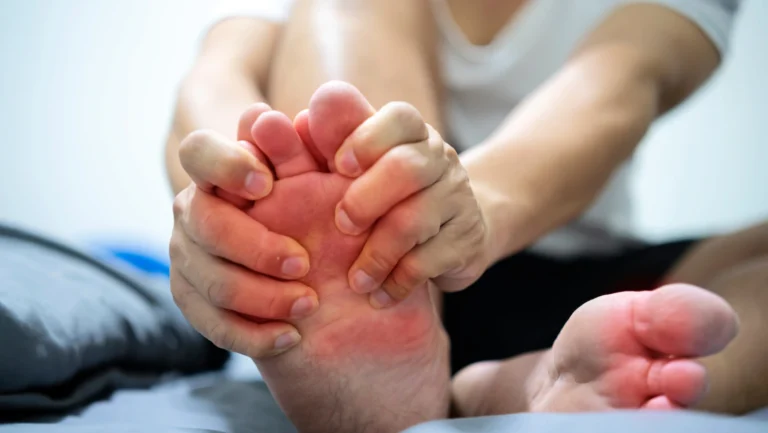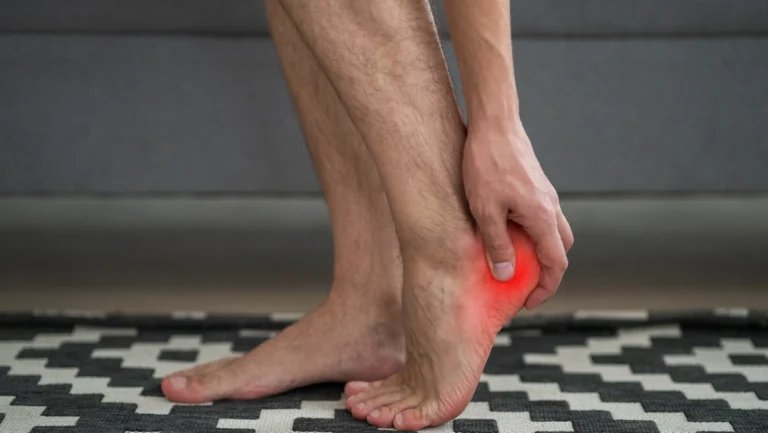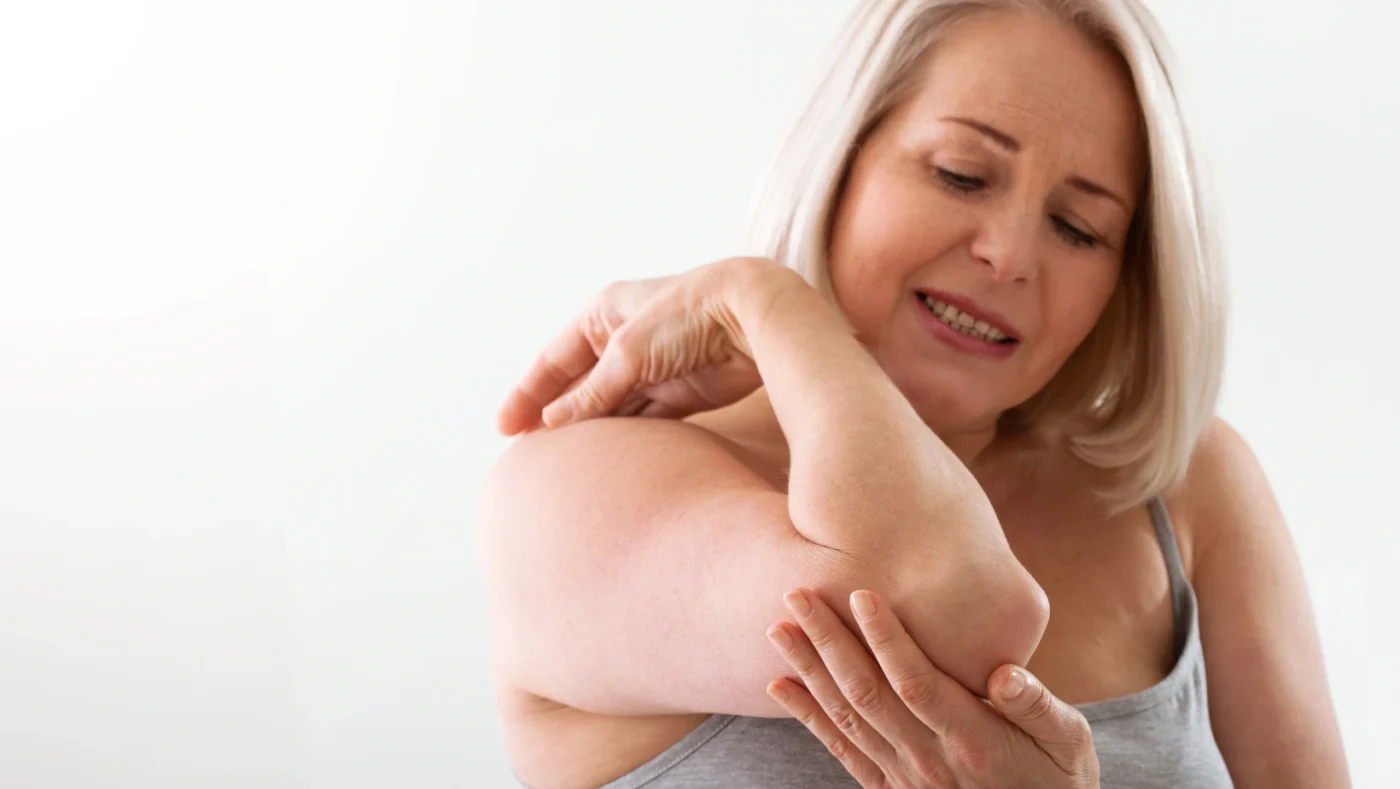

Gout in elbow is a form of inflammatory arthritis caused by uric acid crystals settling inside the elbow joint. It affects roughly 4% of adults in countries like the US and India, and most doctors miss it on first visit because elbow gout is far less common than gout in the big toe. This guide covers causes, symptoms, diagnosis, treatment, and when to call your doctor.
What Causes Gout in the Elbow
The primary cause of gout in the elbow is an excess of uric acid in the blood. When uric acid builds up over months or years, it crystallizes inside joints. The elbow becomes a target in people who already have gout in other joints or those with chronic high uric acid levels above 6.8 mg/dL.
Uric Acid Crystal Accumulation in the Elbow Joint
Uric acid forms when your body breaks down purines, a substance found in many foods. Normally, kidneys filter it out. When kidneys fall behind, uric acid builds in the blood and dumps into joints as sharp needle-like crystals.
These crystals scratch joint tissue and trigger intense inflammation. The elbow’s synovial fluid is thin and provides less cushioning than hip or knee joints, making it easier for crystals to lodge there.
High Purine Diet and Alcohol Intake
Red meat, organ meats like liver, shellfish, and beer are high-purine foods. Fructose, found in packaged juices and sodas, raises uric acid independently of purines. Beer is the worst alcohol for gout because it contains purines and impairs uric acid excretion at the same time. A single night of heavy drinking combined with a red-meat meal raises serum uric acid fast enough to trigger a flare within 24 hours.
Dehydration and Poor Uric Acid Clearance
When your body is dehydrated, urine becomes concentrated, and the kidneys excrete less uric acid. Even mild dehydration of 2% body weight loss raises serum uric acid measurably. People who sweat heavily at work or exercise without replacing fluids are at higher risk.
Certain medications, especially diuretics like furosemide or hydrochlorothiazide, also block uric acid clearance and are a known trigger of gout in elbow in older adults.
Genetic Predisposition and Metabolic Disorders
Around 20% of gout cases trace directly to genetics. Variants in the SLC22A12 gene impair the kidney’s ability to dump uric acid into urine. Metabolic syndrome, type 2 diabetes, chronic kidney disease, and hypothyroidism all raise the risk of gout in elbow by disrupting how the body processes or filters uric acid.
Symptoms of Gout in the Elbow
Gout in symptoms come on fast and are hard to mistake once you know what to look for. The pain, swelling, and skin changes over the elbow are distinct from other joint conditions. Most people go from no symptoms to severe pain within 6 to 12 hours.
Severe Elbow Pain at Night
Severe elbow pain at night is one of the most reported early gout signs. Body temperature drops slightly during sleep, and lower temperatures cause uric acid crystals to form faster.
Nighttime attacks also correlate with lower cortisol levels, which normally suppress inflammation. The pain is sharp, throbbing, and often described as feeling like the elbow is being pressed with hot glass. Trying to rest the arm on a mattress or pillow becomes impossible.
Swelling and Redness in the Elbow Joint
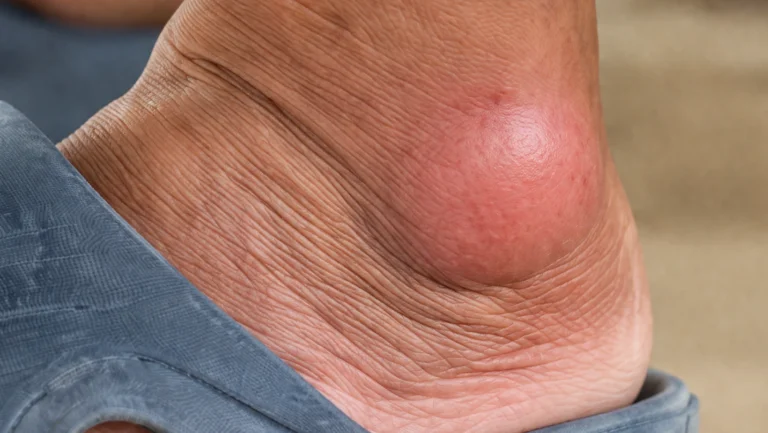
Swelling and redness elbow gout develop quickly because crystals trigger the immune system to flood the joint with inflammatory cells. The olecranon bursa, a small fluid sac at the back of the elbow, swells first. The skin over the elbow tightens, turns red, and sometimes looks shiny. This happens within hours of an attack starting.
Warmth in the Elbow Joint
Warmth in elbow joint is a key diagnostic clue. The elbow feels noticeably hotter than surrounding skin. This is caused by increased blood flow to the inflamed area. Doctors check for this specifically because it separates gout from osteoarthritis, which does not produce warmth. Touch the inside of your wrist and then the swollen elbow; the temperature difference is usually obvious.
Limited Movement and Stiffness
Bending or straightening the arm becomes painful during a flare. In bad attacks, the elbow locks at a partial angle because the joint space fills with inflamed fluid. Grip strength in the affected hand drops because forearm muscles are connected through the elbow.
Sudden Onset vs Gradual Worsening
Gout attacks are sudden. Patients often say they went to bed fine and woke up unable to move the arm. This is different from tennis elbow or osteoarthritis, which worsen over weeks. If elbow pain hits hard within hours, gout in elbow should be the first condition to rule out.
How to Treat Gout in Elbow Fast
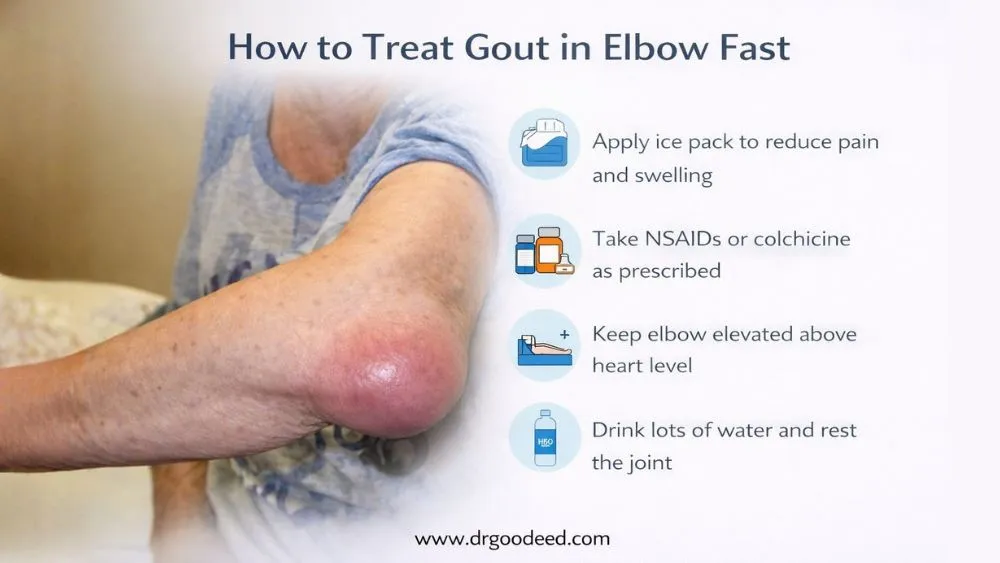
To treat gout in elbow fast, the goal is to stop the inflammatory response and lower uric acid. Treatment works best when started within the first 24 hours of a flare.
Immediate Relief Steps
Rest the arm and elevate it above heart level to reduce blood pooling. Apply ice wrapped in a cloth for 20 minutes on, 20 minutes off. Do not apply heat; it worsens inflammation during an active flare.
Medications
- NSAIDs like indomethacin or naproxen are the first-line treatment. Indomethacin 50mg three times daily for 5 days is a common rheumatologist protocol.
- Colchicine works best if taken within 12 hours of the attack starting. The standard dose is 1.2mg immediately, then 0.6mg one hour later.
- Corticosteroids like prednisone are used when NSAIDs are not safe, such as in patients with kidney disease. A 5-day taper of 30mg-40mg is typical.
- Joint aspiration (draining the joint fluid) gives fast pain relief and confirms the diagnosis at the same time.
Home Care Strategies
Drink at least 2.5 liters of water daily. Tart cherry juice (240ml twice daily) lowers uric acid modestly according to a 2012 study published in Arthritis & Rheumatology. Avoid the food triggers gout listed above until the flare completely resolves.
Diagnosis of Elbow Gout
Gout in elbow is often misdiagnosed as olecranon bursitis or septic arthritis because they look similar. Accurate diagnosis requires more than a blood test.
Joint Fluid Analysis
Needle aspiration of the elbow joint is the gold standard. Lab analysis under polarized light microscopy shows negatively birefringent monosodium urate crystals. No other test is more accurate.
Blood Uric Acid Levels
Serum uric acid above 6.8 mg/dL supports gout. But during an active flare, uric acid sometimes drops to normal as it dumps into the joint; a normal result during a flare does not rule out gout.
Imaging
Ultrasound detects the “double contour sign,” a urate crystal layer over cartilage, which is highly specific to gout. X-rays show bone erosion in chronic cases but are normal in early gout. Dual-energy CT (DECT) is the most accurate imaging tool but is not always available in smaller hospitals across India.
Differentiating from Bursitis, Arthritis, or Infection
Septic arthritis causes fever and elevated white blood cell count; gout usually does not. Bursitis swells at the back of the elbow only. Rheumatoid arthritis affects joints symmetrically and shows positive rheumatoid factor on blood tests.
How Long Does Gout in the Elbow Last
A typical gout in elbow flare lasts 3 to 10 days with treatment. Without any treatment, it runs 1 to 3 weeks.
- With NSAIDs started within 24 hours: pain drops by day 3 to 4.
- With no treatment: the flare peaks around day 4 to 5, then slowly fades over 2 weeks.
- Repeat flares, if uric acid is not controlled long-term, tend to last longer and hit harder each time.
Risk Factors for Elbow Gout
Men aged 40 to 60 have the highest incidence of gout in elbow, especially those with metabolic syndrome or chronic kidney disease. In women, risk rises sharply after menopause when estrogen levels drop and uric acid clearance declines.
- Kidney disease (CKD stage 3 or higher)
- Regular alcohol consumption, particularly beer
- Obesity with BMI above 30
- Diuretic medication use
- Family history of gout
Complications of Untreated Elbow Gout
Ignoring repeated gout in elbow attacks leads to permanent joint damage.
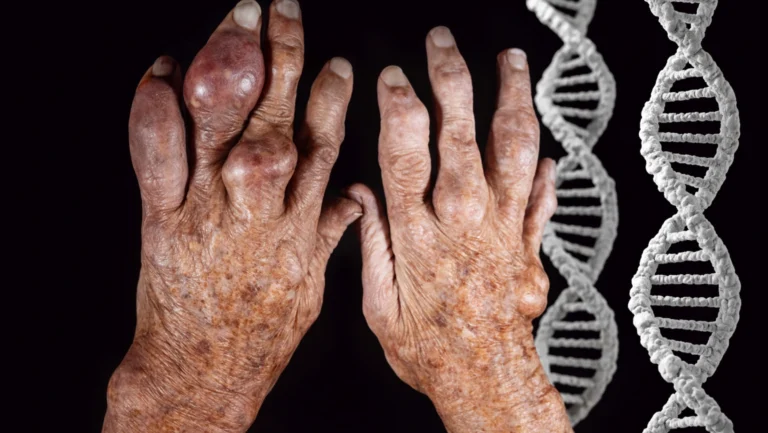
- Tophi formation: Hard uric acid deposits grow under the skin around the elbow. They look like white lumps and can break open.
- Chronic gouty arthritis: Constant low-grade inflammation destroys cartilage permanently.
- Joint deformity: The elbow loses its range of motion completely in severe cases.
- Kidney stones: Uric acid stones form in people with sustained high uric acid levels.
How to Prevent Gout in the Elbow
Keeping serum uric acid below 6 mg/dL (5 mg/dL if tophi are present) prevents flares. Urate-lowering therapy with allopurinol is the standard long-term medication. Starting at 100mg daily and titrating up to 300mg to 600mg based on blood levels is the standard approach.
- Drink 2 to 3 liters of water daily
- Avoid red meat, organ meats, shellfish, and beer
- Limit fructose-heavy drinks
- Maintain a healthy weight; losing even 5kg lowers uric acid meaningfully
- Get serum uric acid tested every 3 to 6 months if you are on allopurinol
When to See a Doctor
See a doctor immediately if:
- Elbow is swollen, red, and hot with fever above 38°C; this needs infection ruled out fast
- Pain does not improve after 48 hours of NSAIDs and ice
- You see white chalky lumps forming near the elbow
- This is your third or more flare in a year; that means your uric acid is not controlled
Frequently Asked Questions
Can gout affect the elbow joint?
Yes. Gout in elbow accounts for around 15% to 20% of gout cases outside the foot and ankle. It usually appears in people who already have high uric acid for years or those with tophaceous gout where crystals spread beyond the lower limbs.
How do I know if elbow pain is gout or bursitis?
Gout causes warmth, redness, and intense pain even without touching the joint. Bursitis creates a soft swelling at the back of the elbow with milder pain. Joint fluid analysis confirms gout; bursitis fluid shows no crystals under microscopy.
Why is severe elbow pain at night gout worse?
Body temperature drops 0.5 to 1 degree Celsius during sleep. Lower temperature speeds up uric acid crystallization. Cortisol, which suppresses inflammation, also drops at night, so the immune response runs harder.
What is the fastest way to relieve elbow gout pain?
Indomethacin 50mg or colchicine 1.2mg taken within 12 hours of the attack gives the fastest relief. Ice packs reduce swelling immediately. Joint aspiration provides the quickest pain drop of all, usually within hours.
Can elbow gout become chronic?
Yes. Without urate-lowering therapy, repeated attacks destroy cartilage over 5 to 10 years and cause permanent stiffness. Tophi form around the elbow and restrict movement even between flares.
Does drinking water help reduce gout symptoms?
Yes. Water helps kidneys excrete uric acid. At 2.5 liters daily, urine uric acid output increases by around 25%. This does not stop an active flare but reduces the frequency of future attacks within 3 to 6 months.
What foods trigger elbow gout attacks?
Beer is the single highest-risk trigger, followed by organ meats like liver and kidney, shrimp, scallops, and fructose-sweetened drinks. A combination of beer and red meat in one meal raises serum uric acid enough to trigger a flare within 12 to 24 hours.
Can gout spread to multiple joints?
Yes. Without treatment, gout progresses from one joint to multiple joints over years. Gout in elbowoften appears in patients who have had untreated gout in the knee or foot for 5 or more years.
Is elbow gout a sign of advanced gout?
Yes, generally. Gout in elbow suggests chronically elevated uric acid above 8 mg/dL for several years. Most doctors consider upper limb gout a marker of poor metabolic control.
Can I move my arm during a gout flare?
Gentle movement is acceptable if tolerable. Forced range-of-motion exercise worsens crystal-induced inflammation. Rest the joint for the first 48 hours, then slowly resume light activity as pain subsides.