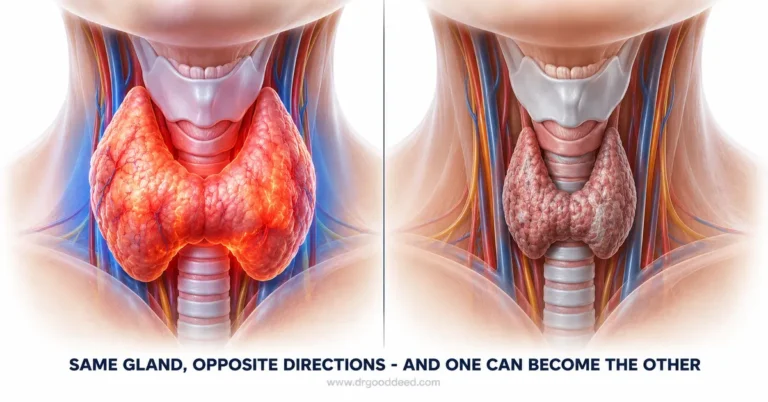
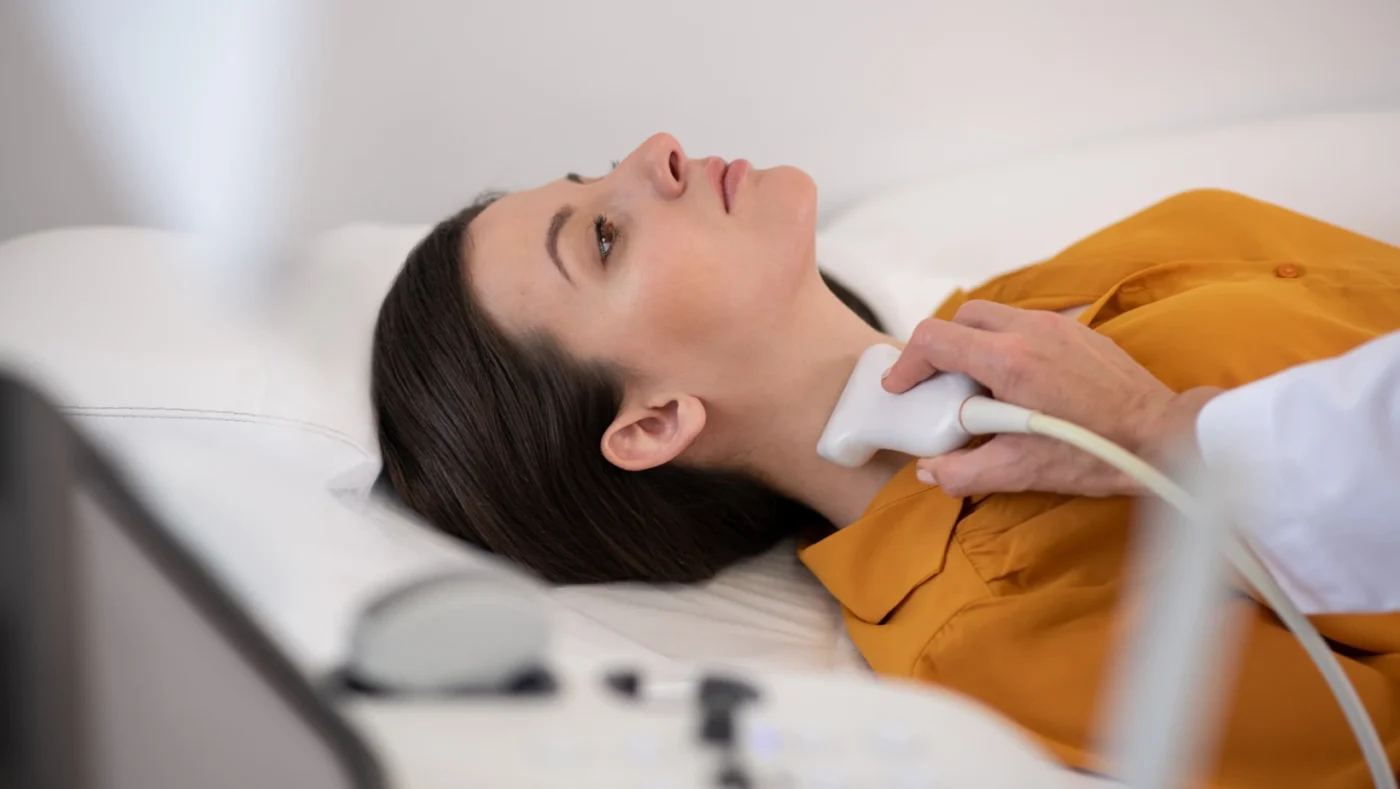

Thyroid test empty stomach or not is one of the most searched pre-test questions in the US, and the answer is more nuanced than most labs tell you. Strict fasting is not required for a standard TSH test, but eating, timing, supplements, and medication can all shift thyroid hormone readings enough to change clinical interpretation.
The American Thyroid Association recommends morning testing in a fasted or lightly fasted state for the most consistent results, especially for patients on levothyroxine. This guide covers every preparation variable that affects accuracy: food, timing, medications, supplements, and metabolic factors.
Preparation for Thyroid Function Test

Preparation for thyroid function test accuracy starts 24 hours before blood draw, not just the morning of.
24 hours before the test:
- Stop biotin supplements completely. Biotin (vitamin B7) at doses above 5 mg/day falsely lowers TSH and falsely elevates Free T4 and Free T3 on immunoassay-based tests. The FDA issued a safety warning on this in 2019. Most multivitamins contain 30 to 100 mcg; those are fine. High-dose biotin (5,000 to 10,000 mcg), taken for hair or nail growth, is the problem.
- Stop iron supplements for 24 hours. Iron binds levothyroxine in the gut and affects absorption calculations when doctors adjust dose.
- Avoid heavy strenuous exercise. Intense physical effort temporarily raises T3 levels through increased peripheral conversion of T4.
Morning of the test:
- Don’t eat a large meal within 2 to 3 hours of blood draw
- Drink water freely; hydration doesn’t affect thyroid hormones but helps with blood draw
- Hold levothyroxine until after the blood draw (explained in detail below)
Consistency across repeated tests: If the first TSH test was done at 8 AM fasted, all follow-up tests should be at 8 AM fasted. Comparing a fasted morning TSH to a post-lunch TSH introduces 20 to 30% variability that has nothing to do with thyroid function. Same lab, same time, same fasting status gives clinically comparable data.
How Food Affects Thyroid Hormone Levels
How food affects thyroid hormone levels is more specific than most people expect. TSH responds differently to meals than T3 and T4 do.
TSH: Eating a meal doesn’t significantly change TSH within a 1 to 2 hour window. However, high-carbohydrate meals raise insulin, and insulin influences the hypothalamic-pituitary axis that controls TSH secretion indirectly. The bigger meal effect on TSH comes through the time-of-day fluctuation (explained in the next section), not direct post-meal hormone change.
Free T4: Eating doesn’t directly alter Free T4 levels in the short term. T4 has a half-life of 7 days. A single meal won’t shift it.
Free T3: T3 is more sensitive to metabolic state. After a large meal, peripheral T4-to-T3 conversion increases slightly as cellular energy demands rise. This can produce marginally higher Free T3 readings within 3 to 4 hours of eating. The change is usually within the normal reference range but can matter when tracking borderline values.
The levothyroxine-food interaction: This is where how food affects thyroid hormone levels becomes clinically critical. Taking levothyroxine with food reduces its absorption by 20 to 40%. Calcium in dairy, fiber in whole grains, and coffee all interfere with levothyroxine absorption at the gut level. If a patient takes their morning dose with breakfast on test day, their Free T4 reading will reflect less absorbed hormone than usual.
Best Time to Take Thyroid Test
Best time to take thyroid test is between 7 AM and 9 AM, before eating and before taking thyroid medication.
TSH follows a circadian (daily body clock) rhythm that most standard lab reports don’t mention. Research published in Clinical Chemistry shows TSH peaks between midnight and 2 AM, then gradually falls through the morning and reaches its lowest point between 1 PM and 4 PM.
A TSH drawn at 8 AM reads higher than the same patient’s TSH drawn at 2 PM, sometimes by 0.5 to 1.0 mIU/L. For a patient with a borderline TSH of 4.2 mIU/L, testing in the afternoon might return 3.5 mIU/L. That’s the difference between a diagnosis and a normal result.
Specific timing guidelines by test:
- TSH: Test between 7 AM and 9 AM for most accurate and reproducible readings
- Free T4: Less time-sensitive, but morning testing still provides the most consistent baseline
- Free T3: Most sensitive to time of day and metabolic state; morning fasted testing is recommended
- Reverse T3: No strict timing rule, but pair with morning Free T3 for a useful ratio
Best time to take thyroid test for patients on levothyroxine: draw blood before the morning dose. This reflects steady-state T4 levels, not a post-dose spike.
Metabolism and Thyroid Test Accuracy
Metabolism and thyroid test accuracy interact in ways that standard lab reference ranges don’t account for.
Reference ranges at most US labs come from population averages. They don’t adjust for individual metabolic differences, age-specific patterns, or recent physiological stress.
Sleep deprivation: One night of 4-hour sleep elevates TSH by 0.5 to 1.5 mIU/L the next morning, according to research in Sleep journal. This occurs because TSH pulses from the pituitary increase during deep sleep; disrupted sleep amplifies these pulses. A patient who slept poorly the night before testing may show a borderline-elevated TSH that normalizes after proper sleep.
Acute psychological stress: Cortisol released during stress suppresses TSH secretion temporarily. A patient who was extremely anxious or in a stressful situation hours before testing may show a falsely normal or low-normal TSH.
Caloric restriction: Women eating fewer than 1,200 calories per day show reduced T3 levels due to decreased peripheral conversion. This isn’t thyroid disease; it’s an adaptive metabolic response. Testing during active caloric restriction produces T3 readings that don’t reflect baseline thyroid function.
Body temperature at time of testing: Cold exposure raises TSH acutely. Testing in a very cold environment or arriving at the lab after prolonged cold exposure can elevate TSH readings slightly.
Metabolism and thyroid test accuracy also vary by testing method. Different labs use different immunoassay platforms. Quest Diagnostics and LabCorp use different calibration standards. A TSH of 3.8 mIU/L on Quest doesn’t automatically compare to 3.8 mIU/L on LabCorp. Always use the same lab for serial testing.
Medication Timing Before Thyroid Test
Medication timing is the most clinically significant preparation for thyroid function test variable.
Levothyroxine (Synthroid, Euthyrox, Tirosint):
Take levothyroxine AFTER the blood draw, not before. Here’s why: levothyroxine taken 1 to 2 hours before testing produces a Free T4 spike of 10 to 15% above the steady-state level. This post-dose peak lasts 3 to 5 hours. If the test captures this peak, Free T4 appears artificially elevated. TSH won’t reflect the true long-term hormonal environment.
Most endocrinologists recommend this sequence: wake up, go directly to the lab, get blood drawn, then take levothyroxine.
Supplements that interfere:
| Supplement | Interference Type | Stop Before Test |
| Biotin (high-dose) | Falsely alters TSH, T3, T4 | 48 to 72 hours |
| Iron | Binds levothyroxine, alters absorption tracking | 24 hours |
| Calcium carbonate | Same absorption interference as iron | 24 hours |
| Multivitamins with minerals | Lower-level interference | Morning of test |
Thyroid-altering medications: Glucocorticoids (prednisone), dopamine agonists, and amiodarone all alter thyroid test results. Don’t stop these medications without physician guidance; inform the ordering doctor so results are interpreted in context.
Drinks, Caffeine, and Hydration Before Testing
Thyroid test empty stomach or not extends to what patients drink, not just eat.
Water: Drink water freely before the test. Dehydration concentrates blood proteins, which slightly elevates TSH readings. Well-hydrated patients produce easier blood draws and more consistent results.
Coffee: This is where most patients get wrong information. Coffee itself doesn’t raise or lower TSH directly. The problem is levothyroxine interaction. Coffee, including black coffee, reduces levothyroxine absorption by 25 to 34% when consumed within 30 minutes of the tablet. Patients who take their levothyroxine with their morning coffee consistently have lower Free T4 levels than they should.
For the test itself: a cup of black coffee 2 or more hours before the blood draw won’t meaningfully change TSH or Free T4 readings in patients not on thyroid medication. For patients on levothyroxine, black coffee consumption complicates interpretation because it interferes with routine absorption.
Green tea and herbal teas: No documented direct effect on thyroid hormone levels in the 2 to 3 hours before testing. Safe to drink before the test.
Alcohol: Heavy alcohol consumption within 12 hours of testing lowers TSH and suppresses the pituitary-thyroid axis temporarily. Avoid alcohol the evening before thyroid testing.
Factors That Can Skew Thyroid Test Results
Several factors shift results independently of actual thyroid health.
Acute illness or infection: Any febrile illness (fever) temporarily lowers TSH and alters T3 conversion. This is called non-thyroidal illness syndrome (euthyroid sick syndrome). Testing during a cold, flu, or active infection returns results that reflect the body’s stress response, not baseline thyroid function. Wait 4 to 6 weeks after illness recovery before testing for the most reliable baseline.
Pregnancy: TSH reference ranges change trimester by trimester. The Endocrine Society recommends trimester-specific ranges: TSH below 2.5 mIU/L in the first trimester; below 3.0 mIU/L in the second and third. Standard lab reference ranges (0.5 to 4.5 mIU/L) don’t apply to pregnant women. Always inform the ordering physician if pregnant.
Menstruation: Estrogen levels peak mid-cycle and affect thyroid-binding globulin (TBG), the protein that carries thyroid hormones in the blood. High estrogen raises TBG, which increases total T4 and total T3 readings. Free T4 and Free T3 are less affected, but testing on the same cycle day for serial monitoring reduces this variable.
Lab variability: Third-generation TSH assays used in the US measure TSH down to 0.01 mIU/L. Second-generation assays, still used in some settings, only measure to 0.1 mIU/L. The platform matters for borderline results.
FAQs
Do I need to fast before a thyroid blood test?
Strict fasting is not required for TSH testing. However, for thyroid test empty stomach or not accuracy, avoid eating for 2 to 3 hours before the draw. Hold levothyroxine until after the test. This prevents the post-dose Free T4 spike (10 to 15% above steady-state) that distorts interpretation.
Can I drink coffee before a thyroid test?
Black coffee 2 or more hours before testing doesn’t significantly shift TSH in patients not on thyroid medication. For levothyroxine users, coffee within 30 minutes of the tablet reduces absorption by 25 to 34%. The issue is medication absorption interference, not direct hormone alteration from coffee itself.
What is the best time of day for a thyroid test?
Best time to take thyroid test is between 7 AM and 9 AM. TSH peaks at 2 AM and drops to its lowest between 1 PM and 4 PM. Afternoon testing reads 0.5 to 1.0 mIU/L lower than morning. For borderline TSH cases, this difference changes the clinical conclusion.
Should I take thyroid medication before or after the test?
After. Take levothyroxine after the blood draw, not before. Levothyroxine taken 1 to 2 hours before testing produces a Free T4 spike lasting 3 to 5 hours. This makes Free T4 appear artificially elevated and prevents accurate dose assessment by the physician.
Does eating affect TSH levels significantly?
Minimally for TSH. A standard meal doesn’t shift TSH significantly within 2 hours. How food affects thyroid hormone levels matters more for Free T3 (slight post-meal increase) and for levothyroxine users whose absorption changes dramatically based on what they eat alongside their medication.
Can dehydration impact thyroid test results?
Yes. Dehydration concentrates plasma proteins, slightly elevating TSH readings. Mild dehydration shifts TSH by 0.2 to 0.5 mIU/L in some studies. Drink 1 to 2 glasses of water before arriving at the lab. Thyroid test empty stomach or not, staying hydrated is always recommended.
How long should I stop supplements before testing?
Stop high-dose biotin (5 mg or higher) for 48 to 72 hours. Stop calcium carbonate and iron supplements for 24 hours. Standard multivitamins with low-dose biotin (under 100 mcg) don’t require stopping. The FDA confirmed biotin interference with thyroid immunoassays causes false results at high doses.
Why do thyroid test results vary between tests?
Four causes drive most variability: different testing time of day (TSH varies 20 to 30% by time), different labs using different calibration platforms, supplement interference (especially biotin), and levothyroxine timing relative to blood draw. Metabolism and thyroid test accuracy also shift with sleep quality and acute illness at the time of testing.
Can stress affect thyroid hormone readings?
Yes. Acute cortisol release from psychological stress suppresses pituitary TSH secretion within hours. A very stressful morning before testing can lower TSH by 0.3 to 0.8 mIU/L temporarily. This doesn’t reflect actual thyroid function. Preparation for thyroid function test should include avoiding major stressors the morning of the draw where possible.
Is fasting required for all thyroid panels?
No. For a standard TSH-only test: no fasting required. For a full panel including Free T4, Free T3, Reverse T3, and antibodies: fast for 2 to 3 hours and hold levothyroxine until after the draw. Thyroid test empty stomach or not matters most when Free T3 and levothyroxine dosing accuracy are both being assessed simultaneously.