
Postpartum depression lasts, depending on when treatment starts, not just how bad symptoms feel. Most women in the US recover within 3 to 6 months with proper care. Without treatment, symptoms can stretch beyond a year. The World Health Organization estimates 1 in 5 new mothers experience postpartum depression (PPD). It is the most common complication of childbirth. This guide covers the real recovery timeline, what extends it, and what actually shortens it.
Duration of Postpartum Depression Symptoms
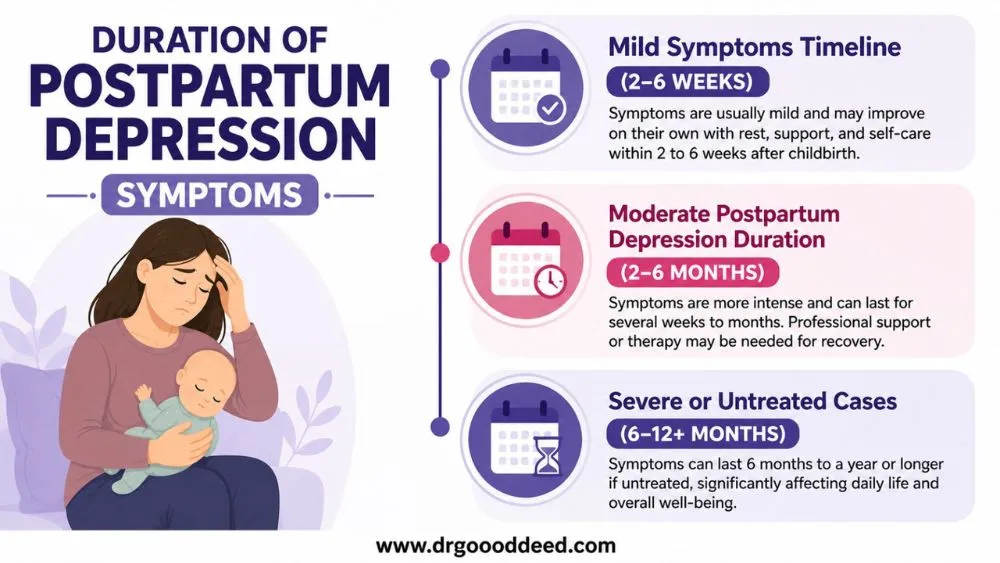
The duration of postpartum depression symptoms varies widely by stage. Mild cases can clear in weeks. Moderate cases take months. Severe or untreated cases sometimes last well over a year.
Mild Symptoms Timeline (2–6 Weeks)
Mild PPD includes persistent low mood, low energy, and difficulty bonding with the baby. With early support, consistent rest, and a conversation with a doctor, most mild cases resolve within 2 to 6 weeks. Left alone, even mild symptoms escalate into moderate PPD.
Moderate Postpartum Depression Duration (2–6 Months)
This is the most common category. Moderate PPD includes frequent crying, loss of interest in daily life, anxiety that does not match the situation depression , and sleep disruption beyond what a newborn causes. Without intervention, symptoms persist for 2 to 6 months. With therapy or medication started early, improvement appears within 8 to 12 weeks.
Severe or Untreated Cases (6–12+ Months)
Severe PPD, which includes intrusive thoughts of self-harm or harming the baby, requires immediate clinical care. Research published in JAMA Psychiatry shows that roughly 30% of untreated cases persist beyond 12 months. Some women report symptoms lasting 2 to 3 years when no formal care was ever sought. Postpartum depression at this stage is directly tied to whether a doctor got involved early.
Why Postpartum Depression Lasts Longer Than Expected
Persistent sadness after childbirth duration often surprises families because it does not follow a predictable schedule. Specific biological and social factors extend recovery in ways most people do not anticipate.
Hormonal Imbalance After Childbirth
Estrogen and progesterone drop sharply within 24 to 48 hours of delivery. Both hormones directly affect serotonin, the brain chemical tied to mood. In women who breastfeed, prolactin levels stay elevated and suppress estrogen for weeks or months longer, which can deepen mood disruption.
Sleep Deprivation and Physical Recovery
A 2019 study in Sleep Medicine found that new mothers average 4.5 hours of uninterrupted sleep in the first 6 weeks postpartum. Sleep loss worsens cortisol levels and weakens emotional regulation. The brain cannot recover from depression without adequate sleep.
Lack of Emotional and Social Support
Women without a strong support system take longer to recover. A University of Michigan study found that women who reported feeling isolated after birth took 40% longer to respond to PPD treatment than those with consistent emotional support.
Previous Mental Health History
Women with a history of depression or anxiety have longer recovery timelines, often 6 to 12 months, because their brain’s stress response system is already sensitized. A treating doctor must know this history before choosing a treatment plan.
Average Recovery Time for Postpartum Depression
The average recovery time for postpartum depression with treatment is 4 to 6 months. Without treatment, the condition extends to 12 months or more. Recovery speed depends almost entirely on how early treatment starts, not just how severe symptoms were at their worst. This is the key fact most competing articles miss.
- Therapy alone: Noticeable improvement within 8 to 12 weeks of starting CBT
- Medication alone: Symptom reduction begins within 4 to 6 weeks on an SSRI
- Combined treatment: Fastest recovery, often visible within 6 to 8 weeks
A woman with severe PPD who starts treatment immediately can recover faster than a woman with mild PPD who waits 3 months before seeking help.
Therapy for Postpartum Depression Recovery
Therapy for recovering from postpartum depression is effective, and the research supports it clearly. Cognitive Behavioral Therapy (CBT) is the most studied and most effective non-medication approach.
Cognitive Behavioral Therapy (CBT) Timeline
CBT typically runs for 12 to 16 weekly sessions. Most women report meaningful symptom reduction by week 8. A 2020 meta-analysis in Psychological Medicine confirmed that CBT reduced PPD symptoms by 50% in 70% of participants within 12 weeks. It targets the thought patterns that keep depression going, not just the mood itself.
Counseling and Support Group Impact
Peer support groups, including those run by Postpartum Support International, shorten recovery time for moderate PPD by reducing isolation. Isolation is a documented driver of extended depressive episodes. Group therapy addresses it fast. Therapy for postpartum depression recovery in a group setting also reduces the stigma that stops many women from seeking care in the first place.
Lifestyle Interventions
Sleep, even in 2 to 3-hour blocks, directly shortens the duration of postpartum depression symptoms. Protein-rich meals stabilize blood sugar and reduce cortisol spikes. A simple daily routine, even just waking and eating at consistent times, helps the brain rebuild predictability after the chaos of early parenthood.
Medication for Postpartum Depression Duration
Medication for postpartum depression duration follows a predictable pattern once the right drug is identified. Most doctors start with SSRIs because they are well-studied in postpartum women.
When Medication Is Needed
Medication is recommended when symptoms persist beyond 2 weeks, interfere with basic daily function, or include thoughts of harm. Therapy alone is too slow in severe cases.
How Long Antidepressants Take to Work
SSRIs like sertraline (Zoloft) and paroxetine typically take 4 to 6 weeks to produce noticeable mood improvement. The first 2 weeks often feel unchanged. Some women feel slightly worse before improving as the brain adjusts. This is temporary.
Typical Duration of Treatment
Most psychiatrists recommend staying on medication for 6 to 12 months after symptoms resolve, not just until symptoms disappear. Stopping too early is the main reason PPD returns. The average recovery time for postpartum depression extends significantly when medication is stopped prematurely.
Safety During Breastfeeding
Sertraline and paroxetine have the strongest safety data for breastfeeding mothers. Both pass into breast milk in very small amounts. The American Academy of Pediatrics considers sertraline compatible with breastfeeding. Always confirm with the prescribing doctor before starting or stopping any medication.
What Delays Recovery (Critical Mistakes)
Knowing depression lasts is useful. Knowing what stretches that timeline is more useful.
- Waiting for symptoms to pass alone: Untreated PPD resolves spontaneously in fewer than 20% of cases
- Stopping medication at first sign of improvement: Relapse rates jump to 50% when SSRIs are stopped before 6 months
- Avoiding therapy: CBT reduces structural negative thought patterns, not just daily mood. Skipping it slows recovery
- Isolating from family or friends: Loneliness raises cortisol directly, extending depressive episodes
- Confusing PPD with baby blues: Baby blues last a maximum of 2 weeks. Symptoms beyond that point are PPD, not exhaustion
Why Duration Matters for Long-Term Health
Postpartum depression lasts affects more than the mother’s wellbeing. Extended, untreated PPD has documented downstream consequences that most articles do not mention.
- Infants of mothers with untreated PPD beyond 6 months show measurable language development delays at 18 months (Cambridge Institute of Psychiatry, 2018)
- Women with PPD lasting over 12 months have a 35% higher chance of major depressive disorder within 5 years
- Partners of women with extended PPD develop depression at a rate 3x higher than the general population
- Future pregnancies carry a 50% recurrence risk for women who had a previous untreated episode
Treatment lowers all of these downstream risks.
FAQs
How long does postpartum depression last without treatment?
In 30% of cases of postpartum depression, it lasts over 12 months. Some women report symptoms for 2 to 3 years. Spontaneous full recovery without any support happens in fewer than 1 in 5 cases. Early intervention cuts that timeline by more than half.
What is the average recovery time for postpartum depression?
The average recovery time for postpartum depression with treatment is 4 to 6 months. With combined therapy and medication started within the first 8 weeks, significant improvement appears within 6 to 8 weeks. Without treatment, the average extends to 12 months or longer.
Can postpartum depression last for years?
Yes. Without treatment, PPD can persist for 2 to 3 years. Roughly 20% of untreated cases reach the 2-year mark. When PPD persists beyond 12 months postpartum, it is clinically reclassified as major depressive disorder.
When should I seek help for postpartum depression?
If symptoms persist beyond 2 weeks after birth, see a doctor immediately. Seek same-day care if you have thoughts of harming yourself or your baby, or if you are unable to care for the baby at all.
Does therapy shorten postpartum depression duration?
Yes. CBT reduces the duration of postpartum depression symptoms by an average of 40% compared to no treatment. Women who start therapy within the first 8 weeks of symptom onset recover significantly faster than those who wait 3 or more months.
How long does medication for postpartum depression take to work?
Medication for postpartum depression duration of effect begins at 4 to 6 weeks. Sertraline shows measurable mood improvement by week 4 in most patients. Full stabilization typically takes 8 to 12 weeks.
Is persistent sadness after childbirth normal?
Persistent sadness after childbirth duration beyond 2 weeks is not normal baby blues. Sadness lasting more than 14 days, paired with low energy or bonding difficulty, meets PPD diagnostic criteria and requires medical evaluation.
Can postpartum depression go away on its own?
In fewer than 20% of cases, yes. For the other 80%, symptoms either persist or worsen without treatment. Waiting it out is a documented risk factor for long-term depression.
What are the signs postpartum depression is getting worse?
Worsening PPD shows intrusive thoughts of harm, complete emotional detachment from the baby, inability to sleep even when the baby sleeps, and severe anxiety that prevents leaving the house. Any one of these requires same-day clinical attention.
Does breastfeeding affect postpartum depression duration?
Yes. Breastfeeding suppresses estrogen, which can worsen mood in women already experiencing PPD. Successful breastfeeding also releases oxytocin, which has a calming effect. Women with PPD who struggle with breastfeeding should know that switching to formula does not worsen recovery outcomes.