
Natural remedies for depression are not backup options. Many are clinically validated. Depression affects roughly 21 million American adults every year, making it one of the most common mental health conditions in the country.
While medication helps millions, research confirms that lifestyle-based interventions, dietary changes, and targeted supplements can significantly reduce symptoms, sometimes matching the effects of low-dose antidepressants for mild to moderate cases.
Home Remedies for Depression Relief
Home remedies for depression relief work because they directly influence how your brain regulates mood. Serotonin, dopamine, and norepinephrine (your brain’s mood chemicals) respond to behavior, sleep, light, and social contact. These are not lifestyle extras. They are inputs your brain requires to function properly.
Structured Daily Routine
Depression disrupts your internal sense of order. Everything feels pointless. A fixed schedule counteracts this by giving your brain external anchors it can predict and follow.
- Wake at the same time every day, regardless of how you feel.
- Plan one small, completable task each morning. Completion triggers dopamine release.
- Eat at consistent times. Irregular eating destabilizes blood sugar, which worsens mood swings.
People with depression who follow structured daily routines report lower symptom severity than those without consistent schedules. The reason is neurological: predictable behavior patterns reduce the burden on prefrontal cortex function (the brain region responsible for decision-making and emotional control), which is already weakened in depression.
Sleep Regulation and Consistency
Sleep and depression have a bidirectional relationship. Poor sleep worsens depression. Depression worsens sleep. Breaking this cycle requires fixing your sleep schedule first.
- No screens 60 minutes before bed. Blue light suppresses melatonin (the sleep hormone).
- Keep room temperature between 65 and 68°F. The brain needs to cool slightly to initiate deep sleep.
- Maintain the same bedtime and wake time on weekends. Even a 90-minute difference resets your body clock negatively.
Oversleeping is also a problem. Depression often causes sleeping 10 to 12 hours, which further fragments sleep architecture and reduces the quality of REM sleep, where emotional processing happens.
Reducing Isolation and Staying Socially Active
Withdrawal is depression’s most effective trap. The less you connect, the worse you feel. The worse you feel, the less you want to connect. Social interaction releases oxytocin (the bonding hormone) and directly suppresses cortisol (the stress hormone).
- One real conversation per day, even by phone, measurably affects mood.
- Joining group activities, a fitness class, a local volunteer program, or a weekly hobby group, adds structure and connection simultaneously.
- Volunteering specifically shows antidepressant effects in adults with mild to moderate depression, supported by multiple observational studies.
One consistent relationship matters more than a wide social circle.
Mindfulness and Stress Control
Mindfulness-Based Cognitive Therapy (MBCT) is included in clinical guidelines for preventing depression relapse (when depression returns after getting better). You do not need a therapist to start. Ten minutes of focused breathing daily reduces activity in the amygdala (your brain’s stress-response center).
- Insight Timer and Headspace both offer structured beginner programs.
- Writing in a journal for 5 to 10 minutes daily processes emotions without rumination (the mental loop of overthinking negative thoughts).
- Body scan exercises, paying attention to physical tension from head to foot, reduce the physical grip depression has on the body.
Foods That Help With Depression
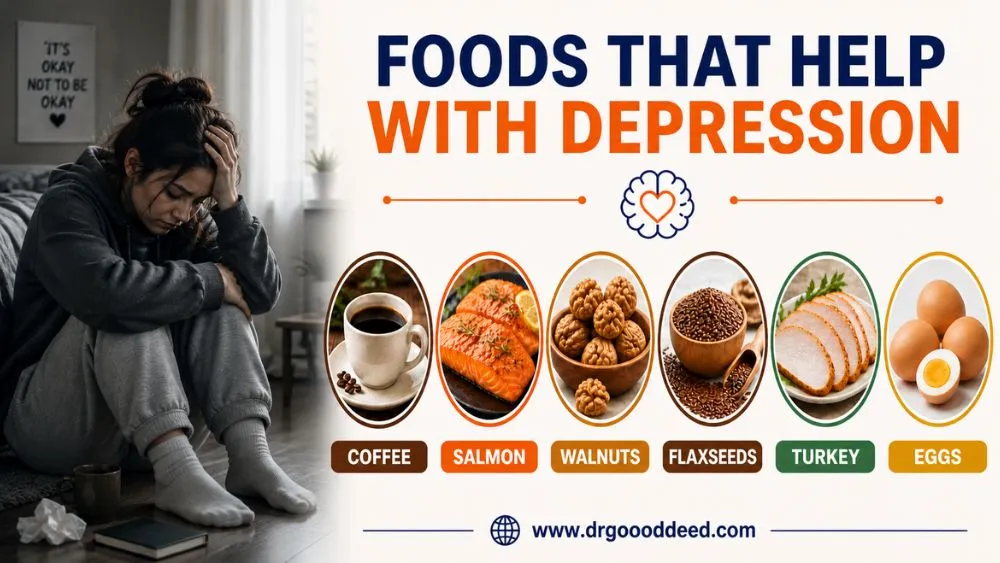
Foods that help with depression directly shape brain chemistry through the gut-brain axis, a two-way communication network linking your digestive system to your brain. About 90% of your body’s serotonin is produced in the gut. What you eat determines how well that system functions.
Omega-3 Rich Foods (Fish, Walnuts, Flaxseeds)
Omega-3 fatty acids build and repair brain cell membranes. They also reduce neuroinflammation (inflammation inside the brain), which research increasingly links to depression. Low omega-3 levels appear consistently in people diagnosed with major depressive disorder.
Eat these at least twice a week:
- Fatty fish: salmon, sardines, mackerel
- Walnuts: a small handful daily
- Flaxseeds and chia seeds added to oatmeal or smoothies
Complex Carbohydrates and Stable Energy
Refined sugar creates blood glucose spikes followed by crashes. Those crashes worsen irritability, fatigue, and low mood. Complex carbohydrates digest slowly and deliver steady glucose to the brain.
Reliable sources: oats, brown rice, lentils, sweet potatoes, quinoa.
Replacing white bread and packaged snacks with these foods stabilizes energy across the day and reduces afternoon mood dips.
Protein and Amino Acids (Serotonin Support)
Serotonin is synthesized from tryptophan, an amino acid found in protein-rich foods. Without consistent tryptophan intake, the brain cannot maintain serotonin production.
High-tryptophan foods: turkey, eggs, tofu, pumpkin seeds, chickpeas, cheese.
Spreading protein across three meals rather than eating one large portion keeps tryptophan levels stable throughout the day.
Gut Health and Probiotics
A disrupted gut microbiome (the community of bacteria in your digestive system) reduces serotonin production and increases inflammation. Fermented foods restore bacterial balance and improve gut lining integrity.
Add regularly:
- Yogurt with live active cultures
- Kefir
- Kimchi or sauerkraut
- Garlic, bananas, and onions as prebiotics (food for beneficial gut bacteria)
People with higher regular intake of fermented foods show lower rates of depression in large population-level studies across multiple countries.
Supplements for Depression Natural Support
Supplements for depression natural support are most useful when they correct a documented deficiency or fill a gap your diet cannot cover. They work best alongside dietary changes and professional care, not as standalone treatments. Consult a doctor before starting any supplement, especially if you take prescribed medication.
Omega-3 Fatty Acids
EPA (eicosapentaenoic acid) is the omega-3 form with the strongest antidepressant evidence. Formulations containing at least 60% EPA show consistent mood benefits across clinical trials. Standard fish oil capsules vary widely in EPA content, so check the label.
Vitamin D (Sunlight Deficiency Link)
Vitamin D receptors are distributed throughout brain regions that regulate mood, including the hippocampus and prefrontal cortex. Deficiency is significantly more common in people with depression. Office workers, people in low-sunlight states, and individuals with darker skin tones who live in northern climates face the highest deficiency risk. Dosage varies based on blood test results, so always test before supplementing.
Magnesium and Stress Regulation
Magnesium regulates the hypothalamic-pituitary-adrenal axis (the system controlling your stress response). Deficiency increases anxiety and depressive symptoms. Processed food diets strip magnesium out regularly.
Food sources: dark leafy greens, dark chocolate, almonds, pumpkin seeds.
Among supplement forms, magnesium glycinate absorbs well and causes the least digestive discomfort.
B-Complex Vitamins
B6, folate (B9), and B12 are required to produce serotonin and dopamine. Low folate appears in a significant percentage of people with clinical depression. B12 deficiency, especially common in people over 50 and in vegetarians, produces fatigue, cognitive fog, and mood changes that closely mirror depression. A combined B-complex supplement covers all three.
Note: Evidence strength varies. Omega-3 and vitamin D have the most robust data. Magnesium and B-complex show strong mechanistic reasoning with growing clinical support.
Exercise and Sunlight for Depression
Exercise and sunlight for depression are among the most evidence-supported natural remedies for depression available. For mild to moderate depression, consistent aerobic exercise performs comparably to antidepressant medication in several head-to-head trials.
How Exercise Improves Mood (Endorphins + Brain Plasticity)
Exercise increases BDNF (Brain-Derived Neurotrophic Factor), a protein that promotes new brain cell growth. Depression shrinks the hippocampus (the brain region managing memory and emotion). Exercise reverses that shrinkage.
- Aerobic exercise, running, cycling, swimming, produces the strongest antidepressant effect.
- 30 minutes of brisk walking, three to five days a week, delivers significant symptom reduction within 2 to 4 weeks.
- Resistance training also shows consistent benefit, particularly for older adults and people with anxiety alongside depression.
Role of Sunlight in Serotonin Production
Sunlight absorbed through the retinas triggers serotonin release independently of vitamin D production. Morning light also resets the circadian rhythm (your internal 24-hour body clock), which governs sleep quality, cortisol timing, and mood stability throughout the day.
Minimum Effective Exposure (Practical Guidance)
- 20 to 30 minutes of outdoor morning light is sufficient.
- Overcast days still work. Cloud cover does not block the light frequencies your retinas respond to.
- Light therapy boxes rated at 10,000 lux replicate this effect for people in low-sunlight regions and are a standard recommendation for seasonal depression (depression triggered by winter months).
Holistic Approaches to Depression Treatment
A natural treatment for depression can address body, mind, and environment together. No single natural remedy for depression fixes everything. The most effective plans layer multiple strategies simultaneously.
Core elements of a holistic plan:
- Cognitive Behavioral Therapy (CBT): The most evidence-backed non-medication treatment for depression. It restructures thought patterns that sustain depressive cycles.
- Yoga and breathwork: Both lower cortisol and improve sleep quality. Breathwork (controlled breathing techniques like diaphragmatic breathing) activates the parasympathetic nervous system (the “rest and digest” state), countering the chronic stress response depression generates.
- Acupuncture: Evidence is limited but growing. Some trials show symptom reduction in mild depression. It is best treated as a supportive tool, not a primary treatment.
- Alcohol reduction: Alcohol is a central nervous system depressant. Regular use worsens depressive episodes over time, even in small amounts.
- Community and purpose: Loneliness is one of the strongest predictors of depressive relapse. Regular participation in group activities (a church, a team sport, a class) provides consistent social anchoring.
Holistic approaches to depression treatment work best when built into a sustainable daily structure rather than added sporadically. Combined with professional support, these strategies form the strongest possible foundation for recovery.
FAQs
What Are the Best Natural Remedies for Depression?
Natural remedies for depression with the strongest clinical evidence: aerobic exercise (30 minutes, 4 days per week), high-EPA omega-3 supplementation, morning sunlight exposure, consistent sleep schedules, and fermented foods. CBT therapy combined with these lifestyle strategies outperforms any single remedy alone.
Do Home Remedies for Depression Relief Actually Work?
Yes. Natural depression relief can involve structured sleep, social connection, and exercise that produce measurable neurological changes. Structured sleep, social connection, and exercise regulate serotonin, dopamine, and cortisol directly. They work well for mild to moderate depression. Severe depression requires professional treatment alongside these habits.
What Foods Help Improve Depression Symptoms?
Salmon, eggs, walnuts, fermented yogurt, and leafy greens are the most impactful. Foods that help with depression supply omega-3s, tryptophan, folate, and probiotics: the exact nutrients your brain uses to produce serotonin and manage inflammation.
Are Supplements Effective for Depression Natural Support?
Supplements for depression natural support vary in evidence strength. High-EPA fish oil and vitamin D have the most consistent clinical data. B-complex and magnesium address common deficiencies that worsen symptoms. Test blood levels before supplementing, and always inform your doctor.
How Does Exercise and Sunlight Help Depression?
Exercise and sunlight for depression target different mechanisms. Exercise raises BDNF and endorphins. Sunlight triggers serotonin release and resets the circadian rhythm. Combining both (a 30-minute outdoor walk each morning) addresses four separate biological pathways simultaneously.
Can Holistic Approaches Treat Depression Completely?
Holistic approaches to depression treatment resolve mild depression fully in many people. For moderate to severe cases, they accelerate recovery when paired with therapy or medication. Full remission through lifestyle changes alone is possible, but the timeline is longer and outcomes are less predictable.
How Long Do Natural Remedies Take to Work?
Exercise produces mood changes within 2 to 4 weeks. Dietary improvements and natural remedies for depression like omega-3 and vitamin D supplementation typically take 6 to 12 weeks. Mindfulness and sleep changes show results within 3 to 6 weeks of consistent daily practice.
When Should You Seek Medical Help for Depression?
Seek help immediately if you experience thoughts of self-harm, cannot complete basic daily tasks, or symptoms persist beyond 2 weeks. Natural remedies for depression do not replace emergency care or professional psychiatric evaluation.
Are Natural Remedies Safe for Everyone?
Lifestyle-based natural remedies for depression are safe for most people. St. John’s Wort (an herbal supplement) interacts with antidepressants, birth control, and blood thinners. Any supplement should be cleared by a doctor before starting if you take prescription medication.
Can Depression Go Away Without Medication?
Yes, for mild to moderate cases. Natural solutions for depression can include therapy, consistent exercise, dietary changes, and strong social support. Severe or chronic depression responds faster and more completely when medication is part of the plan alongside these natural remedies for depression.
This article is for informational purposes only and does not substitute professional medical advice, diagnosis, or treatment. Always consult a licensed healthcare provider about your symptoms.