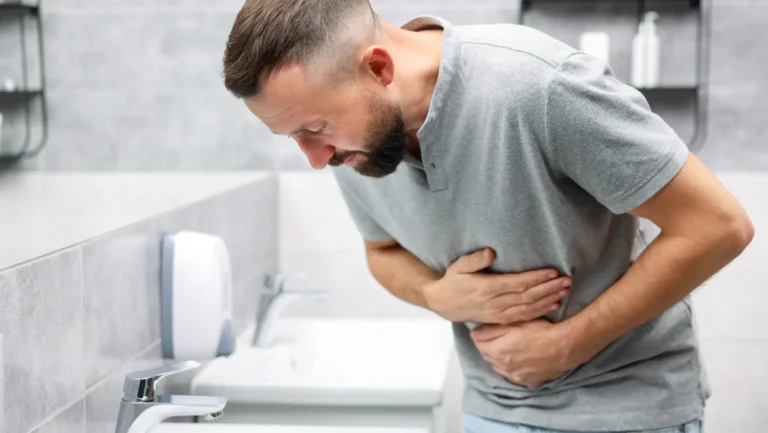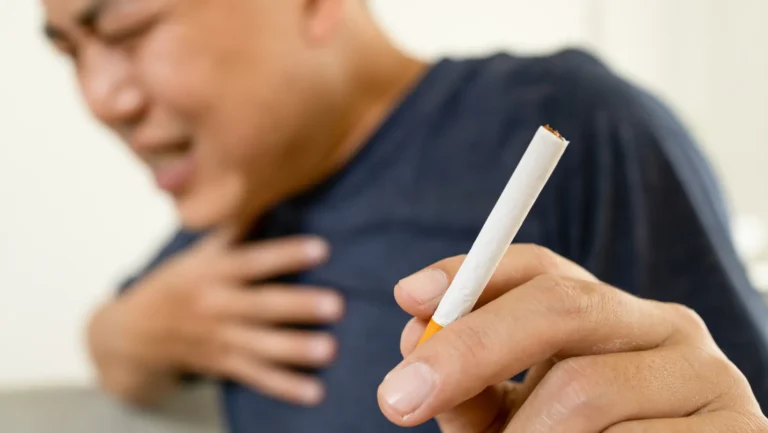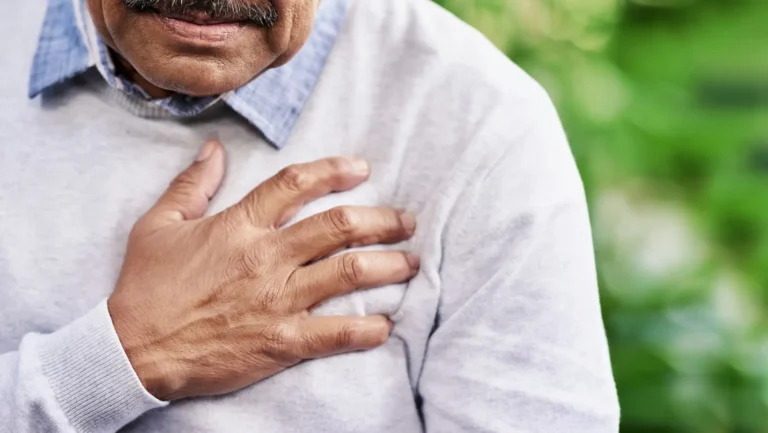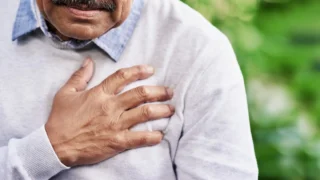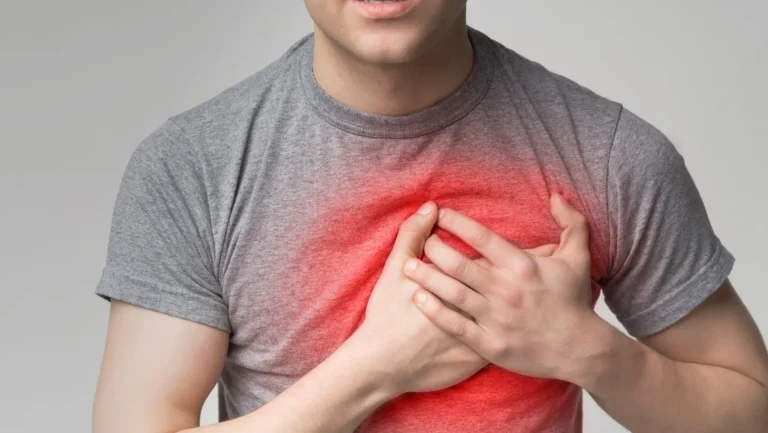

Anxiety can cause chest pain, and it happens more often than most people realize. Anxiety-related chest pain accounts for a significant portion of chest pain visits to emergency rooms in the United States each year, with studies showing that up to 30% of patients presenting with chest pain have a psychiatric cause, most commonly panic disorder or generalized anxiety.
The pain is physically real, not imagined. It comes from measurable physiological changes that anxiety triggers in the body.
How Anxiety Affects Chest Discomfort
How anxiety affects chest discomfort starts with your brain’s threat response system. When anxiety activates, your brain signals the adrenal glands (small glands sitting above your kidneys) to release adrenaline (also called epinephrine). That chemical flood prepares the body for danger, whether the danger is real or not.
Stress Response and Adrenaline Surge
Adrenaline causes rapid changes throughout the body in seconds. Heart rate climbs. Blood pressure rises. Breathing becomes faster and shallower. Blood redirects away from the digestive system toward muscles. All of this happens automatically, without your conscious control.
The chest is directly in the path of these changes. The heart beats harder. The lungs work faster. The muscles surrounding the chest wall tighten in preparation for physical action that never comes.
Muscle Tightening in the Chest Wall
This is the most overlooked mechanism. The intercostal muscles (muscles between your ribs) and the pectoralis muscles (chest muscles) contract during anxiety. Sustained muscle contraction produces pain. It feels like tightness, pressure, or a dull ache. In prolonged anxiety states, this muscle tension persists for hours and sometimes days, producing lingering chest soreness that confuses many people into fearing cardiac disease.
Increased Heart Rate and Breathing Changes
A racing heartbeat (called tachycardia, meaning heart rate above 100 beats per minute) adds to chest discomfort because you become aware of your own heartbeat. This awareness then amplifies anxiety, which drives the heart rate higher. Breathing becomes rapid and shallow, which shifts blood gas chemistry and contributes further to physical symptoms.
Chest Pressure and Anxiety Attack
Chest pressure and anxiety attack symptoms often arrive together, suddenly, and with intensity that feels life-threatening. This is why panic attacks frequently result in emergency room visits.
Sharp, Stabbing, or Tight Chest Pain
Anxiety-related chest pain presents in multiple ways. Some people describe sharp stabbing sensations. Others describe a squeezing tightness. Some feel a dull, heavy pressure. The variation depends on which physical mechanism dominates: muscle tension produces more of a dull ache, while hyperventilation (rapid breathing) tends to produce sharper, more localized sensations.
Pain Localized vs Spreading
Anxiety chest pain stays localized most of the time. It sits in the center of the chest or slightly to the left. It rarely spreads to the jaw or down the left arm in the way cardiac pain classically does. This localization is one of the clearest distinguishing features.
Sudden Onset During Panic Episodes
Chest pressure and anxiety attack episodes share a defining feature: they peak within 10 minutes of onset. A panic attack, by clinical definition, reaches maximum intensity within 10 minutes. This rapid peak-and-decline pattern differs from a heart attack, where pain builds steadily and does not resolve without medical intervention.
Hyperventilation and Chest Discomfort
Hyperventilation and chest discomfort have a direct biochemical connection that most people miss. Hyperventilation means breathing too fast, which blows off carbon dioxide (CO2) from the blood faster than the body produces it.
Rapid Breathing Reduces Oxygen Balance
Low blood CO2 causes blood vessels to constrict (narrow), including the ones supplying the brain and heart. This produces chest tightness, tingling in the fingers and lips, lightheadedness, and a feeling of not getting enough air, even though oxygen levels in the blood are actually normal or high.
Leads to Chest Tightness and Dizziness
Hyperventilation and chest discomfort together create a physical experience that mimics a heart attack almost exactly. The chest tightens. Dizziness sets in. The heart races. The hands and feet may feel numb. Without understanding what is happening, these sensations escalate fear dramatically.
Creates a Cycle of Panic and Worsening Pain
Fear of the physical symptoms causes more anxiety. More anxiety drives faster breathing. Faster breathing intensifies symptoms. This cycle can sustain a panic attack for 20 to 30 minutes without any external stressor remaining. Breaking the breathing pattern is the most direct way to interrupt this cycle.
Anxiety Chest Pain vs Heart Attack
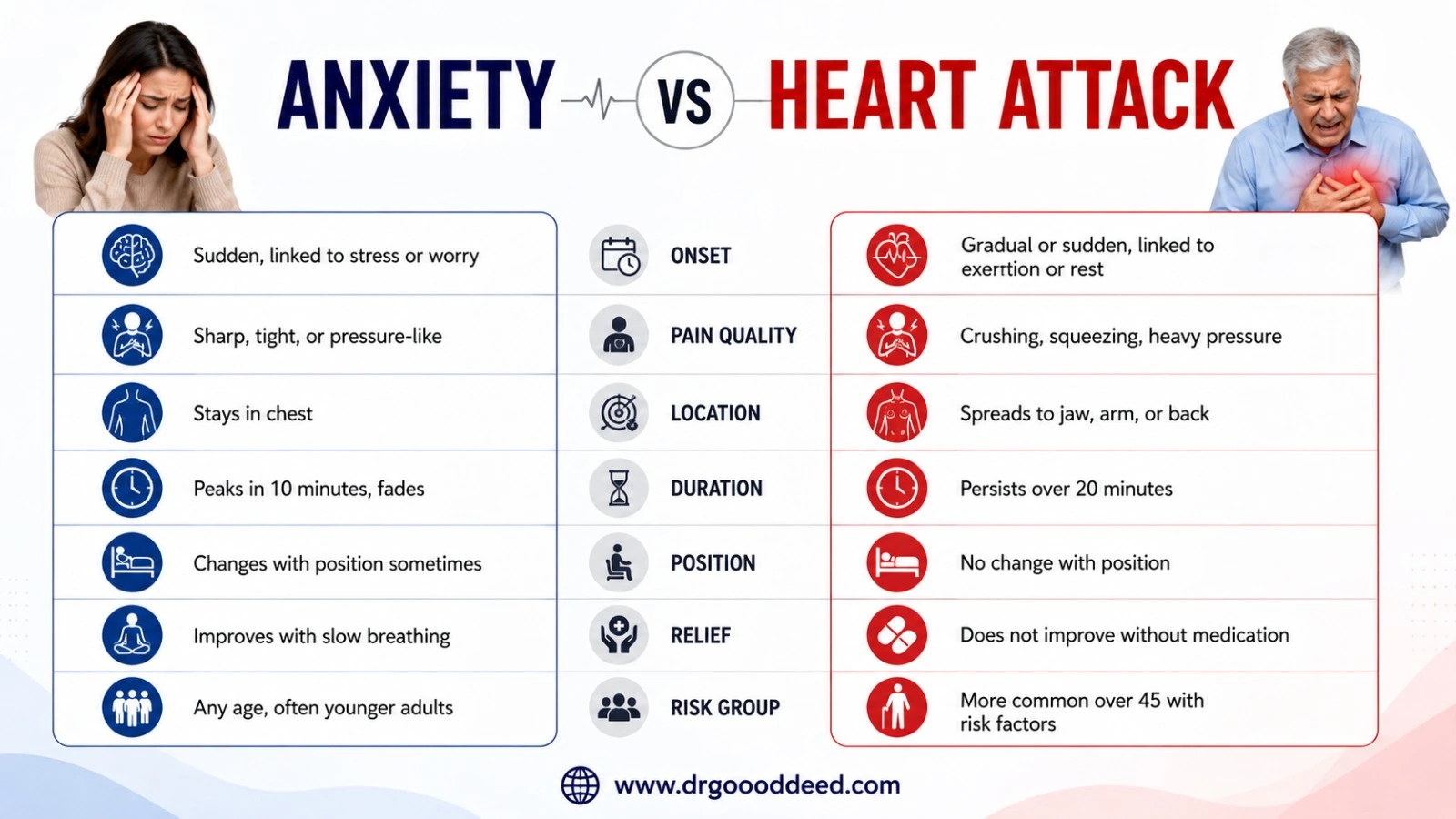
Anxiety can cause chest pain intense enough to be mistaken for a heart attack. But several key differences help tell them apart.
| Feature | Anxiety Chest Pain | Heart Attack |
| Onset | Sudden, linked to stress or worry | Gradual or sudden, linked to exertion or rest |
| Pain type | Sharp, tight, or pressure-like | Crushing, squeezing, heavy pressure |
| Radiation | Stays in chest | Spreads to jaw, arm, or back |
| Duration | Peaks in 10 minutes, fades | Persists over 20 minutes |
| Position effect | Changes with position sometimes | No change with position |
| Relief | Improves with slow breathing | Does not improve without medication |
| Age/risk factor | Any age, often younger adults | More common over 45 with risk factors |
Duration and Pattern of Pain
Anxiety chest pain peaks and then fades as the panic episode subsides. Heart attack pain builds, stays, and does not resolve. A key clinical rule: if chest pain resolves completely within 20 minutes without medication, cardiac causes become less likely.
Trigger (Stress vs Physical Exertion)
Anxiety chest pain starts during emotional stress, conflict, worry, or for no apparent reason. Cardiac chest pain, specifically angina (reduced blood flow to the heart), typically starts during physical exertion and resolves with rest. Pain that appears while sitting quietly and watching television is more likely anxiety-related.
Associated Symptoms Comparison
Both anxiety and heart attacks produce sweating, shortness of breath, and a racing heart. The key difference: anxiety attacks also produce tingling in hands, dizziness, and an overwhelming sense of fear or unreality. Heart attacks more often produce nausea, vomiting, jaw or arm pain, and gray or pale skin color.
Symptoms That Occur With Anxiety Chest Pain
cause of chest pain alongside other symptoms. It almost never arrives alone.
Shortness of Breath
Anxiety disrupts normal breathing rhythm. The chest feels tight, and breathing feels incomplete even when lung function is normal. This is driven by the altered carbon dioxide levels from hyperventilation.
Sweating and Trembling
Adrenaline activates sweat glands and causes fine muscle tremors (shaking). These appear alongside chest pain and sometimes precede it.
Nausea or Dizziness
Adrenaline redirects blood flow away from the stomach, causing nausea. Reduced blood flow to the brain from hyperventilation-induced vessel constriction produces dizziness and sometimes near-fainting.
Fear or Sense of Doom
A clinically recognized symptom of panic attacks is a sudden, intense sense that something catastrophic is about to happen. This is not psychological weakness. It is a documented physiological response driven by the same adrenaline surge causing the physical symptoms.
How to Relieve Anxiety Chest Pain
Relieving anxiety chest pain requires addressing both the physical and mental components simultaneously. Medication is one option, but non-pharmacological techniques work effectively and immediately for most people.
Slow Breathing Techniques
Slowing the breath raises blood CO2 levels back to normal, which reverses hyperventilation-related chest tightness within 2 to 5 minutes. Exhale longer than you inhale. A ratio of 4 seconds in and 6 seconds out works quickly.
Grounding Exercises
The 5-4-3-2-1 technique refocuses attention from internal sensations to the external environment. Name 5 things you see, 4 you can touch, 3 you hear, 2 you smell, and 1 you taste. This interrupts the fear-feedback loop maintaining the panic state.
Muscle Relaxation Methods
Progressive muscle relaxation (tensing and then releasing muscle groups one at a time) reduces the sustained chest wall tension that produces lingering anxiety chest pain. Starting from the feet and working upward takes about 5 minutes.
Reducing Panic Response
Relieving long-term anxiety chest pain involves reducing the baseline anxiety driving these episodes. Cognitive Behavioral Therapy (CBT) is the most evidence-backed treatment for panic disorder and reduces panic attack frequency significantly over 8 to 12 weeks.
Breathing Exercises for Chest Tightness (Step-by-Step)
Breathing exercises for chest tightness are the fastest non-medication intervention available. These work by chemically reversing the effects of hyperventilation within minutes.
4-7-8 Breathing Technique
- Breathe in through your nose for 4 seconds.
- Hold your breath for 7 seconds.
- Breathe out slowly through your mouth for 8 seconds.
- Repeat 4 times.
The extended exhale is the active component. It lowers heart rate and raises CO2, reversing chest tightness quickly.
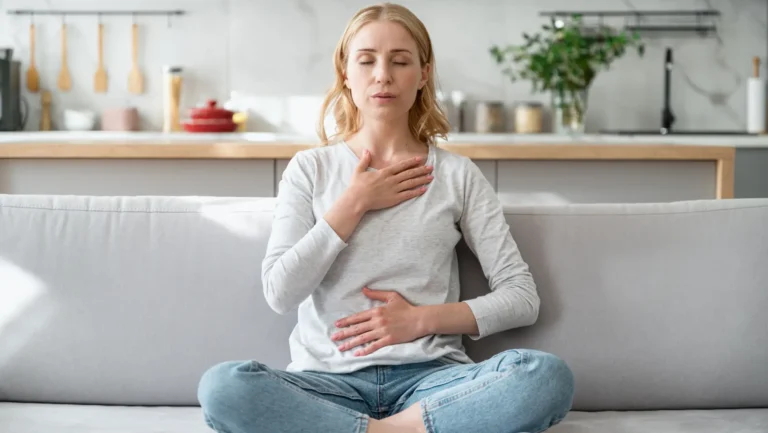
Diaphragmatic Breathing
Place one hand on your chest and one on your belly. Breathe so that only the belly hand rises. Chest breathing during anxiety is shallow and fast. Belly breathing (using the diaphragm, the large muscle under the lungs) is slow and deep, and it activates the parasympathetic nervous system (the “rest and digest” state that counteracts the stress response).
Controlled Exhalation Method
Breathe in normally, then exhale through pursed lips (like blowing through a straw) for 6 to 8 seconds. Breathing exercises for chest tightness work fastest when the focus is on slowing the exhale rather than controlling the inhale.
What Triggers Anxiety Chest Pain
Anxiety can cause chest pain even without a dramatic stressor. Common triggers include:
- Caffeine (coffee, energy drinks, pre-workout supplements): caffeine directly stimulates adrenaline release.
- Sleep deprivation: increases cortisol (the stress hormone) and lowers anxiety threshold.
- Overwork and prolonged mental stress: keeps the nervous system in a low-grade activated state.
- Social conflict or anticipatory worry about future events.
- Certain medications: decongestants and some asthma inhalers contain stimulants that mimic adrenaline.
- Alcohol withdrawal: even mild withdrawal after regular drinking elevates anxiety significantly.
People with a history of panic disorder, generalized anxiety disorder (GAD), or post-traumatic stress disorder (PTSD) experience anxiety chest pain more frequently and with greater intensity.
When to Seek Medical Help
Anxiety can cause chest pain that still requires medical attention, in specific circumstances.
Seek emergency care immediately if:
- Chest pain lasts over 20 minutes without improvement.
- Pain spreads to the left arm, jaw, back, or neck.
- Pain accompanies sweating, vomiting, or gray skin color.
- You have known heart disease, high blood pressure, or diabetes.
- Symptoms appear during or after physical exertion, not at rest.
- First-time chest pain occurs in adults over 40.
Anxiety is a diagnosis of exclusion. That means cardiac and pulmonary causes must be ruled out first, especially in anyone with cardiovascular risk factors. A normal ECG and troponin blood test at 6 hours post-onset reliably excludes a heart attack. Once cardiac causes are cleared, anxiety management becomes the focus.
FAQs
Can Anxiety Cause Chest Pain That Feels Like a Heart Attack?
Yes. Anxiety can cause chest pain that mimics a cardiac event. Panic attacks produce chest pressure, sweating, racing heart, and shortness of breath, all identical to heart attack symptoms. The key difference: anxiety pain peaks within 10 minutes and fades; heart attack pain persists and spreads to the arm or jaw.
How Anxiety Affects Chest Discomfort in the Body?
How anxiety affects chest discomfort involves three simultaneous mechanisms: adrenaline raises heart rate and blood pressure, intercostal muscles contract and tighten the chest wall, and hyperventilation drops blood CO2 levels causing vessel constriction. All three produce pain without any structural damage to the heart.
What Does Chest Pressure During an Anxiety Attack Feel Like?
Chest pressure and anxiety attack sensations are most commonly described as tightness, squeezing, or a weight on the chest. Some report sharp stabbing pain. It usually stays in the center of the chest, peaks within 10 minutes, and fades as breathing normalizes. It does not spread to the jaw or arm.
Can Hyperventilation Cause Chest Discomfort?
Yes. Hyperventilation and chest discomfort are directly linked through blood chemistry. Breathing too fast removes CO2 from the blood, which constricts blood vessels throughout the body. This produces chest tightness, tingling in the hands, dizziness, and a feeling of air hunger, even though blood oxygen levels remain normal.
How to Relieve Anxiety Chest Pain Quickly?
Relieve anxiety chest pain fastest: use the 4-7-8 breathing technique immediately. Inhale for 4 seconds, hold for 7, exhale for 8. This raises CO2 and lowers heart rate within 2 to 4 To relieves. Combine this with the 5-4-3-2-1 grounding technique to interrupt the fear loop simultaneously.
What Breathing Exercises Help Chest Tightness?
Breathing exercises for chest tightness that work fastest: diaphragmatic breathing (belly breathing), 4-7-8 technique, and pursed-lip exhale breathing. Of these, pursed-lip exhale works quickest for acute attacks because it physically slows exhalation and forces CO2 retention within 60 to 90 seconds.
How Long Does Anxiety Chest Pain Last?
Acute panic-related chest pain peaks within 10 minutes and resolves fully within 20 to 30 minutes in most cases. Tension-based chest pain from sustained anxiety (muscle tightness in the chest wall) lasts longer; sometimes 4 to 24 hours, and resolves with muscle relaxation and rest.
When Should Anxiety Chest Pain Be Taken Seriously?
Treat chest pain as an emergency if it lasts over 20 minutes, spreads to the arm or jaw, occurs during exertion, or appears in someone over 40 with high blood pressure or diabetes. Anxiety can cause chest pain in these groups, but cardiac causes must be excluded first.
Can Stress Alone Cause Chest Pain?
Yes. Chronic stress maintains elevated cortisol and adrenaline levels, causing persistent low-grade muscle tension in the chest wall and occasional heart palpitations (noticeable heartbeat awareness). Stress alone produces chest discomfort without any single panic episode occurring.
Is Anxiety Chest Pain Dangerous?
No, anxiety chest pain does not damage the heart or lungs. Anxiety can cause chest pain that harms you physically. The chest pain itself is not dangerous. However, untreated anxiety disorder increases long-term cardiovascular risk through chronic inflammation and sustained high blood pressure. Treating the anxiety treats the root cause.