
An ear infection can cause jaw pain. The ear and jaw share overlapping nerve supply through the trigeminal nerve (cranial nerve V), which means inflammation in the ear frequently sends pain signals into the jaw, teeth, and face. This happens more often than most people expect.
In the U.S., millions of ear infection cases each year come with jaw discomfort that patients mistake for dental problems or TMJ disorders. This guide covers every connection between ear infections and jaw pain, including causes, symptoms, treatment, and when the jaw pain signals something else entirely.
Can Ear Pain Radiate to Jaw?
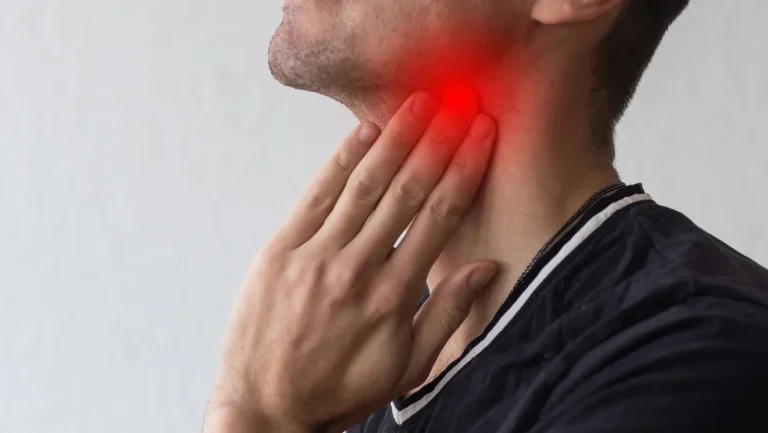
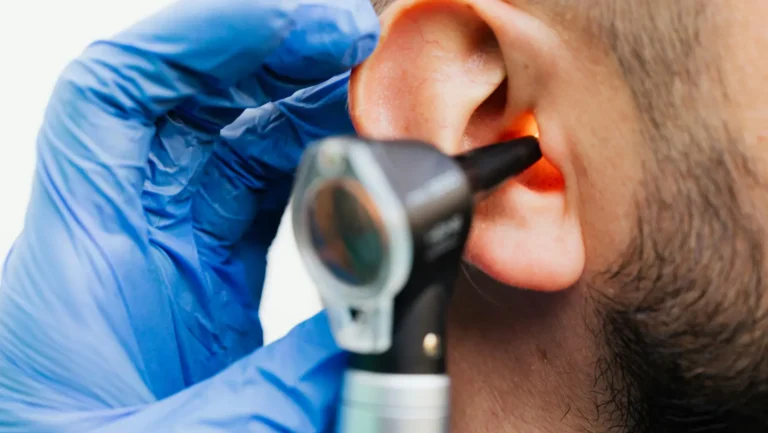
Ear pain can radiate to jaw. The trigeminal nerve branches cover both the ear region and the jaw. When the middle ear becomes inflamed, pain signals travel along these shared nerve pathways and register as jaw pain even when the jaw itself is completely healthy. This nerve-referred pain is well-documented in clinical literature and explains why dentists sometimes spot ear infections first.
Shared Nerve Pathways (Trigeminal Nerve Involvement)
The trigeminal nerve has three branches. The mandibular branch (V3) supplies the lower jaw, teeth, and the area just in front of the ear. The auriculotemporal nerve, a branch of V3, runs directly through the region connecting the ear canal to the temporomandibular joint (TMJ). When an ear infection inflames the nearby tissue, that nerve fires pain into the jaw. That’s not a coincidence; it’s anatomy.
Inflammation Spreading to Surrounding Tissues
Infection in the middle ear creates localized swelling. That swelling puts pressure on nearby soft tissue, including the muscles that control jaw movement. The parotid gland, which sits just in front of the ear, sits close enough that ear inflammation sometimes triggers referred tenderness in that entire region.
Muscle Tension Near the Ear and Jaw
The temporalis muscle and the masseter muscle, both involved in chewing, run near the ear. When the ear hurts, the body instinctively tenses the surrounding muscles. That guarding response causes secondary jaw stiffness and pain even without any jaw pathology. So an ear infection can cause jaw pain through muscle tension alone.
Jaw Pain With Ear Infection Symptoms
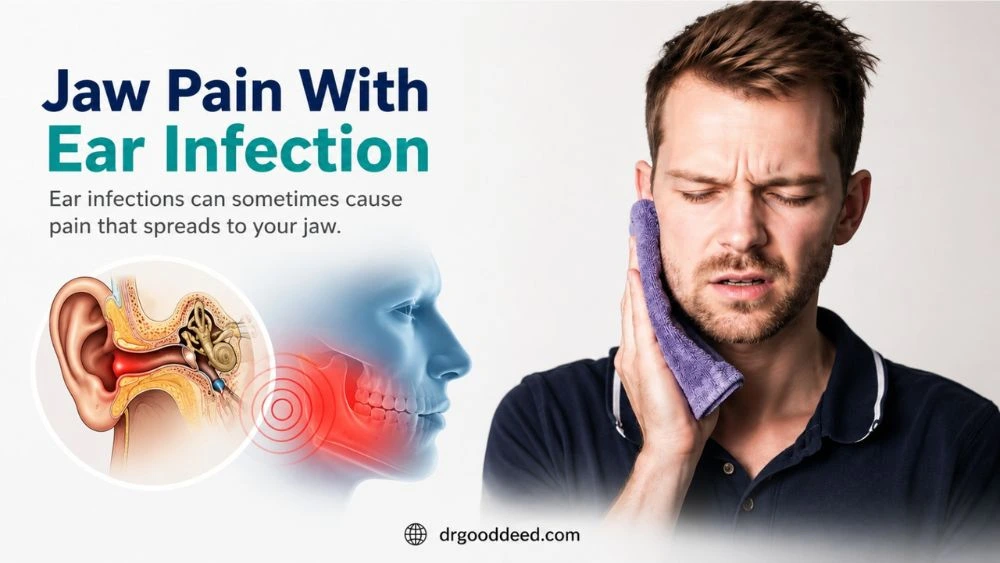
Jaw pain with ear infection symptoms typically appear together and worsen during specific movements like chewing, yawning, or talking. The key is recognizing the combination, not just one symptom alone.
Earache With Jaw Discomfort
The earache comes first in most cases. Jaw pain follows within 12–48 hours as inflammation spreads or muscle guarding sets in. Both sides of the face feel tender when the infection is bilateral (both ears).
Pain While Chewing or Talking
This symptom confuses people into thinking they have a dental problem. But unlike a toothache, the pain from jaw pain with ear infection symptoms doesn’t localize to one tooth. It spreads across the lower jaw and sometimes up toward the temple.
Fullness or Pressure in Ear
This is the most reliable indicator that jaw pain is ear-related and not dental. Fullness or muffled hearing points directly to middle ear involvement. Dental problems do not cause ear pressure.
Mild Swelling Near Ear
Some ear infections cause visible puffiness just in front of or below the ear. This swelling near ear and jaw pain happens when inflammation extends beyond the middle ear into the surrounding tissue. If the swelling is hard, red, or rapidly growing, that requires urgent evaluation because it suggests mastoiditis.
Difficulty Opening Mouth Ear Infection
Difficulty opening mouth ear infection is more common than most online sources acknowledge. Patients describe it as a stiffness or resistance when trying to open wide, especially in the morning or after sleeping.
Jaw Stiffness
The stiffness comes from the masseter and pterygoid muscles tensing up in response to nearby ear pain. These muscles govern how wide the mouth opens. Difficulty opening mouth ear infection patients often report that their maximum mouth opening reduces by 30–50% during peak infection.
Pain With Movement
Opening the mouth wide, yawning, or biting into hard food amplifies the pain. That’s because jaw movement shifts pressure near the temporomandibular joint, which sits directly in front of the ear canal. Any existing ear inflammation makes that movement painful.
Muscle Tightness Due to Inflammation
Inflammation releases cytokines into surrounding tissue. Those cytokines affect muscle fiber contraction. The jaw muscles respond by tightening, and that tightness persists even when the mouth is at rest.
Other Possible Causes of Ear and Jaw Pain
Not every case of ear and jaw pain is an ear infection. Three other conditions produce nearly identical symptoms.
Temporomandibular Joint (TMJ) Disorders
TMJ dysfunction is probably the most common non-infection cause of combined ear and jaw pain in the U.S. The TMJ sits directly in front of the ear canal. When the joint is inflamed or displaced, it produces ear fullness, jaw clicking, pain with chewing, and even mild hearing changes. Unlike ear infections, TMJ disorders rarely cause fever.
Dental Infections
A periapical abscess (infection at the tooth root) in the upper or lower molars radiates pain into the ear and jaw simultaneously. The auriculotemporal nerve connects the jaw to the ear region, so a severe tooth infection mimics jaw pain with ear infection symptoms almost perfectly. A dentist can confirm this with an X-ray.
Sinus Infections
The maxillary sinuses sit directly above the upper teeth and close to the ear. A sinus infection (sinusitis) creates pressure that pushes downward into the upper jaw and radiates toward the ear. Swelling near ear and jaw pain from sinusitis is usually accompanied by nasal congestion, facial pressure, and sometimes a green or yellow nasal discharge.
How to Relieve Jaw Pain From Ear Infection
Relieving jaw pain from ear infection at home focuses on reducing inflammation, easing muscle tension, and supporting the immune response while the infection clears.
Warm Compress
Apply a warm (not hot) cloth or heating pad to the ear and jaw area for 15–20 minutes, three times daily. Heat increases blood flow to the area, which reduces muscle spasm and provides short-term jaw pain with ear infection symptoms relief. Do not apply heat if the skin is red or swollen; that can worsen bacterial infections.
Pain Relievers
Ibuprofen works better than acetaminophen for this type of pain because it targets both pain and inflammation. Standard adult dosing is 400–600 mg every 6–8 hours with food. Acetaminophen is an option if ibuprofen is not tolerated. Neither replaces antibiotics when the infection is bacterial.
Soft Diet to Reduce Strain
Avoid hard foods like raw carrots, nuts, or tough meats during recovery. Chewing hard food recruits the masseter muscle and increases pressure near the TMJ, worsening difficulty opening mouth ear infection symptoms. Soups, mashed potatoes, yogurt, and scrambled eggs are good options for 3–5 days.
Rest and Hydration
Sleep with the head slightly elevated (30 degrees). This reduces fluid pressure in the Eustachian tubes. Drink 8–10 glasses of water daily to thin mucus and support immune function. Dehydration thickens middle ear fluid and slows recovery.
Medical Treatment Options
Home care handles symptoms. Medical treatment addresses the root cause.
Antibiotics (If Bacterial Infection)
Amoxicillin 500 mg three times daily for 7–10 days is the standard first-line antibiotic for bacterial ear infections in adults in the U.S. For penicillin-allergic patients, azithromycin or levofloxacin are common alternatives. An ear infection can cause jaw pain even after antibiotics start for 48–72 hours while inflammation resolves.
Anti-Inflammatory Medications
For significant jaw stiffness and swelling near ear and jaw pain, doctors sometimes prescribe a short course of oral steroids (prednisone) alongside antibiotics. This reduces tissue inflammation faster than ibuprofen alone and speeds up jaw mobility recovery.
Treatment of Underlying Cause
If the jaw pain comes from TMJ, a dentist prescribes a night guard. If it comes from a dental abscess, the tooth needs drainage or extraction. Matching treatment to the actual cause is the only way to get lasting relief. Treating an ear infection when the real problem is a dental abscess keeps both issues unresolved.
When Jaw Pain Is Not From Ear Infection
Three patterns suggest the jaw pain has nothing to do with the ear.
Persistent Jaw Clicking or Locking
A clicking jaw that locks open or closed is a TMJ problem. Ear infections don’t cause mechanical joint clicking. If the click was present before the ear symptoms, TMJ is the primary issue.
Dental Pain or Sensitivity
Pain that spikes when drinking cold water or biting on a specific tooth points to a dental source. An ear infection can cause jaw pain this specific. Ear infection pain is diffuse, not tooth-specific.
Pain Without Ear Symptoms
Jaw pain without any ear fullness, hearing change, or fever is unlikely to be an ear infection. The two conditions almost always appear together.
When to See a Doctor
See a doctor immediately if:
- Jaw pain or ear pain is severe and getting worse each day
- Difficulty opening mouth ear infection symptoms limit mouth opening to less than one finger-width
- Fever rises above 101°F (38.3°C)
- Swelling near ear and jaw pain is hard, red, or rapidly increasing
- Symptoms don’t improve within 3 days of starting antibiotics
- Hearing loss accompanies the jaw pain
FAQs
Can an ear infection cause jaw pain?
Yes. An ear infection can cause jaw pain. The auriculotemporal nerve (a branch of the trigeminal nerve) connects the ear and jaw. Middle ear inflammation activates this nerve, sending pain into the jaw. It’s referred pain, meaning the jaw itself isn’t damaged.
Why is there swelling near ear and jaw pain?
Swelling near ear and jaw pain happens when infection spreads beyond the middle ear into surrounding soft tissue or the parotid gland region. Hard, rapidly growing swelling behind the ear signals mastoiditis, a complication requiring emergency care, not home management.
How to relieve jaw pain from ear infection?
For relieving jaw pain from ear infection: use ibuprofen 400–600 mg every 6–8 hours, apply a warm compress for 15 minutes three times daily, eat soft foods only, and sleep with your head elevated. Symptoms should ease within 48 hours of antibiotics starting.
How to tell if jaw pain is from ear infection or TMJ?
Ear infection jaw pain comes with fever, ear fullness, and hearing changes. TMJ jaw pain comes with a clicking or popping joint, pain that’s worse in the morning, and no fever. If in doubt, both a doctor and a dentist should evaluate.
When should I see a doctor for ear and jaw pain?
See a doctor if pain lasts more than 3 days, fever exceeds 101°F, mouth opening is severely restricted, or swelling appears behind the ear. These signs suggest the infection is spreading beyond the middle ear.
Can sinus infection cause ear and jaw pain?
Yes. Maxillary sinusitis inflames the sinus cavity above the upper teeth and near the ear. That pressure radiates into the upper jaw and ear simultaneously, mimicking jaw pain with ear infection symptoms. Nasal congestion and facial pressure confirm sinus involvement.
How long does ear infection and jaw pain last?
With antibiotics, ear pain improves in 2–3 days. Jaw pain from muscle tension and inflammation takes 5–7 days to fully resolve. Without antibiotics (for confirmed viral infections), both symptoms typically clear in 7–10 days.