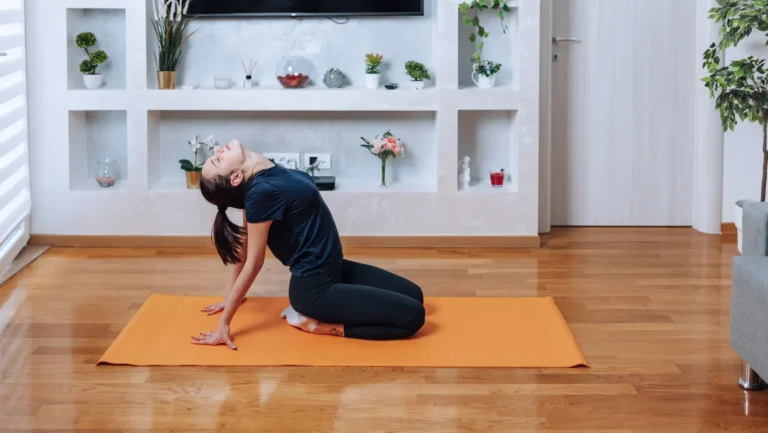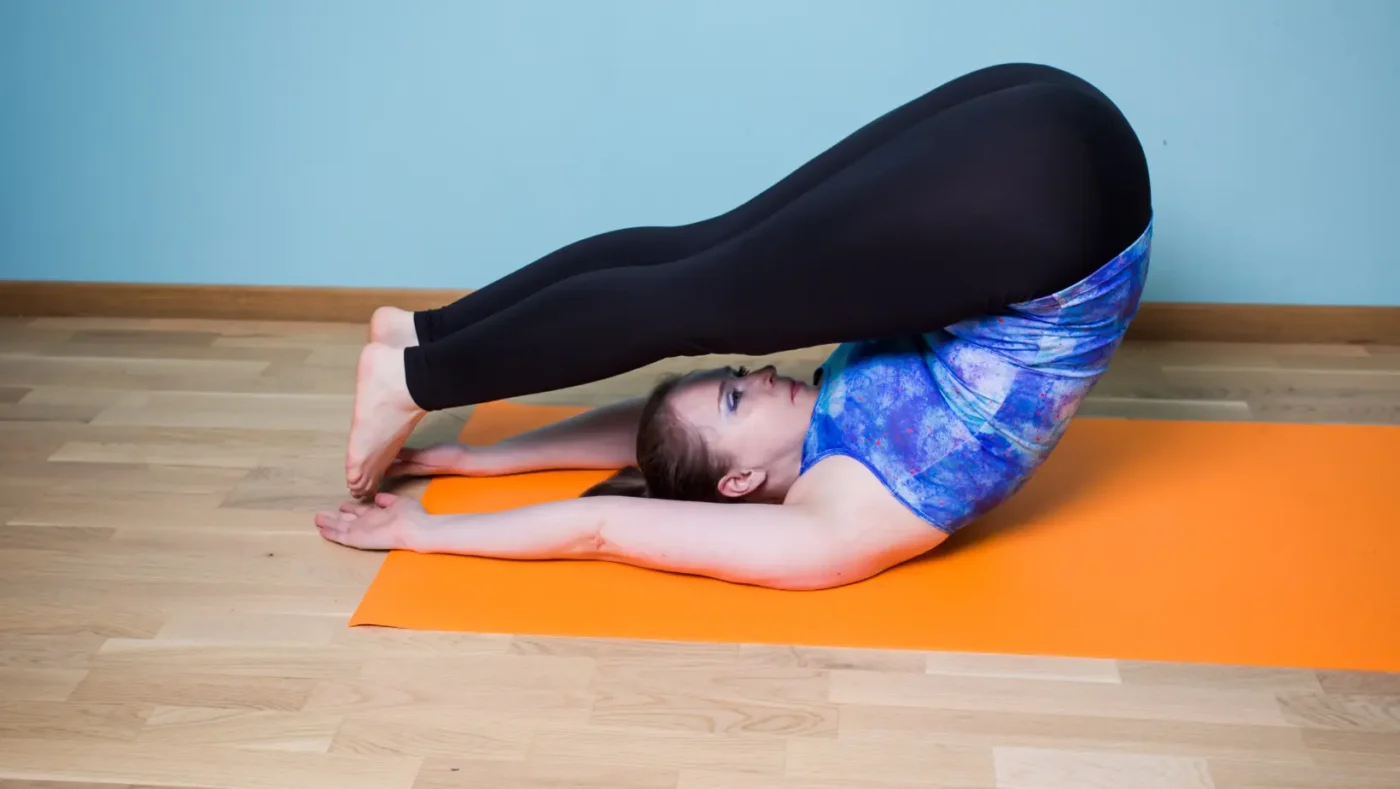

The best yoga poses for back pain work by lengthening compressed spinal muscles, improving vertebral alignment, and increasing blood flow to discs that lack direct blood supply.
The American College of Physicians recommends yoga as a first-line treatment for chronic low back pain, ranking it alongside physical therapy in clinical effectiveness. Back pain affects 80% of Americans at some point in their lives, making it the leading cause of disability in adults under 45.
How Yoga Helps Relieve Back Pain
Yoga for lower back pain relief works through three distinct physical pathways. Muscle lengthening, postural correction, and improved spinal mobility each address a separate cause of back pain. Together, they produce results that pain medication alone cannot replicate.
Stretching Tight Muscles
The most common cause of lower back pain is not structural damage. It is muscle tightness in the hip flexors, hamstrings, and erector spinae (the muscles running alongside the spine). These muscles pull the pelvis out of alignment when shortened. Yoga stretches them to their functional length, reducing the pulling force on the lumbar spine.
Improving Posture and Alignment
Sedentary work shortens the iliopsoas muscle (the primary hip flexor), which tilts the pelvis forward and exaggerates the lumbar curve. This position compresses the posterior facet joints and intervertebral discs. Yoga corrects this tilt by lengthening the hip flexors and activating the glutes and core, which hold the pelvis in a neutral position.
Increasing Spine Mobility and Flexibility
Spinal discs receive nutrition through movement, not blood vessels. Compression and decompression during yoga poses pumps nutrients into disc tissue and flushes out waste products. Restricted movement accelerates disc degeneration. Regular yoga maintains the hydration and nutrient supply that keeps discs healthy and pain-free.
The multifidus muscle, the deep stabilizer of each vertebral segment, atrophies within 24 hours of an acute back pain episode. Yoga activates the multifidus through controlled spinal movements, rebuilding the stabilizer muscle that prevents recurrence. Passive rest does not do this.
Best Yoga Poses for Lower Back Pain Relief
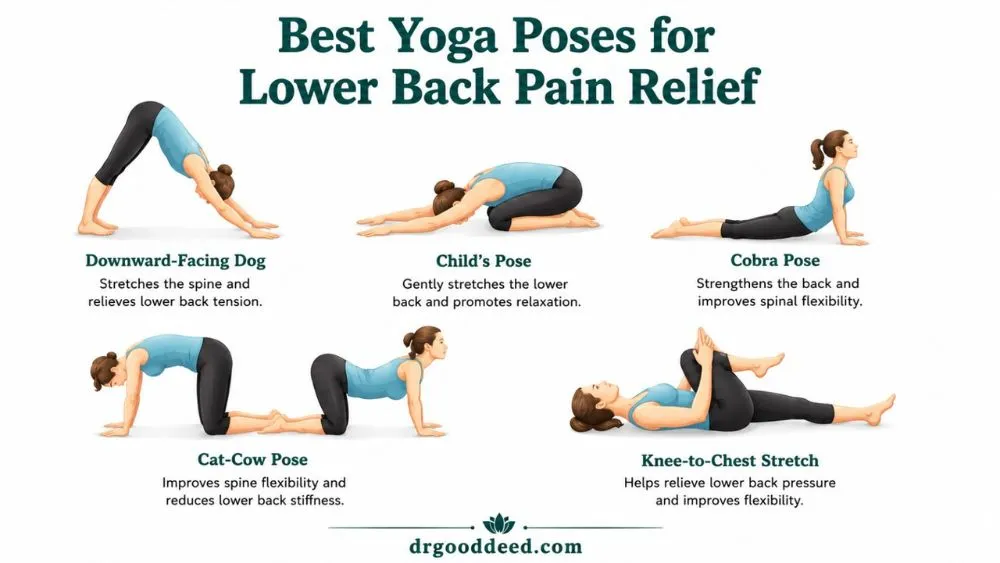
The best yoga poses for back pain target the muscles, joints, and discs most responsible for lower back dysfunction. Each pose below has a specific clinical purpose, not just a general stretching benefit.
Cat-Cow Stretch for Spine Mobility
Start on hands and knees. Inhale, drop the belly, and lift the head and tailbone (Cow). Exhale, round the spine toward the ceiling, and tuck the chin and pelvis (Cat). Repeat 8 to 10 slow cycles.
- Pumps synovial fluid into the facet joints, reducing morning stiffness within 2 minutes
- Activates the multifidus at each spinal level through controlled flexion and extension
- Synchronizes breath with spinal movement, reducing pain perception through vagal activation
Child’s Pose (Balasana)
Kneel, sit back toward your heels, and stretch arms forward on the floor with forehead resting down. Hold for 1 to 3 minutes.
- Decompresses the lumbar spine by creating traction through gravity and hip flexion
- Lengthens the erector spinae, which shortens and stiffens from prolonged sitting
- Reduces intradiscal pressure in the lower lumbar segments more than any standing position
Downward-Facing Dog (Adho Mukha Svanasana)
Start on hands and knees, then lift hips toward the ceiling, forming an inverted V-shape. Press heels toward the floor. Hold for 30 to 60 seconds.
- Decompresses the entire spine by inverting body weight against gravity
- Lengthens the hamstrings, which are the primary drivers of posterior pelvic tilt
- Strengthens the shoulder girdle, which reduces compensatory lower back loading
Cobra Pose (Bhujangasana)
Lie face down. Place hands under shoulders and gently press the chest up, keeping hips on the floor. Hold for 20 to 30 seconds.
- Addresses disc bulges that press posteriorly (the most common direction) by creating anterior spinal extension
- McKenzie physical therapy protocols use this exact movement as their primary disc repositioning technique
- Strengthens the erector spinae in a shortened position, improving active spinal support
Supine Knee-to-Chest Stretch
Lie on your back. Pull one knee toward the chest with both hands. Hold 30 seconds, then switch. Then pull both knees to the chest together for 30 seconds.
- Stretches the piriformis and gluteus muscles, which compress the sciatic nerve when tight
- Reduces lumbar facet joint compression by opening the posterior disc space
- Accessible to anyone, including people in acute pain phases, without loading the spine
Cat-Cow Stretch for Spine Mobility
The cat-cow stretch for spine mobility is the single most clinically supported yoga movement for back pain. Physical therapists and chiropractors assign it as a primary home exercise for a reason.
How the Movement Improves Flexibility
Each Cat-Cow cycle moves the lumbar spine through its full flexion-extension range. This range naturally decreases with age and inactivity. Research from the Spine journal confirms that lumbar range of motion directly correlates with pain levels; people with restricted range report higher chronic pain scores.
Benefits for Spinal Stiffness
Morning stiffness in the spine results from reduced synovial fluid circulation during sleep. The first 5 to 10 minutes after waking are the most critical for joint lubrication. Ten Cat-Cow cycles immediately on waking up back pain measurable spinal stiffness faster than any other single movement.
Proper Breathing Technique During Movement
Inhale during Cow (belly drops). Exhale during Cat (spine rounds). Never hold the breath. The exhale during Cat activates the deep abdominal muscles (transversus abdominis), which support the spine independently of the back muscles. This coordination builds functional core stability with every repetition.
Beginner Yoga Stretches for Back Pain
Beginner yoga stretches for back pain require no prior experience or flexibility. The most effective beginner sequence takes under 10 minutes and addresses every major muscle group contributing to lower back pain.
Gentle Beginner-Friendly Movements
The safest starting sequence:
- Supine Knee-to-Chest: 30 seconds each side
- Supine Spinal Twist: 30 seconds each side (lie on back, drop both knees to one side)
- Cat-Cow: 8 slow cycles
- Child’s Pose: 2 minutes
All four movements occur while lying down or on hands and knees. Zero standing balance required.
Low-Impact Stretching Techniques
Hold each stretch at the point of mild tension, not pain. The stretch reflex activates at pain, causing muscles to tighten in response. Staying just below the pain threshold keeps muscles in passive lengthening mode, where actual tissue changes occur.
Building Flexibility Safely
Flexibility in the hamstrings and hip flexors increases measurably within 3 weeks of daily 10-minute stretching. After 6 weeks, the increase in range becomes structural, reflecting actual changes in connective tissue length. Rushing this process by forcing stretches adds strain without adding speed to the outcome.
Yoga for Tight Lower Back Muscles
Yoga for tight lower back muscles requires targeting the muscles that connect to the lumbar spine, not just the back muscles themselves.
Stretching Hip and Hamstring Muscles
The hamstrings attach to the sitting bones (ischial tuberosities) at the base of the pelvis. When tight, they pull the pelvis into a posterior tilt, flattening the natural lumbar curve and compressing the front of the lumbar discs. Stretching hamstrings through Downward Dog and standing forward bends directly reduces this compressive force.
Releasing Tension in the Lower Back
The quadratus lumborum (QL) is the deepest lower back muscle and the most frequent source of acute lower back pain and spasms. A side-lying stretch (lying on one side and reaching the top arm overhead while the top leg reaches long) targets the QL specifically. Most yoga routines skip this muscle entirely.
Improving Circulation and Mobility
Tight muscles reduce blood flow to their own tissue, slowing repair and increasing pain sensitivity. Yoga poses held for 60 to 90 seconds produce vasodilation (blood vessel widening) in the stretched muscle, increasing nutrient delivery and reducing the chemical irritants that trigger pain signals.
Poor Posture Causing Back Pain: Yoga Solutions
Poor posture causing back pain yoga solutions work by reversing the specific muscular imbalances that desk work creates.
Forward Head and Rounded Shoulder Correction
For every inch the head moves forward from its ideal position (ear over shoulder), the effective weight on the cervical spine increases by 10 pounds. This chain pulls the thoracic spine into kyphosis (rounding), which shifts loading to the lumbar spine. Cobra Pose and Thread-the-Needle (a thoracic rotation stretch) directly counter this pattern.
Strengthening Core and Spinal Muscles
The core is not just the abs. It includes the transversus abdominis, multifidus, pelvic floor, and diaphragm. All four must work together to stabilize the spine during movement. Plank pose (held for 20 to 30 seconds) activates all four simultaneously. This builds the internal support system the spine relies on.
Improving Sitting and Standing Posture
Tadasana (Mountain Pose) teaches correct standing alignment: feet hip-width apart, weight even, pelvis neutral, chest open, crown of head lifting. Practicing Tadasana for 60 seconds multiple times daily retrains the postural muscles to hold this position automatically.
Breathing Techniques That Support Back Pain Relief
Deep Diaphragmatic Breathing
The diaphragm sits directly above the lumbar spine and attaches to the upper lumbar vertebrae. breathing when back pain, the diaphragm does not descend fully, removing its stabilizing effect on the spine. Full diaphragmatic breathing (belly rising on each inhale) stabilizes the lumbar spine with every breath, acting as an internal brace.
Relaxation During Stretching
Exhaling during a stretch reduces the stretch reflex, allowing deeper tissue lengthening. Inhaling while holding a stretch increases muscle guarding. Exhale into every deep stretch and hold for 3 to 5 breath cycles before releasing.
Reducing Muscle Guarding and Tension
Pain causes muscles to contract protectively around an injured area. This guarding reduces mobility and increases compression on already-irritated structures. Slow breathing with extended exhales reduces sympathetic nervous system activity, lowering the guarding response measurably within 3 to 5 minutes.
Common Mistakes to Avoid During Yoga for Back Pain
Overstretching Painful Muscles
Muscle tissue in spasm tears rather than lengthens when forced. Overstretching during an acute pain episode delays healing by 48 to 72 hours compared to gentle movement. Stay at 60 to 70% of maximum stretch during pain flare-ups.
Forcing Flexibility Too Quickly
Connective tissue (fascia, tendons, ligament) adapts to stretching over 6 to 12 weeks. Forcing range of motion beyond current capacity strains these slower-adapting tissues. This produces micro-tears that cause inflammation and worsen back pain rather than relieve it.
Ignoring Alignment and Posture
A forward bend with a rounded spine (instead of hinging at the hips) compresses the lumbar discs rather than decompressing them. The pose becomes harmful rather than helpful. Focus on hinging at the hips with a long, neutral spine during all forward-bending positions.
Daily Yoga Routine for Back Pain Relief
| Session | Poses | Duration | Target |
| Morning | Cat-Cow, Knee-to-Chest, Child’s Pose | 8 to 10 minutes | Stiffness, disc hydration |
| Midday | Tadasana, Cobra, Downward Dog | 5 minutes | Posture reset, disc decompression |
| Evening | Supine Twist, Hamstring stretch, Savasana | 8 to 10 minutes | Muscle release, pain reduction |
Morning Stretches for Stiffness
Do Cat-Cow before getting out of bed. Literally. Lie on your back, bring knees to chest, rock gently side to side for 30 seconds, then move to the floor for Cat-Cow. Morning synovial fluid distribution in the facet joints takes 3 to 5 minutes of gentle movement to complete.
Desk-Worker Mobility Routine
Every 60 minutes of sitting, stand and do 5 Cat-Cow cycles plus one 30-second Cobra. Sitting compresses lumbar discs continuously. Without decompression breaks, intradiscal pressure accumulates and increases pain by afternoon. This two-minute break prevents that accumulation.
Evening Relaxation Stretches
End the day with Supine Spinal Twist (30 seconds per side) and a 90-second hamstring stretch per leg. Then hold Child’s Pose for 2 minutes. This sequence reduces the muscle guarding accumulated through the day and restores resting muscle length before sleep.
FAQs
Which yoga pose gives the fastest relief for lower back stiffness?
Cat-Cow. Eight to ten slow cycles reduces lumbar stiffness within 2 minutes by distributing synovial fluid into the facet joints. It also activates the multifidus at each spinal level. No other single pose addresses both joint lubrication and deep spinal muscle activation simultaneously, making it the fastest-acting option.
Can yoga improve posture-related back pain permanently?
Yes, if practiced consistently for 8 to 12 weeks. Postural muscles (multifidus, transversus abdominis, gluteus medius) rebuild to functional strength in this timeframe. After 12 weeks, they hold corrected alignment automatically without conscious effort. Stopping practice for more than 4 weeks partially reverses the gain.
How often should yoga be practiced for chronic back pain?
Daily practice of 10 to 15 minutes produces better outcomes than 3 longer weekly sessions for chronic back pain specifically. The Annals of Internal Medicine (2017) confirmed that daily yoga matched physical therapy in reducing chronic low back pain at 12 weeks.
Is yoga safer than high-impact exercise for lower back pain?
Yes. High-impact exercise like running increases axial spinal loading with each stride. For people with disc issues or facet joint degeneration, this accelerates structural damage. Yoga is non-impact, increases mobility without compression, and is recommended by the American College of Physicians as first-line treatment.
Can tight hips and hamstrings worsen lower back discomfort?
Yes. Tight hamstrings rotate the pelvis posteriorly, flattening the lumbar curve and shifting disc loading to the anterior vertebral end plates. Tight hip flexors do the opposite, increasing lumbar lordosis. Both patterns overload the discs and facet joints. Stretching both daily is required for lasting back pain relief.
Why does spinal mobility matter for reducing back pain?
Spinal discs have no blood supply. They absorb nutrients through movement-driven compression and decompression. Restricted spinal mobility starves discs of nutrition, accelerating degeneration and increasing pain sensitivity. Daily range-of-motion movements like Cat-Cow maintain disc health by keeping this pump mechanism active.
Can yoga help reduce sitting-related back stiffness?
Yes. Five Cat-Cow cycles plus one 30-second Cobra every 60 minutes of sitting decompresses the lumbar discs and resets postural muscle activation. Research shows intradiscal pressure increases progressively after 45 minutes of sitting. Movement breaks before 60 minutes prevent the pressure accumulation that causes afternoon back stiffness.
What type of breathing helps relax tense back muscles?
Extended exhalation. Exhaling for twice as long as the inhale (4-count in, 8-count out) reduces sympathetic nervous activity, which directly lowers muscle guarding. Back muscles held in protective spasm release measurably within 3 to 5 minutes of this breath pattern when combined with a gentle stretch.
Should yoga be avoided during severe back pain flare-ups?
Avoid forward bends, twists, and any pose that increases pain. Supine Knee-to-Chest, gentle Cat-Cow within a pain-free range, and diaphragmatic breathing are safe during flare-ups. Complete rest worsens outcomes. Gentle movement within a pain-free range maintains disc nutrition and prevents the multifidus atrophy that prolongs recovery.
How long does it take for yoga to improve flexibility and pain?
Pain reduction begins within the first session for most people. Measurable flexibility gains appear after 3 weeks of daily practice. Structural connective tissue changes that produce lasting flexibility take 6 to 12 weeks. The best yoga poses for back pain show statistically significant pain reduction in clinical trials at 6 weeks.