
The best milk for people with diabetes is unsweetened almond milk, with only 1 to 2 grams of carbohydrates per cup and a glycemic index (GI) near zero. Milk choice matters more than most people realize; the wrong option can spike blood sugar by 20 to 40 mg/dL per serving.
Lactose (natural milk sugar), added sugars in flavored varieties, and carbohydrate content all directly affect blood glucose response. Knowing which milks raise blood sugar fast and which don’t is a practical tool for daily diabetes management.
Why Milk Choices Matter in Diabetes
Not all milk is equal for blood sugar control. Cow’s milk contains lactose (natural milk sugar), and each cup delivers 12 grams of carbohydrates, comparable to a small slice of bread. Plant-based milks vary even more widely; some contain 1 gram of carbs per cup, others up to 24 grams.
Protein in milk slows glucose absorption. Higher-protein milk raises blood sugar more gradually than low-protein, high-carb alternatives. Added sugars in flavored milk products compound the problem. Chocolate milk can contain 25 to 30 grams of sugar per cup. Understanding the best milk for people with diabetes starts with reading these numbers on every label.
Healthiest Milk for Diabetics
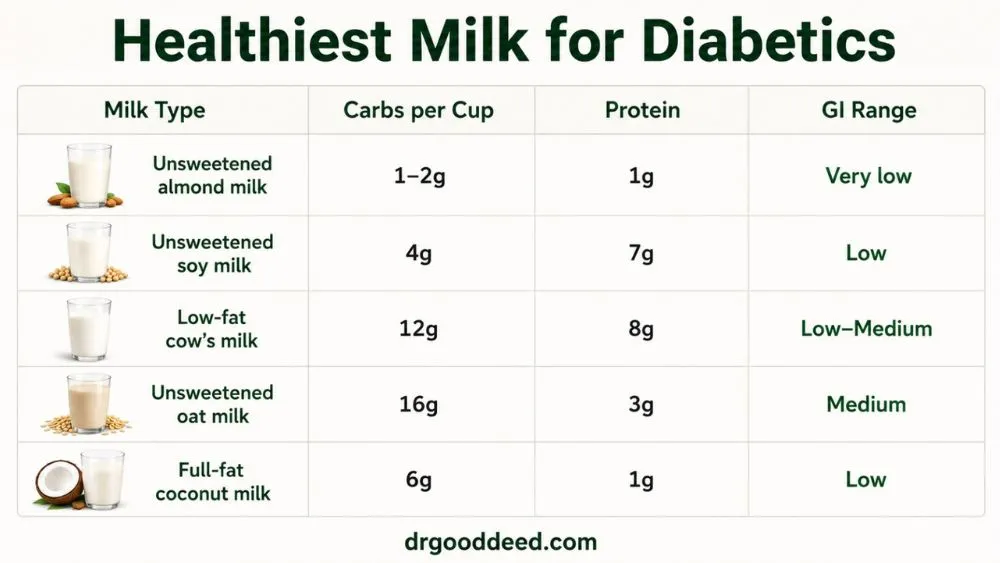
The healthiest milk for diabetics keeps carbohydrates low, protein adequate, and added sugars at zero.
| Milk Type | Carbs per Cup | Protein | GI Range |
| Unsweetened almond milk | 1–2g | 1g | Very low |
| Unsweetened soy milk | 4g | 7g | Low |
| Low-fat cow’s milk | 12g | 8g | Low–Medium |
| Unsweetened oat milk | 16g | 3g | Medium |
| Full-fat coconut milk | 6g | 1g | Low |
Unsweetened almond milk is the top pick for blood sugar control. It has near-zero carbohydrates and a negligible effect on glucose.
Unsweetened soy milk offers the best protein-to-carb ratio among plant milks; 7 grams of protein slows glucose absorption effectively.
Low-fat cow’s milk provides calcium and protein but delivers 12 grams of carbohydrates per cup. It works for diabetics in controlled portions.
Unsweetened oat milk is the most popular plant milk but ranks last among the healthiest milk choices for diabetics; it contains beta-glucan fiber that slows digestion but still delivers 16 grams of carbs per cup.
Low-Glycemic Milk Alternatives
Low glycemic milk alternatives have a glycemic index below 55 and low carbohydrate content per serving.
Unsweetened almond milk has a GI near zero. One cup raises blood glucose by approximately 1 to 2 mg/dL in most people.
Unsweetened soy milk has a GI of around 30 to 34. Its 7 grams of protein per cup blunts glucose absorption, making it one of the best low glycemic milk alternatives for people who need protein alongside their beverage.
Full-fat coconut milk has a low GI due to high fat content, which slows digestion. Its saturated fat level makes it less ideal for people managing both diabetes and cardiovascular risk.
Pea milk (made from yellow split peas) is an underrated pick among the best milks for people with diabetes: 8 grams of protein and only 2 grams of carbohydrates per cup, plus calcium and vitamin D fortification.
Milk Options for Insulin Resistance
Milk options for insulin resistance focus on minimizing the insulin demand triggered per serving.
High-protein choices reduce insulin spikes. Protein triggers a slower, more controlled insulin response than carbohydrates do. Soy milk (7g protein), pea milk (8g protein), and low-fat cow’s milk (8g protein) all support more stable glucose and insulin responses.
Lower-carbohydrate alternatives reduce total glucose load. Unsweetened almond milk (1g carbs), unsweetened cashew milk (2g carbs), and pea milk (2g carbs) are the best milk options for insulin resistance on a per-cup basis.
Avoiding sugar-sweetened beverages is non-negotiable. Sweetened plant milks with “original” or “vanilla” labeling often contain 10 to 18 grams of added sugar per cup. These drive insulin spikes as sharply as soda in people with insulin resistance.
Added Sugar in Flavored Milk Diabetes Risks
Added sugar in flavored milk diabetes risk is significant and frequently underestimated. Flavored milk products, including chocolate milk, vanilla almond milk, and flavored oat milk, contain added sugars that raise blood sugar rapidly.
Chocolate milk typically contains 25 to 30 grams of sugar per cup, 10 to 18 grams of which is added sugar beyond natural lactose. Even “reduced sugar” versions often contain 12 to 15 grams.
Hidden sugars appear under multiple names on labels: cane sugar, brown rice syrup, maltose, dextrose, and “evaporated cane juice.” All of these raise blood glucose just as fast as regular sugar.
Reading nutrition labels correctly matters. Look at the “Total Sugars” line and then check “Added Sugars” directly below it. The added sugar in flavored milk diabetes risk applies even when the product is labeled “natural,” “organic,” or “plant-based.”
A flavored oat milk marketed as healthy can easily deliver more sugar per cup than a regular soda serving. Always choose “unsweetened” on the label, not “original” or “lightly sweetened.”
Bedtime Milk Choices for Diabetics
Bedtime milk choices for diabetics require balancing two competing goals: avoiding overnight blood sugar spikes while supporting nighttime satiety and sleep quality.
Low-sugar bedtime options include unsweetened almond milk (1g carbs), unsweetened cashew milk (2g carbs), and warm unsweetened soy milk. These deliver protein without significant glucose impact.
Protein helps nighttime satiety. Drinking milk with 7 to 8 grams of protein before bed reduces middle-of-the-night hunger without raising fasting blood sugar the following morning, based on research in people with type 2 diabetes.
Avoid overnight glucose spikes by skipping flavored, sweetened, or full-fat milk drinks at bedtime. Whole cow’s milk (12g carbs) and oat milk (16g carbs) raise blood sugar enough to impact morning fasting readings in some people.
The best bedtime milk choices for diabetics are warm unsweetened soy milk or unsweetened almond milk, optionally with a pinch of cinnamon (which has a mild blood sugar-lowering effect).
Milk Choices That May Raise Blood Sugar Quickly
Some milks raise blood sugar fast regardless of how “natural” they appear:
- Sweetened plant-based milks: Vanilla, original, or honey-flavored versions of almond, oat, or rice milk contain 10 to 20 grams of added sugar per cup
- Condensed and flavored milk drinks: Sweetened condensed milk contains 54 grams of sugar per ¼ cup serving, making it one of the worst blood sugar offenders
- Rice milk: Even unsweetened, it contains 22 grams of carbohydrates per cup and has one of the highest GI scores among milk alternatives (GI around 86)
- Horchata and other sweetened traditional milk drinks contain 20 to 35 grams of sugar per cup
These options are not among the best milk choices for people with diabetes and should be avoided or strictly limited to very small portions.
How to Choose Milk for Better Blood Sugar Control
Selecting the best milk for people with diabetes comes down to three concrete checks:
Check carbohydrate content first. Look at the nutrition label. Anything above 8 grams of carbs per cup requires careful portion management for diabetics. Under 4 grams per cup is ideal.
Always choose unsweetened. The word “original” on plant milk packaging often means sweetened. Only buy products with “unsweetened” explicitly on the label.
Balance milk with overall meal intake. Even the best milk choice raises blood sugar if consumed alongside a high-carb meal. Pairing milk with protein and fiber at meals keeps post-meal glucose spikes manageable. Drinking even low-carb milk on an empty stomach raises blood sugar faster than when consumed with food.
Common Milk Mistakes People With Diabetes Make
Most milk-related blood sugar problems trace back to these errors:
Assuming all plant milks are healthy. Oat milk, rice milk, and many flavored nut milks contain as many or more carbohydrates than cow’s milk. “Plant-based” does not mean “low-carb.” Choosing the best milk for people with diabetes always requires checking the label, not the marketing.
Ignoring serving size. Nutrition labels show data per 1 cup (240ml). Many people pour 1.5 to 2 cups at a time, doubling the carbohydrate load. A large oat milk latte can deliver 24 to 32 grams of carbohydrates from milk alone.
Drinking sugary milk beverages regularly. Sweetened lattes, flavored milk drinks, and packaged milk-based smoothies are among the most consistent blood sugar disruptors in people with diabetes. These daily habits silently undermine blood sugar control over weeks and months.
FAQs
Which milk has the lowest effect on blood sugar levels?
Unsweetened almond milk. It contains 1 to 2 grams of carbohydrates per cup and has a glycemic index near zero. Unsweetened cashew milk comes in second with about 2 grams of carbs. Both cause negligible blood glucose changes in controlled portions.
Is almond milk better than regular milk for diabetes?
Yes. Unsweetened almond milk delivers 1 to 2 grams of carbs per cup versus 12 grams in cow’s milk. For blood sugar control, almond milk is significantly better. However, cow’s milk provides 8 grams of protein versus 1 gram in almond milk, which matters for satiety.
Can lactose in milk raise blood sugar significantly?
Yes. Lactose is milk sugar. One cup of cow’s milk delivers 12 grams of lactose, which the body converts to glucose. This raises blood sugar measurably, particularly in people with limited insulin response. Lactose-free milk still contains 12 grams of carbohydrates and raises blood sugar similarly.
Are flavored milk drinks harmful for insulin resistance?
Yes. Added sugar in flavored milk diabetes risk is especially high in insulin resistance. Chocolate milk, vanilla oat milk, and sweetened almond milk spike blood sugar 30 to 50% more than their unsweetened versions. Hidden added sugars in these drinks worsen insulin response over time with daily use.
What is the best milk option before bedtime for diabetics?
Warm unsweetened soy milk or unsweetened almond milk. Among bedtime milk choices for diabetics, soy milk adds 7 grams of protein without significant carbs, supporting stable overnight blood sugar. Avoid oat milk and sweetened varieties before bed; they raise fasting morning readings in some people.
How does protein in milk help stabilize blood sugar?
Protein slows the rate at which glucose enters the bloodstream. Milk protein (casein and whey) delays gastric emptying, reducing the speed of carbohydrate absorption. This means a milk with 7 to 8 grams of protein causes a slower, lower blood sugar peak than one with only 1 gram.
Is oat milk too high in carbohydrates for diabetes?
Yes, for most people with diabetes. Unsweetened oat milk contains 16 grams of carbohydrates per cup, similar to a small bowl of oatmeal. Sweetened versions hit 20 to 24 grams. Oat milk is not among the best milk choices for people with diabetes unless consumed in very small portions.
Can people with diabetes drink milk daily safely?
Yes. The best drink choices for people with diabetes, specifically unsweetened almond, soy, or cashew milk, are safe for daily consumption. Cow’s milk works in controlled 1-cup portions paired with protein. The key is choosing unsweetened varieties and tracking carbohydrate intake as part of total daily intake.
What ingredients should be avoided in packaged milk alternatives?
Avoid cane sugar, brown rice syrup, maltose, dextrose, high-fructose corn syrup, and evaporated cane juice. These are added sugars that raise blood sugar rapidly. Also avoid carrageenan in large quantities (a thickener linked to gut inflammation) and highly processed vegetable oils added to some nut milks.
How do portion sizes affect the glycemic impact of milk?
Directly and proportionally. One cup of cow’s milk = 12g carbs. Two cups = 24g carbs, equivalent to two slices of bread. Even low glycemic milk alternatives become significant glucose contributors in double portions. Always measure rather than estimate, especially when adding milk to coffee, tea, cereal, or smoothies.