

Functional medicine vs naturopath is one of the most searched comparisons in US integrative healthcare, yet most people leave confused because the two overlap in some areas but differ sharply in others.
Functional medicine is a systems-biology-based medical model practiced by licensed MDs, DOs, and NPs who use advanced lab testing to find the root cause of chronic disease. Naturopathy is a separate licensed profession focused on supporting the body’s natural healing ability through herbal medicine, nutrition, and lifestyle therapy.
This guide covers training differences, treatment approaches, gut health protocols, supplement use, and which approach fits which conditions.
What Is Functional Medicine?
Functional medicine treats chronic illness by identifying the underlying biological, environmental, and lifestyle factors driving disease rather than just managing symptoms. Practitioners, often MDs or DOs with additional Institute for Functional Medicine (IFM) certification, use detailed intake timelines, genetic data, advanced blood panels, and stool analysis to map a patient’s full health picture.
The model is built on systems biology, meaning it looks at how body systems interact rather than treating organs in isolation. The Cleveland Clinic opened a full functional medicine center in 2014, which brought the model mainstream credibility in the US.
What Is Naturopathy?
Naturopathy is a licensed healthcare profession in 25 US states and Washington D.C. Naturopathic doctors (NDs) complete a 4-year accredited graduate program at institutions like Bastyr University or National University of Natural Medicine.
The curriculum includes clinical nutrition, botanical medicine, homeopathy, physical medicine, and basic pharmacology. In states like Oregon and Washington, licensed NDs hold prescribing authority for certain medications. Naturopathy operates on the principle of “vis medicatrix naturae,” which means supporting the body’s inherent ability to heal itself.
Functional Medicine vs Naturopath: Key Differences
The core difference between functional medicine and naturopathy is in their medical foundation and diagnostic depth. Functional medicine practitioners are typically conventionally trained medical doctors who add a root-cause lens. Naturopaths are separately licensed professionals trained in natural therapies from the start of their education.
Approach to Treatment
Functional medicine builds individualized treatment plans based on biomarker data, genetic testing (like MTHFR or APOE variants), and systems-level analysis.
Naturopathy builds treatment plans around natural therapies, lifestyle modification, and traditional healing systems. Functional medicine uses lab data to guide interventions. Naturopathy uses assessment tools like tongue diagnosis, iridology, or symptom patterns alongside some lab testing.
Use of Supplements and Natural Therapies
Both approaches use supplements, but the reasoning differs. Supplements in functional medicine are selected based on specific lab findings; for example, magnesium glycinate for low RBC magnesium, or methylfolate for MTHFR gene variants. Supplements in naturopath practice lean on traditional botanical formulations and evidence from herbal medicine research rather than individual biomarker gaps.
Diagnostic Testing and Lab Work
Functional medicine orders tests most conventional doctors skip: organic acids, comprehensive stool analysis (GI-MAP), SIBO breath tests, Dutch hormone panels, and advanced lipid testing. Naturopaths order standard labs and, in some states, additional functional tests. The depth of diagnostic testing is generally greater in functional medicine.
Training and Practitioner Qualifications
Functional medicine practitioners hold an MD, DO, NP, or PA license first, then complete IFM certification. Naturopathic doctors hold an ND degree from an accredited 4-year program. NDs are licensed as independent primary care providers in 25 states. In unlicensed states, the title “naturopath” carries no regulatory oversight, so verifying credentials matters.
Use of Medications vs Natural Remedies
Functional medicine practitioners can prescribe all FDA-approved medications when needed and often combine them with nutritional protocols. Naturopaths prescribe medications only in states where their license allows it. Outside those states, naturopathic treatment stays within natural therapies and referrals.
Functional Medicine vs Naturopathy: Quick Comparison Table
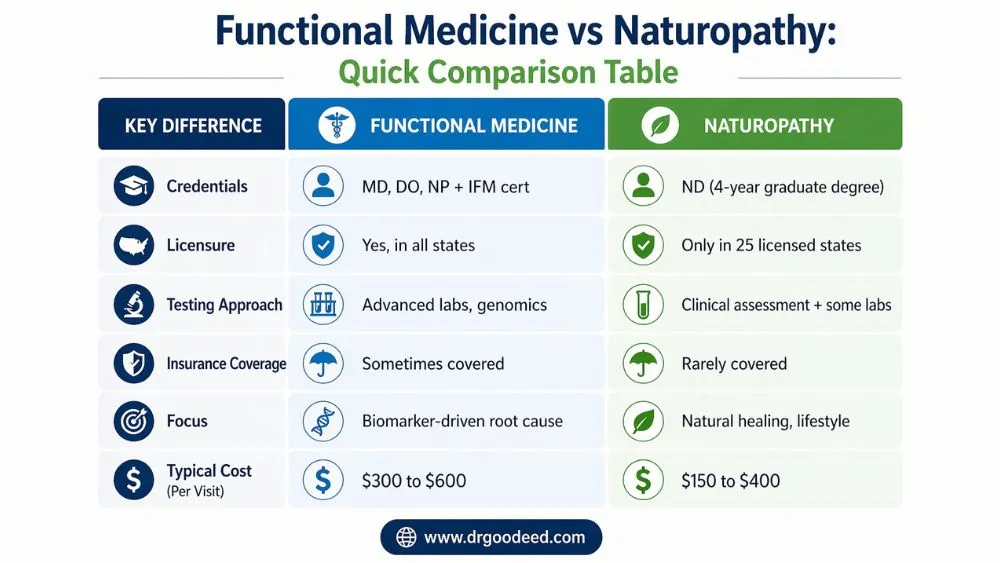
| Factor | Functional Medicine | Naturopathy |
| Practitioner degree | MD, DO, NP + IFM cert | ND (4-year graduate degree) |
| Prescription authority | Yes, in all states | Only in 25 licensed states |
| Primary diagnostic tools | Advanced labs, genomics | Clinical assessment + some labs |
| Treatment focus | Biomarker-driven root cause | Natural healing, lifestyle |
| Insurance coverage | Sometimes covered | Rarely covered |
| Average initial visit cost in US | $300 to $600 | $150 to $400 |
Root Cause Approach: Functional Medicine vs Naturopath
The root cause approach of functional medicine vs naturopath share philosophically but differ mechanically. Both reject the idea of only treating symptoms. The tools they use to find the root cause are where the split happens.
Systems Biology in Functional Medicine
Functional medicine uses the IFM matrix to map how genes, environment, lifestyle, and body systems interact to produce disease. A patient with fatigue gets a workup that includes thyroid panel, adrenal function, mitochondrial markers, gut microbiome, and nutritional status simultaneously. The goal is identifying which biological system broke down first and why.
Vital Force Concept in Naturopathy
The root cause approach naturopath practitioners use centers on the “vital force,” a concept that the body wants to heal and the practitioner’s job is to remove obstacles. Those obstacles include poor diet, toxin exposure, emotional stress, and nutritional deficiency. Naturopaths address root causes through elimination diets, detox protocols, herbal support, and nervous system regulation.
Depth of Investigation into Chronic Illness
For complex chronic illness like Lyme disease, mold toxicity, or autoimmune conditions, functional medicine’s lab-intensive approach identifies specific biomarkers driving inflammation. Naturopathy addresses these conditions too but relies more heavily on general detox and immune support protocols rather than targeted biomarker correction.
Gut Health Approach: Functional Medicine vs Naturopathy
Functional Medicine Gut Protocols
The gut health approach functional medicine practitioners use starts with specific testing. The GI-MAP stool test measures pathogenic bacteria, parasites, fungi, zonulin (a leaky gut marker), and secretory IgA levels.
From that data, practitioners build a protocol: antimicrobial herbs or pharmaceuticals to remove pathogens, specific strains of probiotics matched to deficiencies, L-glutamine for intestinal lining repair, and digestive enzymes if needed. Nothing in the protocol is guesswork.
Naturopathic Gut Healing Approach
The gut health approach naturopathy uses centers on elimination diets, botanical antimicrobials like berberine or oregano oil, and gut-healing nutrients like slippery elm and marshmallow root. Naturopaths also address gut health through stress reduction and liver support since naturopathic philosophy links gut function closely to emotional health and detoxification capacity.
Supplements in Functional Medicine vs Naturopath
Targeted Supplementation (Functional Medicine)
Supplements in functional medicine are biomarker-driven. If a patient’s organic acids test shows low CoQ10, they get CoQ10. If the Dutch test shows low progesterone metabolites, they get targeted support for that pathway.
Dosing is specific and typically retested after 3 to 6 months. Practitioners in this space commonly use brands like Thorne, Pure Encapsulations, or Designs for Health because of their third-party testing standards.
Herbal and Traditional Remedies (Naturopathy)
Supplements in naturopath practice draw heavily from Ayurvedic, Traditional Chinese Medicine, and Western botanical traditions. Ashwagandha for stress, milk thistle for liver support, and valerian for sleep are common recommendations backed by both traditional use and growing clinical research. Formulations are often compound herbal blends rather than single isolated nutrients.
Safety and Regulation Considerations
Neither functional medicine supplements nor naturopathic herbs are FDA-regulated as drugs. Quality varies by brand. Patients should ask practitioners for third-party tested products and flag all supplements to any other prescribing doctor to avoid interactions.
Which Is Better: Functional Medicine or Naturopath?
In the functional medicine vs naturopath debate, neither is universally better. The right choice depends on the specific condition and what level of diagnostic depth you need.
Choose Functional Medicine If:
- You have a complex chronic illness like autoimmune disease, chronic fatigue, or POTS
- You want advanced lab testing to identify specific biological deficiencies or dysfunctions
- You need a provider who can prescribe medications when natural approaches are not enough
- You want a practitioner who bridges conventional and integrative medicine
Choose Naturopathy If:
- You want a primary care provider who uses natural therapies as the first line of treatment
- Your conditions are lifestyle-related: stress, mild digestive issues, hormonal imbalances without complex pathology
- You prefer a whole-person, lower-intervention approach
- You live in a state like Oregon or Washington where licensed NDs provide full-scope primary care
Conditions Treated by Each Approach
Functional Medicine
- Autoimmune diseases (Hashimoto’s, lupus, rheumatoid arthritis)
- Hormonal imbalances (adrenal dysfunction, PCOS, low testosterone)
- Gut disorders (SIBO, leaky gut, IBD)
- Metabolic conditions (insulin resistance, obesity)
- Neurological conditions (brain fog, early cognitive decline)
Naturopathy
- Stress and adrenal fatigue
- Mild to moderate digestive complaints
- Lifestyle-related conditions like poor sleep, low energy
- Skin conditions like eczema through dietary and herbal approaches
- Preventive health and wellness maintenance
When to See a Functional Medicine Doctor vs Naturopath
See a functional medicine doctor when symptoms are complex, lab results from conventional medicine come back “normal,” but you still feel unwell, or you need someone who can interpret advanced biomarker data and prescribe when necessary.
See a naturopath when you want a natural primary care provider for general health, mild chronic conditions, or preventive care. In licensed states, NDs serve as full-scope primary care providers and handle annual physicals, basic lab interpretation, and chronic disease management within their scope.
Frequently Asked Questions
Is functional medicine evidence-based?
Yes. Functional medicine uses peer-reviewed diagnostic tools including the GI-MAP, Dutch hormone test, and organic acids panel. The IFM curriculum references PubMed-indexed research. The Cleveland Clinic’s functional medicine program published outcomes data showing measurable improvement in patient health scores after 12 months of care.
Are naturopaths real doctors?
Yes, in 25 US states and Washington D.C., licensed NDs are recognized as licensed healthcare providers. They complete a 4-year graduate program and pass licensing exams (NPLEX). In unlicensed states, the title is unregulated. Always verify your naturopath holds an ND from an accredited institution like Bastyr University.
Which is better for gut health?
Functional medicine vs naturopath for gut health depends on severity. Functional medicine is better for diagnosed conditions like SIBO, SIBO methane-dominant, or dysbiosis confirmed by stool testing. Naturopathy works well for general digestive improvement, food sensitivity management, and mild bloating without confirmed pathology.
Do both approaches use supplements?
Yes. Supplements in functional medicine are biomarker-driven and retested after 3 to 6 months. Supplements in naturopath practice draw from botanical and traditional medicine traditions. Both use third-party tested products; ask specifically for that when starting care with either provider.
Can functional medicine prescribe medications?
Yes. Functional medicine practitioners hold MD, DO, or NP licenses, which carry full prescribing authority in all 50 states. They prescribe conventional medications when necessary and often combine them with nutritional protocols, which is something naturopaths cannot do in most states.
Is naturopathy safe for long-term use?
Yes, for most conditions. Long-term botanical use carries some risks; high-dose kava causes liver stress and St. John’s Wort interacts with antidepressants, oral contraceptives, and blood thinners. Always disclose all supplements to your prescribing physician. Annual labs are recommended to monitor for herb-related organ stress.
Which approach is better for autoimmune disease?
Functional medicine. Autoimmune disease management requires identifying specific antibodies, inflammatory cytokines, gut permeability markers, and sometimes genetic variants like HLA-DQ2. The root cause approach of functional medicine vs naturopath shows deeper diagnostic capacity for autoimmune conditions specifically.
How expensive is functional medicine vs naturopathy?
Functional medicine initial visits average $300 to $600, with labs adding $200 to $1,500 depending on panels ordered. Most functional medicine practices do not accept insurance. Naturopathic initial visits average $150 to $400. Insurance coverage for NDs exists in some states but remains inconsistent across US plans.
Can I switch between both approaches?
Yes. Many US patients use both providers simultaneously: a naturopath for primary care and preventive support, and a functional medicine doctor for complex chronic illness investigation. Inform both providers of all treatments, supplements, and lab results to avoid conflicting protocols or supplement interactions.