In the USA, drinking olive oil in the morning gets attention because olive oil is rich in unsaturated fat, which fits heart-healthy eating patterns.
Drinking olive oil in the morning does not work like a fix for digestion, weight, or cholesterol. The useful part comes from extra virgin olive oil used in small amounts in a balanced diet.
This guide covers who benefits, who should be careful, and how to use it without wasting calories. It also explains digestion, heart health, serving size, and safer meal use.
Why Olive Oil Is Considered Healthy
Drinking olive oil in the morning is popular because olive oil is mostly monounsaturated fat. Extra virgin olive oil also contains plant compounds that support a healthy eating pattern. That is where the strongest healthy fats in olive oil benefits come from.
- Olive oil replaces butter or animal fat. That swap lowers LDL, the “bad” cholesterol.
- Extra virgin oil contains more antioxidants than refined oil. Those compounds help limit oxidative stress.
- The fat in olive oil helps the body absorb vitamins A, D, E, and K from food.
Benefits of Olive Oil on Empty Stomach
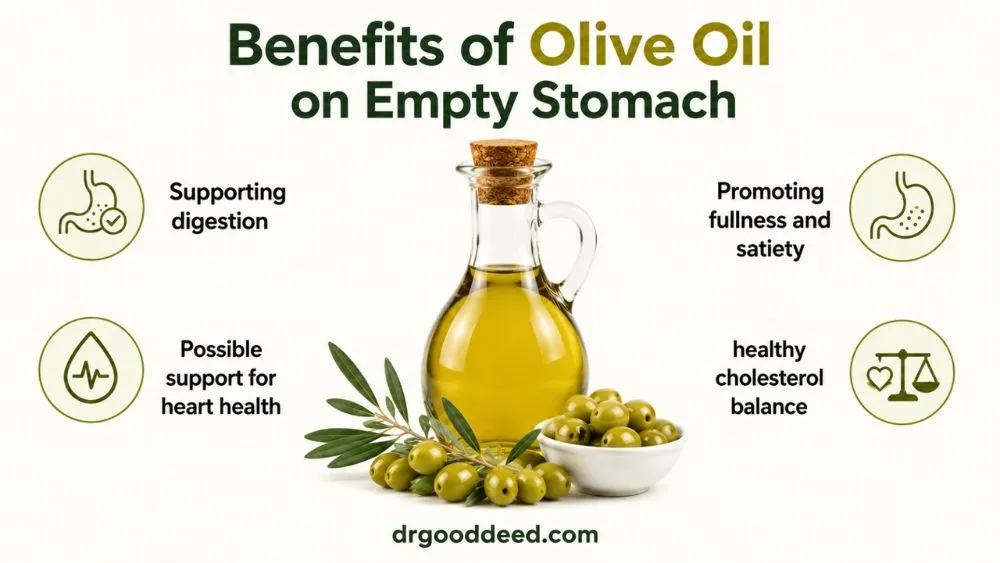
Drinking olive oil in the morning on an empty stomach puts fat into the gut fast. The upside depends on dose, and the science does not show a special morning-only effect. The phrase benefits of olive oil on empty stomach fits only a few real uses.
Supporting digestion and bowel movements
A small amount of olive oil can make stool easier to pass. This is the main idea behind benefits of olive oil on empty stomach for constipation. The effect is mild, and it does not replace fiber, water, or medical care.
Promoting fullness and satiety
This morning habit can make some people feel full for a few hours. Fat slows stomach emptying, so snack urges drop for some users. A tablespoon, though, already carries about 119 calories.
Possible support for heart health
The best use of the olive oil is a heart-friendly diet replacement. Olive oil helps most when it replaces butter, lard, or trans fat, not when it gets added on top of the same meals.
Olive Oil Impact on Heart Health
Drinking olive oil in the morning matters less than the full day pattern, but olive oil still has strong heart-health data behind it. Studies link olive oil, especially extra virgin olive oil, with better cardiovascular risk markers when it replaces less healthy fats.
Supporting healthy cholesterol balance
Olive oil impact on heart health shows up when LDL goes down. Monounsaturated fat helps lower bad cholesterol, and that lowers heart disease risk over time.
Reducing oxidative stress and inflammation
Extra virgin olive oil keeps polyphenols and vitamin E. Those compounds help fight oxidative stress and inflammation. That is one reason the oil has a solid place in heart-focused diets.
Mediterranean diet and cardiovascular wellness
The Mediterranean diet uses olive oil as a main fat source. That pattern is tied to high cholesterol and lower heart disease risk. The oil works best inside that diet pattern, not as a stand-alone trick.
Drinking Olive Oil and Digestive Health
Drinking olive oil in the morning can help some people with dry stools, but it is not a clean fix for constipation. Small doses can feel soothing. Big doses can irritate the stomach.
Lubricating digestive movement
Olive oil can help stool move with less friction. That is the plain meaning of benefits of olive oil on empty stomach for bowel movement support. It helps symptoms, not the cause.
Potential constipation relief support
Drinking olive oil in the morning should not replace fiber-rich foods. Whole grains, vegetables, fruit, and water do more when constipation comes from low fiber or dehydration. Olive oil is only a small add-on.
Importance of moderate intake
Too much oil can trigger loose stool, nausea, or cramping. That is why moderation matters more than timing. A smaller serving is usually easier to tolerate.
Best Amount of Olive Oil Per Day
Drinking olive oil in the morning works best when the amount stays small. For many adults, 1 to 2 tablespoons total per day is a practical range. That amount fits food use, not supplement use.
Recommended moderate serving sizes
For the best amount of olive oil per day, start with 1 teaspoon if the stomach is sensitive. Move up only if it feels fine. Two tablespoons a day already gives a strong fat load.
Calories and fat intake awareness
A tablespoon has about 119 calories. That makes olive oil useful, but also easy to overuse. Extra oil can push total calories too high fast.
Why excessive intake may cause problems
Best amount of olive oil per day matters because too much oil crowds out other foods. It can also cause greasy stools and reflux in people with sensitive digestion.
How to Drink Olive Oil Safely in Morning
Drinking olive oil in the morning is safest when it stays small and gets paired with food. Straight shots are the part most likely to trigger nausea or heartburn. Extra virgin olive oil is the best pick.
Choosing extra virgin olive oil
To drink olive oil safely in morning, choose extra virgin olive oil in a dark bottle. It keeps more natural antioxidants than refined oil. Freshness matters too, because old oil loses flavor and quality.
Starting with small amounts
Drinking olive oil in the morning should begin with 1 teaspoon. Wait a few days, then increase only if the stomach stays calm. That simple step lowers the risk of loose stools.
Pairing olive oil with balanced meals
The safest way to use olive oil with meals is to use it with food. Put it on eggs, toast, yogurt bowls, or vegetables. Food slows the fat load and usually sits better.
Best Ways to Include Olive Oil in Daily Diet
Drinking olive oil in the morning is not the best route for most people. Meal use gives the same fat benefits with better taste and fewer stomach problems. It also makes it easier to replace less healthy fats.
Salad dressings and vegetables
A dressing of olive oil, lemon, and salt works on salads, beans, and roasted vegetables. This is one of the cleanest ways to get healthy fats in olive oil benefits without overdoing calories.
Adding olive oil to breakfast foods
Instead of drinking olive oil in the morning, drizzle it over eggs, tomatoes, or toast. That keeps the oil tied to food and lowers the chance of stomach upset.
Mediterranean-style meal patterns
A Mediterranean-style diet uses olive oil with vegetables, beans, fish, nuts, and whole grains. That pattern gives olive oil impact on heart health more meaning than a single spoon does.
Possible Side Effects of Drinking Olive Oil
Drinking olive oil in the morning is not harmless for everyone. The common problems come from too much fat at once, especially on an empty stomach. Reflux, nausea, loose stool, and gallbladder pain are the main issues to watch.
- Nausea after a big spoonful.
- Loose stool or diarrhea after a large dose.
- Heartburn or reflux in people with sensitive stomachs.
- Weight gain if calories rise and food stays the same
- Extra caution is needed with gallbladder disease or chronic reflux.
FAQs
Is it safe to drink olive oil on an empty stomach every morning?
Yes, for most healthy adults, one teaspoon to one tablespoon is usually safe. Drinking olive oil in the morning on an empty stomach causes problems mainly when the dose is large. Nausea and loose stools are the usual warning signs.
How much olive oil should be consumed daily for health benefits?
One to two tablespoons a day fits most adult diets. That amount gives best amount of olive oil per day without adding too many calories. A tablespoon has about 119 calories, so the rest of the diet still matters.
Does olive oil help improve digestion and bowel movements?
Yes, a small amount can soften stool and ease bowel movement. The benefits of olive oil on empty stomach are mostly about gut lubrication, not a cure for constipation. Fiber, water, and activity still matter more when constipation stays present.
Why is extra virgin olive oil considered healthier than refined oils?
Yes, extra virgin olive oil keeps more antioxidants and plant compounds. That gives healthy fats in olive oil benefits beyond plain calories. Refined oil loses more of those compounds during processing.
Can olive oil support cholesterol and heart health naturally?
Yes, but only as part of a better diet. The impact of olive oil on heart health is strongest when it replaces butter or other saturated fat. It helps lower LDL and supports a healthier fat profile.
Does drinking olive oil help with weight management?
No, not by itself. A spoon of olive oil adds calories fast, so drinking olive oil in the morning can backfire if the rest of the diet stays the same. It helps more when it replaces worse fats.
Can too much olive oil cause digestive discomfort?
Yes, too much can cause nausea, loose stools, cramps, and reflux. Start small if the goal is to drink olive oil safely in the morning. A sudden large shot is the main trigger.
What is the best time of day to consume olive oil?
Any time that fits a meal works. Drinking olive oil in the morning has no proven edge over lunch or dinner. Taking it with food usually feels easier on the stomach.
How do healthy fats in olive oil support the body?
They help with cell structure, energy, vitamin absorption, and heart health. Healthy fats in olive oil benefits also include replacing saturated fat, which can lower LDL cholesterol.
Should olive oil be consumed alone or with meals for better benefits?
With meals is better. To drink olive oil safely in the morning works best when it is added to food, not taken as a shot. Meals improve tolerance and make the calories easier to fit into the day.