Health benefits of garlic include immune support, antioxidant protection, circulation support, and metabolic wellness. Garlic contains sulfur compounds such as allicin, which researchers link to heart health, reduced oxidative stress, and antimicrobial activity. Studies from the National Institutes of Health and peer reviewed reviews continue to examine garlic’s role in cardiovascular and immune function.
Garlic, also called Allium sativum, is widely used in the United States in cooking and wellness routines. Fresh garlic, crushed garlic, aged garlic extract, and garlic powder all contain plant compounds with different effects on the body.
What Makes Garlic Beneficial for Health?
The health benefits of garlic come from sulfur compounds, antioxidants, and plant chemicals formed when garlic is chopped or crushed. These compounds affect inflammation, blood vessel function, and immune response. Garlic also contains small amounts of vitamin C, selenium, manganese, and fiber.
Sulfur compounds and allicin content
Allicin is the best-known active compound in garlic. It forms when fresh garlic is crushed or cut. This process activates an enzyme called alliinase.
Key facts about allicin:
- Fresh garlic produces more allicin than pre-chopped garlic
- Heat can lower allicin formation
- Allicin breaks down quickly after cooking
- Crushing garlic and waiting 10 minutes before heating helps preserve activity
Researchers also study other sulfur compounds such as:
- Diallyl disulfide
- Ajoene
- S allyl cysteine
These compounds are linked to many health benefits of garlic in cardiovascular and immune studies.
Antioxidant properties of garlic
The antioxidant properties of garlic help reduce oxidative stress. Oxidative stress happens when unstable molecules damage cells and tissues.
Garlic antioxidants help:
- Protect blood vessels
- Support healthy aging
- Reduce inflammation signals
- Limit free radical damage
Studies show garlic compounds increase antioxidant enzyme activity in the body.
Natural plant compounds supporting wellness
Garlic contains plant nutrients that support daily wellness:
| Compound | Possible Role |
| Selenium | Supports antioxidant defense |
| Flavonoids | Supports cell protection |
| Sulfur compounds | Support circulation and immunity |
| Prebiotic fibers | Feed helpful gut bacteria |
These natural compounds explain many health benefits of garlic beyond basic nutrition.
Benefits of Eating Garlic Daily
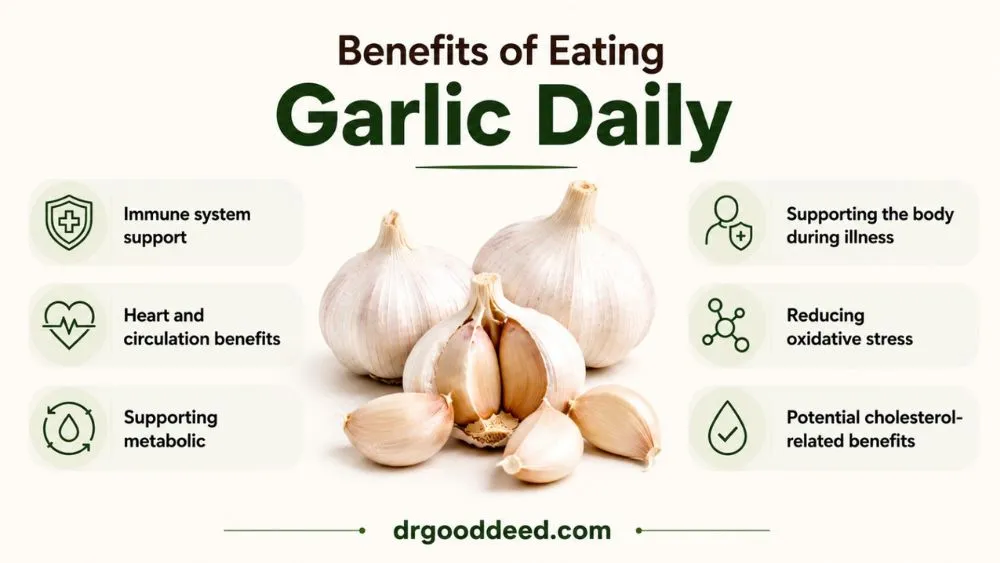
Benefits of eating garlic daily include support for immune health, circulation, and digestion. Most studies examine moderate daily intake rather than very high amounts.
Immune system support
Research on garlic and immune system support shows that garlic compounds help immune cells respond to bacteria and viruses.
Possible immune-related effects include:
- Supporting white blood cell activity
- Helping regulate inflammation
- Supporting recovery during seasonal illness
- Providing antimicrobial activity
Heart and circulation benefits
Garlic is widely studied for circulation and heart health.
Research suggests garlic may help:
- Support blood vessel relaxation
- Maintain healthy blood flow
- Support normal cholesterol balance
- Support healthy blood pressure levels
Evidence is stronger in people with existing cardiovascular risk factors.
Supporting metabolic and digestive health
Some studies connect garlic intake with metabolic wellness.
Garlic compounds may help:
- Support insulin sensitivity
- Support healthy gut bacteria
- Reduce inflammatory stress
- Improve digestion in balanced amounts
Too much garlic can irritate the stomach in sensitive people.
Garlic and Immune System Support
Garlic and immune system support are linked to sulfur compounds, antimicrobial activity, and antioxidant effects. Garlic does not replace medical treatment, but regular intake supports normal immune function in many adults.
Antimicrobial and antioxidant effects
Garlic compounds show antibacterial and antifungal effects in laboratory studies.
Researchers believe garlic supports immunity by:
- Reducing oxidative stress
- Supporting immune signaling
- Limiting microbial growth
- Supporting inflammatory balance
Supporting the body during illness
Some people use garlic during cold and flu season because garlic compounds support immune response activity.
Common ways people use garlic during illness:
- Garlic soup
- Crushed garlic in warm broth
- Garlic with honey
- Garlic mixed into cooked vegetables
Garlic should support healthy habits, not replace medical care.
Reducing oxidative stress
Oxidative stress weakens cells during illness and aging. The antioxidant properties of garlic help protect cells from free radical damage. Researchers continue studying garlic’s role in inflammatory and immune conditions.
Garlic for Heart and Blood Vessel Health
The health benefits of garlic for heart health center on circulation, blood vessel function, and oxidative balance. Garlic compounds affect nitric oxide pathways and vascular flexibility.
Supporting healthy circulation
Garlic compounds may help blood vessels relax more effectively.
Researchers connect garlic intake with:
- Better blood flow
- Improved artery flexibility
- Reduced oxidative stress in blood vessels
These effects are linked to sulfur compounds such as allicin.
Potential cholesterol-related benefits
Studies suggest garlic supplements may slightly reduce LDL cholesterol in some adults.
Results vary because effects depend on:
- Garlic form used
- Daily dose
- Existing cholesterol levels
- Study duration
Garlic supports heart-healthy habits but does not replace prescribed treatment.
Blood pressure support mechanisms
Garlic compounds support nitric oxide production and blood vessel relaxation. Some studies report small blood pressure reductions in adults with hypertension.
People taking blood thinners should speak with a healthcare professional before increasing garlic intake significantly.
Antioxidant Properties of Garlic
The antioxidant properties of garlic help protect cells from oxidative damage linked to aging, inflammation, and cardiovascular stress. In the United States, garlic remains one of the most researched food-based antioxidants because its sulfur compounds interact directly with free radicals and inflammatory pathways.
Key antioxidant-related effects include:
- Supporting cellular repair
- Helping protect artery walls
- Supporting healthy immune signaling
- Reducing oxidative stress markers
- Supporting healthy aging processes
Research also shows crushed garlic contains stronger antioxidant activity than heavily processed garlic products.
How to Eat Garlic for Health Benefits
Many people want to know how to eat garlic for health benefits without stomach discomfort. Preparation matters because heat changes garlic compounds quickly.
Raw garlic vs cooked garlic
Raw garlic contains more active allicin than heavily cooked garlic.
Comparison:
| Type | Main Benefit |
| Raw garlic | Higher allicin content |
| Lightly cooked garlic | Better taste and digestion |
| Roasted garlic | Milder flavor |
| Aged garlic extract | Less odor and stomach irritation |
Adding garlic to meals naturally
Easy ways to eat garlic for health benefits:
- Mix minced garlic into salad dressings
- Add garlic to beans and soups
- Stir into pasta sauces
- Use with roasted vegetables
- Add to olive oil dips
Garlic in soups, vegetables, and dressings
Garlic works well in:
- Chicken soup
- Tomato sauces
- Lentil dishes
- Stir fried vegetables
- Yogurt dressings
Crushing garlic before cooking helps activate beneficial sulfur compounds.
Best Time to Eat Garlic Daily
The best time to eat garlic daily depends more on tolerance and consistency than strict timing. Regular intake matters more than eating garlic at one exact hour.
Morning intake considerations
Some people prefer garlic in the morning because:
- It is easier to build a routine
- Empty stomach intake increases flavor intensity
- Raw garlic is easier to add to breakfast foods
Raw garlic may irritate sensitive stomachs.
Garlic with meals for digestion
Eating garlic with meals reduces stomach discomfort for many adults.
Better tolerated combinations include:
- Garlic with olive oil
- Garlic with cooked vegetables
- Garlic in soups
- Garlic with protein-rich meals
Consistency over timing importance
The best time to eat garlic daily is the time you can maintain consistently. Moderate daily intake matters more than exact timing.
Garlic and Digestive Health
The health benefits of garlic also include digestive and gut-related effects. Garlic contains compounds that interact with gut bacteria and digestion.
Supporting gut microbiome balance
Garlic contains prebiotic fibers that feed beneficial bacteria.
Healthy gut bacteria support:
- Digestion
- Immune function
- Nutrient absorption
- Inflammatory balance
Potential prebiotic effects
Garlic contains fructans, a type of prebiotic carbohydrate.
These compounds help support:
- Bifidobacteria growth
- Gut diversity
- Short-chain fatty acid production
Digestive tolerance and moderation
Too much garlic can cause:
- Heartburn
- Gas
- Bloating
- Stomach irritation
Start with small amounts if digestion is sensitive.
Common Mistakes When Using Garlic
Many people reduce the health benefits of garlic through cooking mistakes, poor storage, or excessive intake. Garlic works best when prepared correctly and eaten consistently in moderate amounts.
Common mistakes include:
- Burning garlic at high heat
- Swallowing large raw cloves whole
- Using spoiled garlic
- Eating excessive amounts daily
- Ignoring medication interactions
Helpful tips:
- Crush garlic before cooking
- Wait 10 minutes before heating
- Store garlic in a cool dry place
- Avoid garlic supplements without medical guidance if taking blood thinners
FAQs
Is raw garlic healthier than cooked garlic?
Yes. Raw garlic usually contains more allicin. Crushing garlic and letting it sit before cooking helps preserve active sulfur compounds linked to the health benefits of garlic.
How much garlic can be safely eaten daily?
Most adults tolerate 1 to 2 cloves daily. Larger amounts raise the risk of stomach irritation, bad breath, and medication interactions.
Why is garlic considered beneficial for immune health?
Garlic and immune system support come from sulfur compounds that support immune signaling, antioxidant activity, and antimicrobial effects.
Can garlic support heart and circulation health naturally?
Yes. Studies link garlic compounds with blood vessel relaxation, circulation support, and modest cholesterol-related benefits.
Does garlic lose nutrients when cooked at high heat?
Yes. High heat lowers allicin activity quickly. Light cooking preserves more beneficial sulfur compounds than frying or burning garlic.
What is the best way to include garlic in daily meals?
The easiest way to eat garlic for health benefits is to add crushed garlic to soups, vegetables, sauces, and salad dressings regularly.
Can garlic irritate the stomach in sensitive individuals?
Yes. Raw garlic can trigger heartburn, bloating, or stomach pain in sensitive people, especially in large amounts.
Are garlic supplements as effective as fresh garlic?
Not always. Fresh garlic contains active allicin compounds. Some supplements contain lower active sulfur levels depending on processing methods.
Why are antioxidants in garlic important for health?
The antioxidant properties of garlic help reduce oxidative stress that damages cells, blood vessels, and tissues during aging and inflammation.
Can eating garlic daily interact with medications?
Yes. Garlic can increase bleeding risk when combined with blood thinners such as warfarin or high-dose aspirin. Speak with a healthcare professional before using concentrated garlic supplements regularly.