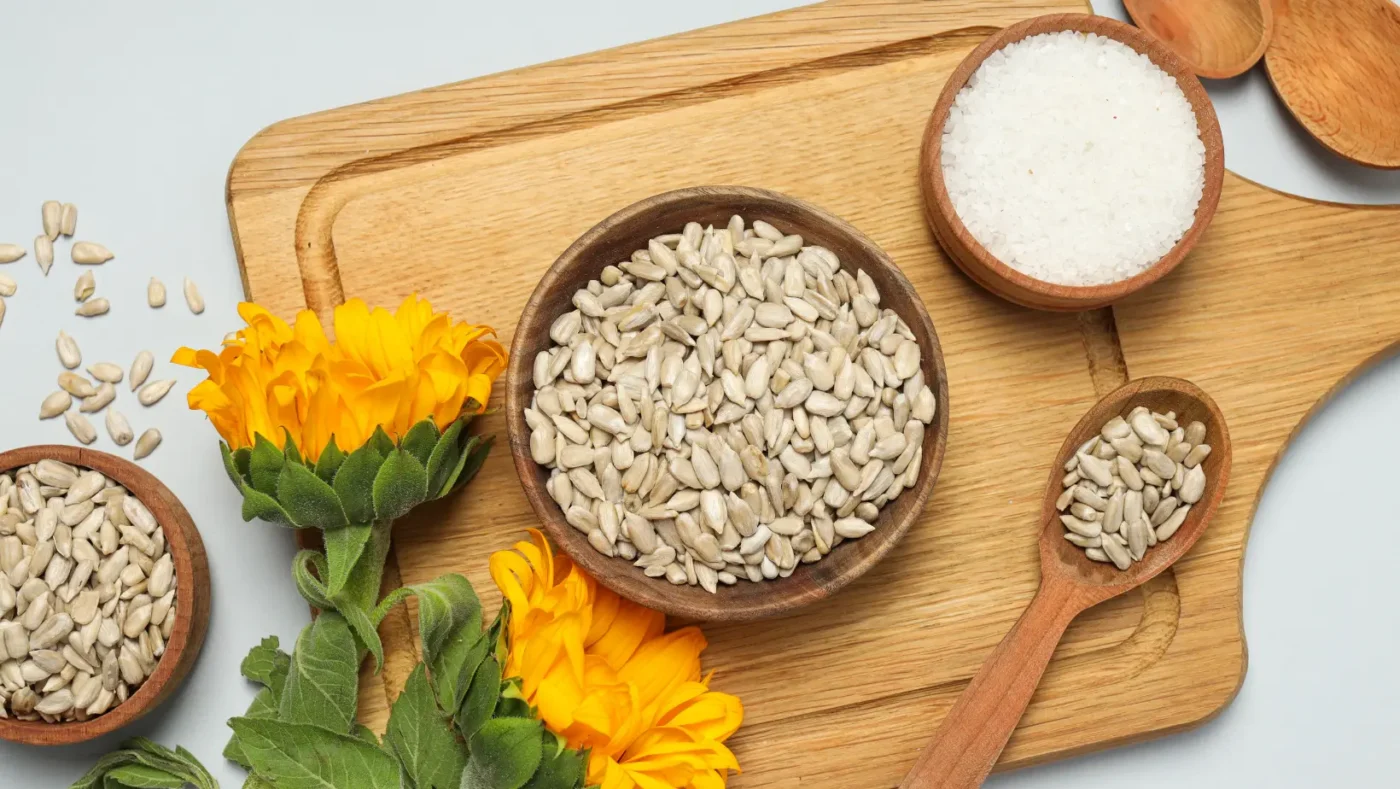

Yes, you can eat too many sunflower seeds, but the effects vary from person to person. A one-ounce serving (about a small handful) covers your daily needs for several nutrients, so eating too many sunflower seeds can push your calorie, sodium, or fat intake higher than planned. Most adults do fine with one to two ounces a day. This guide breaks down what sunflower seeds are, what they do for your body, and where the line sits between a smart snack and too much of a good thing.
What Are Sunflower Seeds?
Sunflower seeds are the edible kernels found inside the large, black-and-white striped shell of the Helianthus annuus plant, better known as the sunflower. They grow in the flower’s center disc, packed tightly in a spiral pattern. One flower head can hold over a thousand seeds. People eat them raw, roasted, salted, or ground into butter, and they show up in bread, granola, and salads across the United States.
Where They Come From
Sunflowers are native to North America. Indigenous tribes in what is now the central United States grew them for food, oil, and dye thousands of years before European settlers arrived. Farmers in the U.S., Russia, and Ukraine now grow the largest commercial crops. North Dakota alone produces close to half of the U.S. sunflower seed supply.
Different Types of Sunflower Seeds
There are three main types sold in stores.
- Confection seeds are the black-and-white striped seeds sold in the shell as a snack.
- Oilseed varieties are small and solid black, grown mainly to press into sunflower oil.
- Kernels are the hulled, ready-to-eat version, sold raw or roasted in bags.
Shelled vs In-Shell Seeds
In-shell seeds take longer to eat because you crack each shell with your teeth or fingers before eating the kernel inside. This slows down eating speed, which naturally limits how much you consume in one sitting. Shelled kernels are quicker to eat and easier to overdo, since nothing slows the pace between handfuls.
Common Ways to Eat Them
People eat sunflower seeds as a standalone snack, sprinkled on oatmeal or yogurt, mixed into trail mix, tossed on salads, or blended into sunflower seed butter as a peanut-free spread. Roasted, unsalted kernels work well in baking, while in-shell seeds are a popular stadium and road-trip snack.
Nutritional Value of Sunflower Seeds
The nutritional value of sunflower seeds comes from a mix of healthy fat, plant protein, fiber, and standout levels of vitamin E, copper, and selenium packed into a small serving. One ounce (about a quarter cup of kernels, roughly 28 grams) delivers real nutrition for around 165 calories.
| Nutrient | Amount per 1 oz (28g) | % Daily Value |
| Calories | 165 kcal | — |
| Protein | 5.8 g | 12% |
| Total Fat | 14.1 g | 18% |
| Fiber | 2.4-3 g | 9-11% |
| Vitamin E | 9.9 mg | 66% |
| Copper | 0.5 mg | 56% |
| Selenium | 15 mcg | 27% |
| Magnesium | 91 mg | 22% |
| Folate | 65 mcg | 16% |
Source: U.S. Department of Agriculture, FoodData Central.
Most of the fat in sunflower seeds is unsaturated, mainly linoleic acid, a fat linked to lower LDL cholesterol when it replaces saturated fat in the diet. The nutritional value of sunflower seeds also includes plant compounds called phytosterols, which block some cholesterol absorption in your gut. Because the seeds are calorie-dense, portion size matters more here than with lower-calorie snacks like fruit or vegetables.
Health Benefits of Sunflower Seeds
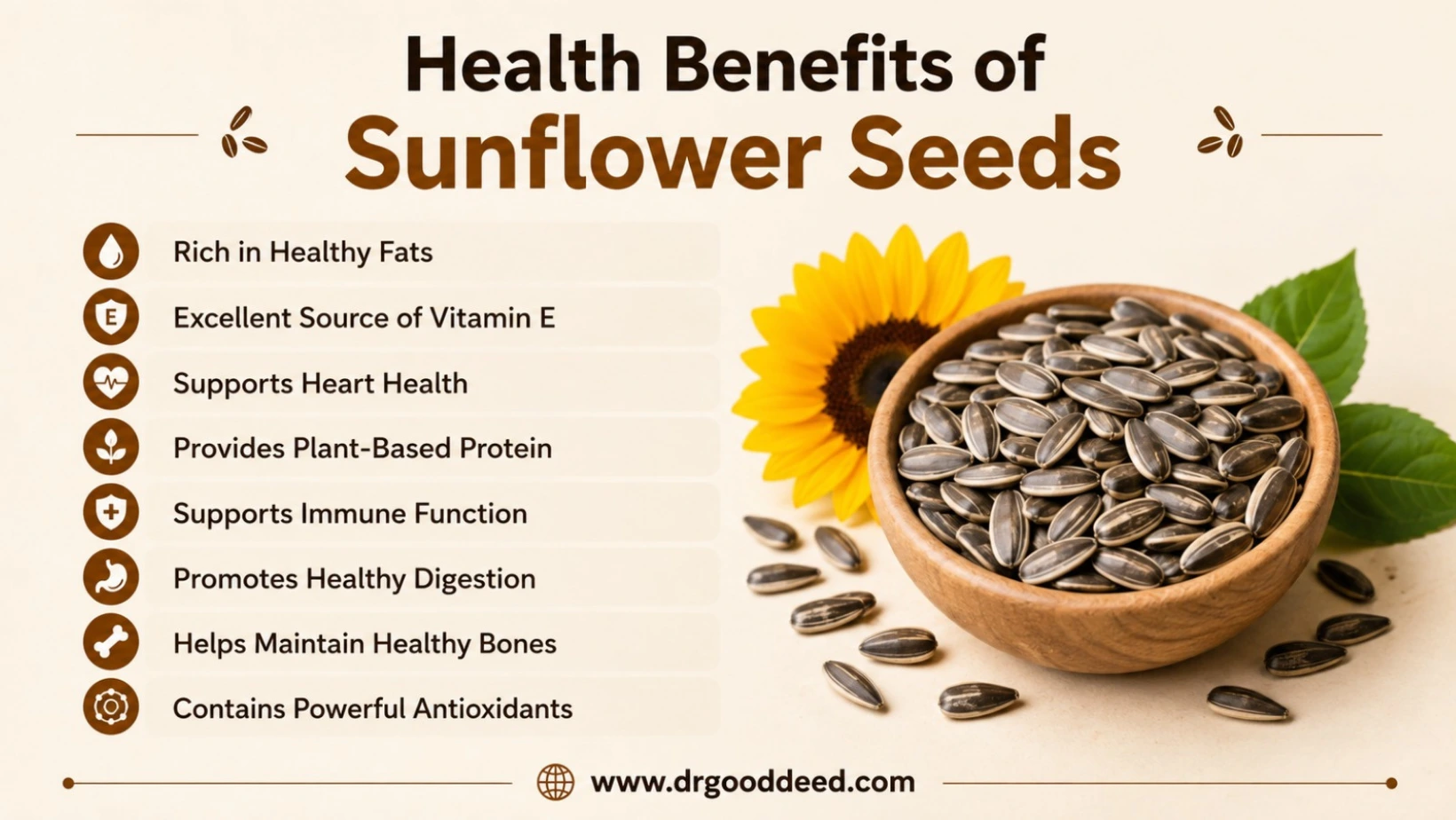
The health benefits of sunflower seeds span heart health, immune support, bone strength, and blood sugar control, backed by their fat profile, vitamin E content, and mineral density. These benefits apply to normal serving sizes; they do not scale up if you eat more, and some effects reverse with excess intake.
1. Rich in Healthy Fats
Roughly 84% of the fat in sunflower seeds is unsaturated. Linoleic acid, the main fat type here, helps lower LDL cholesterol when you swap it in for saturated fat sources like butter or fatty meat.
2. Excellent Source of Vitamin E
One ounce provides 66% of your daily vitamin E, an antioxidant that protects cell membranes from damage. Few common foods pack this much vitamin E into such a small serving.
3. Supports Heart Health
Magnesium and bioactive peptides in sunflower seeds may help relax blood vessels, which supports healthy blood pressure. Combined with their fiber and unsaturated fat, this makes them a useful food for cardiovascular support.
4. Provides Plant-Based Protein
Sunflower seeds give you 5.8 grams of protein per ounce, useful for vegetarians, vegans, or anyone cutting back on meat. They contain all nine essential amino acids, though not in the ideal ratio a complete animal protein offers.
5. Supports Immune Function
Zinc and selenium in sunflower seeds help your immune cells develop and function properly. Vitamin E adds another layer of antioxidant protection that supports the body’s defense against everyday cell damage.
6. Promotes Healthy Digestion
With around 3 grams of fiber per ounce, sunflower seeds feed healthy gut bacteria and add bulk to stool. This supports regular bowel movements when paired with adequate water intake.
7. Helps Maintain Healthy Bones
Copper, magnesium, and phosphorus in sunflower seeds all play roles in building and maintaining bone density. Copper specifically supports collagen formation, a protein that gives bone its structure.
8. Contains Powerful Antioxidants
Beyond vitamin E, sunflower seeds contain flavonoids and phenolic acids. These compounds fight oxidative stress, a process linked to aging and chronic disease when left unchecked over time.
Side Effects of Eating Too Many Sunflower Seeds
The side effects of eating too many sunflower seeds include weight gain from excess calories, bloating, high sodium intake from salted varieties, and in rare cases, selenium overload.
Excess Calorie Intake
A single ounce holds 165 calories, and it is easy to eat several ounces while watching a movie or driving. Eating too many sunflower seeds in one sitting can add 500 calories or more without much awareness, since shelled kernels disappear fast.
Digestive Discomfort
High fiber and fat content can cause bloating, gas, or stomach cramps in people who eat large amounts at once. Eating too many sunflower seeds too quickly, especially on an empty stomach, raises the odds of digestive upset.
High Sodium From Salted Varieties
Salted, in-shell sunflower seeds can carry over 500 mg of sodium per serving once you account for the shells people crack and lick before eating the kernel. This adds up fast for anyone managing blood pressure.
Possible Selenium Excess From Very High Intake
The tolerable upper limit for selenium is 400 mcg a day for adults, according to the National Institutes of Health Office of Dietary Supplements. Sunflower seeds are not as selenium-dense as Brazil nuts, but stacking them with other selenium-rich foods daily could edge someone toward that ceiling over time.
Dental Issues With Cracking Shells
Repeatedly cracking hard shells with your teeth can chip enamel or crack a tooth, especially over years of habitual snacking. Dentists see this pattern often in people who eat in-shell seeds daily.
FAQ
How many sunflower seeds should I eat each day?
Most healthy adults can eat one to two ounces (about 28 to 56 grams, roughly two to four tablespoons of kernels) daily without issues.
Can sunflower seeds cause weight gain?
Yes. At 165 calories per ounce, unmeasured portions add up fast and can contribute to weight gain if they replace nothing else in your diet.
Are salted sunflower seeds unhealthy?
Not inherently, but one ounce can contain over 100 mg of sodium. Choose unsalted or lightly salted versions if you watch your blood pressure.
What is the healthiest way to eat sunflower seeds?
The healthiest way to eat sunflower seeds is raw or dry-roasted, unsalted, and measured to a one-ounce portion using a kitchen scale or measuring cup.
Are sunflower seeds good for heart health?
Yes. Their unsaturated fat, magnesium, and phytosterols support healthy cholesterol and blood pressure levels when eaten in normal portions.
Can sunflower seeds improve skin health?
Vitamin E in sunflower seeds protects skin cells from oxidative damage, but no single food reverses skin aging or clears skin conditions alone.
Are sunflower seeds a good source of protein?
Yes. One ounce provides 5.8 grams of protein, useful for vegetarians, though it is not a complete protein on its own.
Can children eat sunflower seeds?
Yes, in shelled, unsalted kernel form once a child can chew well. Whole in-shell seeds pose a choking risk for kids under four.
Who should avoid sunflower seeds?
People with a seed allergy, kidney stone history tied to oxalates, or sodium-restricted diets should limit or avoid salted varieties specifically.
Sources
- U.S. Department of Agriculture, FoodData Central
- National Institutes of Health, Office of Dietary Supplements, Selenium Fact Sheet
- National Institutes of Health, Office of Dietary Supplements, Vitamin E Fact Sheet
- Mayo Clinic, Nuts and Your Heart
- American Heart Association, Dietary Fats
- Harvard T.H. Chan School of Public Health, Nuts for the Heart
- National Sunflower Association
- U.S. Department of Agriculture, Economic Research Service, Oil Crops
- American Dental Association, Cracked Teeth