
Black coffee is brewed coffee with no milk, cream, or sugar added. The health benefits of black coffee include sharper focus, a lower risk of type 2 diabetes, and liver support. A typical 8-ounce cup has fewer than 5 calories and about 95 milligrams of caffeine.
This drink ranks among the most studied beverages in the American diet. Researchers keep finding fresh links between black coffee for weight loss, brain function, and heart disease risk.
This guide covers the 12 health benefits of black coffee and its full nutrition profile. It also explains how to prepare black coffee at home. You’ll find out how much black coffee is safe per day and the real side effects of black coffee’s excessive dose.
What Is Black Coffee?
Black coffee is coffee in its purest form. It contains no added fat, sugar, or dairy, which keeps its calorie count near zero. Its nutritional value comes almost entirely from caffeine and plant compounds called polyphenols.
How Black Coffee Is Made
Roasted coffee beans get ground, then soaked or run through hot water. This process pulls out caffeine, oils, and antioxidants like chlorogenic acid. No milk or sweetener gets added at any step. The result is a bitter, dark drink that carries the coffee bean’s full nutritional profile.
Nutritional Profile
An 8-ounce cup of black coffee contains:
- Calories: 2 to 5
- Caffeine: 80 to 100 milligrams
- Potassium: 116 milligrams
- Magnesium: 7 milligrams
- Riboflavin (B2): 11% of daily value
- Niacin (B3): small amounts
- Antioxidants: chlorogenic acid, caffeic acid, and melanoidins
Coffee ranks as the single largest source of dietary antioxidants for most American adults. This density drives many of the health benefits of black coffee that most articles skip over.
Types of Black Coffee
Learning how to prepare black coffee the right way starts with knowing your brew style. Different brewing styles change caffeine content and flavor:
- Drip coffee: standard American brew, medium caffeine
- French press: full-bodied, slightly higher caffeine and oil content
- Espresso: concentrated shot, high caffeine per ounce
- Cold brew: steeped for hours, smoother taste, often higher caffeine per serving
- Pour-over: clean flavor, caffeine level similar to drip
Calories in Black Coffee
A plain cup of black coffee has 2 to 5 calories. That number stays low no matter which brewing method you pick. Adding sugar, cream, or flavored syrup changes this fast. One tablespoon of cream adds about 50 calories. Flavored syrups can add over 100.
12 Health Benefits of Black Coffee
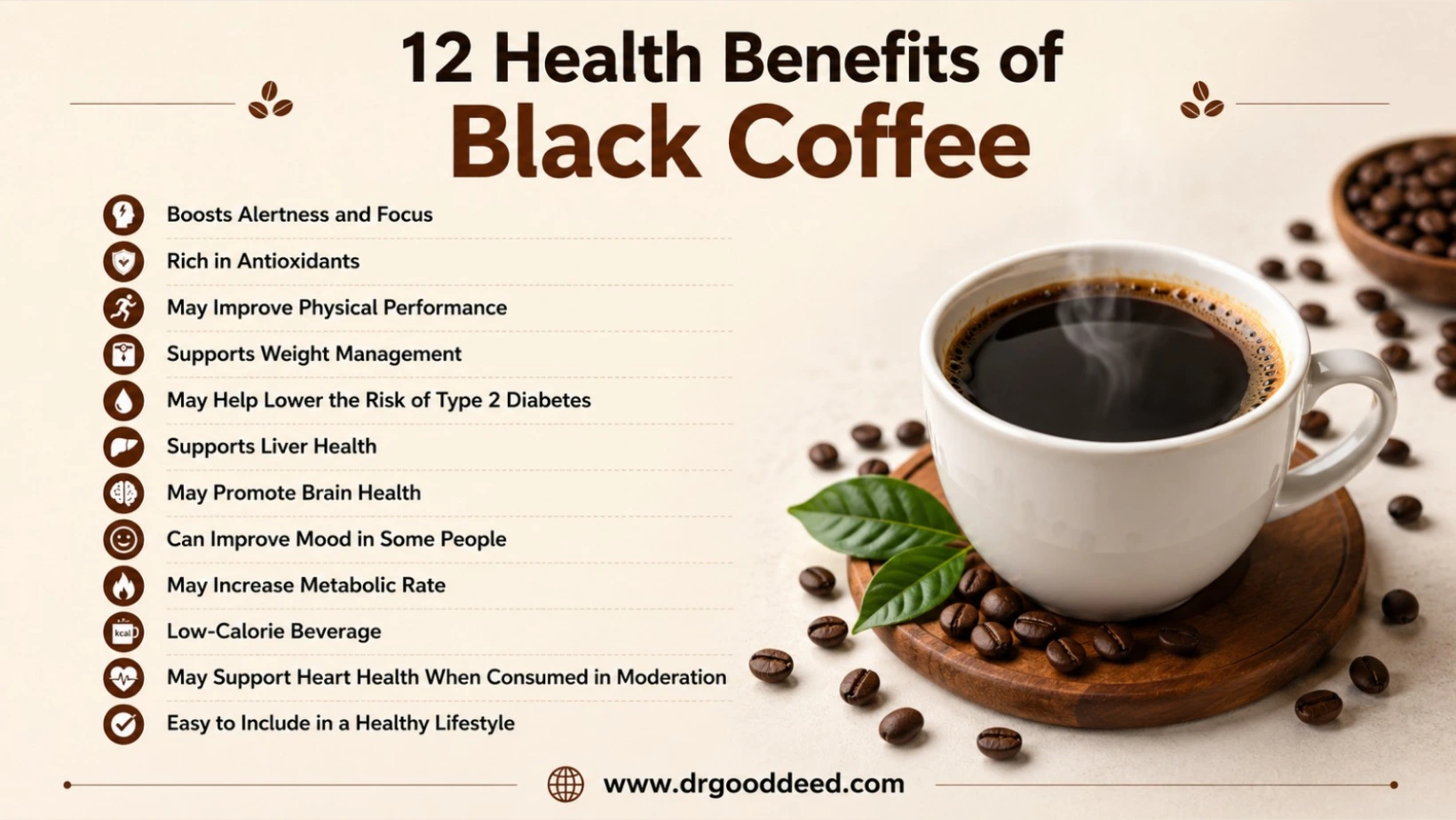
The 12 health benefits of black coffee cover brain function, metabolism, liver protection, and heart health. Most of these effects trace back to two things: caffeine and chlorogenic acid. Together, they explain why coffee ranks as one of the most researched beverages in nutrition science.
1. Boosts Alertness and Focus
Caffeine blocks adenosine, a brain chemical that builds up during the day and makes you feel tired. With adenosine blocked, your brain releases more dopamine and norepinephrine. This combination sharpens focus and reaction time within 30 to 60 minutes of drinking a cup. One study found that 200 milligrams of caffeine, about two cups, improved memory consolidation in test subjects.
2. Rich in Antioxidants
Black coffee delivers more dietary antioxidants than most fruits and vegetables per serving. Chlorogenic acid makes up much of this antioxidant load, alongside caffeic acid and melanoidins formed during roasting. These compounds neutralize free radicals, unstable molecules linked to cell damage and chronic disease. This is one of the health benefits of black coffee that nutrition researchers highlight most often, since few common drinks match this antioxidant density.
3. May Improve Physical Performance
Caffeine raises adrenaline levels in your blood, which prepares your body for physical exertion. Studies show caffeine can improve endurance performance by 2% to 4% in trained athletes. It also helps your body use fat as fuel during exercise, sparing muscle glycogen for later in a workout. Drinking black coffee 30 to 60 minutes before exercise gives caffeine enough time to reach peak blood levels.
4. Supports Weight Management
Black coffee for weight loss works mainly through appetite control and fat oxidation, not magic fat burning. Caffeine increases metabolic rate by 3% to 11% for a few hours after intake. Chlorogenic acid also slows how fast your gut absorbs carbohydrates, which can reduce blood sugar spikes after meals. Black coffee only supports weight loss when you skip the sugar and cream that many people add.
5. May Help Lower the Risk of Type 2 Diabetes
Large studies tracking coffee drinkers found that each additional daily cup links to about a 7% lower risk of type 2 diabetes. Chlorogenic acid slows glucose absorption in the intestines, while caffeine and other compounds improve insulin sensitivity over time. This effect shows up in long-term studies, not single cups, so consistency over months matters more than one strong pot.
6. Supports Liver Health
Coffee drinkers show lower rates of liver enzyme elevation, a marker doctors use to check for liver damage. Research links regular coffee intake to a reduced risk of fatty liver disease, liver cirrhosis, and liver cancer. Scientists believe chlorogenic acid and caffeine both reduce liver inflammation and slow scar tissue buildup. Three or more cups daily shows the strongest protective association in most studies.
7. May Promote Brain Health
Caffeine supports the production of brain-derived neurotrophic factor, a protein that helps neurons grow and survive. Long-term coffee drinkers show lower rates of cognitive decline in several population studies. Starting coffee habits in middle age appears to offer the strongest protective link for brain health later in life. Antioxidants in coffee also reduce brain inflammation tied to neurodegenerative disease.
8. Can Improve Mood in Some People
Caffeine increases dopamine activity in brain regions tied to mood and motivation. Several population studies link regular moderate coffee intake to a lower rate of depression symptoms. This effect varies by person, since genetics affect how fast your body processes caffeine. People who metabolize caffeine slowly may feel jittery or anxious instead of uplifted, especially at higher doses.
9. May Increase Metabolic Rate
Caffeine triggers thermogenesis, a process where your body burns extra calories to produce heat. Studies show this effect can raise resting metabolic rate by 3% to 11% for several hours. This boost is modest, not dramatic, and it shrinks as your body builds caffeine tolerance over weeks of regular use. Cycling your intake helps maintain this metabolic effect over time.
10. Low-Calorie Beverage
Black coffee has 2 to 5 calories per 8-ounce cup, making it one of the lowest-calorie hot drinks available. This matters most when black coffee replaces high-calorie drinks like soda, sweetened tea, or flavored lattes. Swapping one 300-calorie latte for black coffee daily saves over 2,000 calories a week, without any other diet change.
11. May Support Heart Health When Consumed in Moderation
Moderate coffee intake, generally 2 to 4 cups daily, links to a lower risk of stroke and heart failure in long-term studies. Antioxidants in coffee reduce inflammation and improve how well blood vessels dilate. Caffeine causes a short-term rise in blood pressure lasting 3 to 4 hours, though this effect fades with regular use. People with uncontrolled high blood pressure should ask a doctor before increasing intake.
12. Easy to Include in a Healthy Lifestyle
Black coffee fits almost any diet plan since it has no fat, sugar, or carbs on its own. It works as a pre-workout drink, an afternoon focus boost, or a low-calorie swap for sweetened beverages. The health benefits of black coffee add up mainly through consistency, a cup or two daily over months and years, not one large dose.
How to Prepare Black Coffee
Knowing how to prepare black coffee properly affects both flavor and caffeine content. Each method below uses only ground coffee and hot water, with no additives at any step.
Using Ground Coffee
Use a medium grind for most drip methods and a coarse grind for French press. Water temperature between 195°F and 205°F extracts flavor without burning the grounds. A standard ratio is 1 to 2 tablespoons of ground coffee per 6 ounces of water.
French Press Method
- Add coarse-ground coffee to the press.
- Pour hot water over the grounds and stir gently.
- Let it steep for 4 minutes.
- Press the plunger down slowly.
- Pour and drink immediately.
Pour-Over Method
- Place a filter in the dripper and rinse it with hot water.
- Add medium-fine ground coffee to the filter.
- Pour a small amount of water first to let the coffee bloom for 30 seconds.
- Slowly pour the rest of the water in circles.
- Let it drain fully before serving.
Drip Coffee Maker
Add ground coffee to the filter basket and water to the reservoir. Start the machine and let it brew fully before pouring. This method gives the most consistent caffeine content across cups, since machine settings stay fixed each time.
Instant Black Coffee
Add one to two teaspoons of instant coffee granules to hot water and stir. This method skips grinding and filtering, though it often has a milder antioxidant profile than freshly brewed coffee. It remains a fast, low-calorie option when time is short.
How Much Black Coffee Is Safe Per Day
How much black coffee is safe per day depends on your health status and caffeine sensitivity. The FDA states that up to 400 milligrams of caffeine daily, about four 8-ounce cups, is safe for most healthy adults. Pregnant women should stay under 200 milligrams daily. People with heart conditions or anxiety disorders should ask a doctor before regular high intake.
Side Effects of Black Coffee’s Excessive Dose
The side effects of black coffee’s excessive dose show up once intake climbs past 400 milligrams of caffeine in a day. Common symptoms include:
| Symptom | Typical Trigger Level |
| Jitteriness or anxiety | 200mg+ in one sitting |
| Rapid heart rate | 400mg+ per day |
| Insomnia | Coffee within 6 hours of bedtime |
| Upset stomach | Coffee on an empty stomach |
| Headache from withdrawal | Sudden stop after regular high intake |
Consuming around 1,200 milligrams at once can cause toxic effects, according to the FDA. Concentrated powdered caffeine is far more dangerous than brewed coffee, since one teaspoon can equal 28 cups of coffee.
FAQs
Is black coffee good for weight loss?
Yes, when it replaces sugary drinks. Its near-zero calories and metabolism boost of 3% to 11% support weight loss, but only without added cream or sugar.
How much black coffee is safe to drink each day?
Up to 400 milligrams of caffeine, about four 8-ounce cups, is safe for most healthy adults according to the FDA. Pregnant women should limit intake to under 200 milligrams.
Does black coffee increase metabolism?
Yes. Caffeine raises resting metabolic rate by 3% to 11% for several hours after intake, though this effect weakens as your body builds tolerance over time.
What is the best time to drink black coffee?
Mid-morning, around 9:30 to 11:30 AM, works best. Cortisol naturally peaks earlier, so coffee then adds less benefit and may build tolerance faster.
Can black coffee improve exercise performance?
Yes. Caffeine can boost endurance performance by 2% to 4% when consumed 30 to 60 minutes before a workout, based on controlled athletic studies.
Can black coffee raise blood pressure?
Yes, temporarily. Caffeine raises blood pressure for 3 to 4 hours after intake. This effect fades with regular use as your body builds tolerance.
Is black coffee good for liver health?
Yes. Studies link 3 or more daily cups to lower rates of fatty liver disease, liver cirrhosis, and liver cancer, likely from chlorogenic acid’s anti-inflammatory effect.
Can I drink black coffee on an empty stomach?
Most people can, but it may trigger acid reflux or stomach upset in sensitive individuals. Pairing it with food reduces this risk significantly.
Sources
- U.S. Food and Drug Administration: Spilling the Beans on Caffeine
- Mayo Clinic: Caffeine, how much is too much?
- Cleveland Clinic: Caffeine Overdose Symptoms and Treatment
- Harvard T.H. Chan School of Public Health: Coffee
- National Institutes of Health, Office of Dietary Supplements: Caffeine
- American Diabetes Association: Coffee and Diabetes Risk
- PubMed Central: Chlorogenic acid and metabolic health research
- American Heart Association: Coffee and Heart Health
- USDA FoodData Central: Coffee, brewed
- National Institute on Aging: Coffee and Cognitive Health Research