
Small clots up to the size of a quarter (about 25 millimeters) are considered medically normal during menstruation. They form when menstrual blood pools faster than the uterus can break it down. However, clots larger than a quarter, passed regularly or alongside soaking through a pad or tampon every hour, signal heavy menstrual bleeding (HMB) and require evaluation.
Menorrhagia (the medical term for abnormally heavy or prolonged menstrual bleeding) affects roughly 1 in 5 women of reproductive age in the United States. Blood clots during periods are not normal when they appear in large quantities, cause significant pain, or come with symptoms like dizziness and fatigue from blood loss.
What Are Menstrual Blood Clots?
Menstrual blood clots are gel-like masses of blood, tissue, and proteins that form inside the uterus during menstruation. They are not the same as the blood clots that form in veins or arteries. Menstrual clots form when blood volume exceeds the uterus’s ability to break down blood quickly enough before it exits.
Uterine Lining Shedding and Clots
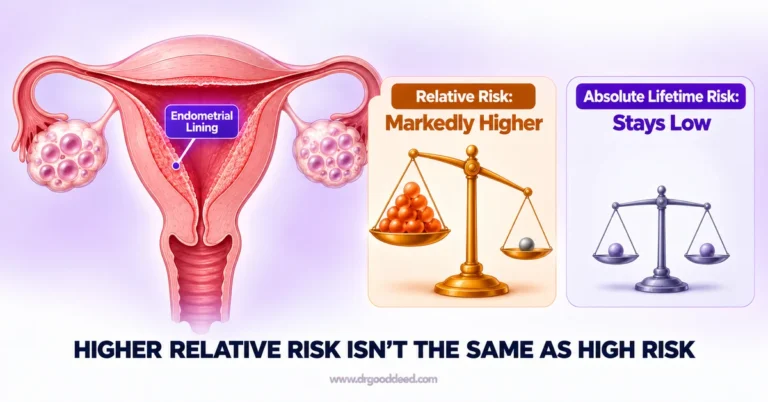
Uterine lining shedding and clots are directly connected. Each month, the uterine lining (called the endometrium) builds up in preparation for a potential pregnancy. When pregnancy does not occur, the lining sheds through menstruation.
As the endometrium breaks down, blood and tissue mix together. The uterus produces natural anticoagulants (substances that prevent blood from clotting, specifically plasminogen activators) to keep blood flowing out smoothly.
When blood flow is heavy and fast, these anticoagulants cannot break down all the blood before it exits. The remaining blood coagulates (thickens) into gel-like clots inside the uterine cavity. The uterus then contracts to push them out, which is why clot passage often causes cramping.
Why Menstrual Blood Sometimes Thickens
Menstrual blood thickens into clots when:
- Blood pools in the lower uterus or vaginal canal before exiting
- Flow volume overwhelms natural anticoagulant activity
- The uterine lining is thicker than usual due to hormonal imbalance
- Uterine abnormalities (fibroids, polyps) slow or redirect blood flow
Normal Clot Size and Appearance
Normal menstrual clots are smaller than a quarter (25 mm), dark red to brown in color, and appear most often on the heaviest days of the period (typically days two and three). Passing one or two small clots per cycle is within normal range. Blood clots during periods are normal when they appear only on heavy days and remain smaller than a quarter.
Why Blood Clots Happen During Periods
Blood clots form during periods as a natural response to heavy flow. The uterus produces fibrinolysin (an enzyme that dissolves blood clots) during menstruation. When bleeding is light to moderate, fibrinolysin keeps blood liquid throughout its exit. When flow is heavy, fibrinolysin activity cannot keep pace, and blood coagulates before leaving the body.
Key factors that increase clot formation:
- Flow rate: faster, heavier flow overwhelms fibrinolysin activity more quickly
- Uterine contractions: slowed or irregular contractions allow blood to pool and thicken before it is expelled
- Body position: lying down for extended periods (during sleep) allows blood to pool in the uterus; clots often appear in the morning upon standing
- Thickened endometrium: a thicker lining means more tissue and blood volume to shed, increasing the chance of clot formation
- Hormonal imbalance: high estrogen levels stimulate endometrial growth, producing a thicker lining that generates more clotting material
Causes of Heavy Periods With Clots
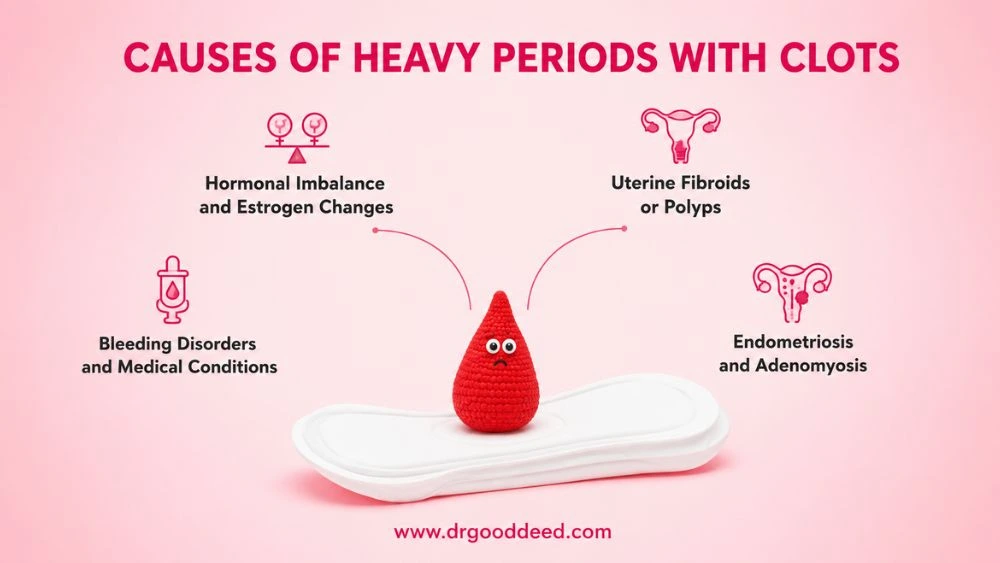
Causes of heavy periods with clots range from hormonal imbalances to structural uterine conditions to systemic bleeding disorders. Identifying the cause is critical because each requires a different treatment approach.
Hormonal Imbalance and Estrogen Changes
Estrogen stimulates endometrial growth. When progesterone (the hormone that stabilizes the lining) does not adequately balance estrogen levels, the endometrium builds up more than usual. This excess lining sheds as heavier bleeding with more clots.
Conditions that create estrogen dominance include PCOS (polycystic ovary syndrome), perimenopause, thyroid dysfunction, and obesity (fat tissue converts androgens to estrogen).
Uterine Fibroids or Polyps
Uterine fibroids (non-cancerous muscle growths inside or on the uterine wall) affect 20 to 80% of women by age 50, with higher prevalence in Black women in the US. Fibroids increase menstrual blood volume by enlarging the uterine surface area and interfering with normal uterine contractions.
Submucosal fibroids (growing into the uterine cavity) cause the heaviest bleeding and the most significant clotting. Uterine polyps (small growths of the uterine lining) produce similar but typically lighter bleeding.
Endometriosis and Adenomyosis
Endometriosis occurs when tissue similar to the uterine lining grows outside the uterus, on the ovaries, fallopian tubes, or pelvic walls. It affects approximately 10% of women globally and causes heavy, painful periods with significant clotting.
Adenomyosis is a related condition where the uterine lining grows into the uterine muscle wall itself, causing the uterus to enlarge and bleed more heavily. Both conditions are common causes of heavy periods with clots and are frequently underdiagnosed.
Bleeding Disorders and Medical Conditions
Von Willebrand disease (the most common inherited bleeding disorder, affecting approximately 1% of the US population) impairs the blood’s normal clotting ability.
Paradoxically, this produces heavier menstrual bleeding with more clotting rather than less, because the uterus bleeds more extensively than normal and blood pools before exiting. Thrombocytopenia (low platelet count) and certain medications including anticoagulants (blood thinners) also increase bleeding volume and clot passage.
Large Blood Clots During Period Symptoms
Large blood clots during period symptoms go beyond the clots themselves. When clotting reflects truly heavy bleeding, the body shows additional signs that indicate significant blood loss over multiple cycles.
Passing Clots Larger Than a Coin
Large blood clots during period symptoms typically start with clots larger than a quarter (25 mm). Passing clots this size during multiple cycles, soaking through a regular pad or tampon in one hour or less, or needing to use both a tampon and pad together are the clinical markers of menorrhagia.
The American College of Obstetricians and Gynecologists defines heavy menstrual bleeding as losing more than 80 milliliters of blood per cycle. Most people cannot measure this directly, which is why the pad and tampon soaking frequency test is used clinically.
Severe Cramps and Pelvic Pain
The uterus must contract to pass large clots. Stronger contractions produce more severe cramping. Dysmenorrhea (painful menstruation) associated with large clot passage is often described as pressure-like cramping in the lower abdomen that radiates to the lower back and thighs.
Cramping that does not respond to ibuprofen or naproxen, or that prevents daily activities, suggests an underlying condition like endometriosis or adenomyosis rather than normal heavy flow.
Fatigue and Dizziness From Blood Loss
Losing more than 80 mL of blood per cycle over several months depletes iron stores. The body uses iron to produce hemoglobin (the protein in red blood cells that carries oxygen).
When iron falls too low, hemoglobin drops, and iron deficiency anemia develops. Symptoms include fatigue that does not improve with sleep, shortness of breath during mild activity, heart palpitations, difficulty concentrating, and dizziness or lightheadedness, especially when standing up quickly.
Dark Red Clots During Menstruation
Dark red clots during menstruation are common and usually not a sign of a problem. The color of menstrual blood reflects how long it took to exit the body, not the severity of a condition.
Older Blood Leaving the Uterus
Dark red clots during menstruation are made of blood that spent more time inside the uterus before exiting. When blood sits longer, it oxidizes (reacts with oxygen), which turns it from bright red to dark red, brown, or even blackish-brown. This is the same process that makes a cut on the skin turn darker as it dries.
Flow Speed Affecting Blood Color
Bright red blood indicates fast, fresh flow. This appears on heavy flow days when blood exits quickly. Dark red clots during menstruation appear at the start or end of the period, when flow is slower and blood takes longer to travel out of the uterus. Dark brown discharge at the very end of a period is simply older blood clearing out.
When Dark Clots May Need Evaluation
Dark clots that persist through most of the period, appear in large quantities, or come with a foul odor (which normal menstrual blood does not have) may indicate retained tissue or infection and require evaluation. Blood clots during periods are normal when they are dark and appear only at the start or end. When dark clotting is heavy and sustained throughout the full period, see a healthcare provider.
How to Reduce Heavy Bleeding and Clots
Reducing heavy bleeding and clots depends on whether the cause is hormonal, structural, or related to a bleeding disorder. The approaches below range from self-care measures to prescribed medical treatments.
Staying Hydrated and Nourished
Dehydration reduces blood volume, which can make the body compensate in ways that increase clotting. Staying hydrated supports healthy blood viscosity (thickness). Eating iron-rich foods during and after heavy periods, including beef, spinach, lentils, and fortified cereals, helps replace what is lost. Pairing iron-rich foods with vitamin C (from orange juice, bell peppers, or tomatoes) improves iron absorption significantly.
Managing Iron Intake During Heavy Periods
Iron deficiency is the most common nutritional consequence of heavy menstrual bleeding. If fatigue, breathlessness, or dizziness accompany heavy periods, a ferritin blood test (which measures stored iron) is more accurate than a standard hemoglobin test for catching early deficiency. Doctors typically recommend ferrous sulfate (an oral iron supplement) for confirmed iron deficiency from heavy periods.
Medical Treatments for Excessive Bleeding
Several evidence-based treatments reduce menstrual bleeding volume and clot formation:
- NSAIDs (ibuprofen, naproxen): reduce prostaglandins (chemicals that drive uterine contractions and bleeding) by 30 to 40% when taken at the start of the period and continued through heavy days
- Tranexamic acid: a non-hormonal tablet that reduces menstrual blood loss by 40 to 50% by inhibiting fibrinolysis (the breakdown of clots). Taken only on heavy days.
- Levonorgestrel IUD (Mirena): reduces menstrual bleeding by 80 to 90% within six months. The most effective non-surgical option for heavy periods with no structural cause.
- Combined oral contraceptive pills: reduce bleeding by 40 to 50% by thinning the endometrium
- Surgery: endometrial ablation (removing the uterine lining) or myomectomy (removing fibroids) for structural causes
Conditions Linked to Abnormal Menstrual Clots
Abnormal menstrual clotting is a symptom, not a diagnosis. The clots may be an expected symptom of the underlying condition, but the condition itself always requires treatment. Multiple conditions produce abnormal clotting through different mechanisms.
Conditions most commonly linked to heavy periods with abnormal clotting:
- Uterine fibroids: the most common structural cause; present in up to 80% of women by age 50
- Endometriosis: affects 10% of reproductive-age women; causes heavy, painful, clot-heavy periods
- Adenomyosis: causes diffuse uterine enlargement with very heavy, crampy periods; often coexists with endometriosis
- PCOS: disrupts ovulation, causing irregular heavy cycles with significant clotting during infrequent periods
- Hypothyroidism: underactive thyroid reduces production of clotting factors and disrupts cycle regulation; 20 to 30% of hypothyroid women experience menorrhagia
- Von Willebrand disease: affects 1% of the US population; frequently goes undiagnosed in women because heavy periods are normalized
- Endometrial hyperplasia: abnormal thickening of the uterine lining, sometimes precancerous; causes heavy irregular bleeding with large clots
The clots may be an expected symptom of the condition, but the condition itself requires treatment.
FAQs
What Size of Menstrual Blood Clot Is Considered Normal?
Blood clots during periods are normal when smaller than a quarter. Clots up to 25 millimeters (roughly the size of a US quarter) on the heaviest one to two days of a period fall within normal range. Clots larger than this, or passing multiple large clots per cycle consistently, indicate heavy menstrual bleeding requiring evaluation.
Why Do Blood Clots Appear More Often During Heavy Periods?
Uterine lining shedding and clots occurs because heavy flow overwhelms the uterus’s natural fibrinolysin enzyme activity. Fibrinolysin dissolves blood before it exits, but when bleeding is faster than the enzyme can act, blood coagulates into clots inside the uterine cavity. Larger surface area (from fibroids or thick endometrium) produces more blood and more residual clotting.
Can Hormonal Imbalance Cause Heavy Bleeding With Clots?
Yes. High estrogen without sufficient progesterone allows the endometrial lining to grow thicker than normal. When this lining sheds, the volume is higher and clotting increases. This estrogen-progesterone imbalance is a primary mechanism behind causes of heavy periods with clots in women with PCOS, perimenopause, thyroid dysfunction, and obesity.
What Do Dark Red Menstrual Clots Usually Mean?
Dark red clots during menstruation indicate blood that sat in the uterus longer before exiting. Slower flow at the start or end of a period allows blood to oxidize (react with oxygen) and darken. This is entirely normal. Dark clotting throughout the entire period, in large amounts, or with an unusual odor warrants evaluation for retained tissue or infection.
When Are Period Blood Clots Considered Abnormal?
Clots are abnormal when they are consistently larger than 25 millimeters, when soaking a full pad or tampon in under one hour, when accompanied by symptoms of anemia (fatigue, dizziness, shortness of breath), or when they cause severe cramping that does not respond to ibuprofen. Large blood clots during period symptoms that match this description require clinical assessment.
Can Fibroids or Endometriosis Increase Menstrual Clotting?
Yes. Uterine fibroids enlarge the uterine cavity and surface area, increasing total blood volume shed per cycle. Submucosal fibroids cause the heaviest clotting. Endometriosis produces inflammatory pelvic changes that intensify menstrual flow. Both are among the most common structural causes of heavy periods with clots in women aged 30 to 50.
How Can Heavy Periods Affect Iron Levels and Energy?
Losing more than 80 mL of blood per cycle repeatedly depletes iron stores. Ferritin (stored iron) drops first, before hemoglobin falls. This means standard blood tests often appear normal while stored iron is already critically low. Fatigue, poor concentration, cold intolerance, and heart palpitations from iron depletion appear before anemia is detectable on a basic complete blood count.
Are Painful Cramps With Clots a Warning Sign of a Condition?
Yes, when cramps are severe. Mild cramping during clot passage is normal because the uterus contracts to expel clots. Severe cramping, pain that radiates to the lower back and thighs, or pain that requires prescription-strength relief and interferes with daily life suggests endometriosis, adenomyosis, or fibroids as underlying causes of heavy periods with clots rather than normal menstrual variation.
What Treatments May Help Reduce Heavy Bleeding and Clotting?
To reduce heavy bleeding and clots medically, NSAIDs reduce bleeding by 30 to 40% when started at period onset. Tranexamic acid reduces bleeding by 40 to 50% and is non-hormonal. The levonorgestrel IUD (Mirena) reduces bleeding by 80 to 90% within six months. Hormonal pills reduce bleeding by 40 to 50%. Endometrial ablation eliminates or greatly reduces periods in over 90% of cases.
When Should Medical Attention Be Sought for Menstrual Clots?
Seek evaluation if you pass clots larger than a quarter regularly, soak a pad or tampon in under one hour on multiple consecutive hours, feel dizzy or faint during your period, or experience fatigue that does not resolve after your period ends. A gynecologist can confirm through a pelvic ultrasound, blood count, ferritin test, and hormone panel.