
Migraine headaches during pregnancy affect roughly 15-20% of expectant mothers, though many women who had migraines before pregnancy actually see them improve, especially after the first trimester. The throbbing, pulsing pain usually hits one side of the head and can last anywhere from four hours to three days. Pregnancy brings major shifts in hormone levels, blood volume, and body chemistry that can trigger these headaches or change how often they happen.
The body undergoes dramatic transformations during pregnancy. Blood volume increases by 40-50%, hormone levels spike and fluctuate, and the nervous system becomes more sensitive. These changes can either trigger new migraines or alter existing patterns.
Why Migraines Can Happen During Pregnancy
Pregnancy transforms your body in ways that directly affect headache patterns. The surge in hormones, increased blood flow, and heightened nervous system sensitivity create a perfect storm for migraine triggers.
Hormonal Changes and Pregnancy Headaches
Estrogen levels multiply rapidly during early pregnancy, jumping from around 50 picograms per milliliter to over 18,000 by the third trimester. This massive increase affects brain chemistry, particularly serotonin levels, which play a key role in pain perception and blood vessel regulation. When estrogen levels stabilize after the first trimester, many women notice their migraines decrease or disappear completely.
Progesterone also rises significantly, reaching levels 10 times higher than normal by late pregnancy. This hormone relaxes blood vessels throughout the body, including those in the brain. The combination of expanding blood vessels and altered pain processing can trigger throbbing headaches. Women who experience menstrual migraines often see similar patterns during pregnancy because both situations involve rapid hormone fluctuations.
Increased Sensitivity to Triggers
Pregnancy amplifies your body’s response to environmental and dietary triggers. The same perfume that never bothered you before might suddenly trigger a splitting headache. This heightened sensitivity happens because pregnancy lowers your migraine threshold, making you more vulnerable to factors that previously caused no problems.
Your sense of smell becomes notably sharper during pregnancy, which is why strong odors like cigarette smoke, cleaning products, or certain foods can immediately trigger a migraine. This sensory amplification extends to light and sound as well. Bright lights and loud noises that seemed tolerable before pregnancy can now provoke severe headaches.
Blood Flow and Nervous System Changes
Blood volume increases by nearly half during pregnancy to support the growing baby. This extra blood puts more pressure on blood vessels, including those in the brain. The cardiovascular system works harder, and any disruption in blood flow can trigger migraines.
The autonomic nervous system, which controls involuntary body functions, becomes more reactive during pregnancy. This heightened state makes you more prone to stress-related migraines and increases sensitivity to changes in sleep patterns, meal timing, and physical activity levels. Your body essentially operates on high alert, responding more dramatically to any disruption in routine.
Causes of Migraines in Pregnancy
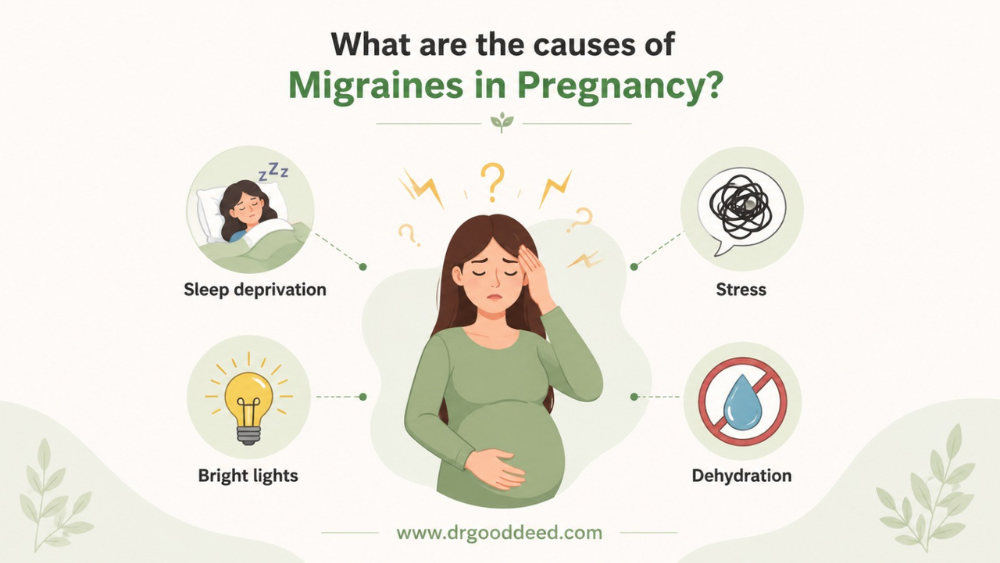
Migraine headaches during pregnancy stem from multiple factors that often work together. Identifying your specific triggers requires careful attention to patterns in your daily routine. The most common causes involve disruptions to basic physical needs and exposure to environmental factors.
Sleep Disruption and Fatigue
Growing discomfort, frequent bathroom trips, and anxiety about the baby make quality sleep difficult during pregnancy. Missing even one hour of your usual sleep can trigger a migraine the next day. The relationship works both ways: poor sleep triggers migraines, and migraines disrupt sleep, creating a frustrating cycle.
First-trimester exhaustion often forces women to change their sleep schedules, going to bed earlier or napping during the day. Any deviation from your body’s established rhythm can prompt a headache. Third-trimester discomfort makes finding a comfortable sleeping position nearly impossible, leading to fragmented sleep that leaves you vulnerable to morning migraines.
Stress and Emotional Changes
Worrying about the baby’s health, preparing for parenthood, and dealing with physical discomfort creates constant background stress. Your body releases cortisol and adrenaline in response to stress, which narrows blood vessels and then causes them to expand rapidly. This expansion triggers the throbbing pain characteristic of migraines.
Anxiety and depression affect up to 20% of pregnant women and significantly increase migraine frequency. The mental strain of managing pregnancy symptoms while continuing work and daily responsibilities takes a toll. Emotional ups and downs caused by fluctuating hormones add another layer of stress that can spark headaches.
Dehydration and Skipped Meals
Pregnancy increases your body’s fluid needs by about 50%. Morning sickness makes drinking water difficult, and dehydration quickly follows. Blood volume drops when you’re dehydrated, reducing oxygen flow to the brain and triggering migraine pain.
Your blood sugar drops faster during pregnancy because the baby continuously draws glucose for growth. Skipping a meal or waiting too long between snacks causes blood sugar to plummet, which can immediately trigger a headache. Nausea often makes eating unappealing, but going more than three hours without food puts you at risk for a migraine.
Sensitivity to Smells and Foods
Strong odors bypass normal sensory filtering during pregnancy and directly stimulate the part of your brain that processes pain. Gasoline fumes, perfume, cooking smells, and even scented lotions can trigger migraine headaches during pregnancy within minutes of exposure.
Your changing body chemistry affects how you process and react to foods. Items you ate regularly before pregnancy might suddenly cause headaches. The body’s increased sensitivity means even small amounts of trigger foods can provoke severe symptoms.
How Pregnancy Hormones Affect Headaches
Hormonal imbalance and pregnancy headaches connect directly through estrogen’s effect on brain chemistry and blood vessel behavior. The relationship between hormones and migraines explains why symptoms vary so dramatically across different stages of pregnancy.
Estrogen Fluctuations and Migraines
Estrogen stabilizes after the first trimester, which is why about 60-70% of women who had migraines before pregnancy experience significant improvement during the second and third trimesters. The steady high levels of estrogen seem to protect against migraines, unlike the dramatic ups and downs of the menstrual cycle that typically trigger attacks.
However, the initial surge during early pregnancy can worsen migraines temporarily. Those first 12 weeks involve rapid hormone changes as the placenta develops and takes over hormone production. Women who never had migraines before pregnancy sometimes develop them during these early weeks, though symptoms usually fade as hormone levels stabilize.
Trimester-Related Migraine Changes
First-trimester migraines tend to be more severe and frequent because of rapidly changing hormone levels combined with nausea, dehydration, and sleep disruption. This challenging period usually peaks around weeks 6-9, then gradually improves.
Second trimester brings relief for most women as estrogen levels plateau at high concentrations. The body adjusts to pregnancy changes, sleep often improves, and morning sickness typically resolves. This “honeymoon phase” of pregnancy often means fewer or less intense migraines.
Third-trimester patterns vary. Some women continue feeling good, while others notice migraines returning as physical discomfort increases and sleep becomes difficult again. The weight of the baby, back pain, and frequent urination interrupt sleep and can restart the migraine cycle.
Food Triggers for Migraines in Pregnancy
Certain foods contain natural compounds that affect blood vessel dilation and brain chemistry, making them common food triggers for migraines in pregnancy. Processed meats, aged cheeses, and foods containing MSG or artificial sweeteners top the list of problematic items.
Tyramine, a naturally occurring substance in aged and fermented foods, causes blood vessels to constrict and then rapidly expand, triggering the characteristic throbbing pain.
Common trigger foods include:
- Processed deli meats containing nitrates and nitrites
- Aged cheeses like cheddar, blue cheese, and parmesan
- Chocolate, particularly dark varieties with high cocoa content
- Citrus fruits and their juices
- Pickled or fermented foods, including sauerkraut and kimchi
- Foods with monosodium glutamate (MSG)
- Artificial sweeteners like aspartame
- Caffeinated beverages, when consumed in excess or withdrawn suddenly
- Alcohol (which should already be avoided during pregnancy)
- Nuts, particularly peanuts and walnuts
Food sensitivity during pregnancy differs from typical food allergies. Your body processes these foods normally, but the compounds they contain trigger a cascade of brain chemistry changes that result in migraines. Keeping a detailed food diary helps identify your specific triggers since individual responses vary widely.
Hydration and Rest for Pregnancy Migraines
Maintaining proper hydration and rest for pregnancy migraines forms the foundation of prevention. These basic physical needs become even more critical during pregnancy when your body’s demands increase substantially.
Importance of Fluid Intake
Pregnant women need roughly 10 cups (2.4 liters) of fluids daily, compared to the standard 8 cups recommended for non-pregnant adults. This extra fluid supports increased blood volume, amniotic fluid production, and the baby’s circulation. Dehydration concentrates waste products in your blood, reduces oxygen delivery to the brain, and makes blood vessels more prone to the inflammation that causes migraines.
Drinking small amounts frequently works better than chugging large quantities at once. Keep a water bottle within reach throughout the day and take sips every 15-20 minutes.
Adding slices of cucumber, lemon, or mint can make water more appealing if nausea makes plain water unappealing. Monitoring your urine color provides a simple hydration check: pale yellow indicates good hydration, while dark yellow signals you need more fluids.
Sleep Positioning and Headache Relief
Side sleeping, specifically on your left side, improves circulation and reduces pressure on major blood vessels. This position prevents the uterus from compressing the inferior vena cava, a large vein that returns blood to your heart. Better circulation means more consistent oxygen delivery to the brain, which helps prevent migraines.
Using a pregnancy pillow to support your belly and placing another pillow between your knees maintains proper spinal alignment. This positioning reduces back and neck strain that can contribute to tension-type headaches and trigger migraines. Elevating your head slightly with an extra pillow can also help if congestion contributes to your headaches.
Managing Fatigue Safely During Pregnancy
Listen to your body’s signals about rest. Pushing through exhaustion increases cortisol levels and sets up conditions for a migraine. Taking short 20-30 minute naps during the day can prevent the deep fatigue that triggers headaches, but avoid napping too late in the afternoon since this can interfere with nighttime sleep.
Establishing a consistent sleep schedule helps regulate your body’s circadian rhythm. Going to bed and waking up at the migraine , even on weekends, trains your body to expect rest at specific times. This consistency reduces one major trigger for migraine headaches during pregnancy.
Safe Migraine Remedies During Pregnancy
Safe migraine remedies during pregnancy focus on non-medication approaches that provide relief without risking harm to the developing baby. These methods work best when applied at the first sign of migraine symptoms.
Cold Compresses and Quiet Environments
Applying a cold compress to your forehead, temples, or the back of your neck constricts blood vessels and numbs pain receptors. The cold temperature provides immediate relief by reducing inflammation and slowing the nerve signals that transmit pain. Use a cloth-wrapped ice pack for 15 minutes, remove it for 15 minutes, then reapply as needed.
Creating a dark, quiet space helps tremendously because light and sound sensitivity intensify during a migraine. Close curtains or wear an eye mask to block light. Use earplugs or play soft white noise to mask disruptive sounds. Lying down in a cool, dark room allows your nervous system to calm down and often shortens the migraine’s duration.
Stress Reduction and Relaxation Techniques
Deep breathing exercises activate your parasympathetic nervous system, which counteracts the stress response that can worsen migraines. Try breathing in slowly for a count of four, holding for four, and exhaling for six. Repeat this cycle for five minutes when you feel a migraine starting.
Progressive muscle relaxation involves tensing and then releasing different muscle groups, starting with your toes and moving up to your head. This technique reduces the muscle tension that often accompanies migraines. Gentle prenatal yoga stretches can also relieve tension in your neck, shoulders, and upper back where migraine-related muscle tightness concentrates.
Medications That Require Medical Guidance
Acetaminophen (Tylenol) is generally considered safe throughout pregnancy when taken at recommended doses. However, you should always check with your healthcare provider before taking any medication, even over-the-counter options. Some women need prescription medications to manage severe migraine headaches during pregnancy, but these decisions require careful evaluation of risks versus benefits.
Certain migraine medications commonly used outside pregnancy are not safe during pregnancy. These include most triptans, NSAIDs like ibuprofen (especially after 20 weeks), aspirin in high doses, and ergotamine-containing drugs. Never take medication without discussing it with your doctor first, as some drugs can cause birth defects or other pregnancy complications.
Lifestyle Habits That May Help Prevent Migraines
Establishing consistent daily routines provides the stability your body needs to avoid migraine triggers. Small preventive measures taken regularly can significantly reduce both the frequency and severity of attacks. Creating predictable patterns around eating, sleeping, and stress management builds a strong defense against migraine headaches during pregnancy.
Prevention strategies include:
- Eating five to six small meals daily instead of three large ones to maintain steady blood sugar
- Staying hydrated by drinking water consistently throughout the day
- Maintaining a regular sleep schedule with 7-9 hours nightly
- Practicing stress management through prenatal yoga, meditation, or gentle exercise
- Avoiding known trigger foods identified through your food diary
- Limiting screen time and taking breaks from bright lights
- Keeping indoor temperatures comfortable since overheating can trigger migraines
- Exercising moderately for 20-30 minutes most days (with doctor approval)
- Taking breaks during stressful activities to prevent tension buildup
- Using sunglasses outdoors to reduce light sensitivity
Tracking your migraines in a journal helps identify patterns you might otherwise miss. Note the date, time, severity, potential triggers, and what provided relief.
Symptoms That May Occur With Pregnancy Migraines
Migraine headaches during pregnancy often come with a cluster of additional symptoms that can be just as disabling as the pain itself. Recognizing the full range of symptoms helps you distinguish migraines from other types of headaches and know when to seek medical attention.
Most migraine symptoms during pregnancy mirror those experienced outside pregnancy, though some women report heightened sensitivity.
Typical migraine symptoms include:
- Intense throbbing or pulsing pain, usually on one side of the head
- Nausea and vomiting that may worsen existing morning sickness
- Extreme sensitivity to light (photophobia) making bright environments unbearable
- Sensitivity to sounds (phonophobia) where normal noises feel painfully loud
- Visual disturbances called aura, including flashing lights, zigzag lines, or temporary blind spots
- Dizziness or feeling off-balance
- Neck stiffness and shoulder tension
- Difficulty concentrating or thinking clearly
- Fatigue and weakness
- Irritability and mood changes
Visual auras occur in about 25% of people with migraines. These neurological symptoms typically appear 10-30 minutes before the headache pain starts and last up to an hour. Seeing shimmering lights, wavy lines, or experiencing temporary vision loss in part of your visual field signals a migraine with aura. Some women experience aura without subsequent headache pain, though this is less common.
FAQs
Why do hormonal changes during pregnancy trigger migraines?
Estrogen affects serotonin levels in the brain, which control pain processing and blood vessel width. Rapid estrogen surges during early pregnancy cause blood vessels to swell and constrict unpredictably, triggering pain. Once estrogen stabilizes after 12 weeks, most women experience fewer migraine headaches during pregnancy.
Which foods commonly trigger migraines during pregnancy?
Aged cheeses, processed meats with nitrates, chocolate, citrus fruits, and MSG-containing foods trigger migraines most often. Tyramine in fermented foods causes blood vessel changes that spark headaches. Caffeine withdrawal when cutting coffee also triggers migraines. Track which specific food triggers for migraines in pregnancy affect you personally.
Can dehydration worsen pregnancy headaches?
Yes, dehydration shrinks blood volume and reduces oxygen delivery to the brain, directly triggering migraines. Pregnant women need 10 cups of water daily versus the usual 8. Even mild dehydration concentrates pain-causing compounds in your bloodstream. Proper hydration and rest for pregnancy migraines prevent most dehydration-related attacks.
Are migraines more common during certain trimesters?
First trimester sees the most migraines because of rapidly changing hormones, morning sickness, and sleep disruption. Second trimester usually brings relief as estrogen stabilizes. Third trimester varies, with some women experiencing renewed symptoms from physical discomfort and poor sleep. About 60-70% improve after week 12.
What safe home remedies may help pregnancy migraines?
Cold compresses on your forehead, dark quiet rooms, and deep breathing exercises provide immediate relief. Gentle neck stretches, adequate sleep, and consistent meal timing prevent attacks. Acetaminophen is generally safe but requires doctor approval. These safe migraine remedies during pregnancy avoid medications that might harm the baby.
How do sleep problems affect headaches during pregnancy?
Missing even one hour of usual sleep lowers your migraine threshold significantly. Fragmented sleep prevents the brain from completing important repair processes, making you vulnerable to headaches. Third-trimester discomfort and frequent bathroom trips disrupt sleep cycles. Maintaining consistent sleep times despite discomfort helps prevent migraine headaches during pregnancy.
When should severe headaches during pregnancy become a medical emergency?
Sudden severe headaches, especially after 20 weeks with vision changes, upper abdominal pain, or swelling, may signal preeclampsia. Headaches with fever, stiff neck, confusion, or seizures need immediate emergency care. Any new severe headache pattern different from your usual migraines requires urgent evaluation to rule out serious complications.
Can stress and anxiety worsen migraine symptoms while pregnant?
Absolutely. Stress releases cortisol and adrenaline, causing blood vessel constriction followed by rapid expansion that triggers throbbing pain. Pregnancy anxiety about the baby’s health compounds this effect. Managing stress through relaxation techniques, prenatal yoga, and adequate rest significantly reduces the causes of migraines in pregnancy.
Is caffeine withdrawal linked to pregnancy headaches?
Cutting caffeine suddenly when discovering pregnancy causes withdrawal headaches that can trigger migraines. Caffeine narrows blood vessels, so stopping abruptly causes them to expand rapidly. Gradually reducing intake over 1-2 weeks prevents withdrawal. Some doctors allow small amounts (under 200mg daily) to avoid triggering severe hormonal changes and pregnancy headaches.
How can migraine triggers be tracked safely during pregnancy?
Keep a detailed journal noting date, time, foods eaten, sleep quality, stress levels, and environmental factors before each migraine. After several weeks, patterns emerge showing your specific triggers. Mobile apps designed for migraine tracking simplify this process. Share your findings with your doctor to develop an effective prevention plan.