
Irritable bowel syndrome causes lower back discomfort in 28–81% of patients, according to a 2021 review in Neurogastroenterology & Motility. The pain is not imagined. It comes from physical pressure, nerve pathways, and gut-brain signaling that link your colon directly to your lower back. This guide covers why it happens, what it feels like, and how to manage it.
Why IBS May Cause Back Pain
IBS causes back pain through multiple physical mechanisms. The colon sits directly in front of the lumbar spine. When the colon is distended, cramping, or under pressure, that sensation travels to the back through shared nerve pathways. Most people do not realize this connection exists until a gastroenterologist explains it.
Abdominal Cramping and Muscle Tension
When gut cramps hit, the abdominal muscles contract involuntarily.
The body tightens the core and the lumbar region simultaneously. Over several hours, this creates genuine muscle fatigue and back soreness that feels separate from the gut pain but is caused by it.
Bloating and Pressure on Surrounding Structures
A distended abdomen puts mechanical pressure on the lumbar vertebrae and surrounding soft tissue. The intestines expand outward and backward. Studies from the American Journal of Gastroenterology confirm that abdominal distension increases intra-abdominal pressure, which compresses the structures near the lower spine.
Visceral Hypersensitivity
IBS causes the gut to become oversensitive to normal stimuli. Gas, stool movement, and mild distension that would go unnoticed in a healthy gut register as pain in IBS patients. This is why researchers confirm that IBS can cause back pain through referred nerve signals, not just direct pressure. A 2022 paper in Gut described this as central sensitization affecting multiple body regions.
The Gut-Brain Connection
The enteric nervous system shares nerve roots with the lumbar spine through the thoracic and sacral plexus. When the gut sends pain signals, the brain cannot always localize them precisely. It registers the signal as coming from the back, the abdomen, or both simultaneously.
Chronic Pain Amplification
In long-standing IBS, the central nervous system becomes sensitized to pain. This is called central sensitization. The brain lowers its pain threshold across multiple body regions, including the lower back. A 2023 review in Pain confirmed that IBS patients show significantly lower pain thresholds in non-gut regions than healthy controls.
Lower Back Pain During IBS Flare-Up
Lower back pain during IBS flare-up follows gut activity patterns, worsens when bowel symptoms peak, and eases as the gut settles. Understanding this pattern helps separate IBS-related back pain from a structural back injury.
IBS-C vs IBS-D Back Pain Differences
IBS-C (constipation subtype) causes back pain from stool buildup. IBS can cause back pain, and it is one of the most direct mechanisms. Stool accumulating in the sigmoid colon and rectum creates direct pressure on the sacral region.
The pain feels like a dull, deep ache low in the back, often near the tailbone. IBS-D (diarrhea subtype) causes sharper, cramp-driven back pain. It arrives quickly, peaks during bowel urgency, and eases after the bowel movement.
Severe Flare-Ups and Pain Intensity
During a severe flare, lower back pain during an IBS flare-up can reach a 6–8 out of 10 on pain scales in some patients. This intensity surprises many people who assume back pain at this level must have a structural cause. A stool-impacted colon, severe bloating, or prolonged cramping can produce back pain this intense without any spinal abnormality.
Duration of Back Pain During IBS Episodes
Back pain tied to IBS follows the flare timeline. Mild flares produce back discomfort for 1–2 days. Moderate flares extend it to 3–5 days. Constipation-driven back pain persists until the bowel empties. This temporal link is a key diagnostic indicator that the back pain is gut-related.
Other Symptoms That May Accompany IBS Back Pain
Abdominal Pain
Cramping or squeezing pain in the lower abdomen is the most consistent symptom alongside back pain. It often shifts location throughout the day, moving from the left lower abdomen to the right or across the midline.
Bloating
Visible abdominal swelling worsens through the day. It compresses structures near the spine and intensifies back discomfort. In IBS, bloating peaks after meals and often reaches its worst point in the early evening.
Excessive Gas
Gas trapped in the colon creates localized pressure pockets. When gas collects in the sigmoid colon, which sits close to the sacrum, it generates back pain that patients often mistake for kidney or spinal problems.
Diarrhea
Frequent loose stools create repeated spasms in the lower colon. Each spasm sends referred pain signals to the lower back. This is why lower back pain during IBS flare-up in IBS-D patients arrives in waves rather than as a constant ache.
Constipation
Hard, retained stool in the descending colon and rectum pushes backward. This creates constipation-related back pain and IBS, one of the most clinically confirmed mechanisms for IBS back discomfort in the USA.
Nausea
Nausea accompanies IBS back pain in roughly 40% of cases. It comes from the same vagal nerve activation driving gut symptoms. Nausea without vomiting is the typical pattern.
Fatigue
Fatigue during an IBS episode with back pain is physiological. Gut-brain signaling disruptions suppress energy and raise the nervous system’s activation state throughout a flare.
Conditions That Can Mimic IBS and Back Pain
Not every combination of gut symptoms and back pain is IBS. These conditions produce a nearly identical symptom picture and need to be ruled out.
Inflammatory Bowel Disease (IBD)
Crohn’s disease and ulcerative colitis cause gut inflammation and back pain. Unlike IBS, IBD produces bloody stool, elevated inflammatory markers (CRP, ESR), and visible inflammation on colonoscopy. If IBS can cause back pain leads you to a doctor, and IBD is the first condition they rule out.
Kidney Stones
Kidney stones cause sharp, one-sided back pain radiating to the groin. Unlike IBS back pain, this pain does not follow bowel activity and is constant. A urine test and CT scan confirm or rule it out.
Endometriosis
Endometriosis affects roughly 11% of US women aged 15–44, per the CDC. It causes lower back pain, abdominal cramps, and bowel symptoms that mimic IBS exactly. Laparoscopy is the only way to confirm it.
Pelvic Floor Disorders
A weakened or hypertonic pelvic floor causes constipation, pelvic pressure, and lower back pain. The symptoms mirror IBS-C closely. Pelvic floor physical therapy resolves both the bowel symptoms and the back pain in confirmed pelvic floor dysfunction cases.
Spinal Conditions
Lumbar disc herniation and sacroiliac joint dysfunction cause back pain that can disrupt bowel habits through nerve compression. Imaging (MRI) differentiates spinal causes from IBS-related back pain.
Risk Factors for IBS-Related Back Pain
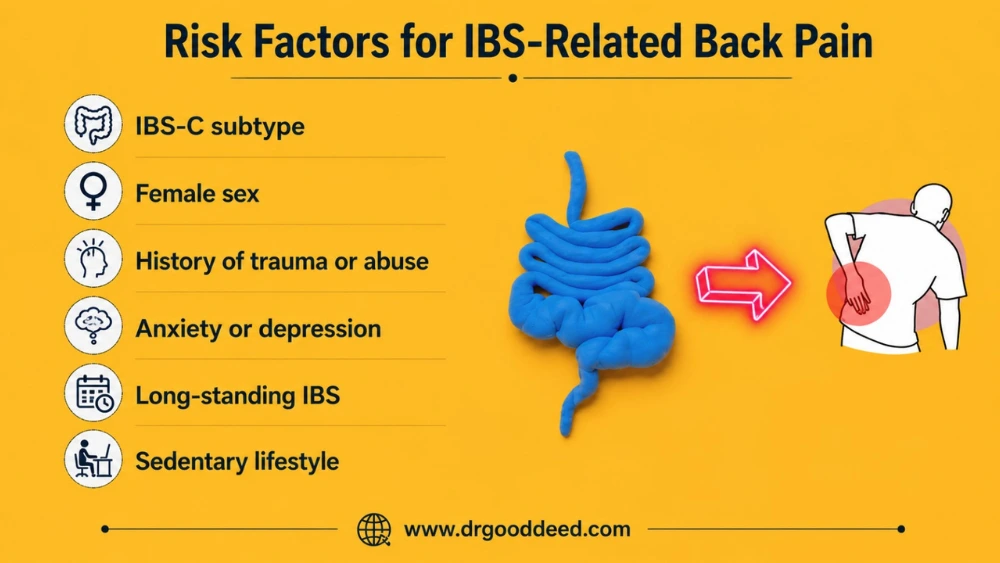
Some IBS patients are more likely to develop back pain than others. Research confirms that IBS can cause back pain more severely in patients who carry one or more of the following risk factors. Does irritable bowel syndrome cause back pain at higher rates in these groups, per ACG and peer-reviewed data:
- IBS-C subtype: retained stool creates more sustained pressure on the lower back than diarrhea-type IBS
- Female sex: women report IBS-related back pain at higher rates, likely due to anatomical proximity of the uterus, colon, and lumbar spine
- History of trauma or abuse: the ACG notes that adverse life events increase central sensitization, raising back pain risk in IBS
- Anxiety or depression: both conditions lower the central pain threshold, making referred back pain more frequent and more intense
- Long-standing IBS: the longer IBS remains unmanaged, the more central sensitization develops, and the wider the referred pain distribution becomes
- Sedentary lifestyle: weak core and lumbar muscles provide less structural support, making pressure from a distended gut more painful
How to Relieve IBS-Related Back Pain
Relieving IBS-related back pain starts with addressing the gut, not the back. Back pain from IBS resolves when the gut settles. Treating the back alone does not work.
Managing IBS Triggers
Identifying and removing dietary triggers is the fastest way to manage IBS symptoms to reduce back pain. A low-FODMAP diet, supported by Monash University research, reduces overall IBS symptom burden, including back pain in patients who follow it for 6–8 weeks under dietitian supervision.
Reducing Abdominal Bloating
Eating smaller meals every 3–4 hours reduces post-meal distension. Avoiding carbonated drinks, cruciferous vegetables, and sorbitol-containing foods during a flare cuts gas volume in the colon and reduces the intra-abdominal pressure driving back discomfort.
Improving Bowel Regularity
Resolving constipation is the single most effective strategy for constipation-related back pain and IBS. Osmotic laxatives (polyethylene glycol), increased soluble fiber (psyllium husk), and consistent hydration (at least 8 cups of water daily) reduce stool impaction and back pain together.
Gentle Stretching and Movement
The child’s pose, supine knee-to-chest stretch, and pelvic tilt exercises decompress the lumbar spine and reduce referred back pain during a flare. A 2021 study in Complementary Therapies in Medicine found yoga-based stretching reduced IBS pain scores by 51% over 12 weeks.
Heat Therapy for Muscle Relaxation
A heating pad at 104°F (40°C) applied to the lower back for 20 minutes relaxes lumbar muscles tightened by gut cramping. It reduces the secondary muscle pain while gut symptoms settle.
Stress Reduction Techniques
Diaphragmatic breathing for 10 minutes twice daily activates the parasympathetic nervous system. This reduces gut motility dysregulation and lowers overall pain sensitivity across the gut and lower back.
How IBS Treatment Resolved Chronic Lower Back Pain
How Low-FODMAP Diet and Physical Therapy Helped Jennifer Castillo Finally End Two Years of IBS Back Pain
Jennifer Castillo, a 34-year-old teacher from Houston, Texas, had been treated for lumbar disc problems for two years. Two MRI scans showed no structural cause. Her pain worsened after meals and eased after bowel movements. A gastroenterologist diagnosed IBS-C and started a 6-week low-FODMAP protocol with daily psyllium husk and pelvic floor physical therapy.
Within 8 weeks, her back pain dropped from a daily 7/10 to occasional 2/10. Her doctor confirmed the pain came from stool retention and sigmoid colon distension pressing on her lumbar spine. Jennifer now manages it with diet and a daily 10-minute stretching routine.
Name has been altered to protect patient privacy.
Treatment Options for IBS and Associated Back Pain
Dietary Therapy
The low-FODMAP diet, developed by Monash University, is the most evidence-backed dietary intervention for IBS in the USA. It cuts fermentable sugars that feed colonic bacteria, reducing gas and bloating. Reduced bloating lowers intra-abdominal pressure and back pain directly. Managing IBS symptoms to reduce back pain starts here for most patients.
Medications for IBS Symptoms
- Antispasmodics (hyoscine, dicyclomine): reduce colonic cramping and the muscle tension it causes in the back
- Osmotic laxatives (polyethylene glycol): clear retained stool in IBS-C, resolving constipation-related back pain and IBS
- Linaclotide and plecanatide: FDA-approved for IBS-C, they improve bowel frequency and reduce abdominal and back pain together
- Low-dose tricyclic antidepressants (amitriptyline 10–25mg): reduce central sensitization, lowering referred pain in the back
Physical Activity and Exercise
30 minutes of walking five times per week improves gut transit time by 20–30%, per a 2022 study in Alimentary Pharmacology & Therapeutics. Stronger core muscles also reduce lumbar strain during episodes of abdominal distension.
Psychological Therapies
Cognitive behavioral therapy (CBT) and gut-directed hypnotherapy reduce IBS pain by targeting the gut-brain axis. Both lower central sensitization, reducing not just gut pain but referred back pain. The ACG recommends these for moderate-to-severe IBS.
Personalized Treatment Plans
Managing IBS symptoms to reduce back pain requires a plan built around your specific IBS subtype, triggers, and lifestyle. IBS can cause back pain to persist even after treatment starts if the plan does not account for all three factors. A gastroenterologist, registered dietitian, and pelvic floor physiotherapist working together produce better outcomes than treating the gut and back separately.
Preventing IBS Flare-Ups and Back Pain
Preventing lower back pain during IBS flare-up means keeping the gut stable long-term. IBS can cause back pain to return even after a period of remission? Yes, when consistent management lapses. Most IBS patients in the USA experience preventable flares because they lack a written plan.
Evidence-backed prevention strategies:
- Follow a modified low-FODMAP diet for at least 8 weeks, then reintroduce foods one at a time to identify your specific triggers
- Track bowel patterns and back pain episodes together in a diary; the correlation confirms whether back pain is gut-driven
- Sleep 7–8 hours consistently; IBS causes back pain more frequently in sleep-deprived patients due to elevated cortisol
- Strengthen core muscles with daily planks and pelvic tilt exercises to reduce lumbar strain during distension episodes
- Limit NSAID use (ibuprofen, naproxen); these worsen gut permeability and increase IBS symptom burden
- Address anxiety with CBT or mindfulness daily, as anxiety is the most consistent predictor of flare frequency in IBS
- Attend gastroenterology follow-ups every 6 months to reassess treatment and adjust the plan based on symptom changes
FAQ
1. Can IBS cause back pain?
Yes. IBS can cause back pain through three confirmed mechanisms: colonic pressure on the lumbar spine, referred pain through shared nerve pathways, and central sensitization lowering the pain threshold across the lower back region.
2. Does irritable bowel syndrome cause lower back pain?
Yes. Irritable bowel syndrome causes back pain in 28–81% of patients, per a 2021 review in Neurogastroenterology & Motility. IBS-C produces a deep sacral ache from stool retention. IBS-D produces wave-like referred pain during cramping.
3. Why do I experience lower back pain during an IBS flare-up?
Lower back pain during IBS flare-up occurs because the descending colon and sigmoid colon sit adjacent to the lumbar spine. Distension or stool retention in these areas creates direct mechanical pressure and referred nerve pain in the lower back.
4. Can constipation-related back pain occur with IBS?
Yes. Constipation-related back pain and IBS are one of the most documented IBS pain patterns. Retained stool in the sigmoid colon and rectum pushes backward against the sacrum and lower lumbar vertebrae, producing a deep, persistent ache that resolves after the bowel empties.
5. How does bloating contribute to back pain?
Bloating increases intra-abdominal pressure. That pressure compresses the lumbar region from the front. Studies confirm that for every measurable increase in abdominal girth during bloating, lumbar compressive forces rise proportionally. Reducing bloating directly reduces back pain in IBS.
6. What does IBS-related back pain feel like?
It typically feels like a dull, deep ache in the lower back or sacral region. IBS-C back pain is constant and pressure-like. IBS-D back pain is crampy and wave-like. Both worsen after eating and improve after a bowel movement.
7. Can IBS back pain occur without abdominal pain?
Yes, in some patients. Central sensitization in long-standing IBS allows referred pain to reach the lower back without prominent abdominal pain. A 2023 paper in Pain confirmed that IBS patients sometimes experience extra-intestinal pain as their primary or only symptom during mild flares.
8. How can I relieve IBS-related back pain at home?
Relieving IBS-related back pain at home: apply a heating pad at 104°F for 20 minutes, do a 10-minute knee-to-chest stretch, drink 250ml of warm water, and avoid all trigger foods for 24 hours. Resolving the gut issue resolves the back pain faster than treating the back directly.
9. Does treating constipation help reduce back pain?
Yes. Clearing retained stool with polyethylene glycol or psyllium husk removes the mechanical pressure driving constipation-related back pain and IBS. Most patients report back pain improvement within 12–24 hours of successful bowel emptying.
10. What exercises help with IBS-related back discomfort?
Child’s pose, supine knee-to-chest stretch, pelvic tilts, and diaphragmatic breathing all reduce lower back pain during IBS flare-up. A 2021 study in Complementary Therapies in Medicine showed yoga-based movement reduced IBS pain scores by 51% over 12 weeks.
Sources
Neurogastroenterology & Motility (2021), IBS extra-intestinal pain prevalence review
American College of Gastroenterology IBS Guidelines (2021)
American Journal of Gastroenterology (2021), CBT and hypnotherapy in IBS
Complementary Therapies in Medicine (2021), Yoga and IBS pain scores
Alimentary Pharmacology & Therapeutics (2022), Exercise and gut transit in IBS
DISCLAIMER: This article is for informational purposes only. It does not substitute professional medical advice, diagnosis, or treatment. Always consult a licensed healthcare provider about your symptoms.