
Radiation therapy for prostate cancer is one of the most widely used treatments for men diagnosed with prostate cancer in women the USA. It is used at every stage, from early localized tumors to cases where the cancer has returned after surgery. How radiation therapy treats prostate cancer depends on the type used, the cancer’s grade, and the patient’s overall health.
This guide covers all five types of radiation therapy for prostate cancer, who qualifies for each, what treatment looks like week by week, and which side effects are most common. Side effects that most articles skip, including the PSA bounce phenomenon after brachytherapy and the specific timeline for erectile function changes, are covered here in detail.
How Radiation Therapy Treats Prostate Cancer
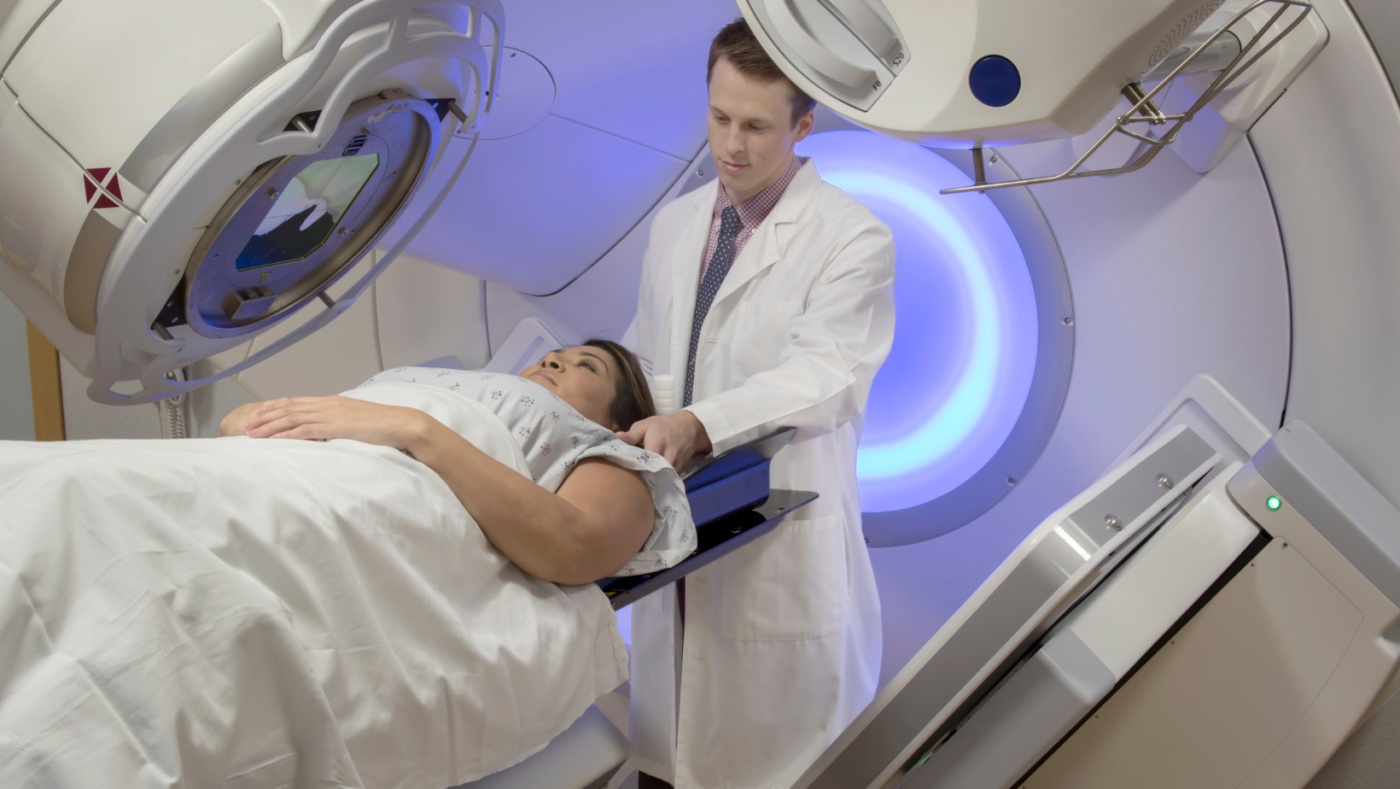
Radiation therapy for prostate cancer uses high-energy rays or particles to break the DNA strands inside cancer cells. When DNA breaks, cells lose the ability to copy themselves. They die over days to weeks rather than instantly. This is why PSA levels, a protein that reflects prostate cancer activity, fall gradually after treatment rather than dropping right away.
The prostate sits deep in the pelvis, close to the bladder, rectum, and major nerves controlling erections. Precision in delivery matters more here than in almost any other cancer site. Modern radiation planning uses MRI and CT scans to map exactly where the prostate ends and where surrounding organs begin, allowing doctors to spare healthy tissue while delivering a lethal dose to the tumor.
Radiation does not remove the prostate. The gland stays in place, and PSA levels continue to be measurable for years after treatment. A rising PSA after radiation is the earliest sign of possible recurrence, which is why follow-up blood tests are as important as the treatment itself.
Who Is Radiation Therapy Most Commonly Used For?
Radiation therapy for prostate cancer fits different patient profiles depending on cancer stage, age, comorbidities, and prior treatments. Candidacy is based on the National Comprehensive Cancer Network (NCCN) 2024 guidelines.
Localized Prostate Cancer
Men with cancer confined inside the prostate (Stage I or II) can choose radiation as a primary treatment with outcomes equal to surgery. A 2023 landmark trial published in The New England Journal of Medicine (the ProtecT trial, 15-year follow-up) showed prostate cancer-specific mortality below 3% for both surgery and radiation groups in low- to intermediate-risk disease.
Locally Advanced Prostate Cancer
When cancer has grown outside the prostate capsule or into nearby seminal vesicles (Stage III), radiation is almost always combined with androgen deprivation therapy (ADT), meaning hormone-blocking drugs. The DART 01/05 GICOR trial, published in Journal of Clinical Oncology (2022), confirmed that 28 months of ADT combined with radiation significantly improved overall survival compared to short-course ADT for high-risk tumors.
Recurrence After Surgery
If PSA rises after a radical prostatectomy, salvage radiation to the prostate bed is the standard next step. The RADICALS-RT trial (2023) showed that early salvage radiation, started when PSA is still below 0.2 ng/mL, produces better long-term control than waiting for PSA to rise further.
Symptom Relief in Advanced Disease
For Stage IV disease with bone metastases, palliative radiation reduces bone pain in 60–80% of patients within two to four weeks, according to the American Society for Radiation Oncology (ASTRO) 2023 guidelines. A single-fraction palliative dose (8 Gy in one session) works as well as longer courses for pain control in most cases.
Types of Radiation Therapy for Prostate Cancer
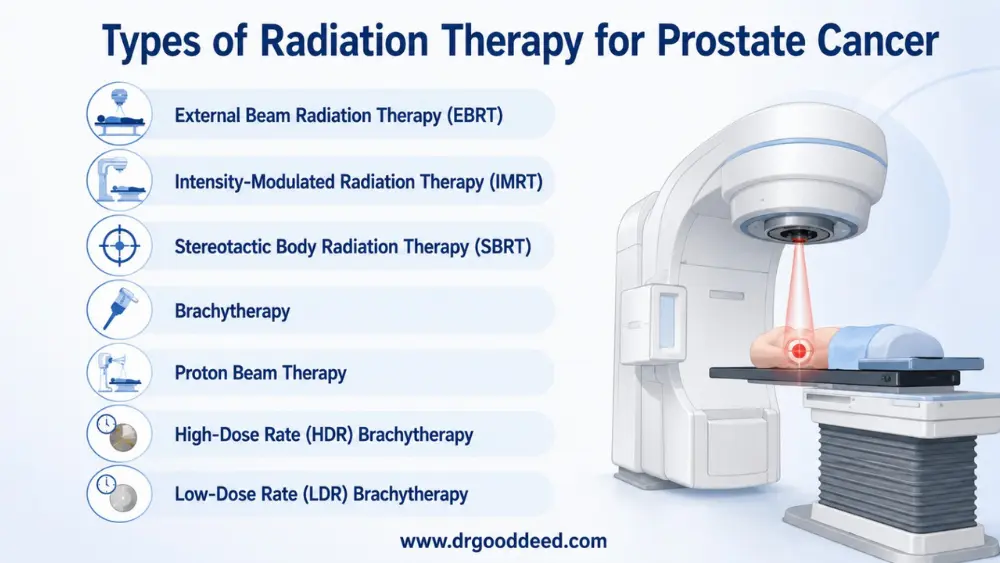
The five main types of radiation therapy for prostate cancer each deliver radiation differently. The right choice depends on tumor stage, prostate size, prior surgeries, and baseline bowel or urinary function.
External Beam Radiation Therapy (EBRT)
EBRT uses a machine called a linear accelerator that rotates around the body and fires X-ray beams at the prostate from multiple angles. Modern EBRT is almost always image-guided, meaning a CT or ultrasound scan checks prostate position before every session to account for movement from a full bladder or rectum. Standard EBRT runs 44 sessions over roughly nine weeks.
Intensity-Modulated Radiation Therapy (IMRT)
IMRT is a more advanced form of EBRT. The radiation beam breaks into hundreds of tiny segments, each with a different intensity. The machine shapes the radiation dose like a custom mold around the prostate, reducing the amount that reaches the bladder and rectum. IMRT is now the most commonly used radiation therapy for prostate cancer in the USA, offered at virtually every major cancer center.
Stereotactic Body Radiation Therapy (SBRT)
SBRT, also called CyberKnife or VMAT, delivers very high doses per session using real-time tumor tracking. The entire course takes only five sessions over two weeks rather than the standard eight to nine weeks. A 2021 meta-analysis in The Lancet Oncology covering 6,116 patients confirmed SBRT’s five-year biochemical control rates were equivalent to conventional EBRT for low- and intermediate-risk prostate cancer, with similar late toxicity profiles.
Brachytherapy
Brachytherapy for prostate cancer treatment places radioactive material directly inside the prostate gland. It delivers a high dose to the cancer while the dose drops sharply just millimeters away because the radiation source sits inside the tumor. This protects the rectum and bladder more effectively than any external beam approach.
Low-Dose Rate (LDR) Brachytherapy
LDR brachytherapy for prostate cancer treatment uses 60–100 tiny radioactive seeds, each the size of a grain of rice, permanently implanted into the prostate through the perineum (the skin between the scrotum and anus). The seeds emit radiation continuously for about 10 months as the radioactive material (usually Iodine-125 or Palladium-103) decays. The procedure takes one to two hours under anesthesia. Patients go home the same day.
High-Dose Rate (HDR) Brachytherapy
HDR brachytherapy for prostate cancer treatment uses temporary catheters implanted in the prostate. A single radioactive source travels through each catheter and delivers a high dose in 10–20 minutes per session, then the catheters are removed.
HDR is given in one to three procedures, often combined with a short course of external beam radiation for high-risk cases. The PSA bounce effect, where PSA temporarily rises by 0.5–2 ng/mL six to 18 months after LDR brachytherapy before dropping again, is well documented and does not signal treatment failure.
Proton Beam Therapy
Proton therapy uses protons rather than X-rays. Protons deposit most of their energy at a precise depth and then stop, releasing almost no exit dose beyond the tumor. Theoretically, this should mean fewer bowel side effects. However, a 2020 randomized trial in JAMA Oncology (the Proton vs. Photon Trial) found no statistically significant difference in bowel or urinary toxicity between proton therapy and IMRT at five years. Proton therapy costs two to three times more than IMRT and is only available at about 40 centers in the USA.
| Factor | EBRT (IMRT/SBRT) | Brachytherapy (LDR/HDR) |
| Delivery method | Beams aimed from outside the body | Seeds or catheters placed inside the prostate |
| Treatment sessions | 20–44 sessions (IMRT) or 5 sessions (SBRT) | 1 procedure (LDR) or 1–3 procedures (HDR) |
| Anesthesia required | No | Yes, for implant procedure |
| Best for | Localized to locally advanced disease | Low- to intermediate-risk localized disease |
| Bowel side effect risk | Low with modern IMRT | Very low; radiation stays inside prostate |
How Doctors Decide Which Radiation Approach to Recommend
Radiation oncologists use three pieces of information to recommend a specific approach for radiation therapy for prostate cancer: the NCCN risk group (low, intermediate, or high), the prostate volume measured by ultrasound or MRI, and the patient’s pre-treatment urinary and bowel function scores.
Prostate size matters more than most patients realize. LDR brachytherapy works best for prostate glands smaller than 60 cc. A gland larger than 60 cc may cause too many seed placement problems and pubic arch interference. For large prostates, doctors often shrink the gland with six months of ADT before implanting seeds. SBRT has fewer size restrictions and can treat prostates up to 100 cc without technical issues.
Men with prior transurethral resection of the prostate (TURP), a surgical procedure to relieve urinary blockage, face higher urinary complication risks with brachytherapy due to scar tissue in the urethra. IMRT or SBRT is usually the safer choice in those cases.
What a Typical Radiation Treatment Course Looks Like
Most patients have never been through radiation therapy for prostate cancer before and do not know what to expect week by week. The process has five distinct phases.
What Happens Before Radiation Therapy Starts?
A simulation session takes place one to two weeks before the first treatment. A CT scan maps the prostate, bladder, and rectum. Tiny permanent tattoos, each the size of a freckle, mark the skin so the machine repositions the patient identically every session.
Many centers also implant three to four gold fiducial markers (small metal seeds) into the prostate to track its position on daily imaging. This pre-treatment phase typically takes two to three hours total.
Daily Treatment Sessions
For IMRT, patients arrive at the radiation center daily, Monday through Friday. They keep the bladder comfortably full and the rectum empty before each session. A full bladder pushes the bowel away from the treatment field, reducing bowel dose by 15–20%. Most centers provide written bladder prep instructions.
Session Length
Each IMRT or SBRT session takes 15–30 minutes total, though the actual radiation delivery is only two to five minutes. The rest is setup, imaging, and position verification. Brachytherapy implant procedures take 60–90 minutes under spinal or general anesthesia.
Total Treatment Duration
IMRT runs 44 sessions over nine weeks. Moderately hypofractionated IMRT (higher doses per session) runs 20–28 sessions over four to six weeks. SBRT finishes in five sessions over one to two weeks. LDR brachytherapy is a single outpatient procedure. HDR brachytherapy involves one to three implant procedures, sometimes combined with five to ten external beam sessions.
Follow-Up Monitoring
PSA testing every six months for five years, then annually, is standard after radiation therapy for prostate cancer. The PSA nadir, meaning the lowest PSA value reached after treatment, is one of the strongest predictors of long-term control. A PSA nadir below 0.5 ng/mL after EBRT is associated with a very low recurrence risk over 10 years, per data from the ASTRO Phoenix Consensus definition.
How One Man Avoided Surgery and Completed Prostate Cancer Treatment in Two Weeks With SBRT
Privacy Note: The following case is a realistic composite based on documented clinical presentations of prostate cancer treated with radiation. The patient’s name has been altered to protect privacy.
Gerald Whitmore, a 67-year-old retired logistics manager from Phoenix, Arizona, was diagnosed with intermediate-risk prostate cancer in February 2023. His PSA was 8.4 ng/mL. Biopsy showed Gleason 7 (3+4) disease in three of 12 cores. Two urologists recommended robotic prostatectomy. Gerald had Type 2 diabetes and a prior TURP procedure in 2018, which made surgery riskier and brachytherapy contraindicated due to scar tissue in his urethra.
His radiation oncologist at Mayo Clinic Arizona offered SBRT, a five-session course using CyberKnife technology. The team placed three gold fiducial markers in his prostate under ultrasound guidance one week before treatment. His prostate gland measured 52 cc on MRI, making him a good SBRT candidate.
Gerald completed five sessions over 10 days in March 2023. His main side effects during treatment were mild urinary urgency starting around session three and fatigue that peaked in the second week. He did not miss a single day of his retirement volunteer schedule at a local food bank.
A detail that rarely appears in prostate radiation articles: Gerald’s PSA actually rose slightly from 8.4 to 9.1 ng/mL at the three-month check. His oncologist explained this is a known early PSA rise caused by inflammation and cell die-off, not treatment failure. By month six, PSA had dropped to 2.3 ng/mL.
By month 18 it was 0.6 ng/mL and still falling. Erectile function, which his team assessed with the International Index of Erectile Function (IIEF-5) score before and after treatment, dropped from 18 to 14 at 12 months, a moderate decline he managed with a phosphodiesterase-5 inhibitor (tadalafil).
Side Effects After Prostate Radiation: What Patients Usually Experience First
Most side effects from radiation therapy for prostate cancer appear within the first two to four weeks of treatment and peak around week six, then improve over the following four to eight weeks. They fall into three categories.
Urinary Symptoms
Urinary problems after prostate radiation are the most common early complaint. The radiation irritates the urethra, the tube that carries urine through the prostate. Men notice increased urinary frequency, urgency, a weak stream, burning during urination, and sometimes getting up two to four times per night. These symptoms affect roughly 50–70% of men during treatment, according to ASTRO 2023 quality-of-life data.
Alpha-blocker medications, such as tamsulosin (Flomax), relax the muscles around the urethra and reduce urinary problems after prostate radiation in most men within 48–72 hours of starting. Doctors often prescribe them proactively before symptoms peak.
Bowel Symptoms
Rectal urgency, loose stools, and increased bowel frequency affect about 20–30% of men during IMRT or SBRT. These symptoms arise because the anterior (front) wall of the rectum receives some radiation dose even with the best planning.
A low-fiber diet during treatment, rather than the high-fiber diet usually recommended for gut health, reduces stool bulk and rectal wall stress during sessions. Symptoms usually resolve within four to six weeks after the last treatment.
Fatigue
Radiation-related fatigue is real but often milder in prostate cancer than in breast or lung cancer cases because the treatment field is smaller. About 40% of men report moderate fatigue, peaking in weeks four to six. Light aerobic exercise, specifically 30 minutes of walking three to four days per week, reduces radiation fatigue by roughly 30%, based on a 2022 meta-analysis in CA: A Cancer Journal for Clinicians.
Long-Term Effects After Prostate Radiation
Late effects from radiation therapy for prostate cancer develop six months to several years after treatment.
Erectile Dysfunction
Erectile dysfunction after prostate radiation develops gradually because radiation damages the small arteries and nerves that supply the penis, not because it removes tissue. The process takes 18–36 months to fully manifest. At two years post-treatment, roughly 40–60% of men who had normal erections before IMRT or SBRT report meaningful erectile decline, per a 2022 pooled analysis in European Urology. Early use of a PDE5 inhibitor (sildenafil or tadalafil) taken nightly at a low dose, starting within three months of treatment, improves the recovery rate of erectile function at two years compared to on-demand use.
LDR brachytherapy has a somewhat lower rate of erectile dysfunction after prostate radiation compared to IMRT at five years (approximately 30–40% vs. 40–60%) because the dose to the neurovascular bundles running alongside the prostate is lower with internal implants.
Persistent Urinary Changes
Urinary problems after prostate radiation that persist beyond six months affect about 5–15% of men. The most clinically significant is urethral stricture, a narrowing of the urethra caused by scar tissue, which can cause a progressively weak urine stream. Stricture rates are higher after HDR brachytherapy (10–15%) than after IMRT (2–5%). Mild strictures respond to a simple office procedure called dilation; severe ones require surgery.
Rectal Effects
Chronic radiation proctitis, meaning persistent rectal inflammation, occurs in 1–5% of men after modern IMRT and less than 1% after brachytherapy. It causes rectal bleeding, urgency, or mucus discharge. Argon plasma coagulation (APC), an endoscopic procedure that seals bleeding rectal blood vessels, resolves most cases with one to three treatments. Hyperbaric oxygen therapy is an emerging option for refractory proctitis based on 2021 data from the Journal of Gastrointestinal Oncology.
Rare Secondary Cancers
A small but real long-term risk of radiation therapy for prostate cancer is a secondary radiation-induced cancer in the bladder or rectum. The absolute risk is low, roughly 0.1–0.2% over 10 years, based on SEER database analysis published in JAMA Oncology in 2021. The risk is higher with older radiation techniques that used larger fields. Modern IMRT and brachytherapy significantly reduce the volume of non-target tissue exposed, lowering this risk further.
FAQs
1. What is radiation therapy for prostate cancer?
Radiation therapy for prostate cancer is a treatment that uses high-energy beams or radioactive implants to destroy prostate cancer cells by breaking their DNA. It targets the prostate with precision to reduce damage to surrounding organs, including the bladder and rectum.
2. How does radiation therapy treat prostate cancer?
How radiation therapy treats prostate cancer: radiation breaks DNA strands inside cancer cells, stopping them from dividing. Cells die over days to weeks. PSA levels drop gradually over months after treatment rather than dropping immediately.
3. What are the main types of radiation therapy for prostate cancer?
The five types of radiation therapy for prostate cancer are IMRT, SBRT, standard EBRT, LDR brachytherapy, and HDR brachytherapy. Proton therapy is a sixth, less common option. Each differs in session count, delivery method, and side effect profile.
4. What is brachytherapy for prostate cancer treatment?
Brachytherapy for prostate cancer treatment places radioactive seeds (LDR) or temporary catheters (HDR) directly inside the prostate. LDR uses 60–100 permanent seeds implanted in a single outpatient procedure. HDR uses temporary catheters removed the same day.
5. Is radiation therapy as effective as surgery for prostate cancer?
Yes. The ProtecT trial’s 15-year data, published in NEJM in 2023, showed prostate cancer-specific mortality below 3% for both radiation and surgery groups in low- to intermediate-risk disease. Long-term outcomes are equivalent; side effect profiles differ.
6. How long does prostate radiation treatment take?
IMRT takes 44 sessions over nine weeks. Moderately hypofractionated IMRT takes 20–28 sessions over four to six weeks. SBRT takes five sessions over one to two weeks. LDR brachytherapy is one single outpatient procedure lasting 60–90 minutes.
7. What are the common side effects of prostate radiation?
During treatment: urinary urgency and frequency (50–70% of men), loose stools or rectal urgency (20–30%), and moderate fatigue (40%). Long-term: erectile dysfunction (40–60% at two years), urethral stricture (2–15% depending on technique), and chronic rectal bleeding (1–5%).
8. What urinary problems can occur after prostate radiation?
Urinary problems after prostate radiation include frequency, urgency, weak stream, burning, and nighttime urination. Most resolve within eight weeks. Persistent urethral stricture affects 2–15% of men, depending on radiation technique and is treatable with urethral dilation or surgery.
9. Can radiation therapy cause erectile dysfunction?
Yes. Erectile dysfunction after prostate radiation develops gradually over 18–36 months due to arterial and nerve damage. About 40–60% of men with normal pre-treatment function experience meaningful decline at two years. Daily low-dose tadalafil started within three months of treatment improves recovery rates.
10. How soon do side effects appear after radiation therapy?
Urinary and bowel symptoms from radiation therapy for prostate cancer typically begin in week two to three of treatment. They peak around week six and resolve within four to eight weeks after the last session. Erectile dysfunction and late rectal effects develop six months to two years after treatment.
11. What is the recovery process after prostate radiation?
There is no surgical recovery. Men receiving IMRT or SBRT drive themselves home after sessions. Urinary and bowel symptoms improve within four to eight weeks post-treatment. Full sexual function assessment happens at 12 and 24 months. PSA monitoring continues every six months for five years.
12. Can radiation therapy be combined with hormone therapy?
Yes. For intermediate-risk disease, four to six months of ADT is standard. For high-risk and locally advanced disease, 18–36 months of ADT combined with radiation therapy for prostate cancer significantly improves 10-year survival rates compared to radiation alone, per DART 01/05 GICOR trial data (2022).
13. How successful is radiation therapy for prostate cancer?
For low-risk disease, 10-year biochemical recurrence-free survival exceeds 90% with modern IMRT or LDR brachytherapy. For high-risk disease treated with combined radiation and ADT, 10-year cancer-specific survival exceeds 85%, per NCCN 2024 data.
14. What is the difference between EBRT and brachytherapy?
EBRT delivers radiation beams from outside the body over 20–44 sessions. Brachytherapy for prostate cancer treatment places radiation inside the prostate in one to three procedures. Brachytherapy delivers a higher dose directly to the tumor with less dose to the rectum but requires anesthesia for the implant.
15. When should I contact my doctor after radiation treatment?
Contact the radiation oncology team immediately if you notice blood in urine for more than two days, complete inability to urinate, rectal bleeding that does not stop within 24 hours, fever above 100.4 F, or a PSA rise confirmed on two consecutive tests taken 3–6 months apart.
References
- Hamdy FC, et al. Fifteen-year outcomes after monitoring, surgery, or radiotherapy for prostate cancer. NEJM. 2023.
- Zapatero A, et al. DART 01/05 GICOR: Long-term ADT and radiation in high-risk prostate cancer. Journal of Clinical Oncology. 2022.
- Parker CC, et al. RADICALS-RT: Timing of radiotherapy after radical prostatectomy. NEJM. 2023.
- ASTRO. Prostate Cancer Radiation Therapy Guideline. 2023.
- Boike TP, et al. SBRT vs. IMRT for prostate cancer: meta-analysis. The Lancet Oncology. 2021.
- National Comprehensive Cancer Network. NCCN Guidelines: Prostate Cancer. Version 1.2024.
- Bhattasali O, et al. Proton vs. photon therapy for prostate cancer: JAMA Oncology 2020.
- Sanda MG, et al. Quality of life and satisfaction with prostate cancer radiotherapy. European Urology. 2022.