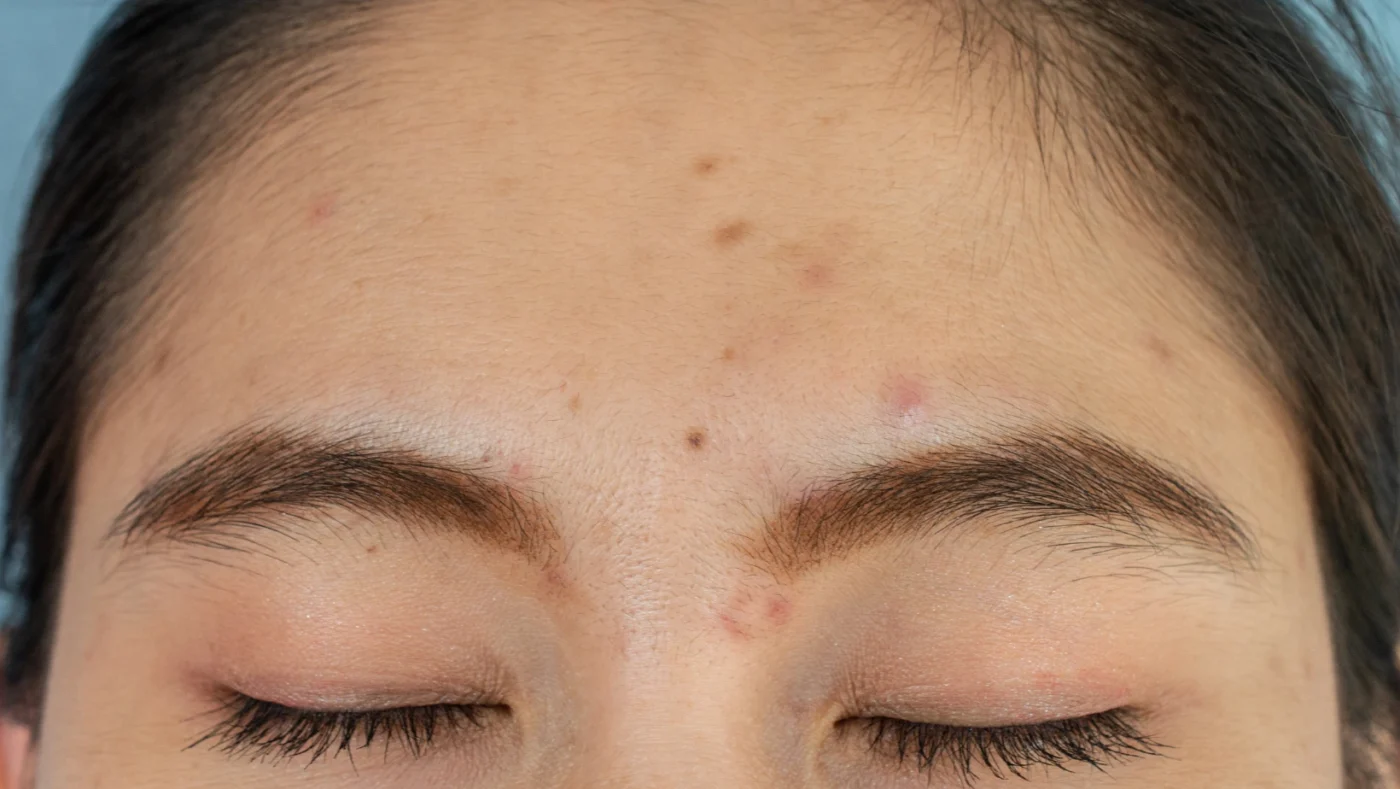

Forehead acne is a common form of acne vulgaris that develops when excess oil, sweat, dead skin cells, and bacteria clog pores on the forehead. It affects teenagers and adults worldwide, including high-humidity populations, where heat, pollution, and hair-product buildup can worsen breakouts.
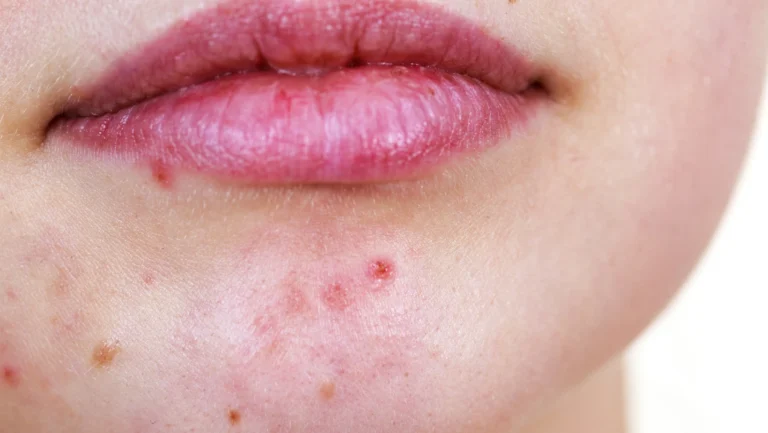
Clinically, forehead acne may appear as comedones (whiteheads and blackheads), inflammatory papules, pustules, or fungal acne-like bumps linked to Malassezia overgrowth.
To get rid of forehead acne, start with one cleanser, one acne medicine, and habits. Forehead breakouts in the U.S. usually come from acne vulgaris, where oil and dead skin clog pores.
What Causes Forehead Acne?
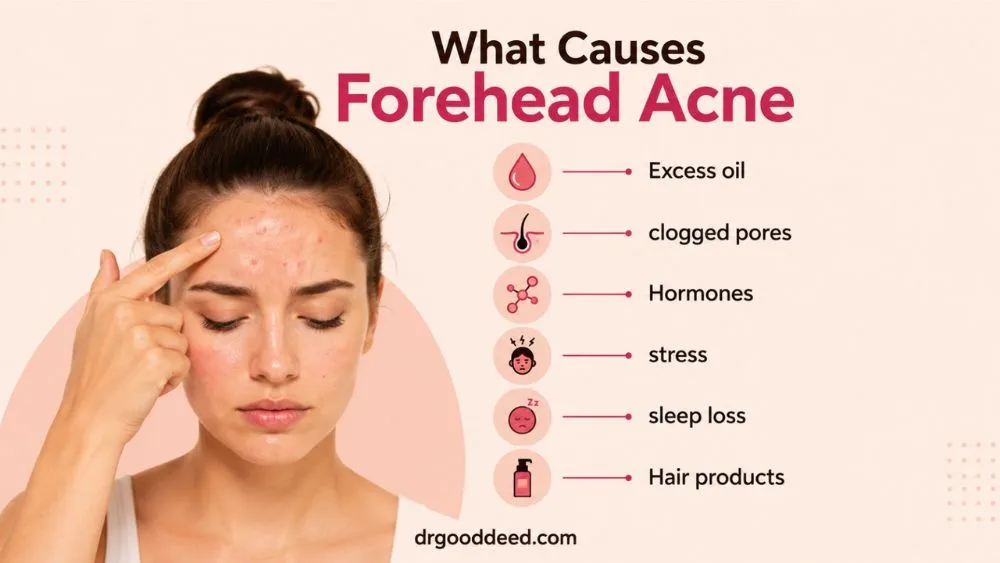
Causes of forehead acne usually come from oil, dead skin, sweat, and hair products that touch the hairline. The forehead is oily, so pores clog faster. That is why blackheads and whiteheads start there. To get rid of forehead acne start by cleaning this zone well.
Excess oil and clogged pores
Oil mixes with dead skin and blocks the pore. Bacteria then drive redness and swelling. Salicylic acid and adapalene help because they open the plug and keep pores clearer.
Hair products, sweat, and friction
Pomades, gels, waxes, sprays, and oily conditioners can leave residue along the hairline. Sweat and friction from headbands, helmets, and bangs can make the problem worse.
Hormones, stress, and sleep loss
Hormone shifts raise oil output, so acne can flare before periods or during puberty. Stress makes existing acne worse by pushing oil and inflammation up. Poor sleep and skin picking add more redness and slower healing.
Lifestyle habits that keep acne going
Sleeping with oily hair on the face, using heavy makeup near the hairline, and touching the forehead throughout the day all block pores. To get rid of forehead acne, remove the trigger acne first with naturally. Then give the skin time to calm down. To get rid of forehead acne usually means removing the trigger first.
Stress and Forehead Acne Flare Ups
To get rid of forehead acne during stressful weeks, lower the habits that feed it. Stress raises oil and inflammation. It also leads to more face touching, picking, and bad sleep. The result is a forehead that breaks out faster and heals slower.
stress and forehead acne flare-ups
When stress stays high, the body can make more androgens and more oil. That oil feeds clogged pores. The flare is real, even when the trigger is school, work, or family pressure.
Skin picking makes spots last longer
Picking pushes oil and bacteria deeper into the skin. It also raises the risk of dark marks and scars. Use a hydrocolloid patch or leave the area alone if your hands keep moving there. Stress and forehead acne flare-ups often last longer when the skin gets picked.
Small Bumps on Forehead Acne
Small bumps on forehead acne usually mean closed comedones, but they can also be folliculitis or a product reaction. The look matters. Acne bumps are often skin-colored or white. Folliculitis tends to itch and appear more suddenly.
What the bumps may mean
If the bumps stay in one strip across the forehead, clogged pores are likely. If they itch or show a red ring, folliculitis is more likely. If they started after a new shampoo, that product may be the trigger. Small bumps on forehead acne need a cause check first.
Fungal acne is different
Fungal acne is Pityrosporum folliculitis, caused by yeast in hair follicles. It often looks like many bumps of the same size on the forehead, chest, or upper back. Heat and humidity can make it worse. A regular acne wash may not clear it well. Small bumps on forehead acne that itch need a closer look.
First steps that help
Stop heavy hair oils, wash gently, and use one acne active ingredient for several weeks. If the bumps do not change, a dermatologist can tell acne from folliculitis. To get rid of forehead acne, the right label comes before the right treatment.
Best Treatments for Forehead Acne
The best treatments for forehead acne are salicylic acid, benzoyl peroxide, and topical retinoids. Salicylic acid clears plugs. Benzoyl peroxide lowers bacteria. Retinoids help stop new clogs from forming.
Salicylic acid for clogged pores
Salicylic acid loosens oil and dead skin inside the pore. It works best for blackheads, whiteheads, and tiny bumps. Use it once daily at first. Too much can dry the skin and backfire.
Benzoyl peroxide for red pimples
Benzoyl peroxide lowers acne-causing bacteria and helps calm red pimples. Start with a low strength if your skin is sensitive. It can bleach towels and pillowcases. Best treatments for forehead acne often pair this with a gentle cleanser.
Retinoids for repeat breakouts
Retinoids such as adapalene keep pores clear and reduce new breakouts. They work best when used often and in a thin layer. Dryness in the first weeks is common.
Daily Skin Care Routine for Forehead Acne
A short routine works better than a harsh one. Clean gently, moisturize lightly, and use sunscreen that will not clog pores. Overwashing strips the skin and can raise oil. Best treatments for forehead acne work better when the skin stays calm.
Gentle cleansing without over-washing
Wash once or twice a day, plus after heavy sweating. Use lukewarm water and a mild cleanser. Scrubbing harder does not clear pores faster. It only irritates the skin and makes acne look redder.
Non-comedogenic moisturizer
Use a light, non-comedogenic moisturizer so the skin barrier stays healthy. Dry skin can trigger more oil. That is why skipping moisturizer usually fails. To get rid of forehead acne, the skin should feel balanced, not stripped.
Sunscreen that does not clog pores
Choose broad-spectrum sunscreen with SPF 30 or higher. Look for non-comedogenic, oil-free, or water-resistant labels. Zinc oxide and titanium dioxide often suit oily skin well.
Hair and Scalp Habits That Can Trigger Forehead Acne
Causes of forehead acne often begin in the hair, not the face. Oily hair products, sweaty scalp buildup, and bangs that sit on the skin can keep the forehead clogged. Dermatologists even call one common pattern pomade acne.
Hair products that leave residue
Pomades, waxes, gels, sprays, and thick conditioners can move onto the forehead. If acne sits right at the hairline, the product is a strong suspect. Stop the product for 4 to 6 weeks and watch for change.
Scalp oil and sweat transfer
If the scalp gets greasy, oil can transfer to the forehead during sleep and exercise. Shampoo more often when hair gets oily fast. Clean hats, helmet liners, and pillowcases also matter.
Friction from headwear and bangs
Tight hats, helmets, and bangs rub the skin and trap sweat. That friction can turn a small bump into a larger one. Looser fits and cleaner fabrics help.
Home Remedies for Forehead Acne
Home remedies for forehead acne should calm skin, not strip it. Safe options are cool compresses, gentle ingredients. Harsh DIY tricks like lemon juice or baking soda can burn the skin barrier.
Cool compress for swelling
Wrap ice in a clean cloth and hold it on a sore pimple for short intervals. This can lower swelling and pain. Never press ice straight on the skin. That can cause a cold burn.
Aloe vera
Aloe vera can soothe irritated skin, and small studies suggest it may help acne when used with other treatment. Home remedies for forehead acne should stay light and simple. Use a plain gel with no heavy fragrance.
Why harsh DIY remedies fail
Scrubs with salt or sugar, vinegar, toothpaste, and lemon juice damage the skin barrier. That can cause more redness. If a home trick stings, stop using it.
Common Mistakes That Make Forehead Acne Worse
To get rid of forehead acne, avoid the habits that keep pores blocked. The biggest mistakes are over-washing, fast product switching, and oily products. These habits keep the skin irritated and slow healing.
Over-scrubbing and over-washing
Hard scrubs damage the skin surface. Washing too often can leave skin dry and tight. Dry skin then makes more oil. That cycle keeps acne going.
Switching products too fast
Acne treatment needs time. Many people quit after a few days, then try something new. That keeps the skin irritated. Give one acne plan at least 4 weeks, and sometimes 2 to 3 months.
Popping, picking, and heavy makeup
Picking raises scar risk and spreads inflammation. Thick, oily makeup can block pores on the forehead. Use non-comedogenic makeup, or skip it on flare days.
FAQs
Why does forehead acne often appear as tiny bumps?
Small bumps on forehead acne usually mean closed comedones, where oil and dead skin sit under the skin. If the bumps itch or look all the same size, folliculitis is possible. That changes the treatment choice.
Can stress alone trigger forehead breakouts?
No. Stress usually worsens acne that already exists. It raises oil and inflammation, which makes the forehead break out faster. To get rid of forehead acne during stress, keep sleep regular. Stress and forehead acne flare-ups last longer when sleep drops.
What ingredients work best for clogged pores on the forehead?
Salicylic acid and adapalene work best. Salicylic acid clears oil plugs. Adapalene keeps new clogs from forming. The best treatments for forehead acne usually start with one of these.
How often should acne-prone skin be washed daily?
Wash once or twice a day, plus after sweating hard. More washing dries the skin and can backfire. Use a mild cleanser and stop scrubbing.
Can oily hair products worsen forehead acne?
Yes. Pomades, waxes, gels, and oily sprays can clog pores along the hairline. Breakouts often start there first. Causes of forehead acne often include products that touch the forehead every day.
Is fungal acne different from regular forehead acne?
Yes. Fungal acne is folliculitis caused by yeast in hair follicles, not simple clogged pores. It often shows as many same-size bumps and can itch. Small bumps on forehead acne that do not act like acne need a closer look.
Why does over-scrubbing make acne worse?
Over-scrubbing strips the skin barrier, then the skin gets dry and irritated. That can trigger more oil and more redness. It also makes acne medicines sting more.
How long should acne treatments be used before expecting results?
Give treatment at least 4 weeks. Many people need 2 to 3 months for clear change. Switching too soon can slow progress. The best treatments for forehead acne only work when they get enough time.
Can diet changes help reduce recurring forehead acne?
Yes, for some people. Certain foods can worsen acne, but triggers vary by person. Track flare patterns before making big diet changes. Causes of forehead acne do not always come from food, but food can matter.
When does forehead acne become serious enough for prescription treatment?
If acne lasts after 8 to 12 weeks of OTC care, leaves marks, or forms painful bumps, prescription help makes sense. To get rid of forehead acne in that case, a dermatologist may use stronger topical or oral medicine.