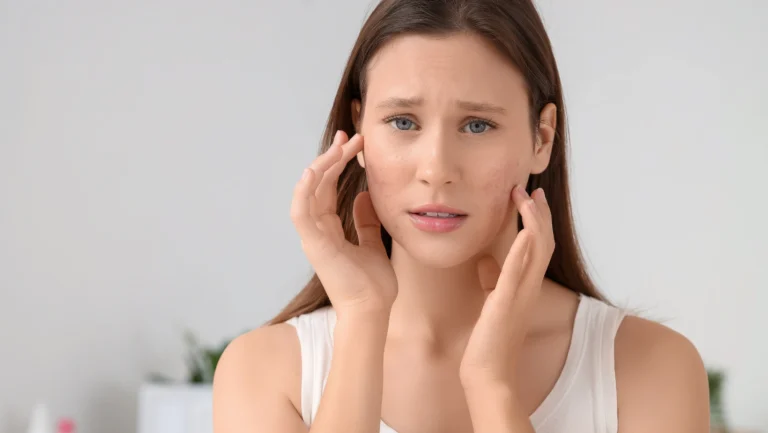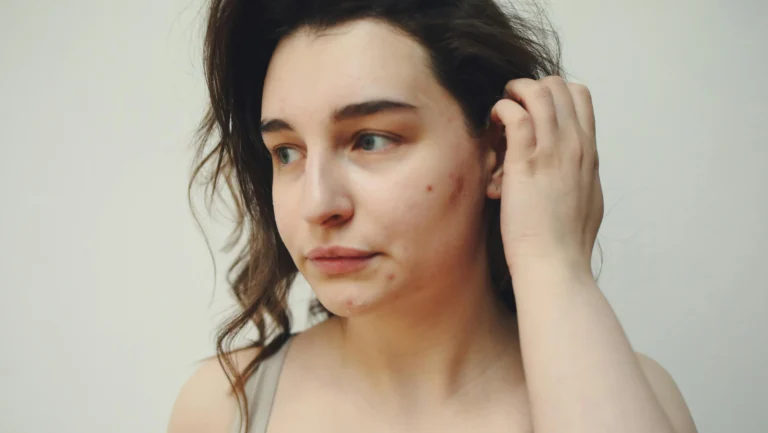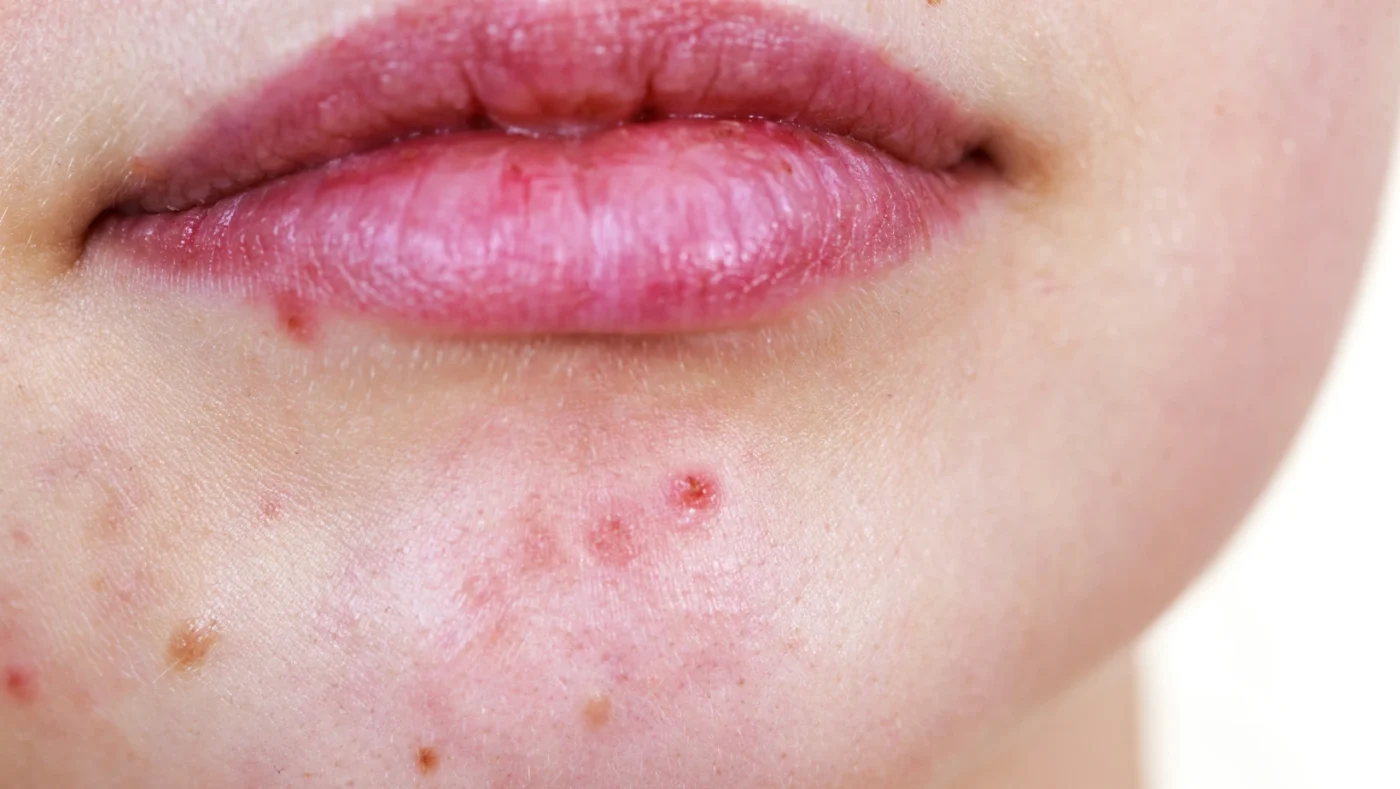

Acne around mouth breakouts form when oil, dead skin cells, and C. acnes bacteria clog pores along the chin, jawline, and lip line. In the United States, this pattern shows up most in adult women aged 20 to 45, often tied to hormone shifts, product irritation, or mask and phone friction.
Perioral dermatitis, cold sores, and angular cheilitis mimic it closely and need completely different treatment. This guide breaks down the causes, the exact features that separate acne from its look-alikes, real clinical trial numbers for treatment, and the point at which you need a dermatologist instead of a drugstore aisle.
What Causes Acne Around Mouth?
Acne around mouth develops when four factors stack together: excess sebum production, clogged hair follicles, bacterial overgrowth, and localized inflammation. The chin and jawline carry a dense concentration of sebaceous glands, which makes this zone more reactive than the cheeks or forehead. Most cases trace back to one or more of the triggers below.
- Hormonal fluctuation. Rising androgens increase sebum output right before a menstrual period, during perimenopause, or after stopping hormonal birth control. This is the single most common driver of adult breakouts concentrated on the lower face.
- Toothpaste and lip product irritation. Sodium lauryl sulfate (SLS), cinnamon or mint flavoring agents, and heavy waxes in lip balm can irritate the thin skin bordering the mouth, producing small comedones or a rash that looks like acne.
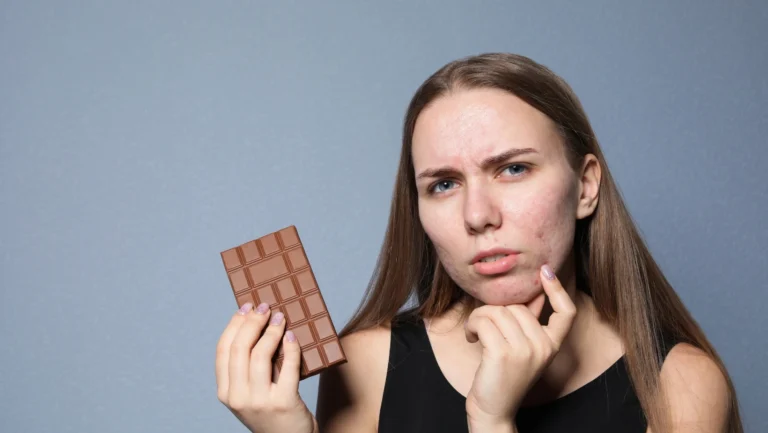
- Diet and stress-related triggers. High-glycemic foods and skim milk have both been linked to increased acne severity in observational studies. Cortisol released during chronic stress raises oil production independently of diet.
- Friction from touching, masks, or phone calls. Repeated mechanical pressure and heat trap sweat and bacteria against the skin, a pattern dermatologists call acne mechanica. It clusters exactly where a mask seam or phone rests, usually the chin and one side of the jaw.
- Comedogenic skincare or makeup. Heavy foundation, occlusive moisturizers, and some sunscreens clog pores faster around the mouth because people reapply lip and chin coverage more often throughout the day.
- Barrier damage from over-washing. Scrubbing the area to “dry it out” strips the skin barrier, triggers rebound oil production, and can worsen the exact breakouts a person is trying to clear.
A flare during a stressful week, using a new toothpaste, and a hormonal dip in the same cycle often overlap, which is why tracking a symptom diary for two to three weeks helps identify the real driver before starting treatment.
Hormonal Acne, PCOS, and the Jawline Myth
Hormonal acne is real, but the assumption that all jawline or chin acne equals a hormonal cause does not hold up against newer data. A 2025 clinical review of 1,867 adult women found chin involvement in 91.4% of cases and nose involvement in only 21.8%, yet the most common presentation was breakouts in two facial zones at once.
- Chin and jawline dominance is a real signal. Deep, cystic bumps concentrated on the lower third of the face and flaring the week before a period point toward a hormonal driver, but forehead or cheek involvement at the same time is common and does not rule hormones out.
- PCOS is a documented cause of persistent breakouts in this zone. Polycystic ovary syndrome raises circulating androgens, which increases sebum production along the chin, jawline, and mouth. Irregular periods, excess facial hair, and scalp thinning alongside the breakouts raise suspicion for PCOS specifically.
- Local skin sensitivity matters more than blood hormone levels for most women. Many people with cyclical jawline acne have completely normal androgen levels on lab testing. Their sebaceous glands are simply more responsive to normal hormone fluctuation than glands elsewhere on the face.
- Cortisol independently worsens the pattern. Research from King Abdulaziz University found a statistically significant link between higher perceived stress and more severe acne, separate from any hormonal panel result.
- Adult-onset timing is itself a clue. Acne that starts for the first time after age 25, concentrated on the lower face, warrants a hormonal workup even without classic PCOS symptoms, since this timing pattern is unusual for standard adolescent acne.
Treat the jawline-equals-hormonal rule as a starting clue, not a diagnosis. Anyone with irregular cycles, new facial hair growth, or acne that resists standard topical treatment for 12 weeks should ask a doctor about hormonal and PCOS-specific testing rather than assuming location alone confirms the cause.
Acne vs Look-Alikes: Perioral Dermatitis, Cold Sores, and Angular Cheilitis
Roughly a third of rashes clustered around the mouth that patients call “acne around mouth” turn out to be perioral dermatitis, cold sores, or angular cheilitis.
| Condition | Signature Look | Typical Cause | Contagious | First-Line Fix |
| Acne around mouth | Blackheads, whiteheads, and inflamed papules; skin right at the lip edge looks the same as the rest of the face | Clogged pores, hormones, bacteria | No | Salicylic acid, benzoyl peroxide, retinoids |
| Perioral dermatitis | Small red bumps with fine scale, no true blackheads; a narrow band of clear skin sits right next to the lips | Topical steroid use, heavy moisturizer, fluoride toothpaste | No | Stop steroid creams; oral or topical antibiotic |
| Cold sores | Grouped, fluid-filled blisters; tingling or burning starts before the blister appears | Herpes simplex virus type 1 (HSV-1) | Yes | Antiviral cream or oral antiviral medication |
| Angular cheilitis | Cracking, redness, and crusting confined to the corners of the mouth | Saliva pooling, candida or bacterial overgrowth, iron or B-vitamin deficiency | No | Barrier ointment, antifungal or antibacterial cream |
Cold sores announce themselves with tingling or burning 24 hours before any visible blister forms, a warning sign acne never produces. Steroid creams that calm eczema will flare perioral dermatitis further, and acne washes will dry out and worsen angular cheilitis.
Evidence-Based Treatments for Acne Around Mouth
Treatment for acne around mouth follows a step-up approach, starting with over-the-counter actives and escalating to prescription options only when needed.
Over-the-counter first-line options:
- Salicylic acid (0.5 to 2%) exfoliates inside the pore and works best on blackheads and surface congestion around the chin.
- Benzoyl peroxide (2.5 to 5%) kills C. acnes bacteria directly and remains the most effective non-prescription option for inflamed, red bumps.
- Adapalene 0.1% gel, sold over the counter in the US, unclogs follicles and reduces new comedone formation with consistent nightly use over eight to twelve weeks.
Prescription options for persistent cases:
- Azelaic acid and topical clascoterone target inflammation and androgen-driven oil production without the resistance risk carried by long-term antibiotic use.
- Oral spironolactone is now backed by the strongest trial data available for adult female acne. The 2023 SAFA trial, a double-blind randomized controlled trial published in The BMJ, followed 410 women with persistent facial acne. At 24 weeks, 82% of women on spironolactone reported improvement compared with 63% on placebo, a statistically significant gap that widened well beyond the 12-week mark. The most common side effect was headache, reported in 20% of the spironolactone group.
- For confirmed perioral dermatitis rather than acne, dermatologists stop any steroid cream immediately and typically prescribe oral tetracycline-class antibiotics instead, since steroids worsen this specific condition.
Expert Insight: The 12-week mark is where most people quit a new acne regimen, right before it would have worked. Trial data on spironolactone shows barely any separation from placebo at week 12, with the real treatment effect only becoming clear at week 24, and that same slow-onset pattern applies to most topical retinoids and oral options.
Daily Skincare Routine for Acne Around Mouth
- Cleanse twice daily with a gentle, non-stripping cleanser. Avoid anything that leaves skin feeling tight, since that signals barrier damage rather than a deep clean.
- Apply active treatment to dry skin at night, waiting 20 to 30 minutes after cleansing to reduce irritation from retinoids or benzoyl peroxide.
- Follow with a non-comedogenic moisturizer, even on oily skin, since a compromised barrier drives more oil production, not less.
- Use mineral sunscreen daily, particularly with retinoid or azelaic acid use, since both increase sun sensitivity around the mouth.
- Patch test any new lip balm or toothpaste on the inner arm for three days before applying it near the mouth, since this zone reacts to irritants faster than the rest of the face.
Pro Tip: Check the ingredient list on your toothpaste before blaming hormones. Cinnamon flavoring, sodium lauryl sulfate, and high-fluoride formulas are documented triggers for both acne flares and perioral dermatitis around the mouth, and switching to a plain, SLS-free toothpaste for two weeks is one of the fastest, lowest-cost ways to rule this cause out.
Common Triggers and Mistakes That Make It Worse
- Touching or resting a phone against the chin and jawline transfers oil and bacteria directly onto already-inflamed skin multiple times a day.
- Popping or picking at bumps pushes bacteria deeper into the follicle and significantly raises the risk of post-inflammatory dark marks and scarring in this area.
- Layering multiple active ingredients at once, such as benzoyl peroxide and a retinoid in the same application, causes irritation that mimics a worsening breakout.
- Using whitening or high-fluoride toothpaste without addressing it as a possible trigger, especially in anyone whose rash sits close to the lip line.
- Skipping sunscreen while on acne treatment allows post-inflammatory marks to darken and take significantly longer to fade.
When Acne Around Mouth Needs Medical Attention
See a dermatologist rather than continuing self-treatment if any of the following apply, since these signs point toward a diagnosis or severity level that over-the-counter products cannot resolve.
- Painful, deep cysts or nodules that do not come to a head
- No improvement after eight to twelve weeks of consistent OTC treatment
- Scarring or dark marks forming faster than breakouts clear
- A rash that includes fluid-filled blisters, since this suggests a cold sore rather than acne
- Irregular periods, new facial hair growth, or other signs suggesting PCOS
- A rash that spreads despite stopping all skincare products, which can indicate perioral dermatitis needing prescription treatment
FAQs
Does toothpaste actually cause acne around mouth?
Yes. Sodium lauryl sulfate, cinnamon flavoring, and high-fluoride formulas irritate the thin skin near the lips and can trigger both acne and perioral dermatitis within days of switching products.
Is jawline acne always hormonal?
No. A 2025 review of 1,867 women found most had breakouts in two facial zones at once, not the jawline alone, so location alone cannot confirm a hormonal cause without other symptoms.
How long does spironolactone take to clear hormonal acne?
The SAFA trial showed no significant difference at 12 weeks, but 82% of women improved by 24 weeks versus 63% on placebo. Expect a six-month commitment before judging results.
Can perioral dermatitis be mistaken for acne around mouth?
Yes, frequently. Perioral dermatitis lacks true blackheads and spares a narrow strip of skin next to the lips, a feature true acne does not show.
Are cold sores near the mouth ever confused with acne?
Yes. Cold sores start with tingling or burning before a fluid-filled blister forms, while acne bumps develop without that warning sensation and never contain clear fluid.
Does PCOS cause acne specifically around the mouth and chin?
Yes. Elevated androgens from PCOS increase oil production concentrated on the lower face, often alongside irregular periods and excess facial hair growth.
Sources
- Santer M, et al. Effectiveness of spironolactone for women with acne vulgaris (SAFA), BMJ 2023 link
- Shields A, Barbieri JS. SAFA trial: a critically appraised topic, PMC link
- SAFA trial full clinical and cost-effectiveness report, NIHR/NCBI Bookshelf link
- Perioral Dermatitis, Merck Manual Professional Edition link
- Periorificial Dermatitis, DermNet NZ link
- Cold Sore: Symptoms and Causes, Mayo Clinic link
- Angular Cheilitis, Cleveland Clinic link
- Angular cheilitis induced by iron deficiency anemia, Cleveland Clinic Journal of Medicine link
- Clinical, Biochemical, and Hormonal Associations in Female Patients with Acne, PMC link
- Bacterial vs. Hormonal Acne: Key Differences, Linia Skin Clinic link