
A headache and ear pain on one side most often point to one of five causes: migraine, ear infection, TMJ disorder, sinus pressure, or a dental problem. The World Health Organization recognizes migraine and ear infections as two of the most common conditions linked to one-sided head and ear pain in adults.
This combination usually appears suddenly and stays on one side of the head. This guide covers the causes, symptoms, diagnosis, and treatments that address both problems together.
One-sided Headache and Earache Causes
One-sided headache and earache causes fall into six main categories, each tied to a different body system. Identifying which category fits matters because treatment differs significantly between, for example, an ear infection and a migraine. The sections below break down each cause and its typical pattern.
Migraine Disorders
Migraines commonly cause pain on one side of the head, and the trigeminal nerve pathway involved can also create referred pain felt in the ear, even when the ear itself is healthy.
Ear Infections
Middle ear infections, called otitis media, cause direct pain inside the ear that can radiate outward, creating a headache on the same side. The CDC notes ear infections are most common in children but occur in adults too.
TMJ Disorders
The temporomandibular joint sits directly in front of the ear. The National Institute of Dental and Craniofacial Research states TMJ disorders affect 5 to 12% of U.S. adults, often causing combined jaw, ear, and headache pain on one side.
Dental Problems
Infected or impacted teeth, especially upper molars and wisdom teeth, share nerve pathways with the ear and temple area, causing pain that spreads in both directions.
Sinus Conditions
Sinus infections cause pressure and pain that can affect one side of the face, forehead, and ear, especially when sinuses on one side are more congested than the other.
Nerve-Related Pain Disorders
Conditions like trigeminal neuralgia or occipital neuralgia cause sharp, shooting pain along specific nerve pathways, sometimes affecting the ear and head on the same side simultaneously.
Ear Pain With Migraine Symptoms
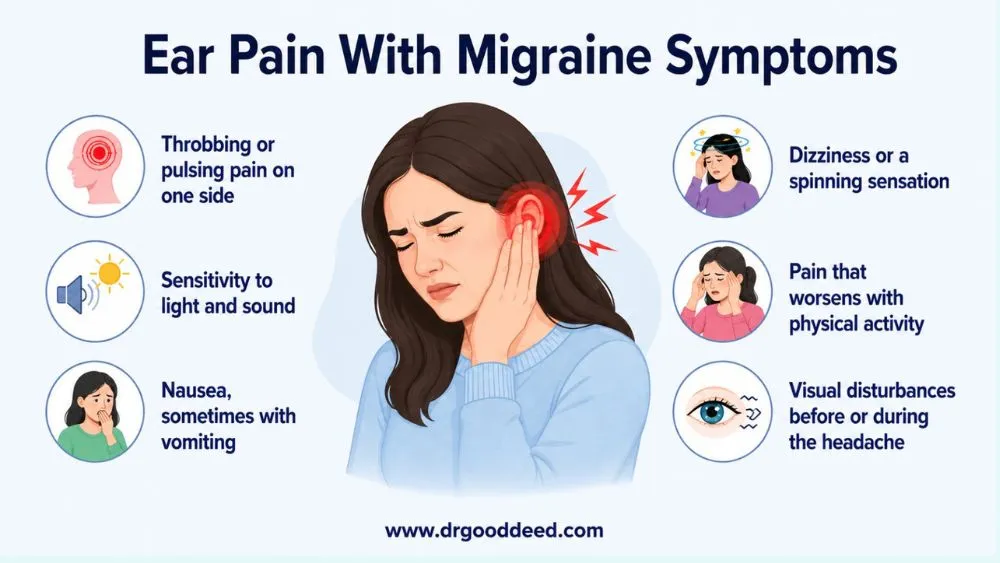
Migraine-related ear pain typically comes with light sensitivity, nausea, and a throbbing quality that worsens with movement, distinguishing it from infection-based pain that often includes fever or drainage.
- Throbbing or pulsing pain on one side of the head and ear
- Sensitivity to light, sound, or smells during the episode
- Nausea, sometimes with vomiting
- Dizziness or a spinning sensation
- Pain that worsens with physical activity
- Visual disturbances before or during the headache (aura)
How Migraines Can Cause Ear Pain
The trigeminal nerve supplies sensation to the face, scalp, and structures near the ear. During a migraine, this nerve becomes overactive, and the brain can interpret signals as ear pain even without any ear problem.
One-Sided Headache Characteristics
Migraine pain typically stays on one side throughout an episode, though it can switch sides between different episodes. This consistency within a single episode helps distinguish migraine from other causes.
Sensitivity to Light and Sound
The American Migraine Foundation identifies light and sound sensitivity as core migraine features, present in over 80% of migraine episodes according to their clinical data.
Nausea and Dizziness
Nausea occurs in roughly 90% of migraine episodes. Dizziness, particularly a spinning or rocking sensation, points toward a specific migraine subtype discussed next.
Vestibular Migraine and Ear Symptoms
Vestibular migraine involves the inner ear’s balance system. The Vestibular Disorders Association states this type causes dizziness, ear pressure, and sometimes temporary hearing changes alongside headache, often without the typical throbbing pain.
Ear Infections and One-Sided Head Pain
Ear infections fall into three categories: outer ear (otitis externa, often called swimmer’s ear), middle ear (otitis media), and inner ear infections, which are less common but more serious.
How Ear Infections Trigger Headaches
Infection causes inflammation and fluid buildup behind the eardrum. This pressure irritates nearby nerves, including branches that connect to headache pathways, causing pain that spreads from the ear to the temple and forehead.
Signs of Middle Ear Infections
- Sharp or dull pain inside the ear
- Feeling of fullness or pressure in the ear
- Reduced hearing on the affected side
- Fluid drainage from the ear
- Fever, especially in children
- Headache concentrated near the affected ear
Symptoms Requiring Medical Attention
Seek care promptly if symptoms include high fever above 102°F, severe pain that doesn’t improve with over-the-counter medication, drainage of pus or blood, or sudden hearing loss.
Treatment for Ear Infection-Related Headaches
Treatment for ear infection-related headaches focuses on resolving the infection itself, since the headache typically improves alongside ear symptoms once treatment begins. Most middle ear infections in adults resolve within 7 to 10 days with appropriate care, according to American Academy of Otolaryngology guidance.
Medical Evaluation and Diagnosis
A doctor examines the ear using an otoscope to check for redness, fluid, or a bulging eardrum, which confirms middle ear infection as the cause.
Antibiotics When Appropriate
The American Academy of Pediatrics notes that not all ear infections need antibiotics. Bacterial infections with severe symptoms typically receive antibiotics, while mild cases may be monitored for 48 to 72 hours first.
Pain Relief Strategies
Over-the-counter pain relievers like ibuprofen or acetaminophen reduce both ear pain and the associated headache during recovery.
Monitoring for Complications
Untreated middle ear infections can occasionally spread to nearby structures. Watching for worsening fever, severe headache, or neck stiffness helps catch rare complications early.
Sinus Conditions Linked to One-Sided Pain
Sinus Infections
Sinus infections, called sinusitis, cause inflammation in the sinus cavities. When one side is more affected, pain concentrates on that side of the face, forehead, and sometimes the ear.
Nasal Congestion and Pressure
Blocked sinuses create pressure that can radiate to the ear through the Eustachian tube, the passage connecting the throat to the middle ear.
Facial Pain and Headaches
Sinus headaches typically feel like pressure behind the cheeks, eyes, or forehead, often worsening when bending forward or lying down.
Distinguishing Sinus Problems From Migraines
A 2021 study published in Headache: The Journal of Head and Face Pain found that many patients diagnosed with “sinus headaches” actually had migraines, since both conditions share facial pressure and congestion-like symptoms. True sinus headaches usually come with thick nasal discharge and fever, while migraines typically don’t.
How Identifying TMJ as the Cause Resolved One Patient’s Symptoms
Case Study: Night Guard Treatment Stopped Recurring Right-Side Headache and Ear Pain
Sarah (name altered for privacy), a 36-year-old from Chicago, dealt with right-sided headaches and ear pain for nearly eight months. She visited an urgent care clinic twice, was treated for a presumed ear infection both times, but antibiotics didn’t help.
A dentist noticed Sarah’s jaw clicked when opening her mouth and asked about morning jaw soreness, which she confirmed. Examination revealed worn enamel on her back teeth, a sign of nighttime grinding. The dentist diagnosed a TMJ disorder affecting the joint directly in front of her right ear.
Treatment involved a custom night guard to prevent grinding, along with jaw stretching exercises shown by a physical therapist. Within four weeks, Sarah’s morning jaw pain decreased, and her one-sided headaches and ear pain dropped from near-daily to occasional. Her case reflects a documented pattern where TMJ disorders get misdiagnosed as ear infections due to the joint’s location directly adjacent to the ear canal.
How to Relieve One-Sided Headache and Ear Pain
Relieving a one-sided headache and ear pain depends on identifying the likely cause first, since treatments for migraine, infection, and TMJ differ. The general strategies below provide relief while the underlying cause gets addressed through proper diagnosis.
Treating the Underlying Cause
This remains the most effective long-term approach. Migraine medications, antibiotics for infections, or TMJ treatments like night guards each target the specific source of pain.
Pain Management Strategies
Over-the-counter pain relievers like ibuprofen reduce inflammation contributing to both headache and ear pain in most non-severe cases.
Managing Migraine Triggers
Keeping a symptom diary helps identify personal triggers like specific foods, stress, or sleep changes that precede migraine episodes with ear involvement.
Jaw Relaxation Techniques
Gentle jaw stretches, avoiding chewing gum, and being mindful of clenching during the day can reduce TMJ-related pain significantly within a few weeks.
Warm or Cold Compresses
A warm compress over the jaw and ear can ease TMJ-related muscle tension, while a cold compress works better for migraine-related pain at the temples.
Preventing Recurring Headache and Ear Pain
Prevention strategies focus on addressing root causes like TMJ habits, migraine triggers, and sinus health consistently over time, rather than relying only on pain relief during flare-ups.
- Track headache and ear pain episodes with dates, triggers, and severity for at least one month
- Address teeth grinding with a night guard if jaw soreness occurs upon waking
- Treat seasonal allergies promptly, since untreated congestion increases sinus and ear pressure
- Stay consistent with migraine prevention medications if prescribed by a doctor
- Schedule a dental check-up if ear pain occurs alongside jaw clicking or tooth sensitivity
- Follow up with an ENT specialist for recurring ear infections occurring more than three times yearly
FAQ
1. What causes a headache and ear pain on one side?
Migraine, ear infection, TMJ disorder, sinus pressure, or dental infection. Headache and ear pain on one side most commonly trace to TMJ or migraine in adults without fever.
2. Can migraines cause ear pain on one side?
Yes. The trigeminal nerve creates referred pain felt in the ear during migraine episodes, occurring in patients with no actual ear infection or hearing problem.
3. What are the most common one sided headache and earache causes?
TMJ disorders affect 5 to 12% of U.S. adults and rank among the top causes, alongside migraine and middle ear infections, per NIDCR data.
4. Can an ear infection cause a headache?
Yes. Fluid buildup behind the eardrum creates pressure that irritates nearby nerves, causing headache pain near the infected ear within hours of infection onset.
5. What are the symptoms of ear pain with migraine symptoms?
Throbbing pain, light sensitivity, nausea, and dizziness without fever or ear drainage. These four symptoms together point to migraine, not infection, in over 80% of cases.
6. How does TMJ disorder cause one-sided head pain?
The jaw joint sits directly in front of the ear canal. Inflammation or grinding here causes pain that spreads to the temple, ear, and head on that side.
7. Can a tooth infection cause ear pain and headaches?
Yes. Upper molar infections share trigeminal nerve branches with the ear and temple, causing pain to spread within 24 to 48 hours of infection developing.
8. How can I relieve a one-sided headache and ear pain at home?
Use ibuprofen for inflammation, apply a warm compress to the jaw for TMJ-related pain, or a cold compress at the temples for migraine-related pain.
9. When should I seek treatment for ear infection-related headaches?
Seek care if fever exceeds 102°F, pain doesn’t improve within 48 hours, fluid drains from the ear, or hearing suddenly decreases on one side.
10. Can sinus infections cause ear pain and headaches?
Yes. Blocked sinuses create pressure through the Eustachian tube connecting to the middle ear, causing facial pain, forehead pressure, and ear fullness on the congested side.
Sources
- World Health Organization
- Centers for Disease Control and Prevention
- National Institute of Dental and Craniofacial Research
- American Migraine Foundation
- Vestibular Disorders Association
- American Academy of Otolaryngology
- American Academy of Pediatrics
Disclaimer: This article is for informational purposes only and does not replace professional medical advice. Talk to a licensed healthcare provider for diagnosis and treatment of headache and ear pain symptoms.