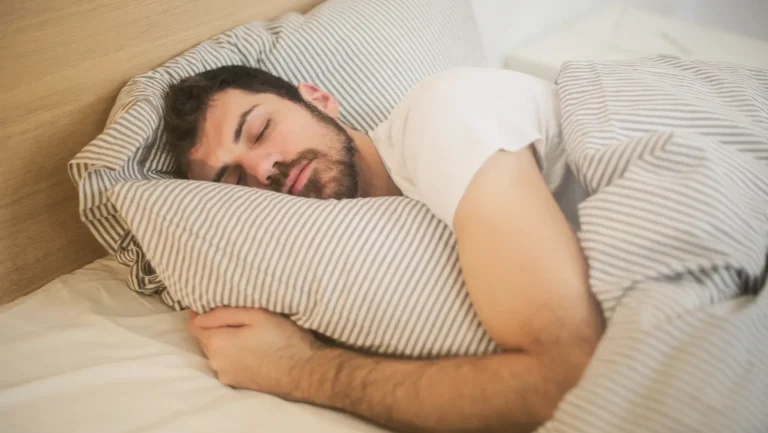

There are three types of sleep apnea: obstructive (OSA), central (CSA), and complex sleep apnea syndrome. Each one disrupts breathing during sleep through a different mechanism. Combined, these conditions affect an estimated 39 million adults in the USA, according to the American Academy of Sleep Medicine (AASM).
What Are the Main Types of Sleep Apnea?
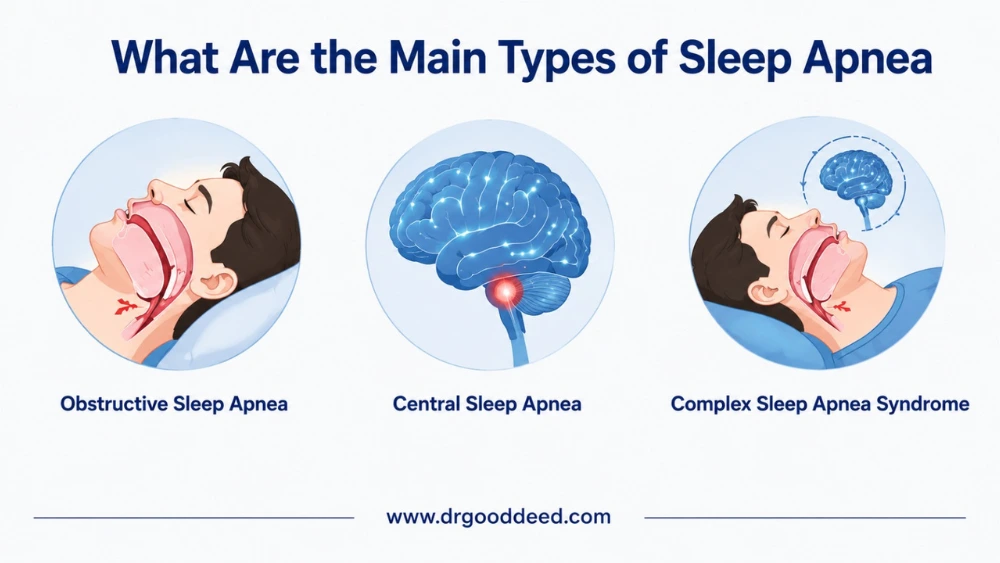
The main types of sleep apnea differ in origin. OSA involves physical airway collapse. CSA is a brain signaling problem. Complex sleep apnea is a combination of both, and it often surfaces only after CPAP treatment begins.
Obstructive Sleep Apnea (OSA)
OSA is the most common of the types of sleep apnea. The throat muscles relax during sleep, soft tissue falls back, and the airway narrows or closes completely. The brain then triggers a wake response to restart breathing. This cycle can repeat 30 or more times per hour in severe cases, per the National Heart, Lung, and Blood Institute (NHLBI).
Central Sleep Apnea (CSA)
CSA has nothing to do with a blocked airway. The brainstem fails to send the correct breathing signals to the respiratory muscles. The result: breathing simply stops, briefly, without any physical obstruction. CSA is less common than OSA. It is frequently linked to heart failure, opioid use, or high-altitude exposure.
Complex Sleep Apnea Syndrome
Also called treatment-emergent central sleep apnea, this type starts as OSA but generates central apnea events once CPAP therapy is applied. A 2006 study published in SLEEP journal (Morgenthaler et al., Mayo Clinic) found it occurred in roughly 15% of OSA patients after CPAP initiation. Standard CPAP alone does not resolve it.
Obstructive Sleep Apnea (OSA)
OSA accounts for roughly 84% of all sleep apnea diagnoses in the USA, making it the dominant form among all types of sleep apnea. The severity ranges from mild (5–14 apnea events per hour) to severe (30+ events per hour), measured by the apnea-hypopnea index (AHI).
What Causes Obstructive Sleep Apnea?
Excess weight is the single biggest modifiable risk factor. Fat deposits around the upper airway narrow the throat passage. Beyond weight, structural factors like a recessed jaw, enlarged tonsils, or a wide neck circumference (over 17 inches in men, over 16 inches in women) increase risk significantly.
How Airway Blockage Occurs
During normal sleep, throat muscles relax slightly. In OSA, they relax too far. The soft palate, uvula, and tongue base collapse inward. Airflow drops or stops entirely. Blood oxygen saturation falls, sometimes below 90%. The brain detects the drop and sends an arousal signal, which restores muscle tone and reopens the airway.
Who Is Most at Risk?
Men are twice as likely to develop OSA as women before menopause. After menopause, women’s risk rises significantly. Age increases risk. Smoking inflames the upper airway. Family history matters: a first-degree relative with OSA raises your personal risk by 22–58%, per research published in the American Journal of Respiratory and Critical Care Medicine.
Why OSA Is the Most Common Type
OSA’s dominance comes from lifestyle and anatomy. The modern diet drives obesity rates. Sedentary behavior worsens airway muscle tone. And OSA frequently goes undiagnosed for years because loud snoring gets normalized. The AASM estimates only 20% of OSA cases in the USA receive a formal diagnosis.
Symptoms of Obstructive Sleep Apnea
The symptoms of obstructive sleep apnea range from obvious to easily dismissed. Loud, chronic snoring with choking or gasping episodes is the clearest sign. A bed partner notices it more often than the person sleeping. Daytime symptoms are what bring most patients to a doctor.
Key symptoms include:
- Loud snoring interrupted by silence, then a gasp or snort
- Morning headaches caused by overnight carbon dioxide buildup
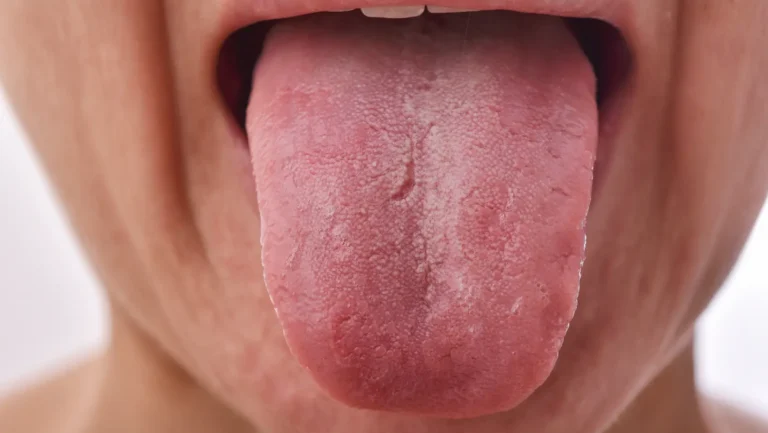
- Dry mouth on waking (from breathing through the mouth)
- Excessive daytime sleepiness, even after 7–8 hours in bed
- Difficulty concentrating or memory problems
- Frequent nighttime urination (nocturia), which OSA triggers by increasing atrial natriuretic peptide production
- Mood changes including irritability or depression
The Epworth Sleepiness Scale is one tool clinicians use to quantify daytime sleepiness. A score above 10 out of 24 suggests a sleep disorder warrants investigation.
Signs of Central Sleep Apnea
The signs of central sleep apnea are subtler than OSA. There is often no snoring. Instead, CSA presents as unexplained breathing pauses and insomnia-like symptoms, which is why it gets misdiagnosed frequently.
Interrupted Breathing Without Airway Obstruction
The breathing pauses in CSA are visible during a sleep study as apnea events with no corresponding chest or abdominal effort. The chest does not struggle. It simply stops moving, which is the defining difference from OSA on a polysomnography reading.
Frequent Nighttime Awakenings
People with CSA wake repeatedly, often without knowing why. The brain’s repeated respiratory arousal signals pull the person out of deep sleep. This fragments sleep architecture and reduces restorative slow-wave sleep stages.
Insomnia Symptoms
Unlike OSA patients who typically fall asleep easily, CSA patients sometimes present with sleep-onset insomnia. The brain’s unstable respiratory drive makes settling into sleep difficult. This is especially true in CSA associated with Cheyne-Stokes respiration, seen in congestive heart failure patients.
Daytime Fatigue
CSA produces daytime fatigue similar to OSA, but without the heavy snoring history. Patients often report exhaustion without an obvious cause, which delays diagnosis by months or years.
Difficulty Maintaining Sleep
Waking after 1–2 hours of sleep and struggling to return is a common CSA pattern. It is distinct from the brief micro-arousals in OSA that patients rarely remember.
CPAP Therapy for Different Sleep Apnea Types
CPAP therapy for different sleep apnea types works differently. It is highly effective for OSA. For CSA, it is less reliable and sometimes counterproductive. For complex sleep apnea, alternative devices are needed.
How CPAP Therapy Works
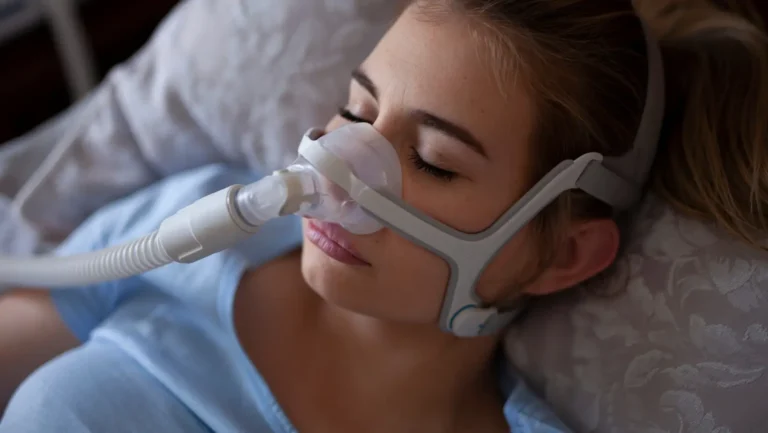
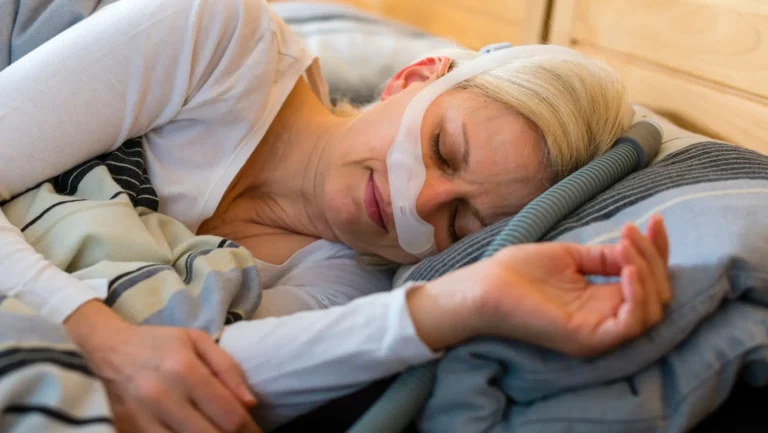
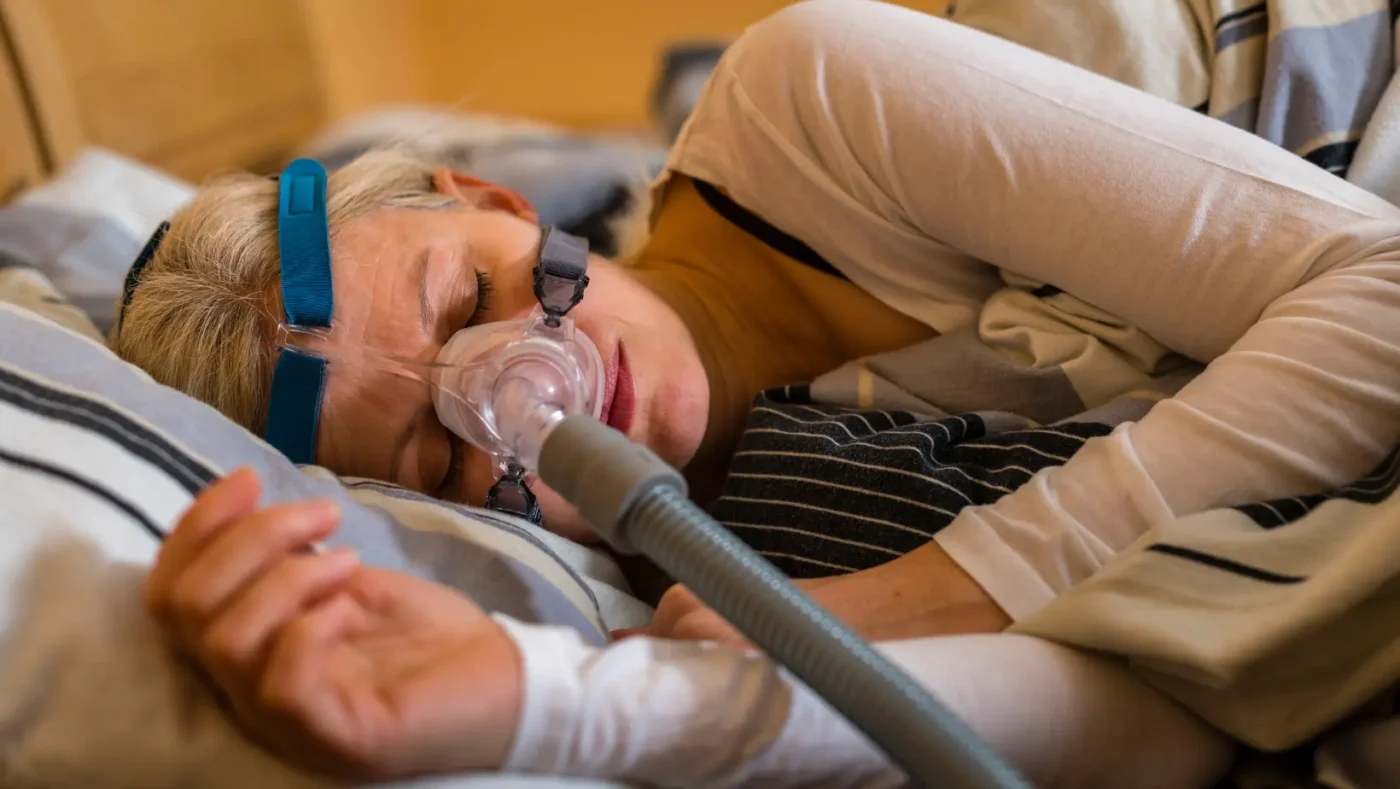
CPAP delivers a continuous stream of pressurized air through a mask. The pressure acts as a pneumatic splint, holding the airway open so it cannot collapse during sleep.
CPAP for Obstructive Sleep Apnea
CPAP is the first-line treatment for moderate to severe OSA per AASM 2023 guidelines. When used consistently (4+ hours per night on 70% of nights), it reduces AHI by over 50% in most patients and cuts cardiovascular risk markers measurably.
CPAP for Central Sleep Apnea
Standard fixed-pressure CPAP does not fix CSA’s underlying signaling problem. In some cases, it worsens central events. Adaptive servo-ventilation (ASV) or bilevel PAP devices that adjust pressure per breath are used instead.
Benefits of Consistent CPAP Use
Patients using CPAP regularly report lower daytime sleepiness scores within 2 weeks. Blood pressure improvements appear within 4–8 weeks of consistent use, according to a meta-analysis in the Journal of Clinical Sleep Medicine (2020).
Common Challenges and Solutions
The most common reason CPAP fails is mask discomfort. A poorly fitting mask causes air leaks, noise, and skin irritation. A CPAP-trained respiratory therapist can trial different mask styles. Auto-titrating CPAP (APAP) adjusts pressure automatically throughout the night and improves tolerance in many patients.
Treatment Options for Obstructive Sleep Apnea
The treatment options for obstructive sleep apnea extend well beyond CPAP for patients who cannot tolerate it or have mild-to-moderate disease.
CPAP Therapy
First-line treatment for moderate-to-severe OSA. Effective, reversible, and non-invasive.
Oral Appliance Therapy
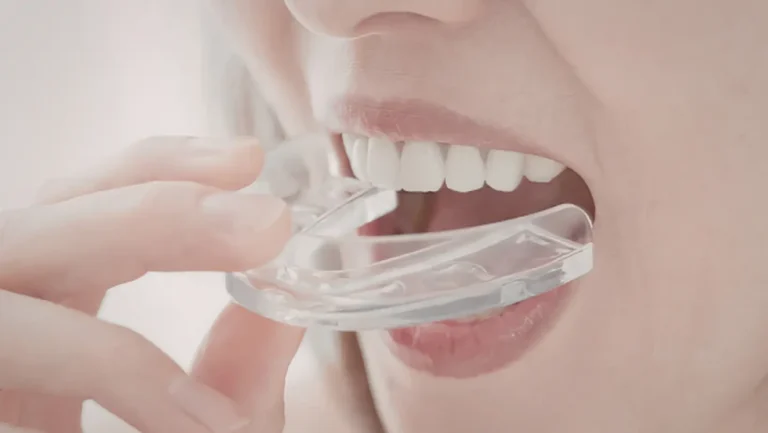
Custom mandibular advancement devices (MADs) position the lower jaw forward during sleep. They are FDA-cleared, AASM-recommended for mild-to-moderate OSA, and preferred by patients with CPAP intolerance. A 2015 study in SLEEP found MADs reduced AHI by an average of 52% versus sham devices.
Weight Loss Strategies
A 10% reduction in body weight produces a roughly 30% reduction in AHI in overweight OSA patients, per NHLBI data. Bariatric surgery produces more dramatic results. A Swedish Obese Subjects study documented AHI normalization in a subset of severely obese patients after surgical weight loss.
Positional Therapy
Supine position (sleeping on the back) worsens OSA in about 56% of patients. Positional therapy devices keep patients sleeping on their side. For positional OSA specifically, this alone reduces AHI into normal range.
Surgical Treatment Options
- Uvulopalatopharyngoplasty (UPPP): Removes excess tissue from the throat. Success rate around 50% at one year.
- Inspire Upper Airway Stimulation: FDA-approved implantable device that stimulates the hypoglossal nerve during sleep, preventing tongue collapse. Indicated for moderate-severe OSA with CPAP intolerance.
- Genioglossus advancement or maxillomandibular advancement: Repositions jaw bones to enlarge the airway structurally.
Treatment Options for Central Sleep Apnea
CSA linked to heart failure responds to heart failure treatment. Optimizing cardiac output with ACE inhibitors, beta-blockers, or cardiac resynchronization therapy reduces or eliminates CSA in a subset of patients, per studies published in Circulation (AHA).
Adaptive Servo-Ventilation (ASV)
ASV devices analyze each breath and deliver variable pressure support to stabilize breathing. AASM guidelines endorse ASV for CSA in patients without severe heart failure with reduced ejection fraction (HFrEF). The SERVE-HF trial (2015) showed ASV increased mortality in HFrEF patients, so cardiac workup before prescribing is required.
Supplemental Oxygen Therapy
Oxygen therapy reduces CSA events in high-altitude CSA and in some heart failure patients by stabilizing chemoreceptor drive. It does not treat airway anatomy.
Medication Adjustments
Opioid-induced CSA resolves or significantly improves when opioid dosing is tapered. Acetazolamide, a carbonic anhydrase inhibitor, is sometimes used off-label for altitude-related CSA.
Specialized Breathing Support Devices
Bilevel positive airway pressure with a backup rate (BiPAP-ST) delivers set breath timing if the patient fails to initiate breathing within a set interval. This is used when ASV is contraindicated.
Lifestyle Changes That Support Sleep Apnea Treatment
Lifestyle changes reduce the severity of sleep apnea and in mild cases can produce clinically meaningful AHI reductions without devices. They work alongside, not instead of, prescribed treatment.
Key lifestyle changes supported by evidence:
- Weight reduction: The most impactful modifiable factor for OSA. Even 5–10% weight loss produces AHI improvement.
- Alcohol avoidance before bed: Alcohol relaxes upper airway muscles and worsens OSA. Avoiding it within 3 hours of sleep reduces event frequency.
- Quit smoking: Smoking increases airway inflammation. Former smokers have lower OSA severity than current smokers, per data from the Wisconsin Sleep Cohort.
- Consistent sleep schedule: Irregular sleep worsens sleep architecture and increases arousal threshold.
- Sleeping on the side: Reduces OSA severity in more than half of patients, as noted above.
- Nasal congestion treatment: Chronic nasal obstruction from allergies increases mouth breathing and OSA severity. Nasal corticosteroids improve nasal airflow and marginally improve CPAP tolerance.
Complications of Untreated Sleep Apnea
Untreated sleep apnea of all types of sleep apnea damages multiple organ systems over time.
High Blood Pressure
Recurrent nighttime hypoxia activates the sympathetic nervous system, raising baseline blood pressure. OSA is present in roughly 50% of hypertension patients. The NHLBI identifies OSA as a leading secondary cause of treatment-resistant hypertension.
Heart Disease
OSA increases risk of atrial fibrillation by 2–4x. Chronic intermittent hypoxia promotes oxidative stress and endothelial dysfunction, accelerating atherosclerosis.
Stroke Risk
A 2005 Yale study (Yaggi et al.) published in the New England Journal of Medicine found untreated OSA doubled the risk of stroke or death compared to controls, independent of other cardiovascular risk factors.
Type 2 Diabetes
Sleep fragmentation impairs insulin sensitivity. A single night of fragmented sleep reduces insulin sensitivity by up to 25% in controlled laboratory studies from the University of Chicago.
Reduced Cognitive Function
The hippocampus, critical for memory consolidation, is damaged by chronic intermittent hypoxia. MRI studies show hippocampal volume reduction in long-term untreated OSA patients.
Increased Accident Risk
Daytime sleepiness from untreated OSA raises motor vehicle accident risk by 2.5x, per the NHLBI. Commercial drivers with untreated OSA face federal restrictions on operating vehicles.
Preventing Sleep Apnea Complications
Complications from all types of sleep apnea are largely preventable with consistent treatment and monitoring. Early diagnosis makes the largest difference; most organ-level damage is reversible in the first 5 years after treatment begins.
Prevention actions with evidence behind them:
- Start CPAP or alternative treatment immediately after diagnosis, do not delay.
- Monitor blood pressure regularly; OSA treatment reduces systolic BP by 2–3 mmHg on average.
- Complete annual sleep study follow-ups if weight changes significantly (5%+ gain or loss changes AHI meaningfully).
- Address cardiovascular risk factors in parallel: statins, blood pressure medications, and glycemic control all reduce the compounded cardiovascular burden.
- Report any return of snoring, morning headaches, or daytime sleepiness to your doctor; these signal treatment failure or pressure changes needed.
When to See a Doctor
If you snore loudly and a partner has observed stopped breathing, schedule a sleep study. Do not wait for daytime symptoms to worsen. These specific signs warrant same-week medical attention:
- Waking with choking or gasping
- Morning chest tightness or headache occurring more than twice per week
- Sudden new confusion or cognitive decline in older adults (CSA can be the trigger)
- New or worsening atrial fibrillation with unexplained fatigue
- Children snoring persistently with mouth-breathing or bedwetting, all of which the American Academy of Pediatrics identifies as red flags for pediatric OSA
A board-certified sleep medicine physician will refer you for a polysomnography (in-lab sleep study) or a home sleep apnea test (HSAT). HSATs are validated for OSA diagnosis in adults without significant comorbidities, per AASM 2017 guidelines, but they cannot detect CSA reliably.
FAQs
1. What are the main types of sleep apnea?
The main types of sleep apnea are obstructive (airway collapse), central (brain signaling failure), and complex (both combined, emerging during CPAP use). OSA accounts for 84% of all cases in the USA.
2. What is the difference between obstructive and central sleep apnea?
OSA is caused by physical throat tissue blocking the airway. CSA is caused by the brainstem failing to send breathing signals. OSA produces chest effort during pauses; CSA does not.
3. What are the symptoms of obstructive sleep apnea?
Core symptoms of obstructive sleep apnea include loud snoring with gasping, morning headaches, dry mouth, excessive daytime sleepiness, nocturia, and memory problems. A bed partner usually spots breathing pauses first.
4. What are the signs of central sleep apnea?
The key signs of central sleep apnea are quiet breathing pauses (no snoring), frequent nighttime awakenings, insomnia, and daytime fatigue without a clear cause. CSA often gets misdiagnosed as insomnia.
5. What is complex sleep apnea syndrome?
It is OSA that generates central apnea events after CPAP is started. Roughly 15% of OSA patients develop it (Morgenthaler et al., Mayo Clinic, 2006). Standard CPAP does not fix it; ASV therapy is required.
6. Which type of sleep apnea is most common?
OSA is the most common of all types of sleep apnea, representing approximately 84% of diagnoses. An estimated 39 million adults in the USA have it, and most are undiagnosed.
7. How is sleep apnea diagnosed?
A polysomnography sleep study measures AHI, oxygen saturation, brain activity, and limb movements. An AHI of 5–14 is mild, 15–29 is moderate, and 30+ is severe. Home sleep tests diagnose OSA but not CSA.
8. Can a sleep study determine the type of sleep apnea?
Yes. Polysomnography distinguishes OSA from CSA by measuring respiratory effort during apnea events. Chest and abdominal effort belts show whether the body is trying to breathe, which is absent in CSA.
9. Does CPAP therapy work for different sleep apnea types?
CPAP therapy for different sleep apnea types works best for OSA. For CSA, ASV devices are preferred. For complex sleep apnea, standard CPAP is insufficient and worsens central events in some patients.
10. What are the treatment options for obstructive sleep apnea?
The treatment options for obstructive sleep apnea include CPAP, oral appliance therapy, weight loss, positional therapy, Inspire upper airway stimulation, and surgeries like UPPP or maxillomandibular advancement, depending on severity and anatomy.
References
- American Academy of Sleep Medicine (AASM)
- National Heart, Lung, and Blood Institute (NHLBI), Sleep Apnea Overview
- Morgenthaler TI et al. “Complex Sleep Apnea Syndrome.” SLEEP, 2006, Mayo Clinic
- Yaggi HK et al. “Obstructive Sleep Apnea as a Risk Factor for Stroke and Death.” NEJM, 2005, Yale University
- American Journal of Respiratory and Critical Care Medicine, familial OSA risk data
- Journal of Clinical Sleep Medicine, CPAP and blood pressure meta-analysis, 2020
- SERVE-HF Trial, 2015, New England Journal of Medicine
- Wisconsin Sleep Cohort, smoking and OSA severity data
- University of Chicago, sleep fragmentation and insulin sensitivity studies