
Sleep apnea causes headaches, and millions of Americans deal with them daily without knowing why. Sleep apnea stops snoring during sleep, dropping oxygen and raising carbon dioxide (CO2), both of which trigger morning head pain.
The International Classification of Headache Disorders (ICHD-3) officially recognizes “sleep apnea headache” as a distinct diagnosis. This is headaches caused by sleep apnea explained at its most fundamental level. Roughly 1 in 4 people with obstructive sleep apnea in the USA experience morning headaches consistently.
Can Sleep Apnea Cause Headaches?
Sleep apnea can cause headaches. They follow a specific, clinically identifiable pattern that is directly caused by overnight breathing disruptions and the oxygen-CO2 changes they produce.
The Link Between Sleep Apnea and Head Pain
Sleep apnea causes partial or complete breathing stops dozens to hundreds of times per night. Each pause drops blood oxygen and raises CO2. This chemical imbalance forces the brain’s blood vessels to expand, and that expansion produces the pressure or squeezing head pain felt by morning.
Why Morning Headaches Are Common
Sleep apnea headaches peak at waking because the oxygen-CO2 imbalance builds through the night. Per ICHD-3 criteria, these headaches are bilateral (felt on both sides), pressing in quality, and resolve within 30 minutes of getting up, without any medication.
How Sleep Disruption Contributes to Headaches
Each apnea episode fragments sleep, blocking the brain from reaching deep restorative stages. Chronic sleep fragmentation lowers the brain’s pain threshold. Discomfort that would normally go unnoticed becomes a headache in people with untreated sleep apnea.
What Research Says About Sleep Apnea Headaches
Morning headaches affect approximately 29% of people with obstructive sleep apnea. Headache frequency correlates directly with AHI (Apnea-Hypopnea Index) severity. People with severe sleep apnea (AHI above 30) experience headaches on significantly more days per month than those with mild cases.
How Sleep Apnea Causes Headaches
Headaches caused by sleep apnea result from two simultaneous changes: oxygen falling and CO2 rising. Both happen during breathing pauses and both independently trigger blood vessel expansion inside the skull.
Low Oxygen Levels Causing Headaches
Low oxygen levels causing headaches is the most direct mechanism. When blood oxygen drops below 90% (called hypoxemia), the brain signals vessels to widen to push more blood through. This cerebral vasodilation (widening of blood vessels inside the skull) raises intracranial pressure and produces the characteristic morning headache.
Carbon Dioxide Changes During Sleep
CO2 buildup during apnea episodes (called hypercapnia) is actually a stronger cerebral vasodilation trigger than low oxygen alone. CO2 accumulates in the bloodstream during each breathing stop. The brain treats rising CO2 as an emergency and expands blood vessels aggressively. This is why headaches are worst immediately on waking after peak CO2 accumulation.
Sleep Fragmentation and Brain Function
Each apnea event partially activates the brain and blocks deep sleep. Without sufficient slow-wave sleep, pain sensitivity rises across the nervous system. This explains why headache disorders and sleep apnea coexist in the same patients at rates far above coincidence.
Blood Vessel Changes During Sleep Apnea Episodes
Each breathing stop spikes blood pressure temporarily. Repeated overnight blood pressure surges cause rapid fluctuations in cerebral blood flow. The cumulative vessel wall strain generates low-grade inflammation that peaks overnight and surfaces as head pain by morning.
Are Headaches a Symptom of Sleep Apnea?
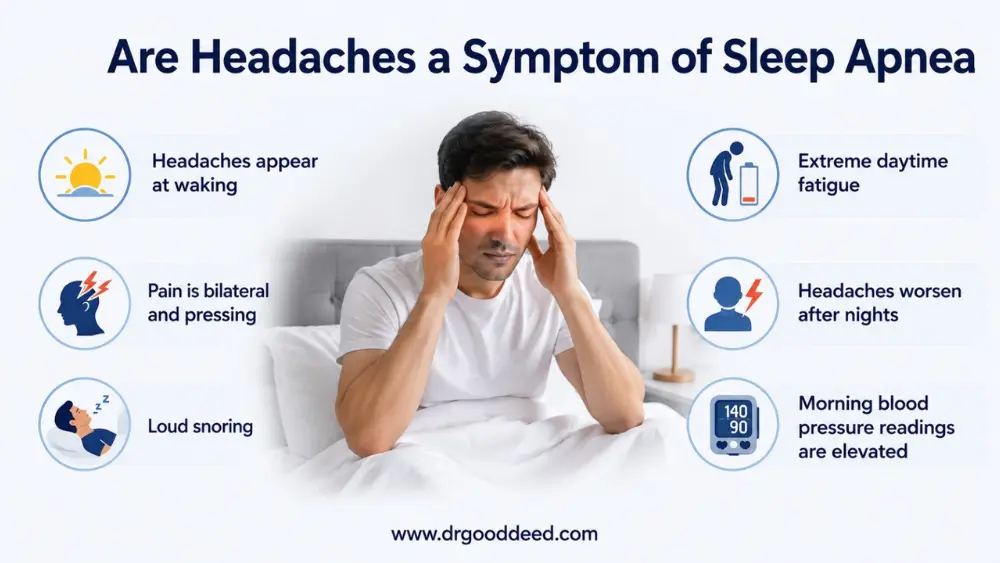
When asking if sleep apnea causes headaches that appear every single morning, the timing and pattern are the key diagnostic signals. Headaches, a symptom of sleep apnea are distinct: they arrive at waking, sit on both sides of the head, and disappear within 30 minutes on their own.
Signs that headaches are linked to sleep apnea:
- Headaches appear at waking, not during the day or evening
- Pain is bilateral and pressing, not one-sided or throbbing
- Headache resolves within 30 minutes without any pain medication
- Loud snoring, gasping, or choking sounds during sleep noted by a bed partner
- Extreme daytime fatigue despite sleeping 4 to 8 hours
- Headaches worsen after nights with alcohol or sleeping on the back
- Morning blood pressure readings are elevated
Morning headaches occurring 15 or more days per month qualify as chronic and need formal sleep testing immediately.
Diagnosing Sleep Apnea-Related Headaches
Diagnosing sleep apnea-related headaches requires two parallel steps: documenting the headache pattern and confirming sleep apnea through objective overnight testing.
Medical History and Symptom Review
Doctors assess headache timing, location, and associated symptoms. The ICHD-3 pattern (bilateral, morning-onset, under 30 minutes, linked to snoring or witnessed apneas) narrows the diagnosis significantly before any testing begins.
Sleep Apnea Screening Questionnaires
The STOP-BANG questionnaire (8 questions covering snoring, tiredness, observed apneas, blood pressure, BMI, age, neck size, and gender) and Epworth Sleepiness Scale quantify risk. A STOP-BANG score of 3 or higher in someone with morning headaches justifies a sleep study.
Home Sleep Apnea Testing
A portable device worn overnight records airflow, blood oxygen, heart rate, and breathing effort. It is accurate for most standard obstructive sleep apnea cases and can be ordered directly after clinical evaluation.
Overnight Sleep Studies
Polysomnography (PSG) is the gold standard for diagnosing sleep apnea-related headaches conclusively. It records brain activity, eye movements, oxygen levels, and breathing simultaneously. It also detects central sleep apnea, which home tests cannot capture.
Ruling Out Other Headache Causes
Migraine, cluster headache, and increased intracranial pressure must be excluded. Some patients need a neurology referral alongside a sleep study, since these conditions can coexist rather than one simply mimicking the other.
Conditions That May Mimic Sleep Apnea Headaches
Migraines are one-sided, throbbing, and last 4 to 72 hours with light or sound sensitivity. Sleep apnea headaches are bilateral, pressing, and resolve within 30 minutes. Both can coexist in the same patient.
Tension-Type Headaches
Tension headaches cause band-like pressure around the entire head, linked to stress or posture. They do not follow a morning-onset pattern and typically persist through the day rather than resolving quickly after waking.
Medication Overuse Headaches
Taking pain relievers more than 10 to 15 days per month produces daily rebound headaches. Someone taking a headache medication every morning may have both overuse headache and untreated sleep apnea reinforcing each other.
Sinus Conditions
Sinus pressure produces facial pain around the cheeks and forehead, often with nasal congestion. Nasal obstruction also worsens sleep apnea, so both conditions frequently appear together and require separate treatment.
High Blood Pressure
Severely elevated blood pressure (above 180/120 mmHg) independently causes morning headaches. Since untreated sleep apnea drives overnight blood pressure spikes, treating the sleep apnea often lowers blood pressure and eliminates the headaches simultaneously.
How to Relieve Headaches From Sleep Apnea
Relieving headaches from sleep apnea means fixing the breathing problem directly. Understanding that sleep apnea causes headaches as an oxygen-CO2 issue makes clear why pain medication alone fails: it never addresses the nightly trigger.
CPAP Therapy
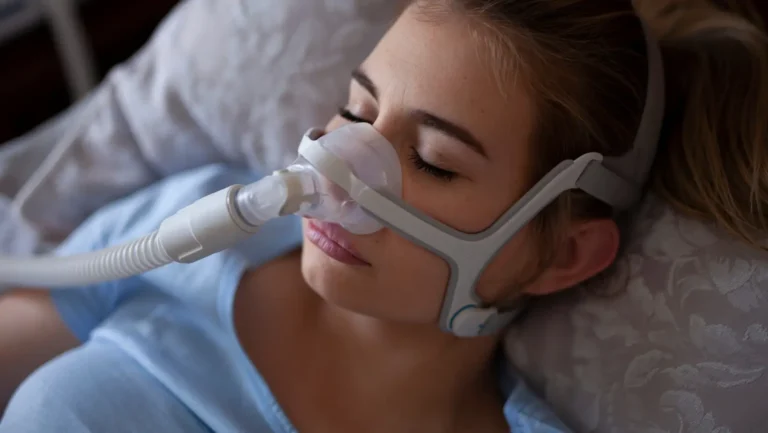
CPAP (Continuous Positive Airway Pressure) is the first-line treatment for obstructive sleep apnea and its morning headaches. It delivers pressurized air through a mask to hold the airway open all night.
How CPAP Improves Oxygen Levels
CPAP eliminates breathing pauses entirely. Blood oxygen stays at 95% or above throughout the night. CO2 clears normally with each breath. Cerebral blood vessels maintain stable tone and stop their nightly cycle of expansion and contraction.
Effects on Morning Headaches
Consistent CPAP use reduces morning headache frequency by 80 to 90% in most patients. Most users notice improvement within two to four weeks of nightly use. Skipping even a few consecutive nights reverses the benefit.
Oral Appliance Therapy
Custom mandibular advancement devices (mouthguards that shift the jaw forward) keep the throat open during sleep. They are effective for mild to moderate sleep apnea in patients who cannot tolerate CPAP.
Improving Sleep Position
Sleeping on your side reduces airway collapse significantly. For positional sleep apnea (which only happens when lying on the back), this single change reduces apnea events and morning headache frequency within a few nights.
Weight Management Strategies
Fat tissue around the neck narrows the airway during sleep. Losing 10% of body weight reduces AHI by approximately 26%. As apnea severity drops, oxygen stabilizes and headache frequency follows.
Consistent Sleep Schedules
Keeping the same sleep and wake time daily stabilizes sleep architecture (the progression through sleep stages) and reduces nightly oxygen variability, which is a direct driver of morning headaches.
Preventing Sleep Apnea-Related Headaches
Preventing sleep apnea headaches requires consistent airway management. Any night without treatment risks triggering the oxygen-CO2 cycle that produces head pain by morning.
Key prevention steps:
- Use CPAP or an oral appliance every single night without skipping
- Sleep on your side to reduce airway collapse and lower apnea event frequency
- Avoid alcohol at least 3 to 4 hours before bed since it relaxes throat muscles and worsens breathing stops
- Treat nasal congestion with saline rinses or allergy medication to support nasal airflow overnight
- Maintain a healthy weight, since modest weight loss produces measurable AHI reductions
- Follow a consistent sleep schedule to stabilize oxygen patterns overnight
- Monitor blood pressure regularly, since sleep apnea and hypertension reinforce each other
FAQs
1. Can sleep apnea cause headaches every morning?
Sleep apnea causes headaches when AHI is above 30. Severe sleep apnea patients report headaches on 15 or more days per month. Daily morning headaches signal severely undertreated or undiagnosed sleep apnea that needs urgent evaluation.
2. Why are headaches a symptom of sleep apnea?
This happens because breathing pauses cause CO2 to build up, forcing cerebral vessels to expand. This is headaches caused by sleep apnea explained: vasodilation inside the skull creates the bilateral pressing pain felt at waking.
3. How do low oxygen levels cause headaches?
Low oxygen levels causing headaches work through vasodilation. When blood oxygen drops below 90%, brain vessels widen to increase blood delivery. The expansion raises intracranial pressure, producing the bilateral, pressing pain that is the hallmark of sleep apnea headache.
4. What do sleep apnea headaches feel like?
Bilateral pressure or squeezing across both sides of the head, appearing at waking and resolving within 30 minutes without medication. No throbbing. No light sensitivity. This distinguishes them from migraines and most tension headaches definitively.
5. How long do sleep apnea headaches usually last?
Under 30 minutes from waking in most cases. This rapid, drug-free resolution is one of the ICHD-3 official diagnostic criteria. Headaches lasting beyond 30 minutes suggest a co-existing condition such as migraine alongside sleep apnea.
6. Are sleep apnea headaches different from migraines?
Yes. Sleep apnea headaches are bilateral, pressing, and last under 30 minutes. Migraines are one-sided, throbbing, last 4 to 72 hours, and include nausea or light sensitivity. A patient can have both simultaneously, requiring separate treatment plans.
7. How are sleep apnea-related headaches diagnosed?
Diagnosing sleep apnea-related headaches requires confirming the ICHD-3 pattern (bilateral, morning, under 30 minutes) and then confirming sleep apnea via polysomnography or a home sleep test. Headache resolution after CPAP treatment confirms the diagnosis conclusively.
8. Can CPAP therapy help relieve headaches from sleep apnea?
Yes. How to relieve headaches from sleep apnea with CPAP: it keeps blood oxygen above 95% all night and stops CO2 buildup, eliminating cerebral vasodilation. About 80 to 90% of consistent users see major headache reduction within two to four weeks.
9. What other symptoms occur with sleep apnea headaches?
Loud snoring, choking or gasping during sleep, extreme daytime fatigue despite full sleep, dry mouth on waking, difficulty concentrating, and elevated blood pressure readings in the morning all accompany sleep apnea headaches.
10. Can sleep apnea cause headaches to become chronic?
Sleep apnea causes headaches that meet the definition of chronic. Untreated severe sleep apnea (AHI above 30) produces headaches on 15 or more days per month, qualifying as a chronic headache. Consistent CPAP use reverses this progression.
Sources: