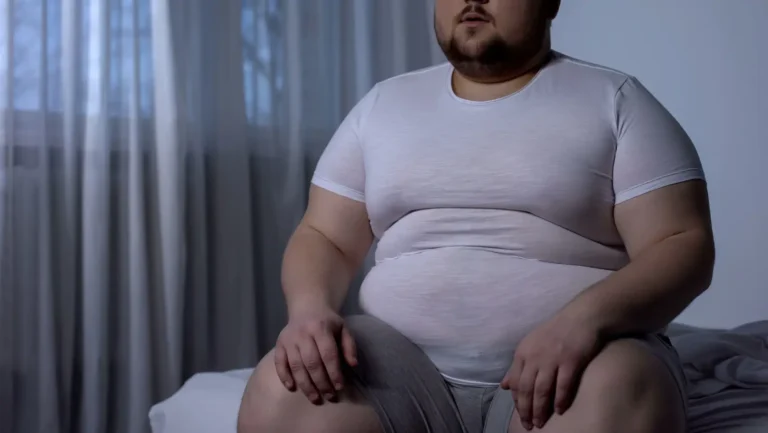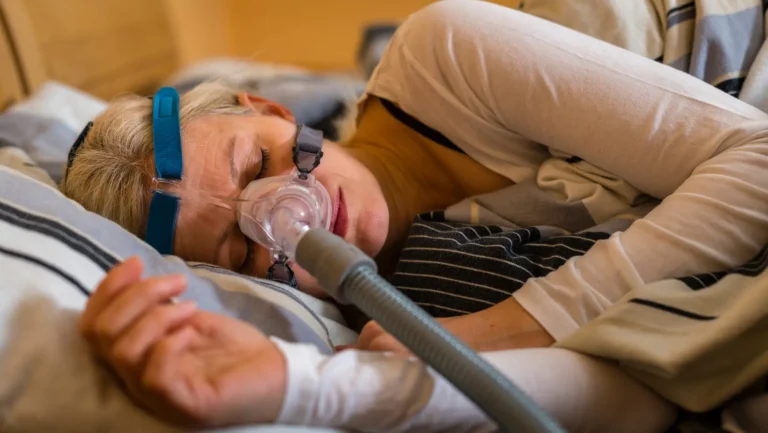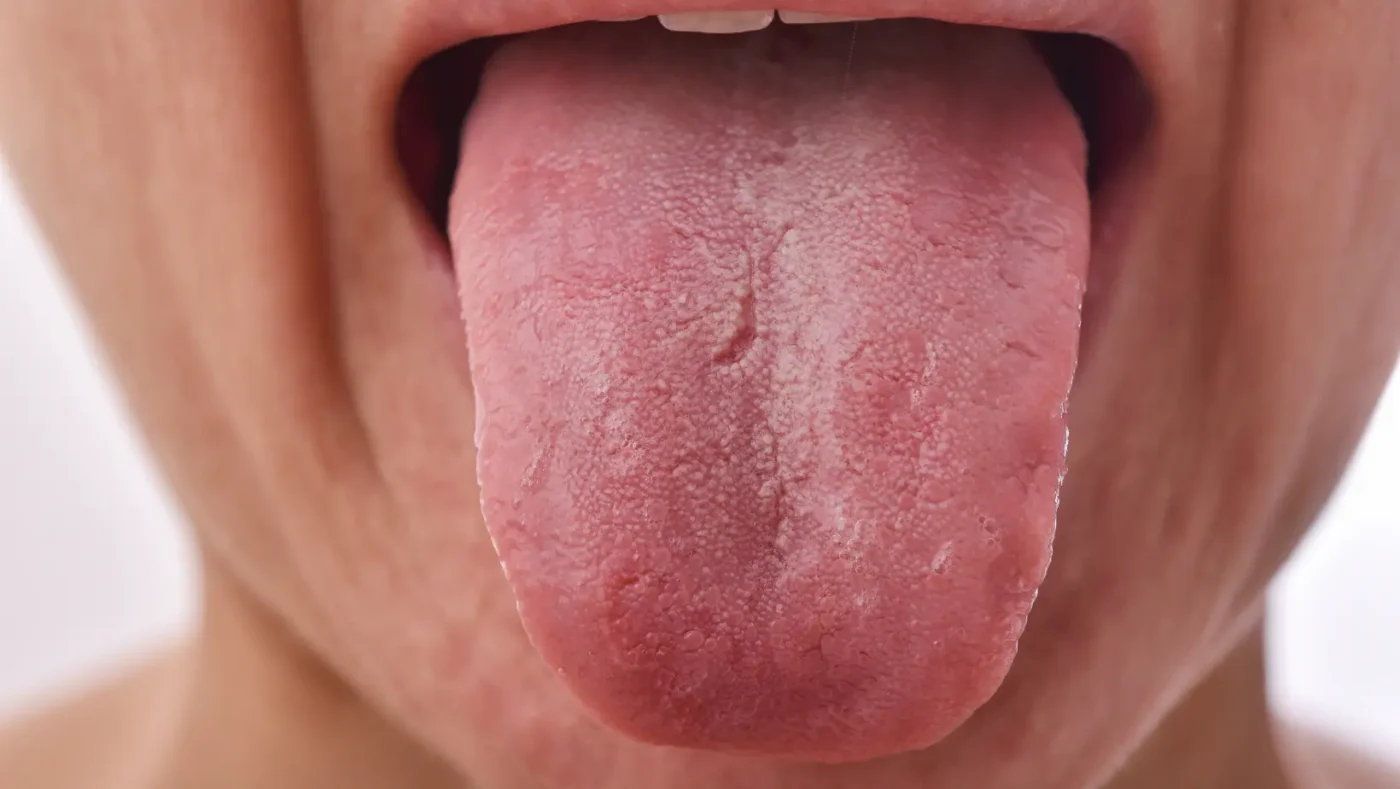

Tongue signs of sleep apnea are physical features visible in and around the tongue that signal obstructive sleep apnea (OSA) risk. These include scalloped edges, enlargement, and low resting posture. Your tongue can indicate sleep apnea risk. Dentists and sleep specialists increasingly use oral exams to identify patients at risk before a formal sleep study. In the USA, tongue anatomy and position directly contribute to airway obstruction in millions of undiagnosed adults.
Tongue Signs of Sleep Apnea
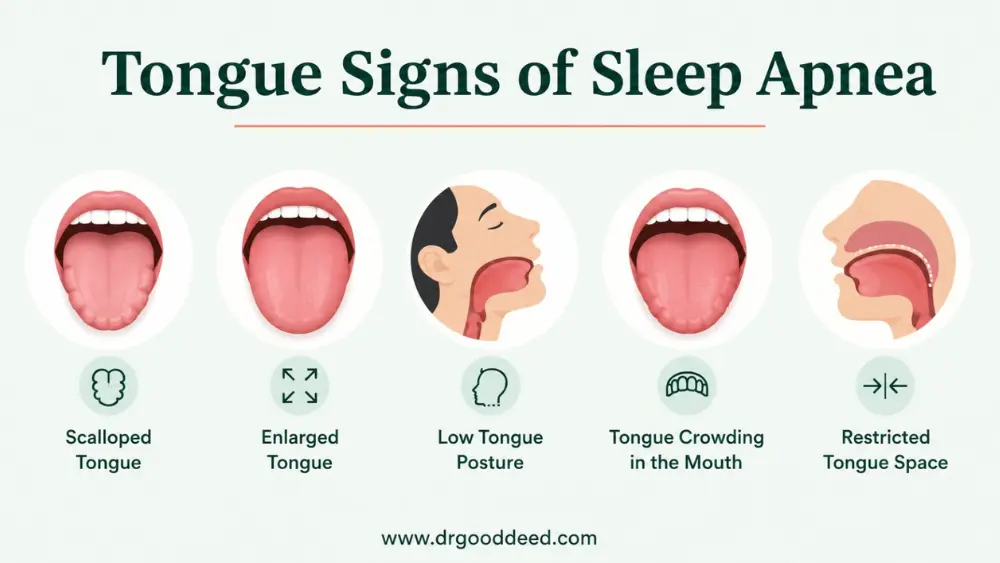
Tongue signs of sleep apnea are among the most overlooked indicators of airway obstruction risk. Several tongue features correlate strongly with sleep-disordered breathing and are visible during a routine dental or clinical exam.
Scalloped Tongue Sleep Apnea Signs
Scalloped tongue sleep apnea signs appear as wavy indentations along the tongue’s outer edges. They form when the tongue presses repeatedly against the teeth, usually because it is too large or rests too low. Bruxism (nighttime teeth grinding) worsens scalloping by increasing tongue-to-teeth pressure during sleep.
Enlarged Tongue (Macroglossia)
Macroglossia is an abnormally large tongue that does not fit comfortably within the dental arch. It crowds into the pharyngeal airway during sleep. It can be inherited or caused by hypothyroidism, acromegaly (excess growth hormone), or genetics. Even a mildly large tongue becomes problematic when the jaw or palate is simultaneously narrow.
Low Tongue Posture
Proper tongue posture means the tongue tip rests lightly on the ridge behind the upper front teeth. Low tongue posture means the tongue rests on the floor of the mouth. This lowers the tongue base toward the throat, reducing airway clearance and increasing collapse risk during sleep.
Tongue Crowding in the Mouth
When the dental arch is narrow and the tongue is average or large, the tongue has nowhere to rest except downward. It pushes toward the throat and contacts multiple teeth simultaneously when relaxed inside the mouth.
Restricted Tongue Space
Ankyloglossia (tongue tie) is a condition where the tissue connecting the tongue to the floor of the mouth is too short. This restricts tongue movement and prevents the tongue from reaching the palate at rest. About 8 to 10% of the population has some degree of tongue tie, and it significantly reduces the tongue’s ability to maintain an open airway position during sleep.
Tongue Position Affecting Breathing During Sleep
Tongue position affecting breathing during sleep is a central mechanism in obstructive sleep apnea. The tongue is the largest muscle structure near the airway. When its tone drops during sleep, its position determines whether the airway stays open or collapses.
Normal Tongue Position During Sleep
Ideally, the tongue maintains light contact with the palate during sleep. This keeps the tongue base lifted away from the posterior pharynx (back of the throat), preserving airway space and reducing collapse risk.
How the Tongue Can Block the Airway
When the tongue falls backward during sleep (glossoptosis), it narrows or fully blocks the pharyngeal airway. Even partial blockage forces air through a smaller space, generating the vibration heard as snoring. Full blockage produces an apnea event.
Tongue Collapse During Sleep
Muscle tone drops most during REM (rapid eye movement) sleep, the deepest sleep stage. The tongue falls back furthest at this point. People with low tongue posture, macroglossia, or poor muscle tone experience the most severe airway narrowing during REM, which is why apnea events cluster in this stage.
Effects on Oxygen Flow and Breathing
Each tongue collapse reduces airflow to the lungs. Blood oxygen drops. The brain forces a partial awakening to restart breathing. This cycle repeats dozens to hundreds of times per night in people with untreated OSA.
Oral Signs of Obstructive Sleep Apnea
Several structural features of the mouth and jaw create the conditions for airway collapse. These go well beyond the tongue alone.
Narrow Palate
A high or narrow palate reduces floor space for the tongue. The tongue is pushed downward toward the throat. Narrow palates are common in chronic mouth breathers and people with early palate development issues.
Enlarged Tonsils
Tonsillar hypertrophy (enlarged tonsils) is the primary cause of OSA in children and a contributing factor in adults. Large tonsils reduce the lateral width of the oropharynx. Combined with a large tongue, they dramatically narrow the available airway.
Crowded Oral Structures
When the jaw is small and teeth are significantly crowded, the tongue compensates by positioning lower and further back in the throat. This structural crowding is a consistent finding in OSA patients across age groups.
High-Arched Palate
A high-arched palate creates an extremely narrow dental arch, limits upward tongue movement, and compresses the nasal cavity above. This forces mouth breathing, which further destabilizes the airway.
Jaw Structure and Airway Size
Retrognathia (a recessed lower jaw) is one of the strongest anatomical predictors of OSA. The Mallampati score, used by sleep specialists and anesthesiologists, assesses the tongue-to-palate size ratio.
A Mallampati class III or IV (tongue covering most visible throat structures) correlates strongly with OSA severity and is a direct oral sign of obstructive sleep apnea on clinical exam.
Symptoms That Often Accompany Tongue Signs
These symptoms alongside visible tongue anatomy changes strengthen the case for sleep testing:
- Loud snoring with gasping or choking reported by a bed partner
- Morning headaches that resolve within 30 minutes of waking
- Extreme daytime fatigue despite 7 to 8 hours of sleep
- Dry mouth on waking from mouth breathing during sleep
- Teeth grinding (bruxism) at night
- Neck circumference above 17 inches (men) or 16 inches (women)
- Blood pressure that does not respond well to medication
Tongue Exercises for Sleep Apnea
Tongue exercises for sleep apnea are one of the few evidence-backed non-device options for reducing apnea severity. A 2015 meta-analysis in the journal Sleep found myofunctional therapy reduced AHI by approximately 50% in adults with mild to moderate OSA and 62% in children.
What Is Myofunctional Therapy?
Myofunctional therapy is a structured exercise program for the tongue, mouth, and throat muscles. It corrects low tongue posture, mouth breathing habits, and weak pharyngeal muscle tone over 3 to 6 months of daily practice.
How Tongue Exercises May Help
The exercises increase muscle tone in the soft palate, pharyngeal walls, and tongue base. Higher tone means these structures resist collapse more effectively when muscle activity naturally drops during REM sleep.
Strengthening Airway Muscles
The genioglossus (the primary tongue muscle that pulls the tongue forward) is the key target. Strengthening it keeps the tongue from falling backward during sleep, directly reducing snoring and apnea event frequency.
Common Tongue and Mouth Exercises
- Tongue press: Press the entire tongue flat against the roof of the mouth and hold 3 seconds; repeat 20 times
- Tongue slide: Slide the tongue tip from the front of the palate backward; repeat 20 times
- Vowel sounds: Slowly and forcefully say “A, E, I, O, U” with exaggerated mouth shapes; repeat 3 sets of 10
Current Evidence and Limitations
These exercises work best for mild to moderate cases. Severe sleep apnea (AHI above 30) requires medical treatment alongside them. Exercises alone cannot replace CPAP or an oral appliance in severe cases.
Treatment Options for Tongue-Related Sleep Apnea
CPAP Therapy
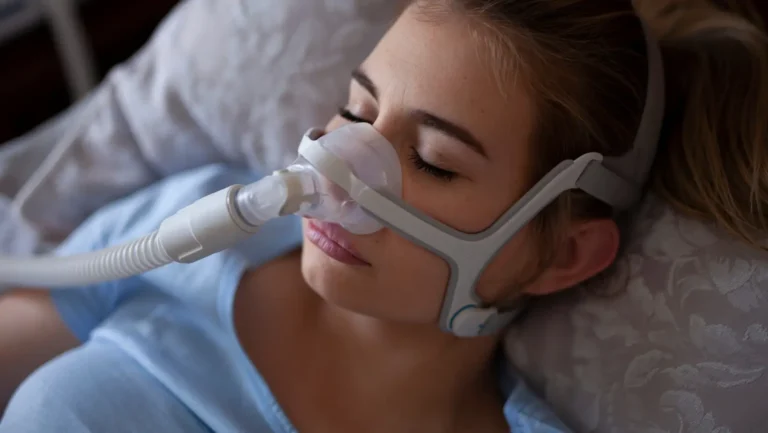
CPAP remains the most effective treatment for moderate to severe OSA regardless of tongue anatomy. It delivers pressurized air to keep the airway open all night, bypassing tongue collapse entirely.
Oral Appliance Therapy
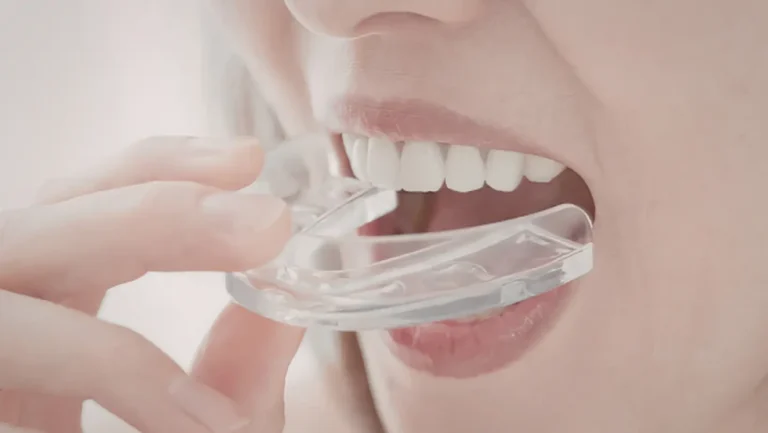
Custom mandibular advancement devices (MADs) reposition the lower jaw forward during sleep, pulling the tongue base away from the throat. They are particularly effective when retrognathia or glossoptosis is the primary obstruction.
Myofunctional Therapy
Myofunctional therapy corrects the muscle tone deficiencies that allow tongue collapse. It works best as a complementary treatment alongside CPAP or an oral appliance, not as a standalone for moderate to severe cases.
Weight Management
Fat deposits in the tongue and parapharyngeal tissues narrow the airway. Losing 10% of body weight reduces AHI by approximately 26% and visibly reduces tongue bulk on imaging.
Surgical Treatment Options
Genioglossus advancement surgically moves the tongue muscle attachment point forward. Hypoglossal nerve stimulation (the Inspire device) electrically activates the genioglossus during sleep to keep the tongue forward. It is FDA-approved for moderate to severe OSA in patients who cannot tolerate CPAP.
Can Improving Tongue Posture Help Sleep Apnea?
Tongue signs of sleep apnea frequently improve when tongue posture is corrected consistently. The degree of improvement depends on OSA severity and the specific anatomical cause.
Relationship Between Tongue Posture and Airway Function
Correct resting posture (tongue tip on the incisive papilla, the ridge behind upper front teeth) lifts the tongue base away from the posterior pharynx. This anatomical repositioning reduces gravitational pull on the airway and decreases collapse frequency during sleep.
Potential Benefits of Proper Tongue Position
Consistent daytime tongue posture trains orofacial muscles and builds habitual muscle memory. Over weeks, this translates to higher resting muscle tone that persists partially during sleep, reducing nighttime airway collapse.
Combining Exercises With Medical Treatment
Myofunctional therapy combined with CPAP or an oral appliance produces better outcomes than either alone. The exercises reduce collapse severity; the device prevents it. Together, they target both the structural and muscular drivers of tongue signs of sleep apnea.
FAQs
1. What are the tongue signs of sleep apnea?
Tongue signs of sleep apnea include scalloped tongue edges, macroglossia (enlarged tongue), chronic low resting posture (tongue floor of mouth), and tongue tie. All are visible during a routine oral exam and signal elevated OSA risk.
2. Can your tongue indicate sleep apnea risk?
Yes, your tongue indicates sleep apnea risk. A Mallampati class III or IV score, where the tongue covers most visible throat structures, correlates directly with higher OSA severity. Dentists use this finding to flag patients for formal sleep testing.
3. What is a scalloped tongue and how is it related to sleep apnea?
Scalloped tongue sleep apnea signs are ridged indentations along the tongue edges from pressing against teeth. They signal chronic low tongue posture or macroglossia, both of which push the tongue base toward the airway and increase collapse risk during sleep.
4. Does tongue position affect breathing during sleep?
Yes. Tongue position affecting breathing during sleep is the core OSA mechanism. When the tongue falls backward during REM sleep (glossoptosis), it partially or fully blocks the pharyngeal airway, causing oxygen drops and repeated forced arousals.
5. Can an enlarged tongue contribute to sleep apnea?
Yes. Macroglossia reduces pharyngeal airway space directly. It can stem from hypothyroidism, acromegaly, or genetics. A tongue of average size also causes obstruction when jaw or palate dimensions give it no space to rest except toward the throat.
6. What oral signs of obstructive sleep apnea should I look for?
Oral signs of obstructive sleep apnea include narrow or high-arched palate, Mallampati class III/IV, enlarged tonsils, crowded teeth, retrognathia (recessed jaw), and scalloped tongue edges. Multiple signs appearing together substantially raise OSA likelihood.
7. Are tongue signs enough to diagnose sleep apnea?
No. Tongue signs of sleep apnea raise clinical suspicion but cannot confirm the diagnosis. Only a polysomnography (PSG) or home sleep test measuring AHI, oxygen levels, and breathing patterns confirms obstructive sleep apnea definitively.
8. What are the symptoms that commonly accompany tongue-related sleep apnea?
Loud snoring, morning dry mouth, headaches resolving within 30 minutes of waking, extreme daytime fatigue, bruxism, and gasping during sleep accompany tongue signs of sleep apnea. Neck size above 17 inches in men further strengthens the clinical picture.
9. Can tongue exercises help sleep apnea?
Yes. Tongue exercises for sleep apnea (myofunctional therapy) reduced AHI by approximately 50% in adults with mild to moderate OSA in a 2015 meta-analysis in the journal Sleep. They are most effective for mild cases and should complement, not replace, medical treatment in severe OSA.
10. What is myofunctional therapy for sleep apnea?
Myofunctional therapy is a daily structured exercise program for the tongue, palate, and throat muscles. It corrects low tongue posture, strengthens the genioglossus muscle, and reduces nighttime airway collapse. Treatment spans 3 to 6 months under specialist guidance.
Sources: