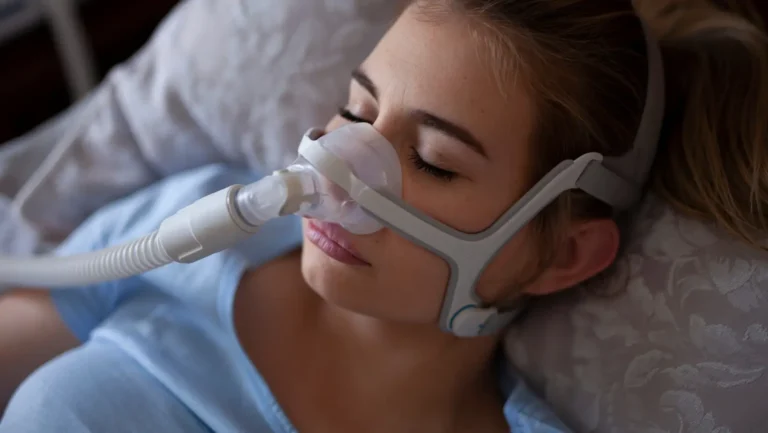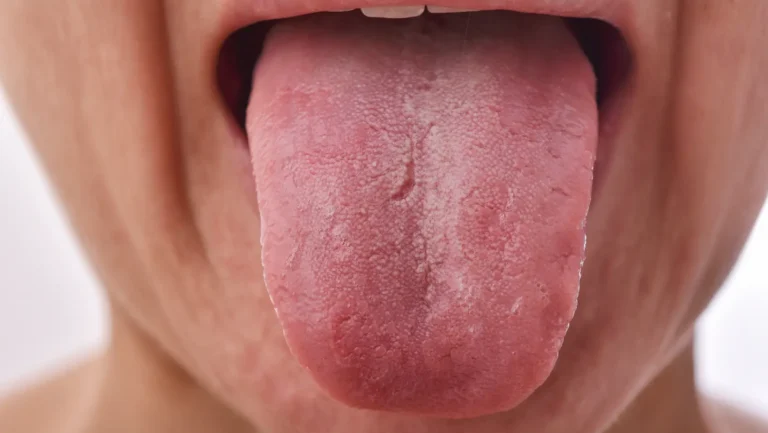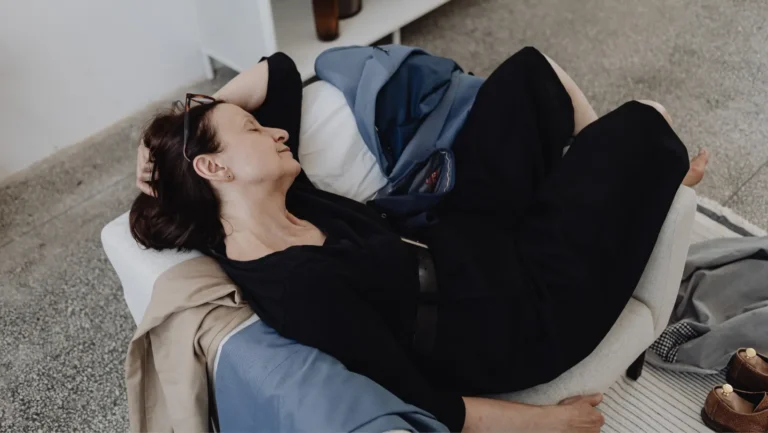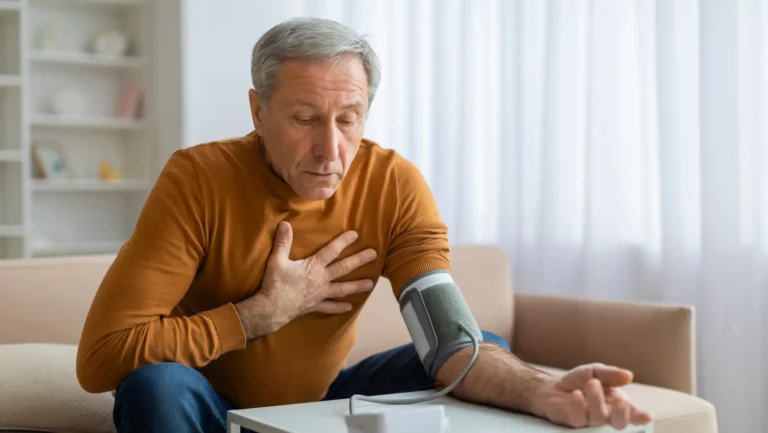

Sleep apnea is defined by repeated breathing interruptions during sleep, not by how loudly you sleep. According to Johns Hopkins Medicine, up to 20% of people with sleep apnea do not snore at all. If you are waiting for a snoring complaint from your partner before getting tested, you may be waiting too long.
Sleep apnea is diagnosed using the Apnea-Hypopnea Index (AHI), which counts how many times per hour your breathing stops or drops sharply. An AHI of 5 or more events per hour meets diagnostic criteria, regardless of whether you make any noise at all.
Expert Insight: “Sleep apnea is diagnosed by breathing events per hour (AHI), not by how loudly someone snores.” – American Academy of Sleep Medicine
Why Some People With Sleep Apnea Don’t Snore
You can have sleep apnea without snoring, and the reason has everything to do with airway mechanics, not sleep habits. Snoring happens when air squeezes past a partially blocked airway and causes tissue to vibrate. But in some cases, the airway collapses more completely, or at an angle that produces little to no vibration.
Airway Obstruction Doesn’t Always Create Noise
Snoring requires a partial obstruction. Rushing air causes soft tissue to vibrate; that is the sound. But you can have sleep apnea without snoring when the airway collapses more completely. A full collapse stops airflow with no tissue vibration, so the breathing pause happens in complete silence.
Central sleep apnea is different again. The brain fails to send the breathing signal, so the airway is not involved at all. No obstruction means no snoring.
Individual Anatomy Matters
Facial structure plays a big role. People with a narrow nasal passage, a long soft palate, or a jaw that sits further back tend to have silent collapse patterns. A small lower jaw shifts the tongue backward during sleep without creating the vibration that causes snoring.
Neck circumference above 17 inches in men (16 in women) raises OSA risk, but normal-sized necks are no guarantee. Nasal anatomy alone can cause sleep apnea in people with average builds.
Sleep Position Changes Symptoms
Back sleeping lets the tongue fall backward, increasing obstruction risk. Some people snore only on their back but have silent breathing pauses in other positions. If you shift throughout the night, symptom patterns vary, making the condition harder to notice.
Certain Groups Tend to Be Underdiagnosed
Women, older adults, and thinner individuals are the three groups most likely to be missed. Women often report different symptoms than men. Older adults attribute fatigue to age. Thin people are told they “don’t fit the profile.” All three groups can have risk factors for sleep apnea in non-snorers that go unrecognized for years.
Silent Sleep Apnea Symptoms
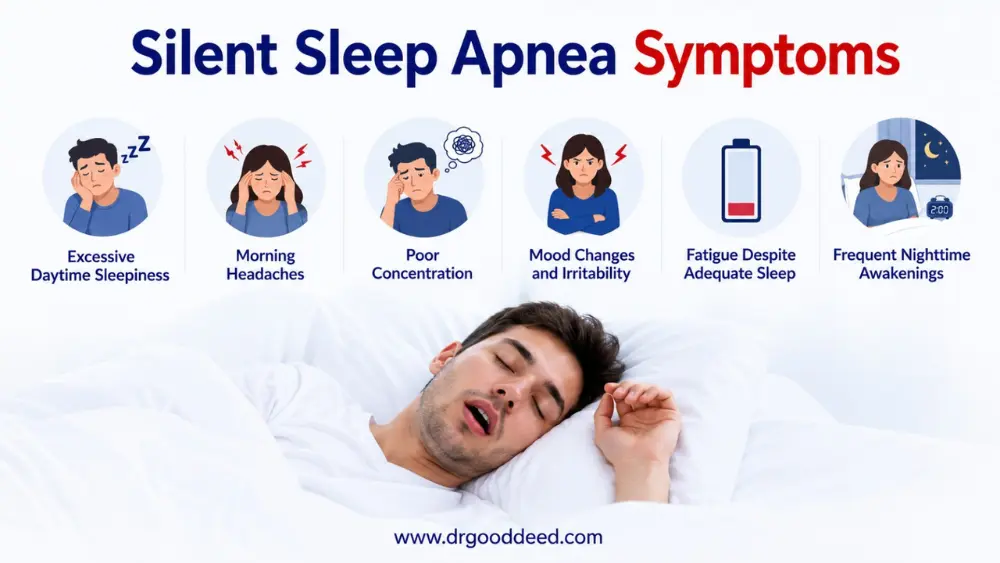
Silent sleep apnea symptoms are often dismissed as stress, poor sleep hygiene, or aging. Here is what to watch for:
Excessive Daytime Sleepiness
Feeling unable to stay alert despite 4 to 8 hours in bed is one of the clearest signs of silent OSA. Sleep apnea fragments sleep structure, cutting short the deep slow-wave and REM stages your body needs most.
Morning Headaches
Waking with a dull, frontal headache is a direct sign of overnight oxygen dips. When breathing stops, carbon dioxide builds up in the blood and dilates brain vessels, causing the headache you feel in the first hour after waking.
Poor Concentration
Frequent breathing pauses prevent memory consolidation. People with undiagnosed sleep apnea report brain fog, forgetting words mid-sentence, and difficulty focusing on tasks they previously found easy.
Mood Changes and Irritability
Disrupted REM sleep impairs emotional regulation. Irritability and mood swings that feel out of proportion are common. In women especially, this is often misdiagnosed as anxiety or depression before sleep apnea is even considered.
Fatigue Despite Adequate Sleep
This is one of the most overlooked silent sleep apnea symptoms. You sleep 7 to 8 hours but wake feeling heavy and drained. Cellular oxygen deprivation overnight causes this kind of fatigue. More time in bed does not fix it.
Frequent Nighttime Awakenings
Waking up gasping without snoring is a major, often-missed warning sign. This single symptom alone is reason enough to request a sleep study. You may not always gasp dramatically. Sometimes it is simply a sudden arousal with a racing heart, a sense of panic, or just waking up for no obvious reason at 2 or 3 AM repeatedly. Each arousal is the brain forcing a recovery breath after a pause.
How Sleep Apnea Looks Different in Women, Thin People, and Older Adults
These three populations carry the highest burden of risk factors for sleep apnea in non-snorers while remaining systematically underdiagnosed.
Women Often Report Fatigue, Not Snoring
Research from the National Library of Medicine confirms OSA remains widely underdiagnosed in adult females. Women more commonly report insomnia, morning headaches, mood disturbances, and low energy, not the classic triad of snoring, witnessed apneas, and daytime sleepiness. These overlap with depression and menopause, which delays referral.
Progesterone helps maintain upper airway muscle tone. After menopause, it drops sharply, pushing women’s OSA risk close to male levels.
Thin People Can Have Sleep Apnea Too
Obesity increases OSA risk, but it is not required. Johns Hopkins Medicine confirms that facial anatomy, jaw position, and nasal structure can cause sleep apnea at a healthy body weight. How sleep apnea is diagnosed without snoring is the same: a sleep study measuring breathing events per hour. A recessed chin or large tonsils alone can push AHI above 15.
Older Adults May Dismiss Symptoms as Aging
Older adults rarely think to ask whether you can have sleep apnea without snoring because they assume age explains their fatigue. A 2024 study in ScienceDaily found sleep apnea contributes to dementia risk in older adults, particularly women, and remains dramatically underdiagnosed. Request a sleep study if you have morning headaches, unrefreshing sleep, or frequent nighttime awakenings.
Treatment Options for Non-Snoring Sleep Apnea
Treatment options for non-snoring sleep apnea follow the same evidence-based pathway as snoring OSA. The risk factors for sleep apnea in non-snorers (anatomy, hormones, age, position) guide treatment selection. The condition is defined by AHI, not by symptoms.
Match the Treatment to the Cause, Not the Snoring
Airway Structure Issues
For people asking whether you can have sleep apnea without snoring due to jaw or nasal anatomy, structural treatment is often the best fit. People with structural causes (recessed jaw, enlarged tonsils, nasal septal deviation) may benefit from:
- Mandibular advancement devices (MADs): Custom dental appliances that shift the jaw forward, widening the airway. Effective for mild-to-moderate OSA.
- Surgical options: Tonsillectomy, septoplasty, or maxillomandibular advancement (MMA) surgery for structural contributors.
Positional Sleep Apnea
If your sleep study shows the AHI doubles when you sleep on your back, positional therapy is a first-line option. Positional pillows and wearable devices that discourage back sleeping are clinically validated for this subtype.
Nasal Breathing Problems
Nasal obstruction worsens airway collapse during sleep. Nasal dilators, corticosteroid sprays, and allergy management reduce resistance and can lower AHI meaningfully in patients with nasal contributors.
Moderate to Severe Cases
CPAP Therapy
Continuous positive airway pressure remains the gold standard for moderate-to-severe OSA regardless of snoring status. It works by delivering a constant stream of pressurized air that physically holds the airway open. A 2024 analysis found that 68% of CPAP users remained adherent at six months with proper support. CPAP works whether you snore or not. It targets the AHI directly.
Advanced Airway Therapies
For patients who cannot tolerate CPAP, hypoglossal nerve stimulation (Inspire therapy) is an FDA-cleared implantable device that stimulates the tongue muscle during sleep to keep the airway open. It is particularly effective for anatomical OSA without significant obesity.
Lifestyle Changes That Have the Biggest Impact
These are among the most accessible treatment options for non-snoring sleep apnea for mild-to-moderate cases.
- Weight reduction: Losing 10% of body weight reduces AHI by about 26% in overweight patients (Sleep Heart Health Study data).
- Alcohol avoidance: Alcohol relaxes throat muscles, worsening collapse even in people without typical OSA risk factors.
- Side sleeping: Reduces AHI by 30 to 50% in positional OSA.
- Avoiding sedating medications: Benzodiazepines and antihistamines further relax upper airway muscles.
Emerging and Less-Known Approaches
Personalized Airway Assessment
Drug-induced sleep endoscopy (DISE) is a procedure where a sleep specialist visualizes your airway as you are sedated to sleep. It identifies the exact site of collapse, which guides treatment selection. This is particularly useful for non-snorers where the collapse pattern may differ from typical cases.
Upper Airway Muscle Training
Myofunctional therapy uses targeted exercises for the tongue, lips, and oropharyngeal muscles to strengthen the airway and reduce collapse risk. A 2024 meta-analysis published in the Australian Dental Journal found that oropharyngeal exercises significantly reduced AHI in patients with OSA.
A separate 2024 proof-of-concept study in JMIR Biomedical Engineering found that a portable home-based device for lip and tongue training correlated with meaningful AHI reduction. This approach suits mild-to-moderate OSA in patients who prefer non-device therapy. Importantly, how sleep apnea is diagnosed without snoring in these patients does not change; a sleep study remains the required confirmation tool.
Combination Therapy Approaches
Combining mandibular devices with positional therapy, or CPAP with myofunctional training, can reduce pressure requirements and improve adherence. Sleep specialists increasingly use combination protocols based on individual airway assessment rather than a one-size approach.
FAQs
Is waking up gasping without snoring a sign of sleep apnea?
Yes. Waking up gasping without snoring is a direct sign of obstructive sleep apnea. Your brain detects the oxygen drop and forces a recovery breath. This can occur with zero snoring and warrants a sleep study.
Why do some people with sleep apnea not snore?
Yes, because snoring requires partial airway obstruction with tissue vibration. When the airway collapses more completely, or when central apnea occurs (a brain signaling failure), no vibration happens. Silence does not mean the airway is functioning normally.
Can women have sleep apnea without snoring?
Yes. Women are far less likely to snore than men. Instead, they report fatigue, insomnia, and morning headaches. These silent sleep apnea symptoms are often misdiagnosed as hormonal issues, delaying OSA diagnosis by years.
How is sleep apnea diagnosed in non-snorers?
How sleep apnea is diagnosed without snoring: via a sleep study (home test or in-lab polysomnography) that measures AHI, oxygen drops, and arousals per hour. Snoring is not required. An AHI of 5 or more per hour confirms OSA.
Can sleep apnea cause fatigue without snoring?
Yes. Fatigue from sleep apnea comes from oxygen desaturation and sleep fragmentation, not from snoring. Every time breathing pauses, the brain partially wakes to restart it, cutting short restorative sleep stages. This causes exhaustion that does not improve with more time in bed.
Is silent sleep apnea dangerous?
Yes. You can have sleep apnea without snoring and still face serious health risks. Overnight oxygen dips raise the risk of high blood pressure, stroke, cardiovascular disease, and dementia, regardless of snoring.
Does CPAP work for silent sleep apnea?
Yes. CPAP is one of the most effective treatment options for non-snoring sleep apnea. It holds the airway open using air pressure, targeting the AHI directly. Patients with silent OSA respond the same as snoring patients do.
When should I get tested for sleep apnea?
If you wonder whether you can have sleep apnea without snoring is your situation, get tested if you have three or more of: unrefreshing sleep, morning headaches, daytime fatigue, mood changes, or difficulty concentrating. A primary care provider can order a home sleep test.
What happens if sleep apnea goes untreated?
When sleep apnea without snoring goes unrecognized, the risks are the same as any untreated OSA: hypertension, atrial fibrillation, stroke, and dementia. A 2024 study linked untreated OSA to cognitive decline, particularly in women.
Sources
- Respiratory Medicine: OSA Prevalence in the US 2024 (ScienceDirect)
- American Academy of Sleep Medicine: Sleep Apnea Public Health Statement
- Johns Hopkins Medicine: Sleep Apnea Symptoms and Myths
- SleepApnea.org: AHI and Diagnosis Explained
- PMC: Sleep Breathing Disorders in the US Female Population
- PMC: Beyond Snoring: Unexpected Presentation of OSA (Cureus 2025)
- ScienceDaily: Sleep Apnea and Dementia in Older Adults, October 2024
- Australian Dental Journal: Myofunctional Therapy for OSA (2024)
- JMIR Biomedical Engineering: Portable Myofunctional Therapy Device Study (2024)
- Frontiers in Neurology: Beyond CPAP: Upper Airway Muscle Training for OSA (2023)