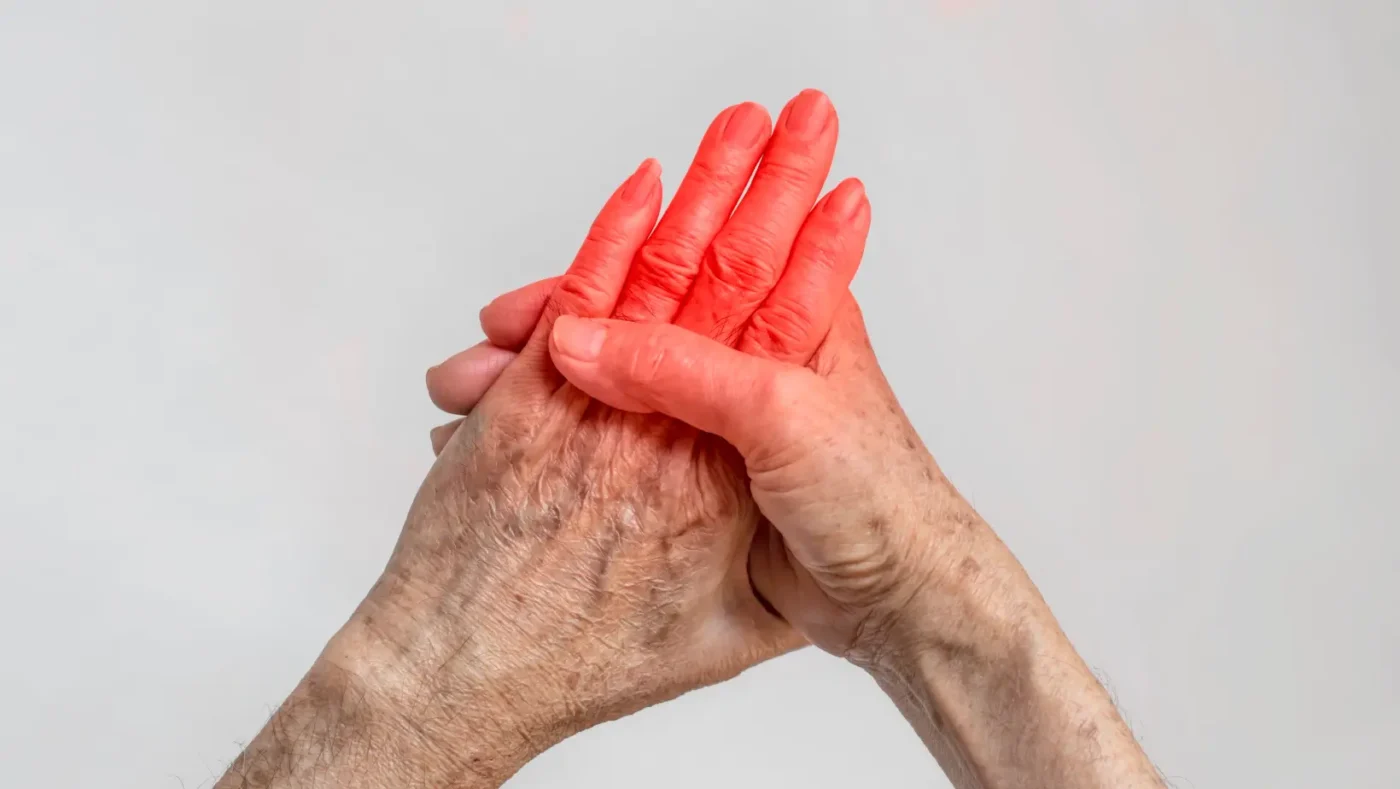

Joint pain, stiffness, and swelling in the fingers and wrist are the core symptoms of arthritis in hands, and they usually start small before they start interfering with daily tasks. Hand osteoarthritis affects a large share of adults over 40, more often women, according to data tracked by the CDC and the National Institute of Arthritis and Musculoskeletal and Skin Diseases.
The condition develops when cartilage at the joint ends wears down, letting bone rub against bone. This guide covers the symptoms of arthritis in hands, the early warning signs people miss, what causes it, and which treatments and exercises actually help.
Symptoms of Arthritis in Hands
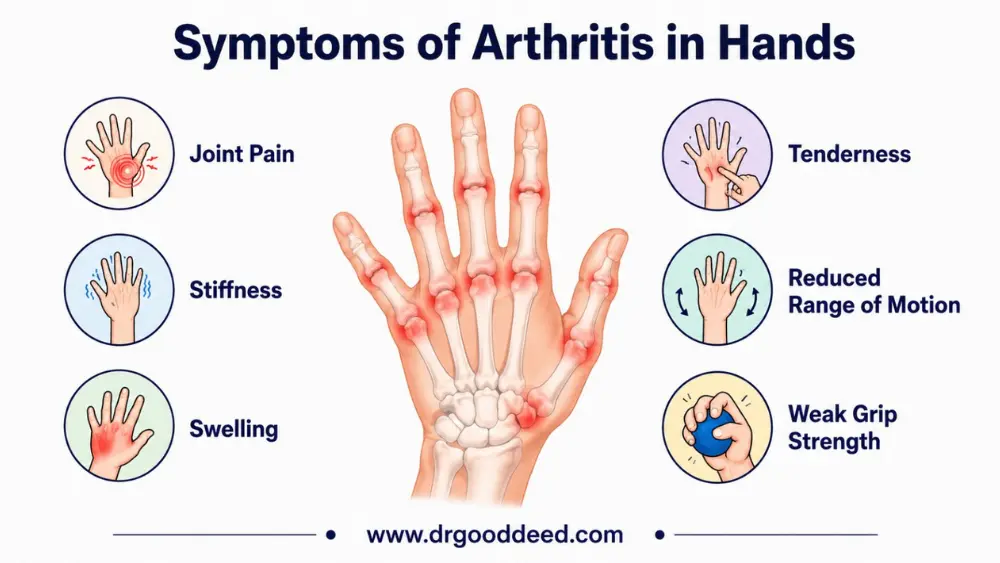
The symptoms of arthritis in hands rarely show up as one single thing. They build as a cluster, pain here, stiffness there, until grip strength quietly disappears.
Joint Pain
Pain usually starts as a dull ache in one or two finger joints. It gets sharper after gripping, typing, or twisting a lid. Many people first notice it after a long day of repetitive hand use, not during rest.
Stiffness
Joints feel tight and resistant to bending, especially first thing in the morning or after sitting still for a while. This stiffness typically eases within 30 minutes of movement, which is one way doctors separate it from rheumatoid arthritis, where morning stiffness often lasts longer.
Swelling
Inflammation around the joint capsule causes visible puffiness, sometimes warmth. Swelling tends to come and go in flare cycles rather than staying constant, which confuses people who expect a steady symptom.
Tenderness
Pressing on the joint, even lightly, triggers a sharp or aching response. This tenderness often shows up before any visible swelling does, making it one of the earliest physical signs a joint is under strain.
Reduced Range of Motion
Fingers stop fully bending or straightening. Making a fist gets harder. This happens because cartilage loss changes how smoothly the joint surfaces glide against each other.
Weak Grip Strength
Pain and joint instability together reduce how hard you can squeeze or pinch. Jar lids, doorknobs, and zipper pulls become daily tests instead of automatic actions.
Early Signs of Hand Arthritis
Most people wait too long to act because the early signs of hand arthritis look like normal stiffness from age or overuse. Spotting the pattern below, rather than any single symptom, is what separates early intervention from a delayed diagnosis. Knowing this distinction is genuinely underused information.
Morning Stiffness
A tight, hard-to-bend feeling in the fingers right after waking up. It loosens with movement but tends to return the next morning, forming a repeating pattern over weeks.
Mild Finger Pain
Pain that comes and goes, often dismissed as a strain. It shows up most after activities like knitting, typing, or gardening, then fades by the next day, only to return later.
Difficulty Gripping Objects
Struggling to open jars, hold a pen steadily, or carry grocery bags. This is frequently the first symptom people mention to a doctor, because it disrupts something they do without thinking.
Occasional Joint Swelling
Mild puffiness near one knuckle, often the base of the thumb or a middle finger joint. It might disappear for days before reappearing, which can delay people from seeking care.
Increased Discomfort After Activity
Pain that flares hours after using the hands heavily, not necessarily during the activity itself. This delayed-onset pain is an underreported pattern that catches people off guard.
Osteoarthritis in Hands Causes
Osteoarthritis in hands causes fall into two buckets: things you can’t control and things you can manage. Knowing which bucket your risk sits in shapes how aggressively you should act on prevention.
Age-Related Cartilage Wear
Cartilage naturally thins with decades of use. The 2022 NICE clinical guidelines on osteoarthritis management identify age as the strongest single risk factor, with risk climbing sharply after 40.
Previous Hand Injuries
A fracture, dislocation, or ligament tear in a finger or wrist joint raises the odds of arthritis developing in that exact joint years later, even after the injury fully healed.
Repetitive Hand Movements
Years of typing, assembly-line work, or instrument playing put consistent mechanical stress on small joints. The damage accumulates slowly, often without pain until cartilage loss is already underway.
Genetic Factors
Hand osteoarthritis runs in families more than most other joint arthritis types. If your mother or grandmother had visibly knotted finger joints, your own risk goes up regardless of activity level.
Joint Overuse
Manual labor, certain sports, and tasks requiring repeated pinching or gripping wear down cartilage faster than age alone would predict. This is distinct from injury, it’s cumulative strain without a single triggering event.
Common Areas Affected by Hand Arthritis
Arthritis doesn’t strike the whole hand evenly. Certain joints take the hit first because of how much mechanical load they carry every single day.
Finger Joints
The joints closest to the fingertips and the middle knuckles are common targets. Bony nodules called Heberden’s and Bouchard’s nodes can form at these sites over time.
Thumb Base Joint
The joint where the thumb meets the wrist, called the carpometacarpal or CMC joint, handles enormous pinching force. It’s one of the most frequently affected sites in hand osteoarthritis.
Knuckles
The large knuckles at the base of the fingers can stiffen and swell, though this pattern shows up more in rheumatoid arthritis than in osteoarthritis.
Wrist Joint
Less commonly affected by osteoarthritis alone, but wrist involvement often signals a prior injury or a different arthritis type that needs separate evaluation.
Multiple Joint Involvement
Many people develop symptoms in several finger joints across both hands at once, rather than in just one spot. This symmetric pattern is common enough that doctors use it as a diagnostic clue.
How Hand Arthritis Affects Daily Life
The clinical symptoms matter less to most people than what they can no longer do without thinking twice. This is where hand arthritis actually costs people the most.
Difficulty Opening Jars
Reduced grip and pinch strength make twisting a jar lid genuinely difficult, not just annoying. Many people switch to jar openers or ask for help before realizing why.
Trouble Writing
Pain and reduced thumb mobility make gripping a pen for more than a few minutes uncomfortable. Handwriting often becomes shakier or smaller as a workaround.
Challenges With Buttons and Zippers
Fine motor tasks requiring precise pinching, like buttoning a shirt, become slow and frustrating. This is frequently the symptom that pushes someone toward adaptive clothing.
Reduced Hand Strength
Carrying bags, opening doors, or wringing out a towel demand strength that arthritic joints can no longer reliably deliver, even on a low-pain day.
Impact on Work and Hobbies
Typing-heavy jobs, knitting, woodworking, and instrument playing often get cut short or abandoned. The emotional toll of losing a hobby is rarely addressed in standard treatment plans, but it matters.
A Pattern Rheumatology Clinics See Often
Hand specialists report a consistent sequence: thumb base pain shows up first, gets dismissed as “just getting older,” and only gets evaluated once grip strength drops enough to interfere with work tasks. By that point, joint space narrowing is often already visible on an X-ray. The 2025 OARSI consensus on hand osteoarthritis care specifically flags this delay as a major reason people miss the window where non-drug interventions work best.
Treatments for Arthritis in Hands
Treatments for arthritis in hands range from simple home strategies to surgery, and most people land somewhere in the middle.
Pain Relief Medications
Topical NSAIDs, like diclofenac gel, are typically recommended before oral medications because they target the joint directly with fewer side effects. Acetaminophen can help with mild pain when NSAIDs aren’t suitable.
Anti-Inflammatory Treatments
Oral NSAIDs reduce swelling and pain during flare periods. Corticosteroid injections directly into a badly affected joint can give short-term relief when topical options aren’t enough.
Splints and Support Devices
A splint on the thumb base or finger joint reduces strain during daily tasks and can slow symptom progression. Many people wear one specifically during activities that previously triggered pain.
Occupational Therapy
A therapist teaches joint protection techniques, like using tools with larger grips or changing how you hold objects, so painful joints carry less mechanical load throughout the day.
Surgical Options for Severe Cases
When conservative treatments for arthritis in hands stop working, options include joint fusion, trapeziectomy for thumb base arthritis, or joint replacement. Surgery is generally a last step, not an early one.
Hand Exercises for Arthritis Relief
Hand exercises for arthritis relief won’t reverse cartilage loss, but they maintain mobility and reduce stiffness in a way medication alone can’t. Consistency matters more than intensity here.
Finger Stretch Exercises
Spread fingers wide, hold for a few seconds, then relax. This counters the tightening that happens from gripping objects all day and keeps tendons gliding smoothly.
Grip Strengthening Exercises
Squeezing a soft ball or therapy putty for short, repeated sets builds the muscle support around weakened joints without overloading them.
Thumb Mobility Exercises
Moving the thumb across the palm to touch each fingertip preserves the wide range of motion the CMC joint needs for pinching tasks.
Range-of-Motion Activities
Slowly making a full fist, then fully straightening fingers, keeps joint surfaces moving through their complete arc instead of stiffening into a partial range.
Safety Tips for Exercising
Stop if sharp pain occurs, work within a comfortable range, and apply these hand exercises for arthritis relief during low-flare periods rather than pushing through active swelling.
FAQ
How do I know if I have arthritis in my hands?
Persistent joint pain, morning stiffness lasting under 30 minutes, and visible knuckle swelling for more than a few weeks point to hand arthritis. An X-ray confirms cartilage loss and joint narrowing.
Is hand arthritis permanent?
Yes. Cartilage loss from osteoarthritis doesn’t reverse. Symptoms are manageable with treatment, but the underlying joint damage stays and typically progresses slowly over years.
Can arthritis in hands get worse over time?
Yes, without management. Joint space narrows further, grip strength declines, and bony nodules can enlarge. Early treatment slows this progression; ignoring symptoms speeds it up.
How is hand arthritis diagnosed?
A doctor examines joint swelling, tenderness, and range of motion, then orders an X-ray to confirm cartilage loss and bone changes. Blood tests rule out rheumatoid arthritis.
Can hand arthritis affect grip strength?
Yes, directly. Cartilage loss and joint instability weaken the muscles and tendons controlling grip, often reducing pinch strength by a measurable, noticeable amount within a few years.
Can diet help reduce arthritis symptoms?
Omega-3-rich foods like fatty fish can modestly reduce inflammation. Diet alone won’t treat hand osteoarthritis, but it supports other treatments rather than replacing them.
Can arthritis cause swollen finger joints?
Yes. Inflammation around the joint capsule causes visible puffiness, most often at the fingertip joint or middle knuckle, and it tends to flare and subside in cycles.
Are there home remedies that help with hand arthritis pain?
Warm water soaks loosen morning stiffness fast. Paraffin wax treatments and topical NSAID gels reduce pain without the systemic side effects of oral medication.