

Sleep apnea can cause weight gain through hormonal disruption, slowed metabolism, and reduced energy for physical activity. Obstructive sleep apnea (OSA), classified under ICD-10 code G47.33, affects 26-30% of US adults per the American Academy of Sleep Medicine.
Sleep apnea can cause weight gain because excess weight increases OSA risk, and OSA itself drives further weight gain through specific hormonal and metabolic pathways. This guide covers how sleep apnea affects metabolism, hormonal changes from sleep deprivation, belly fat accumulation, and evidence-based strategies for weight loss with sleep apnea.
Does Sleep Apnea Cause Weight Gain?
Sleep apnea can cause weight gain through mechanisms separate from simple overeating. Untreated OSA disrupts hormones that regulate hunger and fat storage, creating a cycle where poor sleep drives weight gain, and weight gain worsens OSA severity.
The Link Between Sleep Apnea and Body Weight
OSA and obesity share a bidirectional relationship. A 2021 review in The Lancet Respiratory Medicine by Eckert and colleagues found that excess weight is the leading cause of OSA in 60-70% of cases, while OSA independently predicts future weight gain regardless of starting body weight.
How Poor Sleep Influences Weight Regulation
Sleep fragmentation from apnea events prevents the body from reaching deep sleep stages where hormone regulation occurs. Growth hormone release, which supports muscle maintenance and fat metabolism, drops significantly when deep sleep is disrupted.
Why Weight Gain May Occur Over Time
A 2014 longitudinal study in Sleep by Quan and colleagues, part of the Sleep Heart Health Study, tracked over 2,800 adults and found those with untreated moderate-to-severe OSA gained an average of 3-5 pounds more per year than those without OSA, independent of diet changes.
What Current Research Shows
The Sleep AHEAD trial (Foster et al., New England Journal of Medicine, 2012) found that weight loss improved OSA severity, but separately, multiple studies confirm OSA treatment alone (without intentional weight loss) can improve insulin sensitivity within weeks, suggesting the metabolic dysfunction is partly independent of weight itself.
Hormonal Changes From Sleep Deprivation
Hormonal changes from sleep deprivation directly drive increased hunger, reduced fullness signals, and fat storage. These changes occur within days of poor sleep, not months, making them one of the fastest-acting mechanisms linking OSA to weight gain.
Ghrelin and Increased Hunger
Ghrelin, the hormone that signals hunger to the brain, increases by up to 28% after sleep restriction, according to a landmark 2004 study in PLOS Medicine by Spiegel, Tasali, Penev, and Van Cauter at the University of Chicago. Sleep apnea causes repeated nighttime awakenings that mimic this sleep restriction effect every single night.
Leptin and Reduced Fullness Signals
Leptin signals fullness to the brain. The same University of Chicago study found leptin levels dropped by 18% after sleep restriction, meaning the brain receives weaker “stop eating” signals even after a full meal.
Cortisol and Stress Responses
Each apnea event triggers a stress response, releasing cortisol. Chronically elevated cortisol from repeated nightly apnea events promotes fat storage, particularly around the abdomen, and increases cravings for high-calorie foods.
Insulin Resistance and Blood Sugar Control
Intermittent hypoxia (repeated drops in blood oxygen during apnea events) directly impairs insulin signaling in muscle and fat tissue. A 2008 study in the American Journal of Respiratory and Critical Care Medicine by Punjabi and colleagues at Johns Hopkins found OSA severity correlated directly with insulin resistance, independent of body mass index.
How Hormonal Imbalances Affect Weight
| Hormone | Effect of Sleep Apnea | Resulting Weight Impact |
| Ghrelin | Increases up to 28% | Higher hunger, larger portions |
| Leptin | Decreases up to 18% | Weaker fullness signals |
| Cortisol | Chronically elevated | Increased abdominal fat storage |
| Insulin | Resistance increases | Higher fat storage, harder fat breakdown |
Sleep Apnea and Belly Fat Accumulation
Sleep apnea and belly fat accumulation are connected through a specific type of fat called visceral fat, which surrounds internal organs and is metabolically active in ways that subcutaneous fat is not. This connection explains why OSA patients often gain weight specifically around the midsection rather than uniformly.
The Role of Cortisol in Fat Storage
Cortisol receptors are highly concentrated in visceral fat tissue. Chronically elevated cortisol from nightly apnea events preferentially directs fat storage to the abdomen rather than the hips or thighs.
Visceral Fat and Metabolic Health
Visceral fat releases inflammatory compounds called cytokines that worsen insulin resistance and increase cardiovascular risk. A 2010 study in Sleep by Vgontzas and colleagues found visceral fat volume correlated more strongly with OSA severity than total body weight did.
Sleep Apnea and Abdominal Obesity
Neck circumference above 17 inches in men and 16 inches in women is an independent risk factor for OSA, according to the American Academy of Sleep Medicine. Abdominal obesity reduces lung volume during sleep, worsening airway collapse.
Why Belly Fat Can Worsen Sleep Apnea
Visceral fat around the abdomen pushes up on the diaphragm during sleep, especially when lying flat, reducing lung capacity and making airway collapse more likely. This creates a feedback loop: more belly fat means worse OSA, and worse OSA means more belly fat.
Risk Factors for Sleep Apnea and Weight Gain
Adults in the USA with specific risk factors face a compounded cycle between sleep apnea causing weight gain and weight gain worsening sleep apnea severity. Identifying these factors early allows for targeted intervention before the cycle becomes harder to break.
- Body mass index (BMI) over 30: Each 10% increase in body weight correlates with a 32% increase in AHI per the Wisconsin Sleep Cohort Study
- Neck circumference: Over 17 inches (men) or 16 inches (women) increases OSA risk independent of overall weight
- Age over 40: Muscle tone in the throat decreases, compounding the effects of weight-related airway narrowing
- Menopause: Hormonal changes increase OSA risk in women, who often experience simultaneous metabolic slowdown
- Family history of OSA or obesity: Genetic factors influence both airway anatomy and metabolic rate
- Sedentary lifestyle: Reduces energy expenditure while OSA simultaneously increases hunger hormones
How Sleep Apnea Makes Weight Loss Difficult
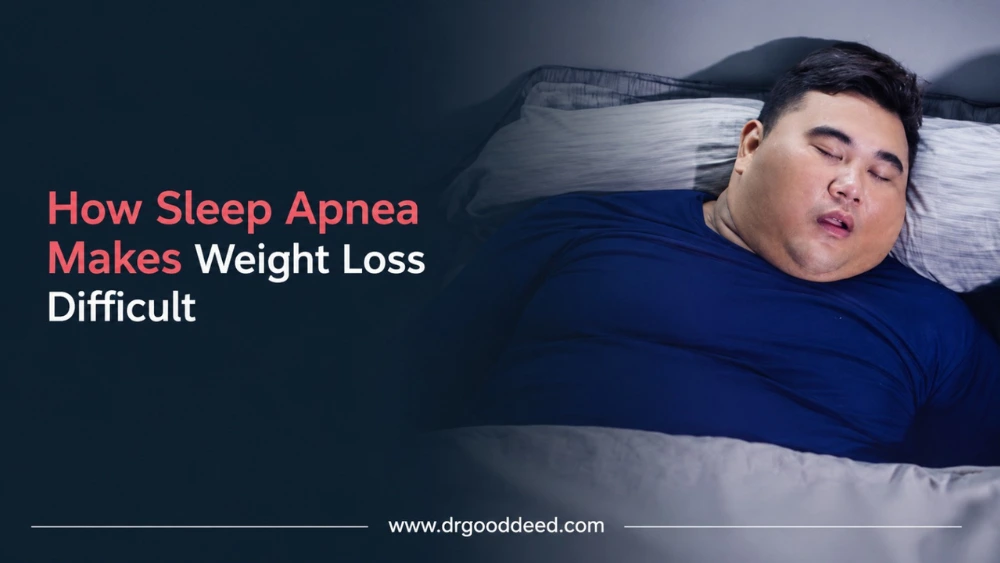
For people trying to lose weight, untreated OSA actively works against nearly every weight loss strategy through multiple simultaneous mechanisms.
Reduced Energy Levels
Sleep fragmentation prevents restorative deep sleep. The Sleep Heart Health Study found OSA patients reported significantly higher daytime fatigue scores, directly reducing motivation for physical activity.
Exercise Intolerance
Intermittent hypoxia reduces oxygen delivery to muscles during exercise, making physical activity feel disproportionately difficult. This often discourages OSA patients from maintaining consistent exercise routines.
Increased Hunger and Cravings
The combination of elevated ghrelin and reduced leptin, documented in the Spiegel et al. study, increases both hunger and specific cravings for high-carbohydrate, high-fat foods.
Slower Metabolic Function
Untreated OSA reduces resting metabolic rate by disrupting the hormonal signals (thyroid hormone, growth hormone) that regulate calorie burning at rest.
Emotional Eating and Fatigue
Chronic sleep deprivation from OSA increases activity in the brain’s reward centers in response to food cues, according to functional MRI studies, making emotional eating more likely during periods of fatigue.
Improving Sleep Apnea to Support Weight Loss
Improving sleep apnea to support weight loss creates a positive cycle where treatment reduces hormonal disruption, which then makes weight loss efforts more effective. This differs from weight loss alone, which addresses only one direction of the bidirectional relationship.
- CPAP Therapy and Metabolic Health: A 2011 study in the American Journal of Respiratory and Critical Care Medicine by Sivam and colleagues found 3 months of consistent CPAP use reduced insulin resistance scores significantly, even before any weight change occurred
- Better Sleep Quality and Appetite Control: Restoring deep sleep normalizes ghrelin and leptin levels within weeks of effective OSA treatment, directly reducing hunger and cravings
- Increased Energy for Physical Activity: CPAP users report significant reductions in daytime sleepiness (measured by Epworth Sleepiness Scale) within 1-2 weeks, enabling more consistent exercise
- Long-Term Weight Management Benefits: A 2009 study in Sleep and Breathing found CPAP users who also pursued weight loss programs achieved greater and more sustained weight loss than those attempting weight loss without OSA treatment
Lifestyle Strategies for Weight Loss With Sleep Apnea
For adults in the USA managing both conditions, improving sleep apnea to support weight loss works best when combined with specific lifestyle changes that address both the airway and the metabolic disruption simultaneously. The strategies below target the documented mechanisms above rather than generic weight loss advice.
- Use CPAP or oral appliance therapy consistently every night, including naps, to stabilize ghrelin and leptin levels
- Schedule exercise for mid-morning when energy levels typically peak for OSA patients before afternoon fatigue sets in
- Prioritize protein at breakfast (20-30 grams) to counteract elevated morning ghrelin levels
- Avoid alcohol and large meals within 3 hours of bedtime, both of which worsen OSA severity and disrupt the hormonal reset that occurs during deep sleep
- Track neck circumference alongside body weight; even a 1-inch reduction can measurably reduce AHI
- Work with a registered dietitian familiar with sleep-related metabolic dysfunction, since standard calorie-restriction advice may not account for the hormonal barriers OSA creates
- Reassess weight loss progress every 3 months alongside a follow-up sleep study, since improving AHI often accelerates weight loss results that previously stalled
FAQs
1. Does sleep apnea cause weight gain?
Yes. The Sleep Heart Health Study found untreated moderate-to-severe OSA patients gained 3-5 pounds more per year than those without OSA, independent of diet, through ghrelin increases and leptin decreases documented in clinical research.
2. How does sleep apnea affect metabolism?
OSA reduces insulin sensitivity through intermittent hypoxia. A 2008 Johns Hopkins study found OSA severity directly correlated with insulin resistance independent of BMI, meaning metabolism slows regardless of starting weight.
3. Can sleep apnea cause unexplained weight gain?
Yes. Weight gain occurs even without increased food intake because cortisol elevation from nightly apnea events redirects fat storage to the abdomen and slows resting metabolic rate through disrupted growth hormone release.
4. What hormonal changes occur from sleep deprivation?
Ghrelin rises up to 28% and leptin falls up to 18% within days, per the 2004 Spiegel et al. study at the University of Chicago. Cortisol also rises with each apnea event, promoting abdominal fat storage.
5. Does sleep apnea increase hunger and food cravings?
Yes. Elevated ghrelin and reduced leptin specifically increase cravings for high-carbohydrate and high-fat foods, not just total hunger. This effect appears within days of poor sleep, confirmed by the Spiegel et al. 2004 trial.
6. Can sleep apnea lead to belly fat accumulation?
Yes. Cortisol receptors concentrate in visceral fat around organs. A 2010 Sleep study by Vgontzas et al. found visceral fat volume correlated more strongly with OSA severity than total body weight.
7. Why is it harder to lose weight with sleep apnea?
OSA simultaneously raises hunger hormones, lowers fullness hormones, reduces resting metabolic rate, and causes exercise intolerance from intermittent hypoxia. All four mechanisms work against calorie deficit at once.
8. Can CPAP therapy help with weight loss?
Yes, indirectly. A 2011 study found 3 months of CPAP use reduced insulin resistance before any weight change occurred. CPAP also normalizes ghrelin and leptin, making subsequent diet efforts more effective.
9. Does treating sleep apnea improve metabolism?
Yes. CPAP use for 3 months significantly reduced insulin resistance scores in the Sivam et al. 2011 trial, independent of weight loss, by restoring oxygen levels during sleep and reducing cortisol spikes.
10. How does poor sleep affect appetite hormones?
Poor sleep raises ghrelin (hunger hormone) by up to 28% and lowers leptin (fullness hormone) by up to 18% within days, per Spiegel et al. 2004. This combination increases both hunger frequency and portion sizes.
Sources
- American Academy of Sleep Medicine (AASM): OSA Prevalence Data
- Eckert DJ, et al. Pathophysiology and treatment of obstructive sleep apnea. The Lancet Respiratory Medicine. 2021.
- Quan SF, et al. Sleep Heart Health Study: Longitudinal weight changes in adults with sleep apnea. Sleep. 2014.
- Foster GD, Sanders MH, Millman R, et al. Obstructive sleep apnea among obese patients with type 2 diabetes. Sleep. 2009.
- Spiegel K, Tasali E, Penev P, Van Cauter E. Brief communication: Sleep curtailment is associated with decreased leptin levels and increased ghrelin levels. PLOS Medicine. 2004.
- Punjabi NM, et al. Sleep-disordered breathing, glucose intolerance, and insulin resistance. American Journal of Respiratory and Critical Care Medicine. 2008.
- Vgontzas AN, et al. Visceral fat and obstructive sleep apnea severity. Sleep. 2010.
- Sivam S, et al. CPAP improves insulin resistance independent of weight loss. American Journal of Respiratory and Critical Care Medicine. 2011.