Dill is a soft, feathery green herb that comes from the plant Anethum graveolens . It has a light, fresh smell and a slightly sweet, grassy taste. People use both its leaves (called dill weed) and its tiny brown seeds in cooking and natural remedies.
Health benefits of dill start with adding a soft green herb to food, which supports digestion, heart health, and your immune system at the same time. Fresh dill and dill seeds give vitamins, minerals, fiber, and plant compounds that protect your cells from damage.
Researchers have tested dill in lab studies, animal studies, and small human trials. These studies suggest real health benefits of dill , especially for digestion, blood fats, blood sugar, and mild inflammation.
Medical groups like Mayo Clinic and NIH do not list dill as a cure for any disease. They focus first on proven treatments and a balanced diet. So you can see dill as a helpful extra. When you know the main health benefits of dill and how to use the herb safely, you can fold it into daily meals in a smart way.
Nutritional Benefits of Dill
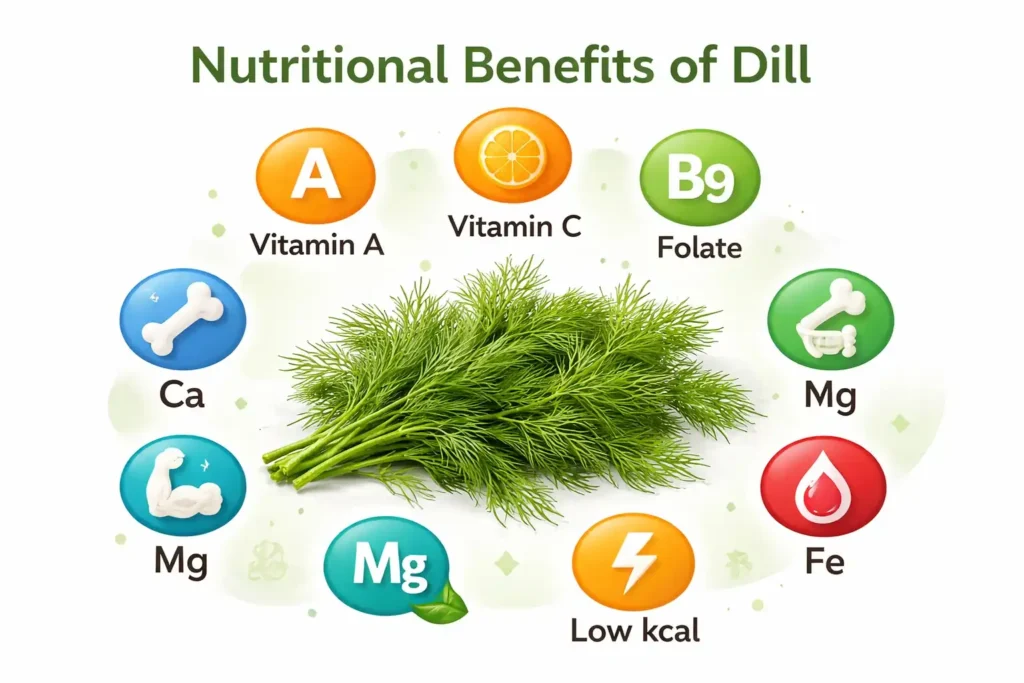
Fresh dill is very low in calories but gives a mix of vitamin A, vitamin C, folate, and fiber. It also supplies minerals like calcium, iron, magnesium, potassium, and manganese.
A small handful of fresh dill leaves can add vitamin C that supports your immune cells, and vitamin A that supports your eyes and skin. Calcium and magnesium help your bones and muscles. Iron helps you carry oxygen in your blood. These nutrients work together to support long-term health, even though the portion looks tiny on your plate.
Major Nutrients Found In Dill Weed & Dill Seeds
Dill weed means the feathery leaves and soft stems. You often sprinkle them over soup, salad, fish, or curd. Dill weed brings most of the vitamins in the plant, especially vitamin C and vitamin A, along with useful fiber.
Dill seeds are different. They are more energy-dense and hold more minerals and essential oils. One spoon of seeds can give a nice share of calcium and iron for the day, plus magnesium, manganese, and phosphorus. These nutrients support your bones, blood, and nerve function. This is why the health benefits of dill apply to both leaves and seeds, but in slightly different ways.
Antioxidant Content And Its Role In Reducing Oxidative Stress
Dill also contains antioxidants (compounds that block damage from unstable molecules called free radicals). These antioxidants include flavonoids and other phenolic compounds.
Lab studies show that extracts from dill leaves and seeds can neutralize free radicals and support natural antioxidant enzymes in the body. This matters because long-term oxidative stress is linked to heart disease, diabetes, and some cancers.
WHO and NIH both stress that diets rich in plant antioxidants help lower the risk of these chronic conditions, but they do not highlight dill alone. They talk about fruits, vegetables, herbs, and spices as a group. So you can see dill antioxidant benefits as a small part of a larger plant-rich plate.
Fiber, Minerals & Essential Oils Summary
Dill gives fiber that supports smooth bowel movements and feeds good gut bacteria. The mineral mix supports nerves, muscles, bones, and normal blood pressure.
Then come the essential oils. These are the fragrant parts that give dill its smell and taste. Main ones include carvone and limonene. Studies on these oils show antispasmodic effects (they relax smooth muscle) and antimicrobial action. These oils explain some of the health benefits of dill for gas, cramps, and mild infections.
Dill Seeds Health Benefits
You feel the dill seeds’ health benefits mostly in your gut. Traditional medicine in India, the Middle East, and Europe uses dill seeds for gas, colic, and loss of appetite. Modern reviews of dill in phytotherapy confirm these long-held uses, although most data still come from small or lab-based studies.
How Dill Seeds Support Digestion And Reduce Bloating
When you chew dill seeds or drink dill seed tea, the essential oils relax the smooth muscles in your stomach and intestines. This can ease trapped gas and reduce bloating and cramps.
Mild dill preparations, such as gripe water that includes dill, appear in many cultures for infant colic. Doctors today are careful with such products, as formulas differ, and not all are well studied.
WHO and pediatric groups warn that you should never give herbal products to babies without medical advice. So you can use the health benefits of dill for your own digestion, but use special care with children.
Dill Seeds For Blood Sugar And Metabolic Balance
Several animal and small human studies suggest that dill seed extracts may help lower blood sugar and improve blood fats. Researchers think this may happen through antioxidant action and better insulin response, but the exact path is not clear yet. The evidence is still limited, and large controlled trials are missing.
For you, this means dill can support a heart-smart and diabetes-friendly diet, but it cannot replace medical treatment. If you take medicine for blood sugar or cholesterol, always check with your doctor before you add strong dill supplements. Using dill as an herb in food is usually safe and still adds the small health benefits of dill .
Dill Seeds As A Natural Anti-Inflammatory Agent
Chronic low-level inflammation is linked to many long-term conditions, like heart disease and joint problems. Dill seed extracts in lab studies show anti-inflammatory and antioxidant effects. This means they can lower markers of inflammation in test systems and in some animal models.
Again, human data is early. You should see this as gentle support, not a cure for arthritis or any serious condition. Still, when you add dill seeds to lentils, pickles, or bread, you get flavor plus possible anti-inflammatory health benefits of dill over time.
Dill Benefits for Immunity
You also get dill benefits for immunity from both leaves and seeds. Immune health starts with good nutrition and a wide range of plant foods. Dill adds vitamin C, vitamin A, zinc, and many plant compounds that help your immune cells do their job.
Antimicrobial Properties Of Dill Essential Oils
Dill essential oils can slow the growth of some bacteria and fungi in lab tests, including microbes that spoil food or affect the mouth and gut. These results do not mean dill can replace antibiotics. CDC and WHO are clear that bacterial infections need tested drugs when they are serious.
What this means for you is simpler. When you use dill in pickles, marinades, and sauces, you get flavor plus small antimicrobial support. This adds to the everyday health benefits of dill but should never replace medical care.
How Dill Supports The Body’s Natural Defense System
The vitamins in dill help your barriers and cells. Vitamin A keeps the lining of your nose, lungs, and gut strong. Vitamin C helps white blood cells fight germs better. Antioxidants protect those cells from damage while they work.
So regular use of dill, along with other herbs and vegetables, supports your defense system on many levels. Single foods do not prevent infections on their own, but the full pattern of eating shapes long-term health benefits of dill and other plants together.
Immune-Boosting Compounds In Dill And Dill Seeds
Flavonoids, phenolic acids, and essential oils in dill can shape immune responses in lab systems. Dill seeds also contribute minerals like zinc and iron that play a direct role in immune function.
Scientists are still mapping out exactly how these compounds act inside the human body. The early evidence supports using dill often in cooking, not swallowing large doses of extracts. When you respect this balance, you get real health benefits from dill with very low risk.
Dill Herb Medicinal Uses
Many cultures have used dill as a gentle home remedy for stomach pain, cramps, and low appetite. These dill herb medicinal uses appear in Ayurveda, Persian medicine, and old European practices. Modern research supports some of these uses, but the evidence is still early. You should always remember that dill is supportive and not a replacement for needed medical care.
Dill As A Natural Remedy For Indigestion And Cramps
The essential oils in dill relax smooth muscles in your gut. When these muscles tighten, you feel gas, cramps, or heaviness after meals. Dill tea or warm water infused with crushed dill seeds can help ease that tight feeling. Lab studies confirm that dill extracts show antispasmodic activity, which means they help muscles relax. This explains why the health benefits of dill feel strongest after a big meal.
Use Of Dill For Menstrual Discomfort And Hormonal Balance
Many women drink dill tea during their period to ease cramping. The same muscle-relaxing effect that helps the gut also helps the uterus. Some small studies suggest that dill may influence certain hormones. The evidence is limited, and researchers need larger trials to confirm this.
What you can rely on is comfort. Warm dill tea can help reduce the feeling of tightness during your cycle, which is why many cultures include dill in natural monthly care routines. This use fits well with other dill herb medicinal uses known for centuries.
Dill In Traditional Medicine Systems
In Ayurveda, dill is called Shatapushpa. Practitioners use it to support digestion, ease gas, and help new mothers with milk flow. In folk medicine, dill seeds are given for colic, but pediatric societies warn that herbs for babies must only be used under medical care. Adults can safely enjoy these traditional health benefits of dill , since the plant offers gentle support for digestion and mild discomfort.
Dill Antioxidant Benefits
Antioxidants are compounds that protect your cells from free radicals. These free radicals can speed aging and increase stress on your heart, brain, and joints. Dill contains flavonoids, phenolic acids, and essential oils that help reduce this stress. These dill antioxidant benefits add another layer to the overall health benefits of dill .
How Dill’s Flavonoids Protect Cells From Damage
Flavonoids in dill can neutralize unstable molecules that harm your cells. Studies on dill extracts show strong antioxidant action in lab systems. This means dill can help lower the daily stress your cells face. WHO and NIH both support diets filled with antioxidant-rich foods because they help long-term health when eaten often. Dill is a simple herb that fits well into this pattern.
Antioxidant Role In Reducing Chronic Disease Risk
Long-term oxidative stress is linked to heart disease, diabetes, and some cancers. Antioxidants in dill help lower this stress and may reduce risk over time. The evidence is based mostly on lab studies and reviews of plant-based diets, so the herb is helpful but not a standalone shield. The health benefits of dill work best when dill is part of a plate rich in many vegetables and herbs.
Comparison Of Antioxidant Levels In Fresh Vs Dried Dill
Fresh dill gives more vitamin C and some delicate antioxidants. Dried dill still helps, but air exposure reduces certain compounds. If the goal is to get stronger dill antioxidant benefits , fresh dill is the better pick. Still, keeping both types in your kitchen lets you enjoy the health benefits of dill all year.
Culinary and Daily Uses of Dill
You get the most health benefits of dill when you use it in daily meals. Because the herb tastes fresh and light, you can mix it into many dishes without changing the flavor too much.
Simple Dishes And Recipes Featuring Fresh Dill
You can stir chopped dill into yogurt, soups, salads, potatoes, and fish. You can add it to scrambled eggs or sprinkle it over grilled vegetables. These small touches bring steady nutritional benefits of dill into your day without effort.
How To Use Dill Seeds In Cooking And Teas
Dill seeds taste warm and sweet. You can roast them lightly and crush them into lentils, beans, bread dough, pickles, or spice mixes. You can also make tea by steeping one teaspoon of seeds in hot water. This tea helps you feel lighter after meals because it uses the dill seeds’ health benefits for gas and digestion.
Storing, Preparing And Preserving Dill For Maximum Benefit
Store fresh dill in the fridge wrapped in a damp cloth or standing in water. Use it within a few days. You can freeze chopped dill in small portions so it is ready for soups or stew. Store dill seeds in a sealed jar away from heat. This keeps their oils strong and protects the dill antioxidant benefits that help your cells.
Safety, Side Effects and Who Should Avoid Dill
Most people can use dill safely. Normal food amounts rarely cause problems. But a few points need care so you can enjoy the health benefits of dill without worry.
Possible Allergic Reactions Or Sensitivities
Some people with allergies to plants like fennel or celery may react to dill. Signs include itching, rash, swelling, or trouble breathing. If you ever notice any of these signs, stop using dill and get medical help.
Dill Interactions With Medications
Dill extracts may lower blood sugar or blood pressure in some people. If you take medicine for diabetes or heart issues, speak with your doctor before you use strong dill supplements or large amounts of dill seed tea. Normal cooking use is usually safe.
Safe Intake Guidelines For Adults And Children
Adults can use dill freely in food. Children can have small food amounts. Only doctors should guide dill use for babies. Since medical needs differ, WHO and CDC stress that herbs should never replace needed treatment.
FAQ
Is Fresh Dill Healthier Than Dried Dill
Fresh dill usually offers more vitamin C and stronger dill antioxidant benefits , which means better support for some health benefits of dill when used often in meals.
Can Dill Help Reduce Inflammation Naturally
Yes, dill has plant oils and antioxidants that offer gentle support. These help lower mild irritation and add steady health benefits of dill when used with balanced meals.
Are Dill Seeds Safe For Daily Use
Yes, small amounts of dill seeds in food or tea are safe for most adults. They support dill seeds’ health benefits , digestion, and comfort, but medical issues need doctor guidance.
Does Dill Improve Digestion Quickly
Many people feel lighter within an hour after drinking dill tea. This happens because essential oils support gut movement and add the soothing health benefits of dill naturally.
Can Dill Aid In Improving Immune Function
Yes, antioxidants and vitamins in dill offer dill benefits for immunity . They support immune cells and add steady health benefits of dill when eaten often.
How Much Dill Should You Eat Per Day For Benefits
A few spoons of fresh dill or a small serving of seeds in meals can support daily health benefits of dill , but doctors note that needs vary by age and health.
Is Dill Beneficial For Blood Sugar Control
Early studies show dill may support sugar balance. These findings connect to Dill’s antioxidant benefits , but more research is needed. Always follow medical advice for blood sugar care.