


Stress can cause spotting in some people, but it is never the only possible reason. Doctors see stress as one factor that can disturb your hormones and lead to light bleeding between periods. At the same time, spotting can also come from pregnancy, infection, birth control, fibroids, or other medical problems, so you should never blame stress alone.
Research from groups like the NIH shows that stress can change your menstrual cycle by affecting the brain–ovary hormone system. This can lead to irregular cycles and abnormal uterine bleeding, which sometimes shows up as small spots of blood.
When you understand how stress can cause spotting , you can decide when to watch and when to seek care.
So yes, in some people, stress can cause spotting , often by changing hormone levels or ovulation timing, but you still need to rule out other causes with a health professional.
Can Anxiety Cause Spotting?
Anxiety is more than feeling nervous. It affects your brain, heart rate, sleep, appetite, and hormone signals. Because these systems link closely with your menstrual cycle, anxiety can cause spotting in some situations, especially when worry stays high for weeks.
Studies in women and teens show that higher stress and anxiety scores are linked with more irregular cycles and abnormal bleeding. This includes skipped periods, short cycles, long cycles, and bleeding between periods. Researchers say stress does not explain every case, and the data for spotting alone is still limited, but the pattern appears often.
When your mind stays on alert, stress can cause spotting by pushing your body into “survival mode,” where reproduction becomes less of a priority.
How Anxiety Triggers Hormonal Shifts
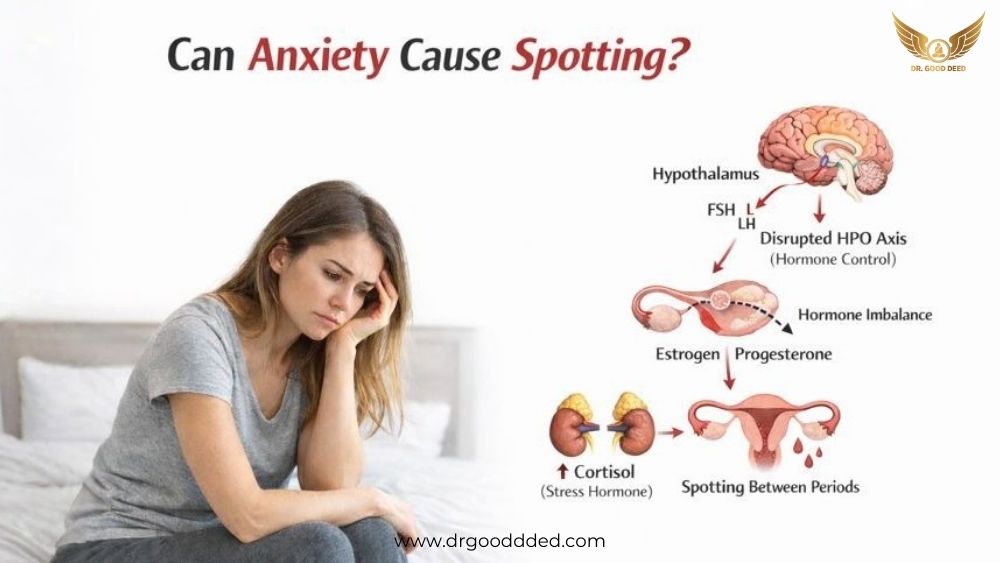
Your cycle runs through a system called the Hypothalamic-Pituitary-Ovarian axis. Doctors shorten this to the HPO axis. It is a hormone control line between your brain and your ovaries.
The hypothalamus in your brain releases GnRH (a hormone that starts the menstrual cycle). This tells the pituitary gland to release FSH and LH. These hormones then tell your ovaries to make estrogen and progesterone and to release an egg.
Chronic stress and anxiety can disturb GnRH pulses. Stress changes this axis and links to irregular or missing periods. When those signals shift, stress can cause spotting because the uterine lining does not build and shed in its usual pattern.
Cortisol Spikes And Menstrual Cycle Disruption
Cortisol is your main stress hormone. It comes from your adrenal glands and helps you react to danger. Short rises are normal. Long, high levels can disturb reproductive hormones.
Research on functional hypothalamic amenorrhea (stress-related loss of periods) shows that stress and metabolic strain can lower GnRH, FSH, and LH, which then reduce estrogen and progesterone. You might not develop full amenorrhea, but milder forms of this process can still make cycles irregular.
In that setting, stress can cause spotting in the middle of the cycle, a few days before your period, or at random times. The spotting appears because the uterine lining becomes fragile and sheds in small pieces instead of in one clean flow.
Who Is Most At Risk For Anxiety-Related Spotting?
Anyone with periods can notice that stress can cause spotting , but some groups seem more sensitive to stress-related cycle changes. Studies suggest a higher risk when you:
- You are a teen or student under strong academic or social pressure.
- You live with an anxiety disorder, panic disorder, or depression.
- You restrict food, lose weight quickly, or train at a very high level.
- You sleep poorly or work rotating night shifts.
In these settings, even small extra stress can push a fragile hormone system off balance.
Stress And Irregular Bleeding:
Abnormal uterine bleeding is any bleeding that is irregular in timing, duration, or amount. This can include spotting, long periods, very heavy periods, or cycles that keep shifting.
Stress is a contributor to irregular bleeding , although it is often one factor among many. Stress may not act alone, but it can act together with weight changes, illness, or hormone disorders.
How Stress Affects Estrogen And Progesterone Levels
Estrogen helps the uterine lining grow. Progesterone stabilizes that lining after ovulation. When stress disrupts the HPO axis, estrogen and progesterone can rise and fall at the wrong times.
If progesterone falls too early, parts of the lining can break down before your period. You may see light brown or pink smears instead of a steady flow. This is one of the ways stress can cause spotting without a full period starting.
If estrogen stays unbalanced over many cycles, you may move from mild spotting to more obvious irregular bleeding , such as long or heavy periods.
Impact On Ovulation And Menstrual Timing
Stress-related hormone changes can delay ovulation (release of an egg from the ovary) or block it for a time. This is called ovulatory dysfunction and is a known cause of irregular bleeding patterns.
When ovulation moves later, your period often comes later. Your cycle length can change from month to month. During the wait, small pieces of the uterine lining may shed, so stress can cause spotting before the delayed period.
When ovulation does not happen at all, estrogen can rise without the calming effect of progesterone. The lining may grow too thick and then shed in uneven chunks. In that case, stress can cause spotting mixed with heavier days of bleeding.
Spotting Vs. Irregular Bleeding: How To Tell The Difference
Spotting means a very small amount of blood. You may see it only when you wipe or as a few drops on your underwear. Often, you do not need a full pad.
Irregular bleeding means a flow that feels more like a light or regular period, but it comes at the wrong time or lasts longer than usual. It may require pads or tampons and may include clots.
Both can appear when stressed , yet irregular bleeding raises more concern because it may point to structural causes like fibroids or polyps. A doctor uses your history, exam, and tests to sort out which pattern you have.
Common Causes Of Spotting Between Periods
Even though stress can cause spotting , medical guidelines from groups like ACOG reminds doctors to look for other causes first. Common reasons include hormone shifts, ovulation bleeding, birth control changes, early pregnancy, and cervical or vaginal problems.
Hormonal Fluctuations
Hormone levels change during puberty, after pregnancy, around perimenopause, and after starting or stopping hormonal medicines. In these times, you may see short-term hormonal imbalance spotting while your body adjusts.
Doctors often watch these changes for a few months, as long as you have no red flag symptoms. If spotting lasts or worsens, they look beyond the idea that stress can cause spotting and check for thyroid disease, PCOS, or other endocrine problems.
Ovulation Bleeding
Some people notice a light stain around the middle of the cycle. This may be ovulation bleeding. It usually lasts one or two days and stays very light.
Ovulation bleeding itself is not harmful. However, if you also feel very stressed at that time, stress can cause spotting to become a little more frequent or noticeable, because your hormone signals already sit at a sensitive point.
Birth Control Changes Or Missed Doses
Hormonal birth control can shift how your uterine lining grows and sheds. Starting a new pill, patch, ring, implant, or hormonal IUD often brings spotting in the first months. Missing pills or taking them at very different times also increases the chance of bleeding between periods.
Stress itself can make you forget doses. So stress can cause spotting indirectly, by making your birth control less steady. In this situation, stress and hormones act together, rather than stress acting alone.
Early Pregnancy Spotting
Light spotting can show up in early pregnancy. Some people notice this around the time the embryo implants into the uterine lining. Others see spotting if the cervix becomes more sensitive.
If there is any chance you might be pregnant, never assume that stress can cause spotting and ignore it. A home pregnancy test and a call to your doctor give safer answers.
Infection, Inflammation, Or Cervical Irritation
Sexually transmitted infections, vaginal infections, and inflammation of the cervix can all cause spotting, especially after sex. Growths like cervical polyps or more serious problems like precancerous changes can also bleed.
These conditions need proper testing and treatment. In these cases, stress can cause spotting only in the sense that stress might weaken your immune system or delay you from seeking care. The infection or lesion itself still causes the blood.
Reasons For Spotting From Stress
Stress raises cortisol and other stress hormones. These hormones disturb the HPO axis, which then changes GnRH, FSH, LH, estrogen, and progesterone. Over time, this chain can move you from a regular cycle to mild hormonal imbalance spotting and later to more obvious cycle changes.
Rapid Hormonal Imbalance From Acute Stress
A sudden shock, such as a breakup, accident, exam, or job crisis, can trigger sharp rises in cortisol and adrenaline. Your brain may briefly change its GnRH release, which then shifts your ovarian hormones for that cycle.
In some people, this shows up as a one-time episode where stress can cause spotting a few days or weeks after the event. Research on stress-related menstrual disorders supports this pattern, but it also notes that not everyone reacts the same way, and evidence remains limited for predicting who will spot.
Weight Loss, Over-Exercise, Or Poor Sleep
Your body reads fast weight loss, very hard exercise, and long-term lack of sleep as extra stress. These factors raise cortisol and change energy use. Reviews on functional hypothalamic amenorrhea show that this “combined stress” often leads to irregular or absent periods.
Even if your periods do not stop, this mix can add up so that stress can cause spotting before or after your main bleed. Improving nutrition, easing training, and sleeping better often help, but treatment plans always vary by person.
Emotional Trauma Or Chronic Stress Exposure
Living with long-term family conflict, abuse, discrimination, money stress, or ongoing illness can keep your stress system activated every day. Studies link chronic psychological stress with higher rates of menstrual irregularities and abnormal bleeding.
Hormonal Imbalance Spotting
When your hormones swing out of their normal rhythm, you may notice bleeding at times that do not match your usual cycle. Doctors call this hormonal imbalance spotting . While stress can cause spotting , hormone issues often mix with stress, sleep loss, weight shifts, illness, or new medicines. So spotting does not happen from stress alone in every case.
Medical guidelines from the NIH show that changes in the hypothalamic-pituitary-ovarian system are a major reason for irregular bleeding. This system can become unstable when stress levels stay high, which explains why stress can cause spotting repeatedly for some people.
How Cortisol Suppresses Reproductive Hormones
Cortisol rises during stress. This hormone helps your body handle danger, but it also lowers GnRH pulses in the brain. When GnRH drops, FSH and LH drop too. These are hormones that tell the ovaries how to function. If this signal weakens, estrogen and progesterone fall out of sync.
When that balance breaks, the uterine lining may grow in uneven layers. Parts of it may shed early. That is how stress can cause spotting , especially in the middle of your cycle or close to your period. Doctors have strong evidence that chronic stress plays a role, though research still explores which types of stress cause the biggest changes.
Effects On Menstrual Flow And Cycle Length
When your hormones fall or rise at the wrong time, your cycle may shorten, lengthen, or become unpredictable. Some people get heavy flow one month and very light flow the next. Others see tiny brown or pink marks instead of a full bleed.
Since the lining becomes unstable, stress can cause spotting before, after, or between periods. The bleeding may last a few hours or up to two days. When the imbalance grows stronger, the spotting may mix with heavier irregular bleeding.
When Hormonal Spotting May Signal A Bigger Issue
Even though stress can cause spotting , it should not be the default explanation. Spotting that happens for three months or more may signal thyroid disease, PCOS, fibroids, polyps, or perimenopause. These conditions need tests, because treatment differs for each one.
If you see spotting along with pelvic pain, strong cramps, fever, or bleeding after sex, you should not assume stress can cause spotting . Those symptoms may point to infection or cervical changes that require medical care.
What Stress-Related Spotting Looks Like
Not every dot of blood comes from a serious problem. Many people notice a pattern when they face emotional strain, major life changes, or panic spells. When this happens, stress can cause spotting that looks small but still feels worrying.
Doctors say stress-related bleeding usually stays light. It may appear as brown stains, tiny red streaks, or a slight pink discharge. What matters most is whether the pattern repeats and whether you also have pain or unusual symptoms.
Light Bleeding, Brown Discharge, Or Pink Spotting
Brown discharge often means older blood. Pink discharge often means a small amount of fresh blood mixed with cervical mucus. Both can appear when stress causes spotting .
Since the lining sheds in thin layers, the amount is low. You may not fill a pad. Some people only notice it once a day when wiping.
Spotting After Emotional Events Or Panic Attacks
When your stress spikes fast, your hormones can shift in the next day or two. Panic attacks raise your heart rate, breathing rate, and cortisol. After this sudden change, a group of people reported that stress causes spotting in the next few days.
This does not mean every panic attack leads to spotting. The link is not perfect, and research on panic-related spotting is limited. But the pattern shows up often enough that doctors consider it a possible factor.
Patterns That Suggest Stress Is The Cause
A few signs make stress more likely:
- The spotting appears on weeks when your sleep, appetite, or mood worsen.
- The spotting stops when your stress level drops.
- Tests for infection, pregnancy, and hormone disorders come back normal.
If your doctor sees this pattern, they may explain how stress can cause spotting through short-term hormone changes rather than a structural issue.
When To See A Doctor About Spotting
Even though stress can cause spotting , this does not mean you should ignore every episode. Spotting is only considered safe when it is mild, short, and not repeated often. Doctors use your symptoms, cycle history, and test results to decide whether it is harmless or not.
Below are times when you should seek care.
Red Flag Symptoms
Spotting needs medical attention when you also notice:
- Severe pelvic pain
- Fever
- Bleeding after sex
- Bleeding after menopause
- Strong cramps or dizziness
These signs point away from the idea that stress can cause spotting and toward infections, cysts, or cervical problems that must be checked.
Spotting That Lasts Longer Than One Cycle
If you see spotting in more than one cycle, do not assume it is stress. Even though stress can cause spotting , repeated episodes need a full evaluation. Doctors do this to rule out thyroid disease, PCOS, fibroids, or early pregnancy issues.
Long-lasting spotting is one of the most common reasons people visit gynecology clinics, so you are not alone if it worries you.
Diagnostic Tests Your Provider May Recommend
Doctors usually start with:
- A pregnancy test
- Pelvic exam
- Tests for infections
- Thyroid and hormone blood tests
- Pelvic ultrasound
These steps help confirm whether stress can cause spotting in your case or whether another cause needs treatment. Most conditions have several treatment paths, and doctors avoid one-size-fits-all plans.
FAQ
Can prolonged stress cause irregular bleeding throughout the month?
Yes. Long-term stress can disturb hormones and lead to stress and irregular bleeding , including spotting, early bleeding, or delayed bleeding, though other causes must be ruled out.
How do I know if spotting is from stress or a medical condition?
You cannot tell by symptoms alone. Even though stress can cause spotting , infections, thyroid issues, or pregnancy, testing is needed to confirm the true cause.
Can stress cause spotting right before or after ovulation?
Yes. Hormones shift during ovulation, and added stress can make the lining unstable, which explains why stress can cause spotting in the middle of your cycle.
Does stress related spotting look different from implantation bleeding?
Not always. Both can be light and pink or brown. Because stress can cause spotting , a pregnancy test is needed if there is any chance of pregnancy.
Can skipping meals or over-exercising from stress trigger spotting?
Yes. These habits raise cortisol and disrupt hormones, so stress can cause spotting when your body is under both emotional and physical strain.
How fast can stress affect menstrual cycle hormones?
Some people notice changes within the same cycle. Since stress can cause spotting through quick hormone shifts, timing varies between individuals.
Can emotional stress cause spotting without affecting your period?
Yes. You may still get regular periods, but notice light mid-cycle bleeding. This happens because stress can cause spotting through small hormone dips.
Does panic disorder increase the likelihood of spotting?
It can. Panic attacks raise cortisol, which may disrupt hormone levels. This is why stress can cause spotting more often in people with anxiety conditions.
Can stress cause both early and late periods, along with spotting?
Yes. Hormone shifts can delay or speed up ovulation. Because of this, stress can cause spotting plus early or late periods.
Is it normal to spot for several days after a stressful event?
It can happen. Short term hormone changes explain why stress can cause spotting , but bleeding that lasts longer than a few days needs medical review.