
A stroke is a medical emergency that happens when blood flow to part of your brain stops or when a blood vessel in the brain breaks. This sudden disruption damages brain cells because they lose oxygen and nutrients. The effects depend on which brain area is affected and how fast treatment begins.
A stroke feels like a sudden and clear change in how your body or mind works. It often starts without pain, which makes it easy to dismiss. You may feel one side of your body turn heavy or weak, as if strength drains out at once. Your speech may sound wrong, slow, or hard to control.
Balance can fail, making standing or walking unsafe. Vision may blur, darken, or split. Confusion can appear fast, even when you were thinking clearly moments before. For many people, a stroke feels like losing control without warning, and that sudden loss is the most important signal to act immediately.
How Stroke Symptoms Start
A stroke happens when blood flow to the brain is blocked or when bleeding starts in the brain. Either problem can disrupt the brain areas that control speech, vision, movement, and balance.
Sudden Numbness Or Heaviness On One Side
A classic early feeling is heaviness on one side. Your arm may feel like it weighs more. Your leg may feel like it’s dragging. Your face can feel numb, like dental freezing. You may still feel touch, but you cannot control the movement well. That mismatch can feel confusing.
Instant Loss Of Balance Or Coordination
You can lose balance without warning. You might sway, stumble, or fall. You may feel dizzy, but not like a slow “spin”. It can feel like your body stops lining up with the floor. Strokes that affect the back of the brain can hit balance hard. This is why “Balance” shows up in the BE-FAST stroke check.
Sudden Confusion Or Mental Fog
Confusion can hit fast. You may know what you want to say, but the words will not form. You may read a text, and it makes no sense. You may feel a thick mental fog. People around you may notice it before you do.
Sharp Or Unusual Headache Onset
Not every stroke causes a headache, but some do. A bleeding stroke can cause a sudden, severe headache. Severe headache can come with vomiting, dizziness, and changes in consciousness (how awake you feel). If a headache feels sudden and extreme, treat it as urgent. For some people, a stroke feels like a headache.
Difficulty Speaking Or Forming Words
Speech trouble can show up in a few ways. You may slur. You may say words that sound close but are wrong. You may get stuck and repeat sounds. Or you may understand others poorly. Trouble speaking and trouble understanding speech are key stroke signs.
Symptoms Of A Stroke In Adults
Symptoms of a stroke in adults often match the FAST check: face, arm, speech, time. Many experts also use BE-FAST, which adds balance and eyes. BE-FAST is a way to catch more strokes, especially ones that affect balance and vision.
Facial Drooping Sensations
Your face may feel “pulled” on one side. Your smile can look uneven. You may drool. You may notice numbness near the lip or cheek. Even if you can still talk, face droop matters. In the moment, a stroke feels like your face does not match your intention.
Weakness In Arm Or Leg
Weakness often hits one side. You might lift both arms, then one arm sinks. Your grip may fail. Your leg may buckle. This can look subtle at first. It can also get worse within minutes.
Vision Changes Or Darkened Spots
Vision can blur in one eye or both. You can see double. You can get blackened or dim vision. Trouble seeing, blurred vision, blackened vision, or double vision are stroke symptoms. A vision shift can make a stroke feel like the room turns unsafe fast.
Tingling Or Pins-And-Needles Feelings
Tingling can happen with numbness. You may feel pins-and-needles in your hand, face, or arm. Tingling alone can come from many causes. Tingling plus one-sided weakness, speech trouble, or vision change is different. Treat that combination as urgent.
Trouble Understanding Conversations
You may hear words but fail to process meaning. You may answer in a way that does not fit the question. You may feel irritated because nothing makes sense. That reaction can come from the brain area that handles language.
Signs Of What A Stroke Feels Like
Signs of what a stroke feels like often come down to timing and mismatch. The change feels sudden. The symptom does not match the situation. Your body does not “reset” when you try harder. You cannot will it away.
What Mini-Strokes Feel Like (Brief, Subtle Symptoms)
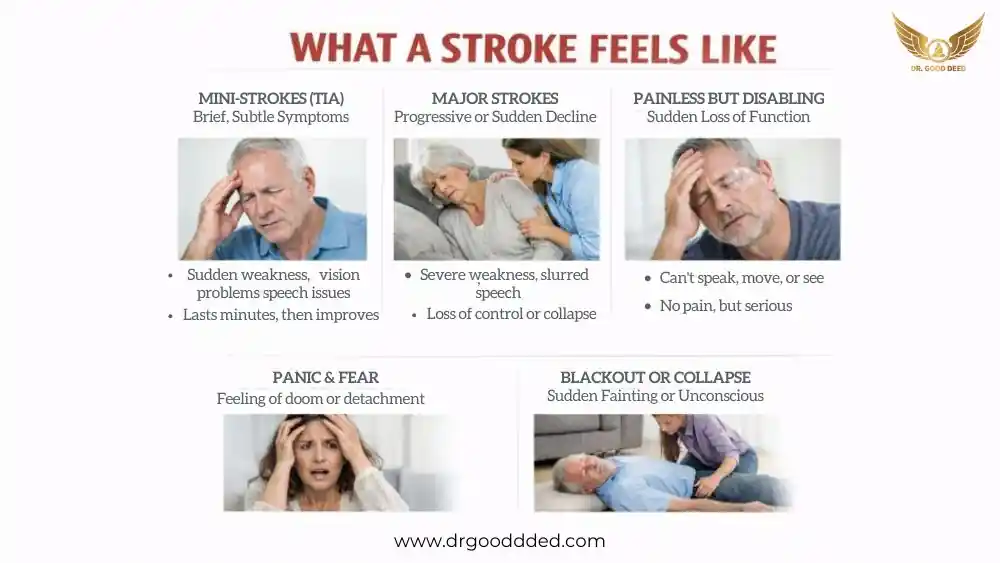
A mini-stroke is a TIA (transient ischemic attack). Symptoms can look like a stroke. They can fade quickly. TIA symptoms are stroke-like warning signs that may last minutes and then improve. That improvement can fool you.
A TIA can still signal a serious risk. So a stroke feels like a short event that leaves you tempted to ignore it.
What Major Strokes Feel Like (Progressive Or Sudden Decline)
A major stroke can hit like a switch or it can build over minutes. You may start with mild weakness, then lose more control. Your speech may get worse. Your balance can collapse. This pattern matters because people often wait during the “mild” stage. During a major stroke, a stroke feels like your body slips away from you.
How Strokes Can Feel Painless But Disabling
Pain does not decide if it is serious. Many strokes cause no pain at all. You can lose speech, movement, or vision without pain. That is why you must treat sudden disability as an emergency, even if you feel no pain.
Emotional Sensations: Panic, Fear, Detachment
Panic can rise fast because your brain senses danger. You may feel fear, doom, or detachment. Detachment means you feel distant from what is happening. These feelings do not prove stroke, but they can appear with stroke symptoms. If they show up with one-sided weakness or speech trouble, act fast.
Loss Of Awareness Or Sudden Blackout
Some strokes affect alertness. You may feel faint. You may collapse. You may become hard to wake. A stroke can include changes in consciousness with a severe headache in some cases. Treat sudden blackout as an emergency.
Types Of Stroke And How Each One Feels
The types of stroke mainly include ischemic (blocked blood flow), hemorrhagic (bleeding), and TIA (temporary blockage). Each pattern can “feel” different because different brain areas get stressed. Still, overlap happens. You cannot safely guess at home.
Ischemic Stroke Sensations
Ischemic stroke often causes classic FAST signs. You may feel sudden face droop, arm weakness, or speech trouble. You may also notice sudden vision loss or balance trouble. In many ischemic strokes, a stroke feels like sudden one-sided weakness with confusion.
Hemorrhagic Stroke Sensations
Hemorrhagic stroke can cause sudden, severe headache. It can also cause vomiting, dizziness, and a drop in alertness. These features are associated with stroke headache symptoms. In this type, a stroke feels like a sudden head crisis plus a fast decline.
TIA Sensations And Why They Fade Quickly
A TIA often clears because the blockage moves or breaks up. The brain’s blood flow returns. Symptoms can stop, but that does not mean you are safe. TIAs are urgent warnings that need quick medical care.
How Symptom Pattern Differs By Stroke Type
Blocked-flow strokes often show one-sided weakness or speech trouble. Bleeding strokes more often include a sudden, severe headache with vomiting or alertness change. TIAs often come and go. These are patterns, not rules. Treat any sudden neurologic symptom (brain-related symptom) as an emergency.
Stroke Warning Signs You Should Never Ignore
Some problems can wait. Stroke cannot. The warning signs of stroke often look simple, but they point to a brain emergency. If you notice them in yourself or someone near you, treat it as “call now,” not “watch and see.” Even if symptoms go away quickly, it can still be a TIA, and you still need medical help.
FAST Warning Signs Explained Simply
FAST works because it focuses on the most common outward signs.
- Face changes: one side droops, feels numb, or looks uneven.
- Arm weakness: one arm feels heavy, weak, or drifts down.
- Speech change: words slur, sound mixed up, or you cannot find them.
- Time: You should call emergency services right away.
Sudden Inability To Walk Or Stand
If your legs do not obey, that matters. You might feel like you are walking on a moving boat. You might fall without warning. Trouble walking, dizziness, and loss of balance or coordination are stroke symptoms.
Worst Headache Of Your Life (Red Flag)
A sudden, severe headache can signal a bleeding stroke. A sudden severe headache as a possible stroke symptom, sometimes with vomiting, dizziness, and changes in consciousness (how awake you feel).
Chest Or Breathing Changes Linked To Stroke
Stroke can come with shortness of breath, chest tightness, or a racing heartbeat from fear. Also, some heart rhythm problems raise stroke risk. You cannot diagnose the cause at home. If stroke signs show up with breathing trouble, you still call emergency services.
When Symptoms Come And Go Over Minutes
Symptoms that fade can be a TIA. TIA symptoms often go away within an hour, but they can last longer. That “gone now” feeling tricks people into skipping care. If symptoms come and go, a stroke feels like a short glitch that leaves a big risk behind.
What Does a Stroke Feel Like in Real Time?
You might want a minute-by-minute script. Stroke does not follow one script, but patterns repeat. Understanding how stroke symptoms start helps you act faster when your body throws a sudden warning.
Seconds: Abrupt Sensory Shift
In the first seconds, you notice a sharp change. Your lip feels numb. Your hand feels strange. Your vision blurs. Your balance slips. You may feel fine emotionally, yet your body feels “wrong.”
First Minute: Confusion And Motor Loss
Within a minute, your brain may struggle with simple tasks. You may try to speak and hear nonsense come out. You may lift an arm and watch it drift down. You may try to stand and feel your leg fail. This is when signs of what a stroke feels like become visible to other people, not just to you.
5–10 Minutes: Escalating Weakness
Some strokes stay steady. Others worsen. Weakness can spread from hand to arm. Speech can get more slurred. You may feel more confused. You may start to choke on saliva because your swallowing muscles lose control. In this stage, a stroke feels like your body keeps slipping further away, even if you try hard to fight it.
When The Stroke Becomes Fully Disabling
In some cases, the stroke reaches a point where you cannot walk, speak, or stay alert. This can happen fast. It can also happen after a short “mild” phase. That is why you never wait for a perfect sign. A stroke feels like a sudden shutdown when it turns severe.
What a Stroke Feels Like After It Starts
Once symptoms begin, you may notice lasting effects right away. You may also notice effects later, after the emergency passes. Many symptoms of a stroke in adults come from which brain area was harmed.
Persistent Weakness Or Paralysis
Weakness may stick on one side. Your arm may feel heavy and useless. Your leg may drag. Paralysis means you cannot move a body part at all. Even mild weakness can limit your daily life. After the event, a stroke feels like you lost the strength you used to have without thinking.
Lingering Cognitive Fog
You may feel mentally slow. You may struggle to focus. You may forget names or mix up steps in simple tasks. “Cognitive” means thinking skills. This can improve with time and rehab, but it can also frustrate you. A stroke feels like you are working twice as hard to do normal thinking.
Sensation Loss Or Abnormal Feelings
You might not feel the temperature well on one side. Touch can feel dull. Some people feel burning, tingling, or odd discomfort. These are sensory changes caused by brain pathways getting disrupted. This is another way the types of stroke and brain locations change what you feel.
Emotional Impact And Sudden Overwhelm
Your emotions can swing. You may cry easily. You may feel anger or fear that does not match the moment. Some of this comes from stress. Some comes from brain changes. If mood changes feel extreme or unsafe, you tell your care team. A stroke feels like an emotional storm for some people, not just a body problem.
When to Seek Emergency Help
You do not try to “sleep it off.” You do not drive yourself if you feel unsafe. You call emergency services.
Why Every Minute Matters
Stroke damages brain tissue fast. A well-known “time is brain” idea means brain cells get lost as time passes without treatment. Rapid evaluation and therapy matters because damage grows as minutes pass.
When Symptoms Seem Mild Or Unclear
Mild signs still count. A slight face droop counts. A short speech slip counts. A brief vision blackout counts. Stroke-like symptoms that go away after a few minutes may be a TIA and still need medical help. This is where warning signs of stroke save lives, even when they look small.
Why Waiting For Symptoms To Improve Is Dangerous
Symptoms can improve and still signal danger. A TIA can act like a preview of a bigger stroke. Temporary symptoms still need urgent assessment to help prevent a full stroke.
FAQ
How Do I Know If I’m Having A Stroke Or Something Else?
You focus on sudden change. If you get sudden face droop, one-sided weakness, speech trouble, vision loss, or balance failure, you treat it like a stroke and call. Warning signs of stroke matter more than guessing.
Do Strokes Always Hurt?
No. Many strokes do not cause pain. You can lose speech, movement, or vision without any headache. Bleeding strokes may cause sudden severe headaches, but lack of pain does not mean safety. A stroke feels like disability, not always pain.
Can A Stroke Feel Like Vertigo Or Dizziness?
Yes. Stroke can cause sudden dizziness, trouble walking, and poor coordination. If dizziness appears with speech trouble, weakness, numbness, or vision change, you should call emergency services. That combo fits the signs of what a stroke feels like .
What Do Mini-Strokes Feel Like Compared To Full Strokes?
A TIA can feel like a brief stroke that clears, such as short numbness, short slurred speech, or brief vision loss. Most TIA symptoms go away within an hour. You still need urgent care.
Can Stroke Symptoms Come And Go?
Yes. TIAs often come and go. Symptoms may vanish in minutes, then return later. Symptoms that go away may still mean a TIA, and you still need medical help. You do not wait for a repeat to act.
What Does A Stroke Feel Like In Sleep?
You may wake up with new weakness, numbness, slurred speech, or vision loss. You may feel confused and not know why. If you wake with sudden neurologic symptoms (brain-related symptoms), you treat it as urgent because a stroke can feel like it can start while you sleep.
Can Anxiety Attacks Feel Like A Stroke?
Anxiety can cause fear, a fast heartbeat, sweating, and tingling from fast breathing. Anxiety does not usually cause one-sided weakness, face droop, or trouble speaking clearly. If you cannot tell, you treat it like a stroke because how stroke symptoms start often feels sudden too.
What Does A Silent Stroke Feel Like?
A silent stroke may cause no clear, sudden symptoms. You might notice memory problems, slower thinking, or trouble with tasks over time. Only a clinician can confirm it with imaging. You still report new changes fast, especially if you have risk factors.
What Sensations Mean I Should Call Emergency Services?
You call for sudden face droop, arm weakness, speech change, vision loss, severe headache, or sudden balance collapse. Those match the symptoms of a stroke in adults and can happen in different types of stroke . A stroke feels like a sudden loss of control.
Can Younger Adults Feel Strokes Differently?
Symptoms often look the same at any age. Younger adults may delay because they assume a stroke cannot happen to them. Do not delay. If the warning signs of stroke show up, you act fast, even if you feel “too young” for it.