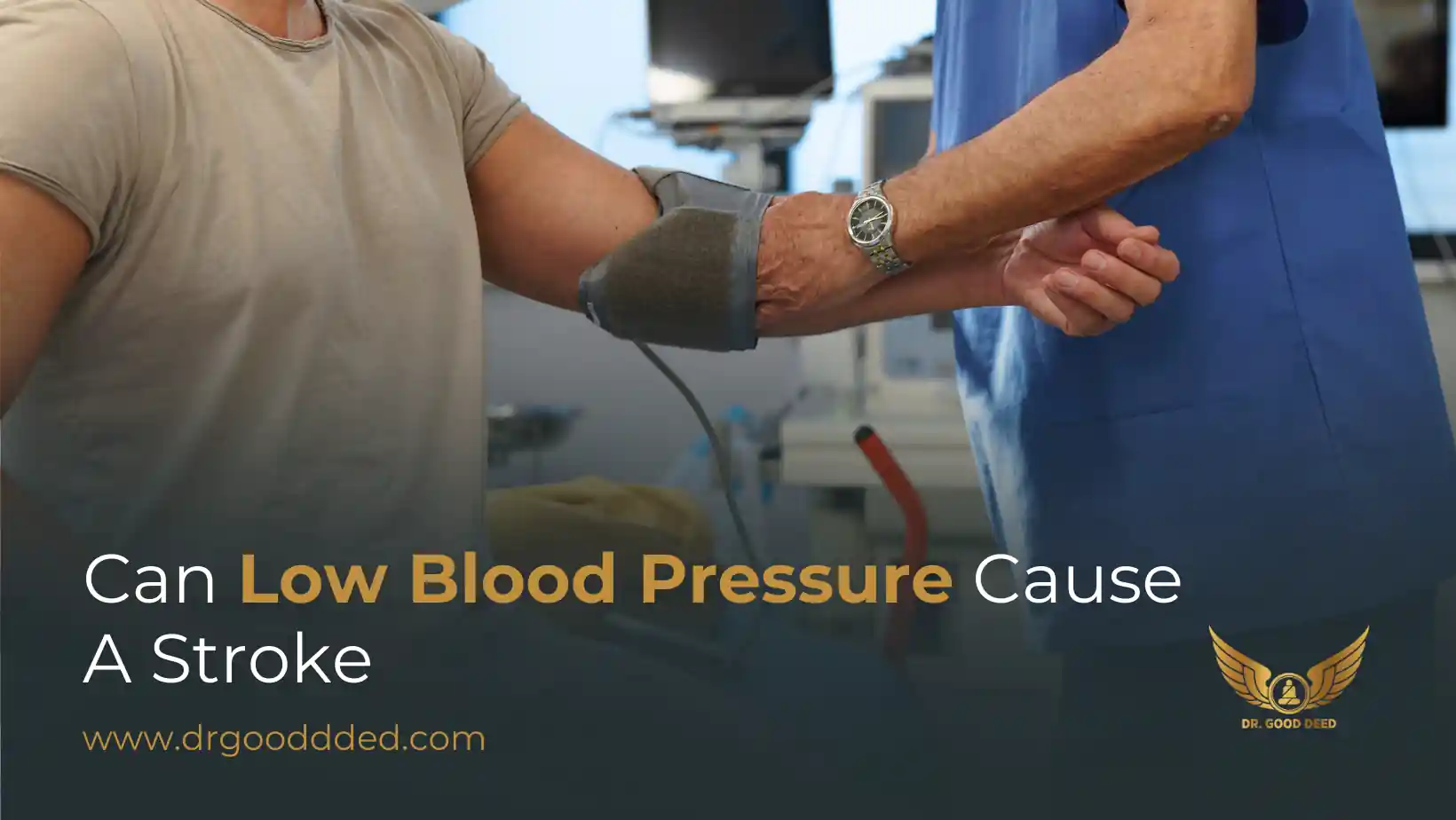

Low blood pressure can cause a stroke in specific situations, especially when the brain does not receive enough blood for a long time or when blood pressure drops suddenly. So can low blood pressure cause a stroke? Yes, but only under certain medical conditions where the brain’s blood supply becomes critically reduced.
Blood pressure pushes oxygen-rich blood to the brain. If pressure falls too low, brain cells can starve. This can trigger fainting, brain injury, or even a stroke. Sustained or sudden hypotension (abnormally low blood pressure) can reduce brain perfusion (blood supply), raising stroke risk in vulnerable people.
Can Hypotension Cause a Stroke?
Doctors define hypotension as blood pressure low enough to cause symptoms or organ harm. Not every low reading is dangerous. Problems begin when pressure cannot meet the brain’s needs. In those cases, hypotension causing a stroke becomes a medically accepted possibility.
A common question is whether low blood pressure causes stroke without warning. Although it is less common than stroke caused by high blood pressure, severe or prolonged hypotension can reduce cerebral blood flow enough to contribute to an ischemic stroke in vulnerable individuals.
Critically low blood pressure during surgery, severe illness, or bleeding increases ischemic stroke risk. An ischemic stroke means brain tissue dies due to poor blood flow.
When Low BP Becomes Dangerous for the Brain
Your brain needs constant blood flow. It cannot store oxygen. When blood pressure drops below the brain’s autoregulation range (the brain’s ability to control its own blood flow), cells suffer. Once this safety range fails, low blood pressure can cause a stroke through oxygen deprivation.
For many adults, symptoms begin when systolic pressure drops below 90 mmHg, but danger depends on the person. However, what is a dangerously low blood pressure varies from person to person. Doctors assess both the blood pressure reading and symptoms such as confusion, fainting, or signs of poor organ perfusion rather than relying on one number alone.
How Sudden Drops in BP Impact Oxygen Supply
Sudden drops are more dangerous than slow ones. Causes include rapid blood loss, severe dehydration, heart rhythm problems, or standing up too fast. Sudden hypotension reduces cerebral oxygen delivery within seconds. This explains why low blood pressure can cause a stroke during shock or collapse events.
The brain reacts poorly to abrupt pressure loss. Even brief episodes can injure sensitive brain regions.
Stroke Risk Differences in Chronic vs Acute Hypotension
Chronic hypotension develops slowly. The body sometimes adapts by narrowing brain vessels. Acute hypotension strikes fast. No time exists for adjustment. Studies in critical care journals show higher stroke rates during acute hypotensive episodes. In both forms, low blood pressure can cause a stroke , but acute events carry greater immediate danger.
Who Is Most Vulnerable to Low-BP-Related Stroke Events
Certain groups face a higher risk. Older adults, people with heart disease, and patients on blood pressure drugs are most affected. Neurological conditions that damage autonomic nerves also matter. In these populations, low blood pressure can cause a stroke even without warning signs.
Patients often ask what a dangerous low blood pressure is for a woman or whether the threshold differs by sex. In practice, there is no separate blood pressure cutoff for women or men. The risk depends more on age, symptoms, underlying health conditions, and how well vital organs continue receiving blood.
How Low Blood Pressure Affects the Brain
The brain consumes about 20% of the body’s oxygen. Even small flow changes matter. This explains why low blood pressure affects the brain more quickly than other organs.
Reduced Cerebral Blood Flow Explained Simply
Cerebral blood flow means how much blood reaches the brain tissue each minute. Low pressure weakens that flow. It’s like a weak pump pushing water uphill. Less reaches the top. This is how low blood pressure affects the brain at a basic level. Imaging studies show reduced flow in deep brain areas during hypotension episodes.
BP Thresholds Where Brain Perfusion Becomes Unsafe
There is no single safe number. Doctors focus on symptoms and organ response. However, critical care data suggest that mean arterial pressure below about 60 to 65 mmHg often fails to support brain perfusion in adults. Below this level, low blood pressure affects the brain rapidly.
Why Older Adults Are at Higher Risk From Low BP
Aging stiffens blood vessels and weakens reflexes that stabilize pressure. The brain also loses reserve blood flow capacity. Older adults experience faster brain injury from hypotension. In them, low blood pressure affects the brain even during brief drops.
Similarly, people frequently ask what dangerous low blood pressure is for a man. Clinical guidelines do not use different danger thresholds based solely on sex. Instead, physicians consider symptoms, existing cardiovascular disease, and evidence of reduced blood flow to organs.
How Dehydration or Standing Up Too Fast Worsens Blood Flow
Dehydration reduces blood volume. Standing quickly shifts blood to the legs. Both reduce brain flow. Repeated episodes of stress can damage the brain tissue. Over time, low blood pressure affects the brain through repeated short oxygen gaps.
Low BP and Brain Blood Flow
Blood pressure and cerebral blood flow stay tightly linked. One fails, the other follows. This connection explains why low BP and brain blood flow problems often appear together in clinical settings.
Silent Early Warning Signs of Poor Brain Perfusion
Early signs often feel mild. Lightheadedness, tunnel vision, nausea, and trouble focusing appear first. These signs reflect low BP and brain blood flow before serious injury occurs. Ignoring these signs allows damage to build silently.
How Hypotension Can Trigger Transient Ischemic Attacks
A transient ischemic attack, or TIA, is a short-lived stroke-like event. Reduced blood flow causes it. Repeated hypotension episodes increase TIA risk. This supports how a hypotension-caused stroke pathway often begins with TIAs.
When Low BP Leads to Ischemic Stroke Pathways
Low pressure worsens narrowed or diseased arteries. Blood moves more slowly. Clots form more easily. Over time, low BP and brain blood flow disruption can cross the line into full ischemic stroke, especially in people with vascular disease.
Long-Term Risks From Chronic Low BP Patterns
Chronic hypotension damages small brain vessels. Long-term low pressure to white matter damage, which affects memory and balance. These findings explain how low BP and brain blood flow issues raise stroke risk over years.
Symptoms of a Low Blood Pressure Stroke
When low blood pressure can cause a stroke, symptoms often start subtly and then worsen fast. Many people mistake early signs for fatigue or dehydration. This delay increases brain damage risk.
Many of these low blood pressure stroke symptoms overlap with those of a typical ischemic stroke, making prompt medical evaluation essential whenever neurological symptoms occur alongside hypotension.
Sudden Dizziness or Collapse
A sudden drop in blood pressure can reduce brain blood flow within seconds. You may feel spinning, blackout, or loss of balance. Collapse or fainting happens when the brain cannot stay awake. Low BP raises concern for reduced brain perfusion and stroke, especially in older adults.
Confusion, Blurred Vision, or Mental Fog
The brain struggles to think clearly when oxygen drops. Confusion, slow thinking, or trouble focusing can appear. Blurred or dim vision happens because the visual centers lack blood. These signs suggest low blood pressure affects the brain in real time, not just discomfort.
Weakness or Difficulty Moving One Side
Weakness on one side of the body signals brain injury. Low blood pressure can worsen flow in already narrow vessels. This can trigger focal weakness, a classic stroke sign. When weakness appears with low BP, doctors treat it as urgent.
Trouble Speaking or Understanding Words
Speech centers need constant blood flow. Slurred speech or trouble finding words means these areas suffer. Combined with hypotension, this pattern supports how low blood pressure can cause a stroke through poor perfusion.
Severe Headache From Inadequate Brain Oxygen
Some people feel a sudden, severe headache. This can happen when brain tissue reacts to low oxygen levels. While a headache alone is common, a headache plus low BP and neurological signs raises red flags.
Low Blood Pressure Stroke Risk
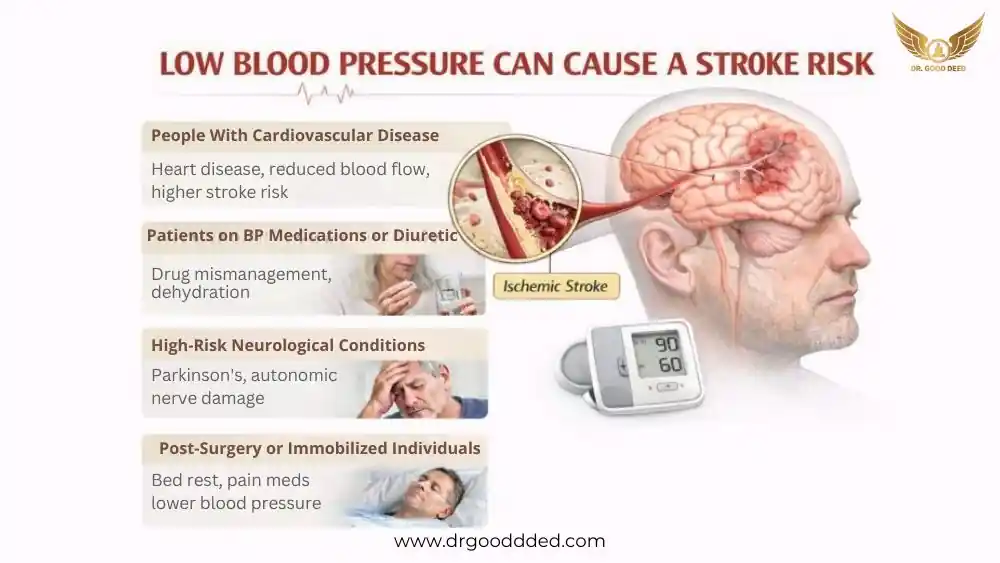
Not everyone with low BP faces the same danger. Risk depends on health status, medications, and body response.
People With Cardiovascular Disease
Heart disease reduces pumping strength. Low pressure further limits blood delivery. Patients experience higher stroke rates during hypotensive episodes in heart patients. In them, low blood pressure stroke risk remains significant.
Patients on BP Medications or Diuretics
Blood pressure drugs and water pills lower pressure on purpose. Dose changes, illness, or dehydration can push levels too low. This explains why low blood pressure can cause a stroke during medication mismanagement.
High-Risk Neurological Conditions
Conditions like Parkinson’s disease damage autonomic nerves that control BP. Sudden drops occur without warning. Neurology journals confirm higher stroke risk from hypotension in these patients.
Post-Surgery or Immobilized Individuals
After surgery, blood loss, pain drugs, and bed rest lower BP. Standing too soon can trigger sharp drops. Hospitals monitor this because low blood pressure stroke risk increases during recovery.
What Causes Dangerously Low Blood Pressure?
Understanding what causes low blood pressure is important because the underlying cause often determines how serious the condition is. While mild hypotension may be harmless, severe or persistent hypotension can reduce blood flow to the brain and other organs.
Medication Side Effects
Drugs for blood pressure, heart rhythm, depression, or pain can lower BP too much. Combined effects are common. Clinicians often adjust doses because low blood pressure can cause a stroke when pressure falls below brain’s needs.
Severe Dehydration
Vomiting, diarrhea, fever, or heat cause fluid loss. Blood volume drops. The CDC links dehydration-related hypotension to reduced cerebral perfusion, especially in older adults.
Endocrine or Autonomic Disorders
Hormone problems like adrenal insufficiency reduce BP control. Autonomic disorders impair reflexes. These conditions increase episodes where low blood pressure affects the brain suddenly.
Blood Loss or Shock
Bleeding reduces pressure fast. Shock states starve organs of oxygen. Emergency medicine research shows high stroke rates during prolonged hypotensive shock.
Heart Rhythm Problems
Irregular rhythms reduce effective pumping. Even with normal heart strength, flow drops. This explains how low blood pressure can cause a stroke in arrhythmia patients.
How to Reduce Stroke Risk
Hydration and Steady Salt Intake
Adequate fluids maintain blood volume. Salt helps retain fluids. Doctors often advise this for chronic hypotension, especially when low BP and brain blood flow symptoms appear.
Avoiding Sudden Posture Changes
Standing slowly gives blood vessels time to adjust. This reduces sharp drops that harm the brain.
Adjusting Medications With a Doctor
Never change drugs alone. Doctors balance stroke risk from high BP against danger from low BP. This careful control reduces events where low blood pressure can cause a stroke .
Monitoring BP During Illness or Heat Exposure
Illness and heat lower BP. Home monitoring helps detect danger early, before brain injury occurs.
When Compression Garments Help
Compression stockings reduce blood pooling in the legs. They support return flow to the heart and brain. This improves low BP and brain blood flow stability in selected patients.
When to Seek Emergency Help
Low BP Symptoms That Indicate Brain Distress
Fainting, confusion, vision loss, or weakness with low BP requires urgent care. These signs suggest active brain hypoperfusion. Some low blood pressure symptoms, such as dizziness, blurred vision, fainting, fatigue, nausea, and confusion, may seem mild at first. However, when these occur together with weakness, speech difficulty, or vision loss, they may indicate reduced brain blood flow requiring emergency care.
Combining Low BP Plus Neurological Symptoms
Low BP with speech trouble or one-sided weakness signals an emergency. Doctors treat this as a potential stroke until ruled out.
Why Waiting for Symptoms to Improve Is Dangerous
Symptoms may fade, but damage can continue. Delayed care worsens outcomes when hypotension causes stroke events to occur.
FAQ
Can Chronic Low Blood Pressure Damage the Brain?
Yes. Long-term hypotension can injure small brain vessels. Imaging studies show white matter damage over time, confirming how low blood pressure affects the brain beyond short-term symptoms.
What BP Is Too Low for Safe Brain Function?
There is no single number. Safety depends on symptoms and organ response. When pressure cannot maintain cerebral perfusion, low blood pressure can cause a stroke regardless of exact readings.
Can Postural Hypotension Lead to Stroke?
Repeated drops when standing can reduce brain oxygen often. In vulnerable people, this pattern increases stroke risk over time.
Is Fainting a Sign of a Low-BP-Related Stroke?
Fainting alone is not a stroke. Fainting with weakness, confusion, or speech trouble raises concern for brain injury from low BP.
Can Young Adults Get Strokes From Low BP?
Yes, though rare. Severe dehydration, drug effects, or heart rhythm issues can cause dangerous hypotension even in young adults.
How Long Can the Brain Tolerate Low Blood Flow?
Only minutes. Brain cells begin injured quickly. This explains the urgency when low blood pressure can cause a stroke during collapse or shock.
Does Low BP Increase TIA Risk?
Yes. Reduced flow can trigger transient ischemic attacks. Repeated TIAs often precede larger strokes.
Can Anxiety Cause BP to Drop and Mimic Stroke Symptoms?
Anxiety can lower BP and cause dizziness. True weakness or speech problems still require urgent evaluation to rule out stroke.
What Tests Diagnose Low BP–Related Brain Issues?
Doctors use BP monitoring, brain imaging, heart tests, and blood work. These identify causes of poor brain perfusion.
What Lifestyle Changes Protect the Brain From Low BP Risks?
Hydration, slow movements, medication review, and symptom awareness reduce events where low blood pressure stroke risk becomes dangerous.
This article is for informational purposes only and does not substitute professional medical advice, diagnosis, or treatment. Always consult a licensed healthcare provider about your symptoms.