

Food poisoning is a digestive illness that happens when you eat food or drink liquids contaminated with harmful bacteria, viruses, parasites, or toxins, which irritate the stomach and intestines, leading to symptoms like nausea, vomiting, diarrhea, cramps, and weakness.
Home remedies for food poisoning play a key role when symptoms are mild and stable, and medical care is not immediately required. Proper hydration replaces lost fluids and electrolytes, which prevents dehydration, the most common cause of complications. Gentle remedies like oral rehydration fluids, ginger, rice water, and probiotics help calm the stomach ulcer and reduce irritation. Choosing the right foods protects the gut while avoiding items that worsen inflammation.
What Is Food Poisoning?
Food poisoning happens when you eat food or drink liquids that carry harmful germs or toxins. These germs reach your digestive system and upset its normal balance. Home remedies for food poisoning work best when symptoms are mild and start suddenly.
How Contaminated Food Causes Infection
Food becomes unsafe when germs multiply before you eat it. This often happens due to poor hand hygiene, unsafe water, or food left at warm temperatures too long. Once swallowed, germs attach to the gut wall. They release toxins that irritate the lining. Your gut reacts by pushing contents out fast. This causes vomiting or diarrhea. Home remedies for food poisoning support your gut while your immune system clears the germs.
Common Bacteria, Viruses, And Parasites
Bacteria cause most food poisoning cases. Salmonella often comes from undercooked poultry or eggs. E. coli spreads through contaminated water or raw produce. Viruses like norovirus spread through unwashed hands and shared food. Parasites are less common but can cause longer illness. Home remedies for food poisoning help reduce symptoms but do not kill every germ.
Early Warning Signs To Identify
Symptoms often begin within six hours. You may feel nausea first. Belly discomfort follows. Loose stools may start soon after. Some people feel chills or body weakness. Acting early with home remedies for food poisoning can reduce fluid loss and gut irritation. Early care also helps you treat food poisoning at home safely when symptoms remain mild.
Symptoms Of Food Poisoning
Symptoms vary based on the germ and your health. Healthy adults often recover faster. Children and elders lose fluids faster. Home remedies for food poisoning aim to control symptoms without forcing the gut to work harder.
Vomiting And Nausea
Nausea comes from gut irritation and toxin signals to the brain. Vomiting removes harmful contents but also drains fluids. Frequent vomiting raises dehydration risk. Small sips of fluids help. Ginger-based drinks often calm nausea. These steps align with natural remedies for food poisoning that support gut comfort.
Diarrhea And Dehydration
Diarrhea flushes germs but removes water and salts. Dehydration causes dry mouth, dark urine, dizziness, and weakness. Children show signs faster. Oral rehydration fluids help replace lost electrolytes. Home remedies for food poisoning focus on steady hydration to protect organs.
Stomach Cramps And Fatigue
Cramps happen when gut muscles spasm to move toxins out. Pain comes in waves. Fatigue follows fluid loss and reduced calorie intake. Rest helps healing. Warm fluids often relax the gut. These approaches help treat food poisoning at home without stressing digestion.
Red-Flag Symptoms Requiring Urgent Care
Some symptoms need medical care. These include blood in stool, high fever, stiff neck, or confusion. Severe weakness also matters. These signs suggest complications. Home remedies for food poisoning do not replace medical care in these cases.
Best Home Remedies For Food Poisoning
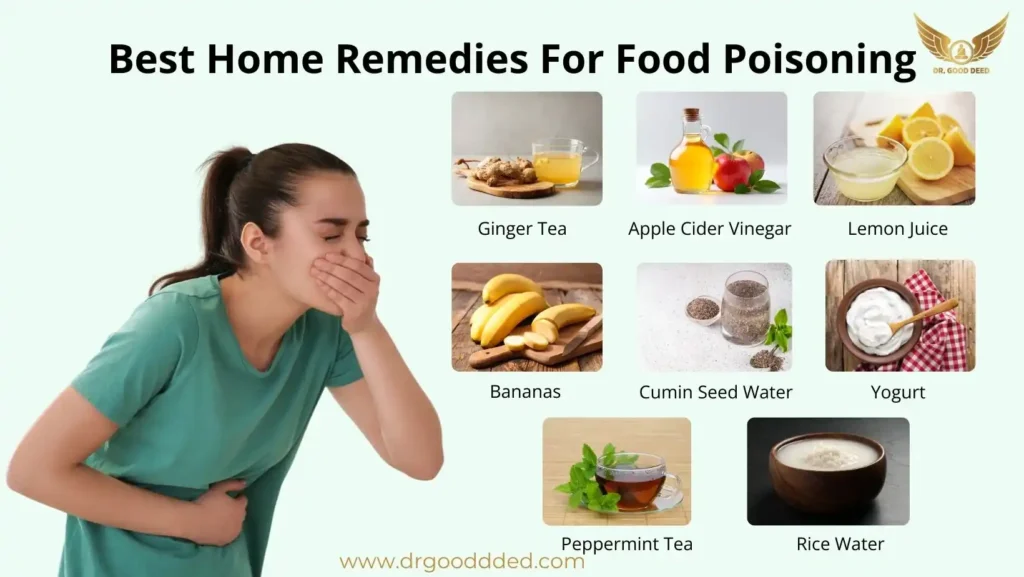
Mild food poisoning improves with supportive care. The goal is hydration, gut protection, and symptom control. Home remedies for food poisoning work best when used early and consistently. They also help you decide what to eat during food poisoning and what to avoid.
ORS (Oral Rehydration Solution) For Hydration
ORS replaces water, sodium, and potassium lost through vomiting and diarrhea. It helps prevent dehydration and kidney stress. Sip small amounts often. Large gulps can trigger vomiting. ORS supports natural remedies for food poisoning by keeping blood volume stable. This is the most important step among home remedies for food poisoning .
Ginger Tea To Reduce Nausea
Ginger affects stomach emptying and nausea signals in the brain. Warm ginger tea often reduces vomiting frequency. Use fresh ginger slices when possible. Drink slowly. Ginger works well with natural ways to stop vomiting from food poisoning when nausea feels constant.
Apple Cider Vinegar For Stomach Support
Apple cider vinegar increases stomach acidity. Higher acidity can slow growth of some bacteria. Mix a small amount with warm water. Avoid this remedy if you have ulcers or severe pain. Evidence remains limited, so results vary. Use this as part of home remedies for food poisoning , not a cure.
Lemon Juice For Antibacterial Benefits
Lemon juice adds citric acid, which creates an unfriendly environment for some microbes. Warm lemon water may also stimulate saliva and digestion. Avoid strong concentrations. Too much acid can worsen nausea. This method fits within natural remedies for food poisoning when used gently.
Bananas To Restore Electrolytes
Bananas provide potassium, which diarrhea removes quickly. They are soft and easy to digest. Mashed bananas reduce gut strain. They also support energy levels. Bananas guide what to eat during food poisoning once vomiting slows.
Cumin Seed Water For Digestive Relief
Cumin seeds support digestion and reduce gas buildup. Warm cumin water often eases cramps. This remedy helps gut comfort rather than killing germs. It complements home remedies for food poisoning that focus on symptom relief.
Yogurt Or Probiotics To Restore Gut Balance
Food poisoning disrupts healthy gut bacteria. Plain yogurt contains live cultures that help restore balance. Start only after vomiting settles. Avoid sweetened yogurt. This approach supports natural remedies for food poisoning by improving gut recovery.
Peppermint Tea To Soothe The Stomach
Peppermint relaxes smooth muscles in the gut. This can reduce cramps and bloating. Warm tea often feels calming during recovery. Peppermint pairs well with natural ways to stop vomiting from food poisoning when nausea is linked to cramps.
Rice Water To Reduce Diarrhea
Rice water thickens stool and reduces fluid loss. It coats the gut lining and calms irritation. Sip slowly. Rice water also helps guide what foods to avoid during food poisoning by replacing harsh foods with gentle options.
At this stage, avoid heavy meals. Choose fluids and soft foods only. Avoid fried food, alcohol, and caffeine. These choices support home remedies for food poisoning and reduce relapse risk. Knowing foods to avoid during food poisoning matters as much as choosing the right remedies.
Natural Ways To Stop Vomiting
Vomiting is the body’s way of pushing toxins out fast. It protects you, but repeated vomiting causes dehydration and weakness. You should focus on calming the stomach without blocking this natural defense. These natural ways to stop vomiting from food poisoning aim to reduce frequency, not force vomiting to stop completely.
Ginger Water Sips
Ginger affects nerve signals between the stomach and brain. It helps reduce the urge to vomit and supports stomach emptying. Take very small sips every five to ten minutes. Large amounts can trigger gagging. Ginger works best after the first few vomiting episodes slow down. It is one of the safest natural ways to stop vomiting from food poisoning when nausea feels constant.
Cool Compress For Nausea Control
Nausea often worsens when body temperature rises. A cool compress on the forehead or neck lowers stress signals. It also reduces dizziness linked to dehydration. This method does not treat infection but helps you tolerate fluids better. Better fluid intake improves results from home remedies for food poisoning .
Avoiding Strong Odors And Heavy Foods
Strong smells activate nausea centers in the brain. Cooking smells, perfumes, and fried food odors can trigger vomiting even without eating. Stay in a well-ventilated room. Avoid fatty or spicy foods completely. These steps support natural ways to stop vomiting from food poisoning and prevent relapse.
What To Eat During Food Poisoning
Food choice affects recovery speed. Eating the wrong food can restart vomiting or diarrhea. Eating the right food helps repair the gut lining. Knowing what to eat during food poisoning matters once vomiting slows.
BRAT Diet Basics
The BRAT diet includes bananas, rice, applesauce, and toast. These foods are bland and low in fiber. They reduce stool frequency and gut irritation. Bananas replace potassium lost in diarrhea. Rice binds excess fluid in the gut. Use this diet for the first 24 to 48 hours. It forms the base of what to eat during food poisoning .
Hydrating Broths And Soups
Clear broths provide sodium and fluids without stressing digestion. Chicken or vegetable broth works best. Avoid cream-based soups. Sip slowly. Warm liquids also relax stomach muscles. Broths help you treat food poisoning at home by supporting hydration and energy.
Electrolyte-Rich Drinks
Electrolytes maintain nerve and muscle function. Oral rehydration fluids restore sodium and potassium lost through vomiting and diarrhea. Coconut water works if tolerated. Avoid sugary sports drinks. Excess sugar can worsen diarrhea. These drinks are essential when deciding what to eat during food poisoning , even though they are liquids.
Easily Digestible Foods
After 24 hours, you may add boiled potatoes, plain crackers, or soft oatmeal. Introduce one food at a time. Stop if pain or nausea returns. Gradual refeeding protects the gut. This approach strengthens the effect of home remedies for food poisoning .
Foods To Avoid During Food Poisoning
Avoiding certain foods prevents symptom flare-ups. Many relapses happen due to poor food choices. Knowing foods to avoid during food poisoning is as important as knowing what to eat.
Dairy And Spicy Foods
Dairy products increase gas and cramps because the gut temporarily loses lactase, the enzyme that digests milk sugar. Spices irritate the gut lining. Avoid milk, cheese, chili, and sauces until stools normalize.
Junk Food, Caffeine, And Sugary Drinks
Fried food slows digestion and increases nausea. Caffeine raises urine output and worsens dehydration. Sugary drinks pull water into the gut and worsen diarrhea. These are key foods to avoid during food poisoning during the entire illness.
Raw Foods And Leftover Meals
Raw vegetables may carry germs and require more digestion. Leftover food can contain toxins if stored improperly. Eat freshly prepared, well-cooked meals only. This reduces reinfection and supports natural remedies for food poisoning .
Lifestyle Tips For Recovery
Recovery depends on daily habits, not just food. Small mistakes delay healing. These steps improve outcomes when using home remedies for food poisoning .
Hydration Routine For Recovery
Drink small amounts every ten minutes instead of large volumes at once. Monitor urine color. Pale yellow urine signals good hydration. Dark urine signals dehydration. This routine prevents kidney stress and supports healing.
Rest And Gradual Food Reintroduction
The immune system works better during rest. Avoid physical activity for at least one day. Add foods slowly. Rushing meals often triggers relapse. Rest improves the success rate of treating food poisoning at home .
Hygiene Practices To Prevent Reinfection
Wash hands after bathroom use and before eating. Clean surfaces touched during illness. Avoid preparing food for others until symptom-free for at least 48 hours. Hygiene protects others and prevents repeat infection.
When To Seek Medical Help
Some cases need medical care. Home care has limits. Do not delay help when warning signs appear. Home remedies for food poisoning do not replace professional care.
Severe Dehydration Symptoms
Signs include no urine for eight hours, sunken eyes, dry mouth, and confusion. Children and elders are at higher risk. IV fluids may be required.
Vomiting Lasting More Than 24 Hours
Ongoing vomiting prevents hydration. This raises the risk of electrolyte imbalance. Medical evaluation becomes necessary.
Blood In Stool Or High Fever
Blood indicates gut injury or severe infection. A fever above 101°F suggests systemic involvement. These signs require urgent care.
High-Risk Groups Needing Urgent Care
Infants, pregnant individuals, elders, and people with weak immunity need early medical advice. They should not rely only on home remedies for food poisoning .
FAQs
What Is The Fastest Home Remedy For Food Poisoning?
The fastest relief comes from oral rehydration fluids combined with rest. Hydration prevents complications and supports recovery better than any single herb or food.
Can Food Poisoning Go Away Without Treatment?
Yes, many mild cases resolve within one to three days. Fluids, rest, and careful food choices allow you to treat food poisoning at home safely.
How Long Does Food Poisoning Usually Last?
Most cases last one to three days. Viral causes may resolve faster. Some bacterial infections last longer depending on the germ and hydration status.
What Should I Drink When I Have Food Poisoning?
Drink oral rehydration fluids, water, and clear broths. These choices support hydration and reduce strain on the digestive system during illness.
Which Foods Help Settle The Stomach?
Bananas, rice, applesauce, and toast calm the gut. These foods form the base of what to eat during food poisoning during early recovery.
Can I Take Medicine For Food Poisoning At Home?
Anti-diarrhea medicines are not always advised. They can trap germs inside. Doctors usually decide based on age, cause, and symptom severity.
Is Vomiting Normal During Food Poisoning?
Yes, vomiting is common and helps remove toxins. Use natural ways to stop vomiting from food poisoning only when vomiting becomes frequent or exhausting.
When Should I Visit A Doctor?
Visit a doctor if symptoms worsen, dehydration signs appear, or illness lasts more than three days. High-risk groups should seek help earlier.
Can Food Poisoning Lead To Complications?
Yes, severe dehydration, kidney stress, and electrolyte imbalance can occur. Early hydration and rest reduce these risks significantly.
How Can Food Poisoning Be Prevented?
Wash hands, cook food thoroughly, store food safely, and avoid unsafe water. Prevention is always safer than relying on foods to avoid during food poisoning later.