Fever is not an illness by itself, but a body signal that shows your immune system is reacting to an infection, inflammation, or another internal stress. In many cases, fever helps slow germs and supports immune cells, which means it is not always harmful.
Home remedies for fever focus on keeping your body stable while this process happens. The main goals are hydration, rest, and safe temperature control, not forcing the temperature down fast. Mild fever often needs comfort care rather than aggressive treatment.
Smart home care reduces dehydration risk, lowers strain on the heart, and helps you feel better without blocking recovery. When used correctly, home-based care can support adults, children, and older people safely.
What Causes Fever
Immune Response And Fever Explained
When germs enter your body, your immune system releases chemical signals. These signals tell your brain to raise your temperature set point. You may feel cold and start shaking first. That is your body making heat.
Later, when the set point drops, you sweat to lose heat. Fever can slow some germs and help immune cells respond faster. Fever is a common sign of illness and may help fight infections.
Fever is a sign, not a diagnosis. Two people can have the same temperature but different risk. Your age, health history, and other symptoms matter.
Common Triggers (Viral, Bacterial, Inflammatory)
Viruses cause many fevers. A cold, flu-like illness, and stomach viruses often bring fever. Some bacterial infections also cause fever, like a urine infection or strep throat.
Inflammation can raise the temperature too. This can happen after some vaccines or during flare-ups of autoimmune illness. Heat illness can also raise temperature, but it starts from heat exposure, not infection. If you get very hot outdoors, that needs faster action.
Mild Vs High Fever, Quick Triage
A common fever cutoff is 100.4°F (38°C). Mild fever often stays below 102°F (38.9°C). With a mild fever and no other problems, you often only need fluids and rest.
High fever can push your body harder. In adults, many clinicians take 103°F (39.4°C) seriously, especially with other symptoms. Your risk goes up when fever lasts several days. Warning signs that need medical care are trouble breathing, chest pain, rash, or dehydration.
That is why home remedies for fever should always include symptom checks, not only temperature checks.
Natural Remedies For Fever
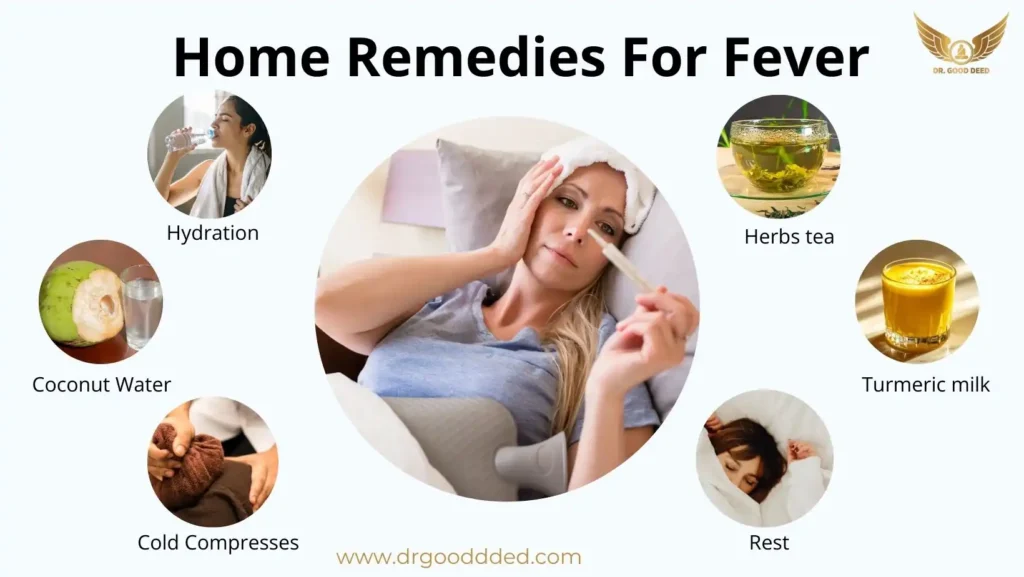
Hydration: ORS, Coconut Water, Broths
Oral Rehydration Salts (ORS) matter when you sweat a lot, or you have diarrhea or vomiting. ORS is a glucose-electrolyte solution that treats dehydration by mouth and works across age groups. The glucose helps your gut absorb salt and water better. That is the “why” behind ORS.
Use packaged ORS when possible. Mix it exactly as the packet says. A practical caution: some drinks market themselves as “ORS-style” hydration. They may not match the WHO-type formula. So when you need real ORS, choose a proper ORS sachet and mix it with the right water volume.
Coconut water can help you sip more fluids. Broths also help because they add fluid plus some salt. That salt can support hydration when you sweat. If you feel nauseated, take smaller sips often. That can work better than big gulps.
Cooling Compresses And Lukewarm Baths
Cooling helps most when you feel hot and restless. Use a cool, damp cloth on your forehead, neck, or armpits. Replace it once it warms up.
A lukewarm bath can also help. Keep the water lukewarm, not cold. Cold water can trigger shivering. Shivering makes heat. That can push your temperature up. If you start shivering, stop the cooling and dry off.
These comfort steps count as home remedies for fever because they support heat loss without stressing your body.
Rest, Clothing, Room Ventilation
Rest supports immune work. When you keep moving, you burn energy your body could use for recovery. Wear light clothing. Use a light sheet. Heavy blankets can trap heat.
Keep the room airy. A gentle fan can help, but do not blast cold air onto your skin. If you feel chills, add one light layer. Remove it when chills stop. This simple balance is part of home remedies for fever that many people get wrong.
Fever Relief Home Treatment
How To Use Antipyretic Vs When To Avoid Meds
Sometimes you need medicine, not because fever is “bad,” but because you feel miserable. Fever reducers can lower temperature and reduce aches. Common options include acetaminophen (paracetamol) and ibuprofen. Fever treatment depends on symptoms and your situation.
You should avoid aspirin in children and teens. Giving aspirin to children is harmful because of the risk of Reye’s syndrome, a rare but serious illness that can harm the liver and brain.
Also, avoid fever medicines when they do not fit your health. Ibuprofen may not suit you if you have kidney disease, stomach ulcers, or dehydration risk. Acetaminophen overdose can harm the liver. Dosage varies by age and condition. Doctors usually advise you to follow the label and avoid doubling up on similar products.
Used the right way, this is fever relief home treatment that supports comfort without unsafe promises.
Positioning, Oral Fluids, And Symptom Monitoring
When fever hits, you may feel dizzy when you stand. Lie down and rest. Sit up when you sip fluids. If nausea hits, take one or two mouthfuls every few minutes.
Monitor what matters most. Your breathing rate matters. Your alertness matters. Your urine output matters. Mild fever often needs only rest and fluids, which makes symptom checks your main job.
This watchful approach is part of fever relief home treatment that actually protects you.
Managing Fever In The Elderly And Comorbid Patients
Older adults may not mount a high fever even during serious infection. You may notice confusion, weakness, or reduced eating first. People with diabetes, heart disease, kidney disease, lung disease, or cancer also face higher risk from dehydration and infection stress.
If you are caring for someone high-risk, treat lower fevers more seriously. Pay attention to behavior changes and drinking ability. Dehydration is a reason to seek medical care, such as refusing fluids or very low urine output. In high-risk cases, home remedies for fever should not delay medical advice.
Natural Ways To Lower Body Temperature
Evaporative Cooling Technique (How-To)
Evaporative cooling means water leaves your skin as vapor and carries heat away. You can do this safely at home. Wipe your arms, legs, and torso with lukewarm water. Let it air-dry. Keep airflow gentle in the room. Stop if shivering starts.
This technique can help you feel calmer when a fever makes you restless. It is one of the most practical natural ways to lower body temperature because it does not shock your body.
Foods And Fluids That Support Cooling
Cooling starts with circulation and hydration. Water helps. ORS helps when you lose salts. Broth helps with salt plus fluid. If you tolerate it, warm herbal tea can soothe your throat. Avoid very hot drinks if they make you sweat too much.
You will also do better when you choose easy fluids and light meals. Later, foods to eat during fever can support hydration and energy without upsetting your stomach. You can also consider fever treatment without medicine for mild cases where you stay alert, hydrated, and stable.
When Cooling Is Harmful, Precautions
Do not use ice baths. Do not use alcohol rubs. Cold methods can trigger shivering and raise heat production. Alcohol on skin can also be unsafe, especially for children.
Be extra careful with infants and older adults. They lose heat faster. If you suspect heatstroke from heat exposure, treat it as urgent. Heatstroke can cause confusion and very high temperature. It is not a simple fever.
Safe cooling is still part of natural ways to lower body temperature , but it must stay gentle and controlled.
Foods To Eat During Fever
Easy-To-Digest Meals: Soups, Porridge, Khichdi
When you have a fever, your digestion slows down. Heavy meals can make nausea worse. Soft foods help your body use energy for healing, not digestion. Clear vegetable soup gives fluids and warmth without stress.
Rice porridge is gentle and easy to swallow. Khichdi works well because it mixes rice and lentils in a soft form. Bland diets are good during fever because they reduce stomach load and vomiting risk. These are safe foods to eat during fever when appetite is low but nutrition still matters.
Hydrating Fruits And Electrolyte Sources
Fruits with high water content support hydration. Watermelon, oranges, papaya, and pears help replace lost fluids. Bananas add potassium, which helps muscle and nerve function during illness.
Coconut water provides natural electrolytes and supports fluid balance. Fluids with some salts are useful when fever causes sweating. These foods to eat during fever work best when taken in small portions across the day.
Foods To Avoid While Febrile
Avoid oily and fried foods because they slow digestion. Spicy foods may irritate your throat or stomach. Sugary drinks can worsen diarrhea in some people. Alcohol increases dehydration and should be avoided. Excess caffeine may increase fluid loss. Choosing the wrong foods can delay recovery even when you use home remedies for fever correctly.
Fever Treatment Without Medicine
When You Can Treat Without Meds, Criteria
You can often manage fever without drugs if it stays mild. You should be alert, able to drink fluids, and breathing normally. Fever under about 102°F in adults often fits this range. Rest, fluids, and cooling may be enough. This approach fits fever treatment without medicine when no danger signs appear.
Herbal Options With Evidence (Ginger, Tulsi, Turmeric)
Some herbs may support comfort, but evidence is limited. Ginger tea can ease nausea and throat discomfort. Small clinical studies suggest ginger may reduce inflammation, but it does not cure infection.
Tulsi tea may support cough relief in mild viral illness, though large trials are lacking. Turmeric contains curcumin, which has anti-inflammatory effects in lab studies, but human fever data remains limited. Use these only as support, not treatment. This careful use fits fever treatment without medicine when symptoms stay mild.
Dosing And Safety Notes For Herbs
Use small amounts only. A few ginger slices in warm water are enough. Tulsi leaves should be steeped lightly. Turmeric should be a pinch mixed into food. Stop if symptoms worsen.
Herbs may interact with medicines or pregnancy. Doctors usually advise caution because dosing varies by age and health. Home remedies for fever should never cause new problems.
Home Fever Care For Children And Infants
Age-Specific Red Flags And Safe Remedies
Children lose fluids faster than adults. Infants under three months need urgent medical advice for any fever. In older children, watch behavior closely. Lethargy, nonstop crying, poor drinking, or stiff neck are warning signs. Safe care includes frequent fluids, light clothing, and rest. Lukewarm sponging may improve comfort. Avoid cold baths and alcohol rubs. Home remedies for fever in children must stay gentle.
How To Measure Temperature Correctly In Kids
Use a digital thermometer. Underarm readings work for screening but may read lower. Oral readings suit older children who can hold the thermometer properly. Rectal readings give core temperature in infants but should follow product guidance. Measure when the child is calm and dry. Record both the number and time.
When To Call Pediatric Care
Call a clinician if fever lasts over 24 hours in children under two years. Call if it lasts over three days in older kids. Seek urgent care for breathing trouble, seizures, spreading rash, or dehydration signs. Fever relief home treatment should never delay care when red flags appear.
When To Seek Medical Help
High Fever Thresholds And Duration Limits
Adults should seek care for fever at or above 103°F, or if fever lasts more than three days. Lower thresholds apply if you have chronic illness, weak immunity, or pregnancy. Travel-related fever needs urgent testing. Home remedies for fever are not enough in these cases.
Concerning Symptoms: Rash, Breathing, Confusion
Trouble breathing, chest pain, confusion, or fainting are urgent signs. A fast-spreading rash with fever may signal serious infection. Severe headache with neck stiffness also needs evaluation. These signs matter more than the thermometer number.
Dehydration, Persistent Vomiting, Seizure Risk
Very little urine, dry mouth, or dizziness suggest dehydration. Persistent vomiting blocks oral fluids. High fever can trigger seizures in some children. A first seizure always needs medical review. Natural remedies for fever cannot manage these risks alone.
Prevention And Recovery Tips After A Fever
Rest, Graded Return To Activity
After fever breaks, your body still needs time. Rest for one or two days. Resume activity slowly. Overexertion can prolong fatigue. Sleep supports immune repair and hormone balance.
When To Test If Symptoms Persist
If cough, pain, or fever returns, testing may be needed. Viral and bacterial illnesses can look alike early. Timely tests guide proper care and reduce complications.
Immunity-Supporting Habits
Regular sleep, balanced meals, and hand hygiene reduce repeat illness. Protein supports tissue repair. Fruits and vegetables support immune cells. These habits strengthen recovery beyond natural ways to lower body temperature .
FAQs
What Is The Fastest Home Remedy To Reduce Fever Safely?
The fastest relief usually comes from fluids plus gentle cooling. Sip ORS or water often and use lukewarm sponging. These home remedies for fever improve comfort without stressing the body.
Can I Treat Fever Without Medicine At Home?
Yes, if fever is mild and you stay alert and hydrated. Rest, fluids, and cooling often work. This approach matches fever treatment without medicine when no danger signs exist.
Which Natural Remedies Actually Lower Temperature?
Lukewarm sponging and evaporative cooling help heat leave the body. Hydration supports sweating. These natural remedies for fever reduce discomfort but do not cure the infection.
Is Apple Cider Vinegar Or Cold Water Better For Fever?
Neither is advised. Cold water can cause shivering, which raises heat. Vinegar rubs lack evidence and may irritate skin. Use natural ways to lower body temperature that stay gentle.
What Should I Feed Someone With A Fever?
Offer soft meals, soups, porridge, fruits with water, and electrolyte fluids. These foods to eat during fever support hydration and energy without stomach strain.
How Long Does Viral Fever Usually Last?
Most viral fevers last two to three days. Some last up to a week. If fever persists or worsens, medical review is needed, despite using home remedies for fever .
When Is A Fever Dangerous And Needs Urgent Care?
High fever, confusion, breathing trouble, severe dehydration, rash, or seizures need urgent care. Fever relief home treatment should not delay emergency help.
Can Fevers Be Managed Naturally In Children?
Mild fevers often can. Focus on fluids, rest, and comfort. Watch behavior closely. Natural remedies for fever in children require careful monitoring.
Are Herbal Remedies Safe During Pregnancy?
Safety data is limited. Many herbs may affect pregnancy. Doctors usually advise fluids and rest first. Avoid herbs unless approved. Fever treatment without medicine still needs caution.
How Can I Avoid Dehydration During A Fever?
Drink small amounts often, use ORS when sweating or diarrhea occurs, and monitor urine output. This supports recovery alongside home remedies for fever .
This article is for informational purposes only and does not substitute professional medical advice, diagnosis, or treatment. Always consult a licensed healthcare provider about your symptoms.