
Causes of testicular pain stem from problems that affect blood flow, infection, physical injury, nerve signaling, or pressure from nearby organs. When the blood supply drops, pain turns sudden and severe because testicular tissue lacks oxygen.
Infections such as epididymitis or orchitis cause pain through swelling and internal pressure as the body fights bacteria or viruses. Direct trauma, sports injuries, or repeated strain irritate nerves and soft tissue, leading to lingering discomfort.
15 Common Causes Of Testicular Pain
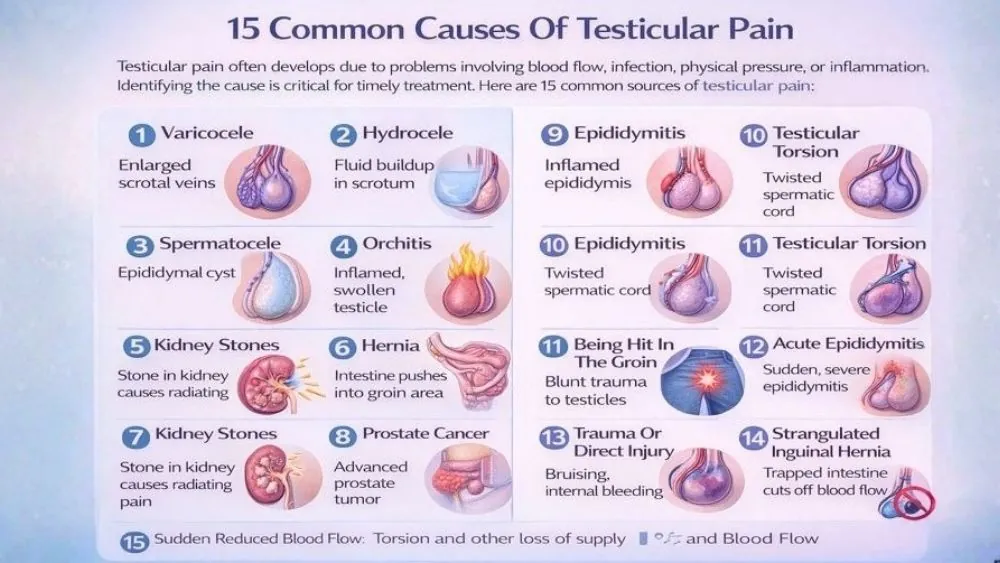
Testicular pain often develops due to problems involving blood flow, infection, physical pressure, or inflammation. Many conditions affect nearby organs, but still send pain signals to the testicles because pelvic nerves overlap. Identifying the exact source matters because treatment and urgency differ widely.
1. Varicocele
A varicocele happens when the veins inside the scrotum fail to drain blood properly. Blood pools and raises the temperature around the testicle. You often feel a dull ache that worsens after standing or exercise. Pain improves when lying down. Varicoceles reduce sperm quality due to heat stress on testicular tissue. This condition appears more on the left side because of the vein anatomy.
2. Hydrocele
A hydrocele forms when fluid collects around the testicle. The scrotum looks swollen, but the pain stays mild. You may feel heaviness rather than sharp pain. Hydroceles occur after inflammation, injury, or infection. In adults, doctors rule out tumors because fluid buildup sometimes masks deeper problems.
3. Spermatocele
A spermatocele is a cyst filled with sperm and fluid near the epididymis. It feels smooth and movable. Pain is uncommon unless it grows large. This condition does not raise cancer risk and rarely affects fertility. Observation is the usual approach unless discomfort increases.
4. Orchitis
Orchitis means testicular inflammation. Viral infections such as mumps remain a known cause. Bacterial infections may also trigger it. Pain appears suddenly with swelling, fever, and tenderness. Severe orchitis may damage sperm-producing cells. This is why doctors stress early care.
5. Testicular Tumor
Testicular tumors often start without pain. Some men feel dull aching or heaviness as the mass grows. Any firm lump inside the testicle needs urgent testing. Cancer spreads faster in younger men if ignored. Early treatment has very high survival rates.
6. Kidney Stones
Kidney stones cause intense pain that travels from the back to the groin. This is called referred pain, meaning the source sits elsewhere. Nerves shared between the kidney and testicle carry the pain signal. Blood in urine and nausea often occur at the same time.
7. Hernia
An inguinal hernia develops when abdominal tissue pushes through a weak groin wall. Pain increases with lifting or coughing. The scrotum may swell when standing. A trapped hernia cuts the blood supply and becomes dangerous.
8. Prostate Cancer
Advanced prostate cancer may cause testicular discomfort due to nerve involvement. Pain usually comes with urinary changes or bone pain. Early prostate cancer rarely causes scrotal pain.
9. Epididymitis
Epididymitis causes swelling and tenderness behind the testicle. Bacteria move backward from the urinary tract or prostate. Pain develops over hours or days. Walking and sitting become uncomfortable. This condition remains one of the common causes of testicular pain in clinics.
10. Testicular Torsion
Testicular torsion occurs when the testicle twists and blocks blood flow. Pain starts suddenly and becomes severe within minutes. Nausea and vomiting often follow. Tissue damage begins within hours. Emergency surgery is required to save the testicle. Among all causes of testicular pain , this one demands the fastest response.
11. Being Hit In The Groin
Blunt trauma causes immediate pain due to nerve shock and tissue compression. Most cases heal with rest and ice. Severe swelling or persistent pain suggests deeper injury and needs imaging.
12. Acute Epididymitis
This is a sudden form of epididymitis with rapid swelling, redness, and warmth. Fever may occur. Delayed treatment increases the risk of abscess formation.
13. Trauma Or Direct Injury
Sports injuries and accidents cause bruising and internal bleeding. Pain severity varies. Ultrasound helps rule out rupture when swelling persists.
14. Strangulated Inguinal Hernia
This occurs when herniated tissue loses its blood supply. Pain becomes constant and severe. The scrotum may darken in color. Surgery is urgent.
15. Sudden Reduced Blood Flow
Any event that lowers the blood supply causes sharp pain. Torsion is the main reason. Rare clotting disorders may also contribute. These remain the medically accepted causes of testicular pain seen across age groups.
Testicular Torsion Pain Causes
Testicular torsion occurs when blood flow to the testicle becomes blocked, leading to rapid tissue damage. The pain intensity relates directly to how long the circulation remains cut off. Even a few hours of delay can result in permanent loss of testicular function.
Twisting Of The Spermatic Cord
The spermatic cord carries blood to the testicle. Twisting blocks oxygen delivery. Nerve pain follows almost instantly. Permanent damage begins within four to six hours.
Congenital Bell-Clapper Deformity
Some males are born with loose testicular attachments. This allows free rotation inside the scrotum. Teenagers face the highest risk due to rapid growth.
Rapid Testicular Movement During Sleep
Many torsion cases occur at night. Muscle relaxation allows sudden movement that twists the cord.
Cold Exposure Triggering Cremaster Reflex
Cold causes muscles to pull the testicles upward. Sudden movement increases torsion risk in susceptible individuals.
Epididymitis Testicular Pain
Epididymitis causes pain due to swelling and irritation of the epididymis, the structure that stores and carries sperm. Inflammation increases pressure inside the scrotum, which explains the gradual pain buildup rather than the sudden onset seen in torsion.
Bacterial Infection
Common urinary bacteria travel backward through the vas deferens. Pain increases gradually. Swelling and warmth appear behind the testicle.
Sexually Transmitted Infections
Chlamydia and gonorrhea remain frequent triggers in sexually active men under forty. Pain may follow unprotected sex.
Urinary Tract Infection Spread
Older men with prostate enlargement face a higher risk. Difficulty urinating often appears first.
Inflammation Due To Urine Backflow
Heavy lifting or straining may force urine backward into the epididymis. Chemical irritation causes pain without infection. Epididymitis remains among the causes of testicular pain that respond well to early treatment.
Testicular Pain Causes Without Swelling
Pain without visible swelling often points toward nerve involvement or early-stage inflammation. These cases confuse many men because the testicle looks normal despite discomfort. Ignoring this pain can allow hidden conditions to worsen silently.
Nerve-Related Pain
Irritated nerves cause burning or shooting pain. The testicle appears normal. Sitting may worsen symptoms.
Referred Pain From Kidney Stones
Shared nerve pathways send pain to the testicle even when the problem lies in the kidney.
Early Epididymitis
Pain may start before swelling develops. Early antibiotics prevent progression.
Muscle Strain In The Groin
Strained abdominal or thigh muscles send pain into the scrotum during movement.
Chronic Pelvic Pain Syndrome
This condition causes long-term discomfort without a clear infection. Pain may shift locations and vary in intensity. These conditions still fall under the causes of testicular pain and require evaluation when persistent.
Non-Testicular Causes Of Scrotal Pain
Not all scrotal pain starts inside the testicle. Several conditions outside the testicle can still trigger pain signals there because nerves overlap in the pelvis and lower abdomen. These remain overlooked causes of testicular pain , especially when exams show a normal testicle.
Kidney Stones
Kidney stones often cause sharp pain that begins in the back or side. The pain travels downward into the groin and testicle. This happens because the ureter (urine tube) shares nerve pathways with the testicle.
You may notice blood in urine, nausea, or sudden waves of pain. The testicle itself remains normal on exam, which helps doctors identify this as referred pain rather than a local testicular problem.
Inguinal Hernia
An inguinal hernia allows abdominal tissue to push through a weak spot in the groin. Pain increases during lifting, coughing, or standing. You may feel a dragging sensation in the scrotum. In severe cases, trapped tissue loses blood supply and causes constant pain. This condition remains one of the common causes of testicular pain seen in emergency rooms.
Lower Back Or Spine Issues
Spinal disc problems compress nerves that supply the groin. Pain may travel into one testicle without swelling or redness. Sitting or bending often worsens symptoms. Many men chase testicular treatment for months before doctors identify the spine as the source.
Nerve Compression
Entrapped nerves in the pelvis or groin cause sharp, electric pain. Tight clothing, prior surgery, or scar tissue may trigger it. Pain increases with pressure or prolonged sitting. This type of pain explains many causes of testicular pain without swelling .
FAQs
What Is The Most Common Cause Of Testicular Pain?
Infections like epididymitis rank highest among the common causes of testicular pain , especially in sexually active men and older men with urinary issues.
Can Testicular Pain Go Away On Its Own?
Mild injuries or muscle strain may resolve. Persistent pain lasting over one hour needs evaluation to rule out serious causes of testicular pain .
Is Testicular Pain Always Serious?
No, but sudden or severe pain raises concern for torsion or infection. These conditions demand urgent care to prevent tissue damage.
Can Exercise Cause Testicular Pain?
Yes. Poor support, muscle strain, or impact can cause testicular pain after exercise , especially during running, cycling, or weightlifting.
What Causes Testicular Pain Without Swelling?
Nerve irritation, kidney stones, early infection, or muscle strain remain the leading causes of testicular pain without swelling .
How Do You Know If Testicular Pain Is Torsion?
Sudden severe pain, nausea, and a high-riding testicle strongly suggest torsion. This is a surgical emergency within hours.
Can Infections Cause Long-Term Testicular Pain?
Yes. Untreated infections may cause scar tissue and lead to chronic pain or fertility problems, especially after repeated episodes.
Is Testicular Pain Linked to Cancer?
Cancer rarely causes pain early. Any hard lump, heaviness, or persistent ache still requires testing to rule out malignancy.
Should Sudden Testicular Pain Be Treated As An Emergency?
Yes. Sudden pain always warrants urgent evaluation because torsion remains one of the most dangerous causes of testicular pain .
When Should Testicular Pain Not Be Ignored?
Pain with swelling, fever, nausea, or lasting longer than one hour should never be ignored due to the risk of permanent damage.