
Early-stage gout symptoms often arrive long before the classic midnight joint explosion most people associate with gout. Uric acid silently builds up in the bloodstream, and by the time real pain hits, the crystal deposits in your joints are already well-formed. In India, gout affects roughly 0.12% to 0.16% of the general population, but urban rates are climbing with changing diets and alcohol habits.
This guide covers the first warning signs, what triggers them, how to treat them early, and when to get medical help.
Early Warning Signs of High Uric Acid
The early warning signs of high uric acid are subtle signals your body sends weeks or months before a full flare hits.
Mild Joint Discomfort Before a Flare
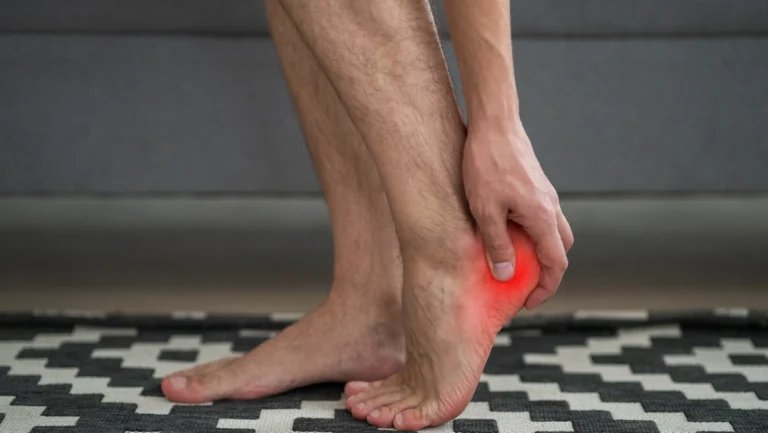
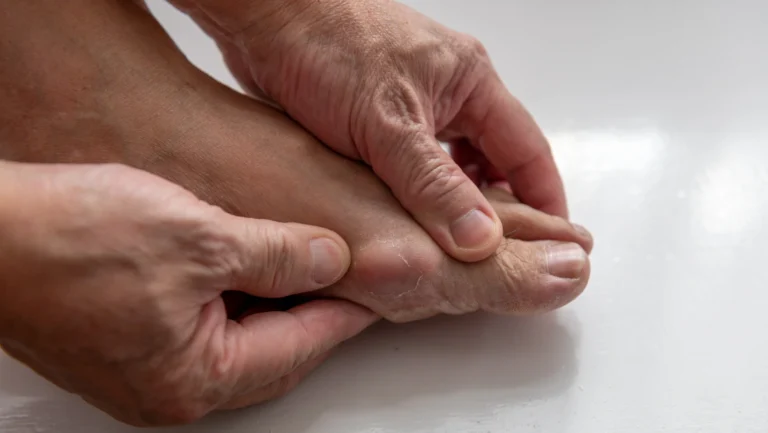
A dull ache in the big toe, ankle, or knee that appears at night and clears by morning. It is ignored because it doesn’t feel like “real” pain. But this is uric acid microcrystals beginning to irritate the joint lining. The discomfort fades, so most people assume it was nothing. It wasn’t.
Occasional Stiffness in Joints
Joints feel stiff for 10 to 20 minutes after waking or after sitting still. This is different from arthritis stiffness. With early gout, the stiffness is localized, usually in one joint, and it clears up fast once you start moving. Arthritis stiffness lasts longer and spreads.
Tingling or Sensitivity in the Big Toe
The metatarsophalangeal joint (base of the big toe) is where uric acid crystals settle first in about 75% of gout cases. Before any visible swelling, some people feel a mild tingling or unusual sensitivity when the bedsheet touches the toe at night. That’s not nerve damage. That’s urate crystals pressing against joint tissue.
Fatigue or Low-Grade Inflammation Signals
Uric acid triggers a low-grade inflammatory response even before a visible flare. Some people feel general fatigue, mild body aches, or a vague feeling of being unwell for a few days before the joint symptoms appear. These are cytokines (your body’s inflammation messengers) that activate in response to crystal deposits.
First Symptoms of Early Gout in the Toe
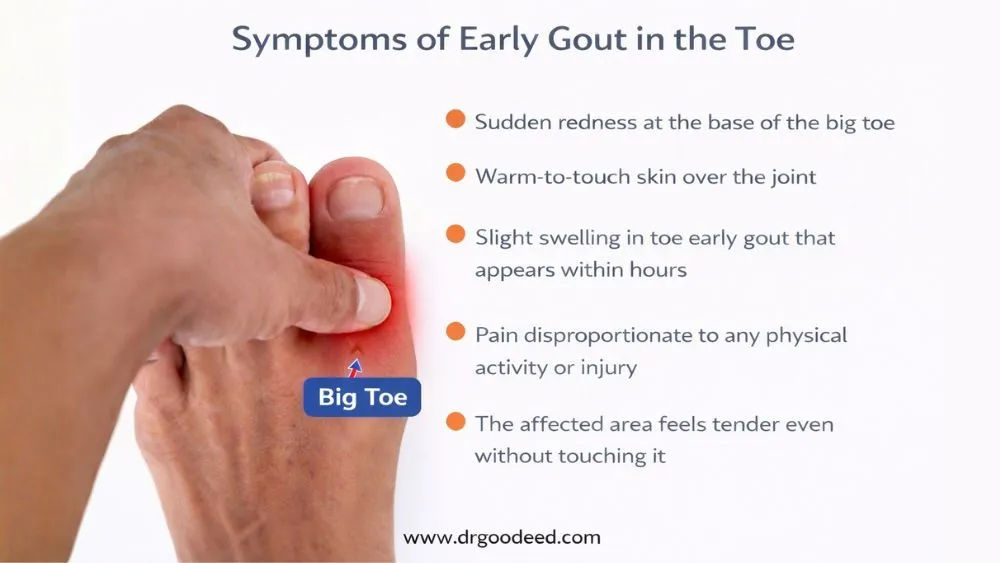
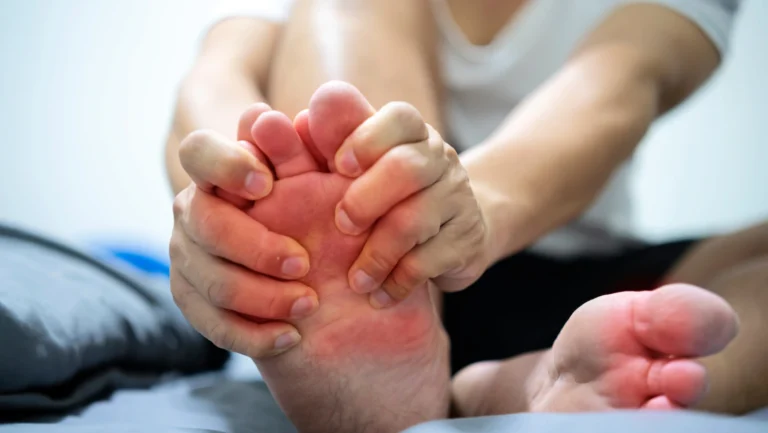
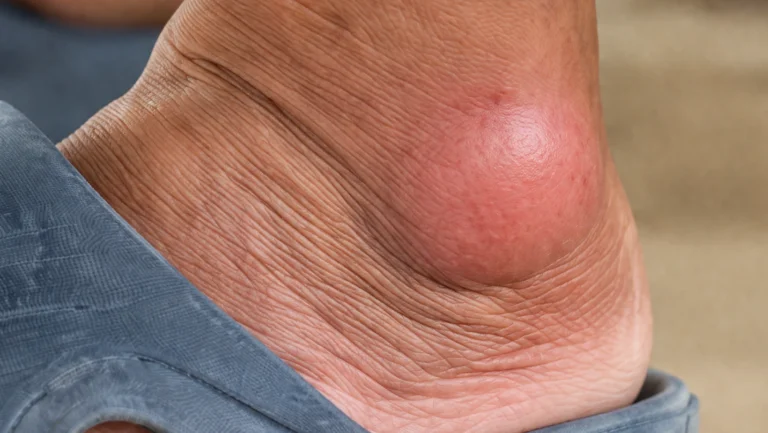
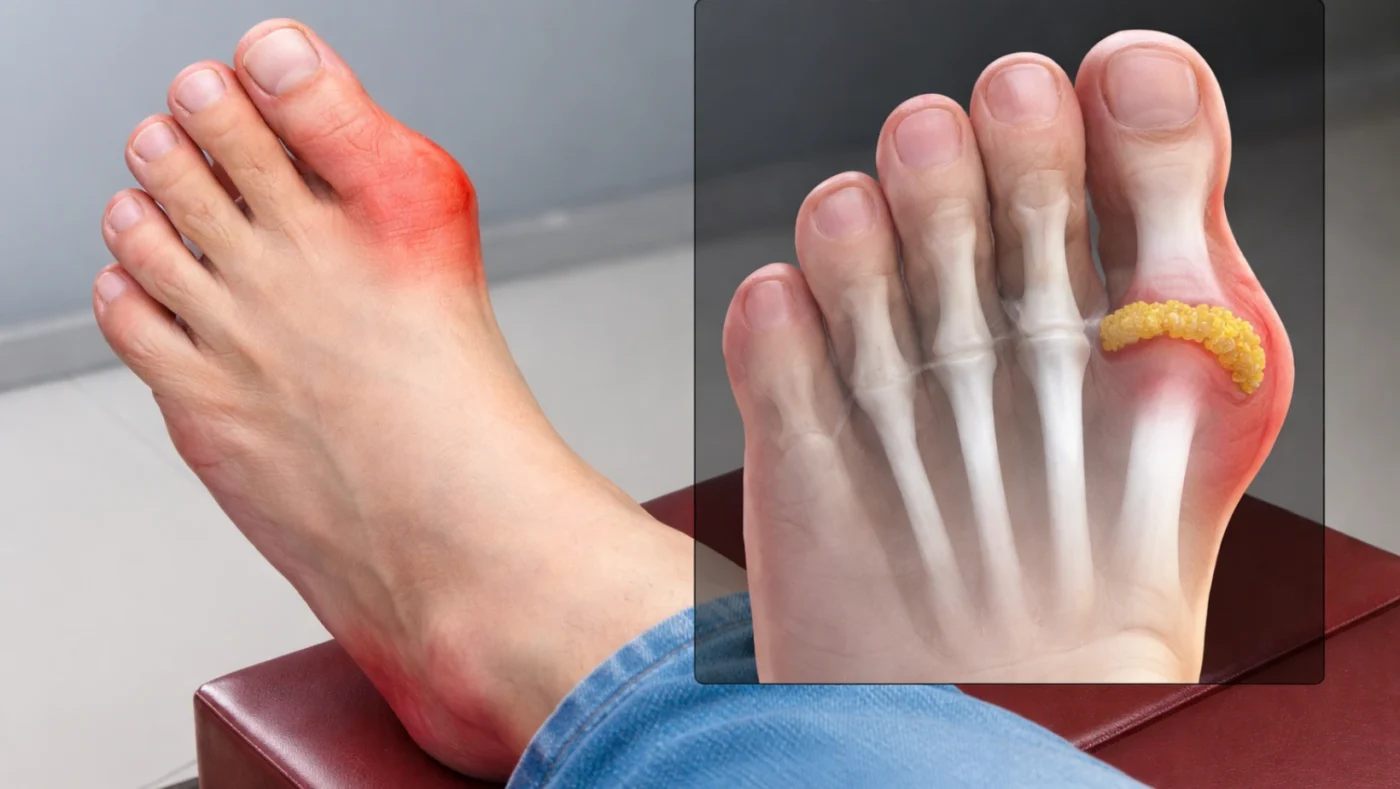
Early-stage gout symptoms in the toe start without warning and worsen within hours. The first clear sign is a slight swelling in toe of early gout, accompanied by warmth and redness around the joint. Pain peaks within 12 to 24 hours. The skin can look shiny or stretched. Even light pressure from socks becomes unbearable. This pattern, sudden onset in the big toe after a night of rich food or alcohol, is clinically called podagra and it’s the most recognizable early gout presentation.
Key signs to identify early gout in the toe:
- Sudden redness at the base of the big toe, usually at night
- Warm-to-touch skin over the joint
- Slight swelling in toe early gout that appears within hours
- Pain disproportionate to any physical activity or injury
- The affected area feels tender even without touching it
Stiffness in Joint: What It Actually Means in Early Gout
Stiffness in joint early gout symptoms is one of the most misread signs. People chalk it up to age, overexertion, or sleeping in a bad position. Here’s what’s actually happening.
Morning Stiffness or After Inactivity
Urate crystals settle deeper into joint tissue during rest. So stiffness is worst in the morning or after prolonged sitting. It eases with movement because circulation increases and fluid redistributes around the joint.
Reduced Range of Motion
The affected joint doesn’t move through its full range. The big toe won’t bend back as far as usual. The ankle feels locked. This happens because crystal deposits physically restrict the joint capsule from moving freely.
Difficulty Walking or Moving the Joint
Some patients describe walking on a bruise. Every step sends a sharp signal. This is especially common after a night of heavy eating or drinking when uric acid spikes.
Difference Between Stiffness vs Injury Pain
Injury pain has a clear cause (fall, twist, impact). It’s usually sharp immediately after the event. Gout stiffness appears without any injury, worsens overnight, and is often accompanied by redness and warmth. Injury pain rarely causes heat over the joint.
What Triggers Early Stage Gout
Alcohol Intake and Early Gout Symptoms
Alcohol intake and early gout symptoms are directly linked. Beer is the worst offender because it contains both ethanol and guanosine (a purine compound). Ethanol slows uric acid excretion through the kidneys.
Just two beers in an evening raise blood uric acid enough to trigger crystal formation in people already at high-normal levels. Whiskey and spirits carry lower risk than beer, but any alcohol in large amounts worsens gout.
High Purine Foods
Organ meats (liver, kidney), red meat, shellfish (shrimp, crab, lobster), and certain fish (sardines, anchovies, mackerel) break down into uric acid during digestion. A single large serving of sardines can raise serum uric acid by 0.5 to 1 mg/dL in susceptible individuals.
Dehydration
Kidneys excrete uric acid through urine. When hydration drops, uric acid concentration in the blood rises. Even mild dehydration from skipping water for a few hours during a hot day raises gout risk measurably.
Sudden Weight Changes
Crash dieting triggers rapid cell breakdown, releasing purines into the bloodstream. Weight gain increases uric acid production. Either extreme destabilizes uric acid levels.
Stress and Metabolic Imbalance
Cortisol (stress hormone) affects kidney function and uric acid clearance. People going through surgery, illness, or intense psychological stress often experience gout flares with no dietary trigger.
How to Treat Early Stage Gout
Treating early-stage gout depends on catching it at the right time. The earlier you act, the shorter and milder the flare.
Immediate Steps at First Symptom
- Rest the affected joint. Do not walk on a painful foot.
- Ice the joint for 20 minutes at a time, every few hours.
- Elevate the foot above heart level to reduce swelling.
- Drink 2 to 3 liters of water to flush uric acid through the kidneys.
- Avoid alcohol completely until the flare resolves.
Medical Treatment Options
NSAIDs: Ibuprofen (400 to 800 mg) or naproxen taken within the first 24 hours of a flare significantly reduces pain and inflammation. Indomethacin is the most commonly prescribed NSAID for gout specifically.
Colchicine (early use benefit): Colchicine works best when taken within the first 12 to 24 hours of symptom onset. The standard dose is 1.2 mg immediately, followed by 0.6 mg one hour later. Taken late, it loses much of its effectiveness. Most patients tolerate it well when used at this low dose.
Lifestyle Correction
- Cut organ meats, shellfish, and red meat to 2 to 3 servings per week.
- Replace beer with water or low-sugar beverages.
- Target a serum uric acid level below 6 mg/dL.
- Add low-fat dairy (yogurt, milk) to the daily diet; studies show it lowers uric acid.
- Coffee at moderate intake (2 to 4 cups daily) has shown a modest uric acid-lowering effect in multiple studies.
When to See a Doctor
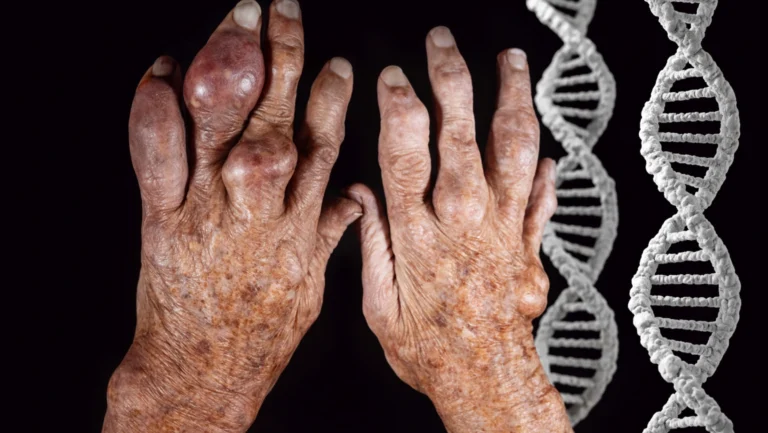
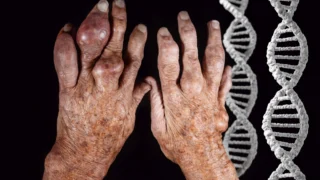
Early-stage gout symptoms that don’t resolve within 7 to 10 days need medical evaluation. Untreated gout progresses through stages. Repeated flares cause permanent joint damage and tophi (chalky crystal deposits under the skin). See a doctor immediately if:
- Joint pain is severe and you have a fever above 38°C (a sign of possible joint infection, not gout)
- The same joint has flared more than twice in 12 months
- Swelling involves multiple joints at once
- Uric acid blood test comes back above 8 mg/dL
- You’re on diuretics (water pills) or cyclosporine, which significantly raise gout risk
A rheumatologist uses a combination of serum uric acid levels, joint fluid analysis (looking for needle-shaped crystals under microscope), and imaging to confirm gout.
How to Prevent Gout from Progressing
Maintain Healthy Uric Acid Levels
Target below 6 mg/dL for patients with confirmed gout. Below 5 mg/dL for those with tophi. Allopurinol is the first-line medication for long-term uric acid control.
Diet and Hydration Strategy
Drink at least 2.5 liters of water daily. Add cherry juice or fresh cherries; anthocyanins in cherries lower uric acid and reduce flare frequency (backed by a 2012 Boston University study of 633 gout patients).
Avoid Trigger Foods and Alcohol
- Avoid: liver, kidneys, beer, sardines, anchovies, high-fructose corn syrup
- Limit: red meat, shellfish, spirits
- Safe: eggs, low-fat dairy, most vegetables, coffee, nuts
Regular Monitoring
Check serum uric acid every 6 months if you’ve had one flare. Annually, if there’s no flare, but levels are borderline (6.5 to 7 mg/dL).
Frequently Asked Questions
What are the earliest signs of gout?
The earliest early-stage gout symptoms are mild nighttime aching in the big toe, tingling sensitivity when the bedsheet touches the joint, and occasional ankle stiffness after rest. These appear weeks before a visible flare.
Can gout start without severe pain?
Yes. Early gout frequently begins as mild discomfort or vague stiffness. Severe pain comes later, during an acute flare. Many patients describe the pre-flare phase as “nothing alarming,” which is why it gets ignored.
How long do early gout symptoms last?
An untreated early gout flare lasts 7 to 14 days. With colchicine or NSAIDs started within 12 hours, symptoms resolve in 2 to 4 days.
Is slight toe pain always gout?
No. Slight swelling in toe early gout shares symptoms with hallux valgus (bunion), stress fractures, and septic arthritis. Blood uric acid test and clinical evaluation confirm gout specifically.
Can early gout go away on its own?
Yes, a single flare resolves on its own within 10 to 14 days. But without treatment, the next flare comes faster, lasts longer, and affects more joints.
Does alcohol trigger early gout immediately?
Alcohol intake and early gout symptoms often appear within 24 hours of heavy drinking. Beer is the fastest trigger; symptoms can begin within 12 hours after heavy beer consumption in high-risk individuals.
Can walking worsen early gout symptoms?
Yes. Walking on an actively inflamed joint accelerates crystal-induced tissue damage. Rest is mandatory during a flare.
What foods should I avoid in early gout?
Avoid organ meats, sardines, anchovies, beer, and anything containing high-fructose corn syrup. These raise uric acid the fastest.
Can early gout be reversed?
Yes. With sustained uric acid control below 6 mg/dL for 6 to 12 months, urate crystals dissolve and early-stage damage reverses fully.
How do I confirm gout in early stages?
A serum uric acid test above 6.8 mg/dL combined with classic early-stage gout symptoms in the big toe strongly suggests gout. Joint fluid analysis under polarized light microscopy gives a definitive diagnosis.