
Medical Disclaimer: This article is for informational purposes only and does not replace professional medical advice, diagnosis, or treatment. Consult a healthcare professional for persistent dizziness or balance problems.
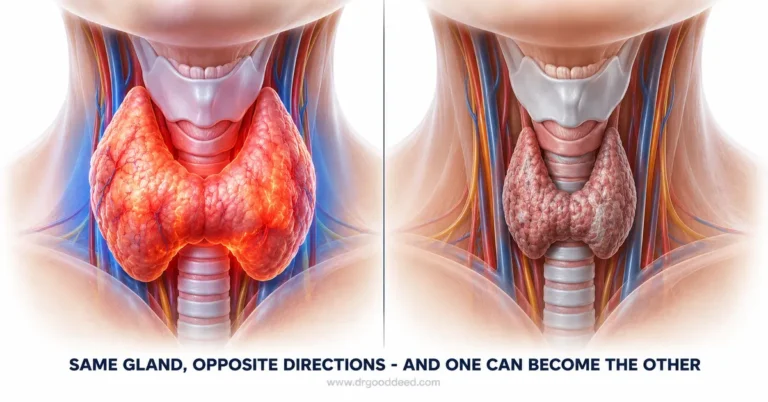
Can Thyroid cause Dizziness, Both hypothyroidism and hyperthyroidism produce dizziness through separate but well-documented mechanisms: circulatory slowdown, blood pressure fluctuations, neurological signaling disruption, and inner ear fluid imbalances.
In the US, thyroid disorders affect approximately 20 million people, and dizziness ranks among the commonly reported but frequently overlooked symptoms. This article covers how each thyroid condition triggers dizziness, how to identify thyroid-related balance issues, and what treatment actually resolves them.
Can Hypothyroidism Cause Dizziness?

Thyroid causes dizziness balance problems through two primary mechanisms: reduced cardiac output and peripheral nervous system slowing.
When the thyroid produces too little hormone, the heart beats more slowly and with less force. Reduced cardiac output lowers blood pressure. Low blood pressure reduces cerebral blood flow (blood reaching the brain). The brain becomes mildly under-supplied with oxygen, producing a lightheaded, unsteady feeling, especially when standing up quickly.
This is called orthostatic hypotension. A study in Thyroid journal found that hypothyroid patients show a significantly higher rate of orthostatic hypotension compared to euthyroid (normal thyroid) controls.
The second mechanism is neurological. Hypothyroidism slows nerve conduction velocity. The peripheral nerves that carry balance signals from the feet to the brain work more slowly. The result: the brain receives delayed, less accurate positional information. Patients feel off-balance, particularly in low-light environments where vision can’t compensate.
Hyperthyroidism and Dizziness Symptoms
Hyperthyroidism and dizziness symptoms follow a completely different pattern from hypothyroid dizziness. The mechanism here is excess stimulation, not deficit.
Excess thyroid hormone pushes heart rate above normal (tachycardia), often to 90 to 110 beats per minute at rest. This rapid heart rate drops diastolic blood pressure while raising systolic pressure. The pressure swings cause the brain’s blood supply to fluctuate, producing sudden lightheadedness that often arrives without warning.
Anxiety is a direct symptom of hyperthyroidism, not a psychological reaction to it. Excess T3 directly stimulates the sympathetic nervous system. This produces a state of sustained fight-or-flight activation, which includes hyperventilation (fast, shallow breathing). Hyperventilation lowers carbon dioxide in the blood. Low CO2 constricts cerebral blood vessels, reducing brain blood flow acutely and causing lightheadedness within minutes.
Hyperthyroidism and dizziness symptoms also include:
- Palpitations (feeling the heart beat irregularly or rapidly) occurring just before dizzy episodes
- Sudden episodes of feeling faint in warm environments or during physical exertion
- Dizziness worsening in the afternoon when T3 levels peak
- Shakiness in the hands alongside balance instability
Graves’ disease (the most common hyperthyroid condition in the US) produces all these patterns in combination.
Hormonal Imbalance Causing Dizziness
Hormonal imbalance causing dizziness extends beyond direct thyroid effects on the heart and brain.
The thyroid interacts with the adrenal glands (which produce cortisol and adrenaline) and the systems that regulate blood sugar. When thyroid function is disrupted, both systems shift.
Adrenal interaction: Low thyroid function slows cortisol clearance from the body. Cortisol accumulates at the tissue level, which further suppresses thyroid function in a self-reinforcing cycle. Elevated tissue cortisol constricts blood vessels and disrupts the body’s ability to regulate blood pressure during position changes.
Blood sugar interaction: Hypothyroidism slows glucose metabolism. This produces blood sugar instability, with mild hypoglycemic (low blood sugar) episodes between meals. The brain runs on glucose. When blood sugar drops, even briefly, dizziness appears within minutes. Patients on no thyroid treatment sometimes report mid-morning or mid-afternoon lightheadedness that resolves after eating; this pattern points to glucose-thyroid interaction.
Inner ear impact: The endolymph fluid inside the inner ear (which controls balance signals) requires stable electrolyte concentrations. Hormonal imbalance causing dizziness through the thyroid-inner ear pathway occurs because thyroid hormones regulate sodium and potassium balance in body fluids, including endolymph. When thyroid levels are low, endolymph composition shifts subtly, reducing the accuracy of balance signals the inner ear sends to the brain.
Vertigo Episodes and Thyroid Imbalance
Thyroid causes dizziness balance problems severe enough to cause full vertigo in specific circumstances.
Vertigo is a spinning sensation; the room feels like it’s rotating or the patient feels like they’re spinning. General dizziness is a feeling of lightheadedness or unsteadiness without spinning. Thyroid conditions produce both, but through different pathways.
True spinning vertigo from thyroid dysfunction is most commonly associated with Meniere’s disease co-occurrence. Hypothyroidism disrupts endolymph fluid regulation in the inner ear, and endolymph excess (endolymphatic hydrops) is the direct cause of Meniere’s. A 2021 review in Frontiers in Neurology confirmed that hypothyroid patients show significantly higher rates of endolymphatic hydrops than euthyroid populations.
General dizziness (non-spinning) from thyroid dysfunction is far more common than full vertigo. Patients describe it as:
- Feeling unsteady when walking, especially on uneven surfaces
- Needing to hold onto walls or furniture for stability
- Momentary “blank” feelings followed by sudden awareness of being off-balance
- Worsening of symptoms in low-light or eyes-closed conditions
Distinguishing thyroid vertigo from benign paroxysmal positional vertigo (BPPV): BPPV produces brief (under 60-second) spinning episodes triggered by specific head positions. Thyroid-related vertigo tends to be more prolonged and not strictly position-dependent.
Early Warning Signs That Dizziness Is Thyroid-Related
Dizziness rarely appears alone in thyroid disorders. The combination of symptoms makes identification clearer.
Signs that dizziness is thyroid-related rather than inner ear or cardiovascular in origin:
- Dizziness accompanied by unexplained weight change (gain in hypothyroidism; loss in hyperthyroidism)
- Persistent fatigue that doesn’t improve with rest
- Palpitations or a noticeably slow or rapid resting pulse
- Temperature sensitivity (always cold in hypothyroidism; always overheated in hyperthyroidism)
- Hair thinning or dry skin alongside balance issues
- Brain fog, memory problems, or difficulty concentrating
- Dizziness that varies with time of day (worse in mornings for hypothyroid; worse in afternoons for hyperthyroid)
Thyroid causes dizziness balance problems in patterns that follow thyroid fluctuations. Patients with Hashimoto’s thyroiditis report dizziness that worsens during antibody flares, coinciding with periods when TSH fluctuates rapidly. The dizziness tracks the hormonal instability, not a fixed inner ear problem.
Why Thyroid Disorders Affect Balance and Coordination
Balance depends on three systems working simultaneously: the inner ear, vision, and proprioception (position sense from muscles and joints). Thyroid disorders disrupt all three.
Neurological signaling: Hypothyroidism causes peripheral neuropathy (nerve damage to the limbs) in approximately 40% of untreated patients, according to research in Clinical Endocrinology. Damaged peripheral nerves carry less accurate proprioceptive signals. The brain receives incomplete position information and compensates poorly, especially when standing still or walking on unstable surfaces.
Cerebellar involvement: The cerebellum coordinates movement and balance. Both hypothyroidism and hyperthyroidism alter cerebellar function. Hypothyroid cerebellar ataxia (loss of coordination) is a documented, reversible syndrome that fully resolves with levothyroxine treatment in most cases. Patients show a wide-based, unsteady gait that improves directly as TSH normalizes.
Circulatory oxygen delivery: Hypothyroidism reduces red blood cell production (secondary anemia in 20 to 30% of hypothyroid patients). Less circulating hemoglobin means less oxygen reaching the brain, cerebellum, and inner ear simultaneously. This compounds the balance disruption from other thyroid-related mechanisms.
How to Treat Dizziness From Thyroid Problems
Treatment of dizziness from thyroid problems starts with treating the thyroid itself, not the dizziness.
Primary treatment:
- Levothyroxine for hypothyroidism: Normalizing TSH to 1.0 to 2.5 mIU/L resolves dizziness in most patients within 6 to 12 weeks of reaching a stable dose
- Methimazole or propylthiouracil for hyperthyroidism: Reducing excess T3 and T4 resolves tachycardia-driven dizziness within 3 to 6 weeks
- Beta-blockers (propranolol) for hyperthyroid dizziness: Used short-term to control heart rate fluctuations and the rapid blood pressure swings that trigger lightheadedness
Symptom-specific management while awaiting hormonal stabilization:
- Increase sodium and fluid intake for orthostatic hypotension (low blood pressure dizziness in hypothyroid patients); target 2 to 3 liters of water daily
- Rise slowly from seated or lying positions; pause for 10 to 15 seconds before walking to allow blood pressure to equalize
- Eat small, frequent meals to prevent blood sugar drops that worsen dizziness
- Avoid sudden temperature changes (hot showers, saunas) during active thyroid-related dizziness; heat dilates blood vessels and worsens low blood pressure
Treating dizziness from thyroid problems through vestibular rehabilitation: If inner ear involvement is confirmed, vestibular physical therapy (targeted balance exercises) complements thyroid treatment and accelerates balance recovery.
Long-Term Management of Thyroid-Related Balance Issues
Thyroid causes dizziness and balance problems that persist long-term even after treatment? Sometimes, yes.
Patients with Hashimoto’s who experienced prolonged untreated hypothyroidism sometimes retain mild peripheral neuropathy even after TSH normalization. The nerve damage accumulated before treatment started. Targeted B12 supplementation (B12 deficiency is common in Hashimoto’s and compounds neuropathic balance issues), along with physical therapy balance training, addresses residual symptoms.
Annual vestibular assessment is reasonable for hypothyroid patients who previously had significant balance problems. The inner ear adapts over time; balance retraining helps the brain recalibrate.
TSH consistency matters for long-term balance stability. Patients whose TSH fluctuates significantly between tests (from inconsistent medication timing, changing supplement interference, or dose changes) report more persistent dizziness than patients with stable TSH values. Consistent morning testing, stable medication timing, and same-lab serial testing all contribute to TSH consistency and reduced dizziness episodes over time.
FAQs
Can thyroid problems make you feel dizzy every day?
Yes. Untreated hypothyroidism produces daily dizziness in a significant portion of patients through reduced cardiac output and peripheral neuropathy. Thyroid causes dizziness balance problems daily. The lightheaded, floating feeling in hypothyroidism is typically persistent rather than episodic, present most mornings and worsening with prolonged standing.
Is dizziness more common in hypothyroidism or hyperthyroidism?
Both cause dizziness, but through different mechanisms. Hypothyroidism produces a constant, low-grade unsteadiness from reduced circulation. Hyperthyroidism produces sudden, episodic lightheadedness from rapid heart rate fluctuations and hyperventilation. Hyperthyroidism and dizziness symptoms tend to feel more acute and alarming; hypothyroid dizziness tends to feel chronic and foggy.
Can thyroid imbalance cause vertigo-like symptoms?
Yes. Hypothyroidism disrupts inner ear endolymph fluid regulation. This produces true spinning vertigo in patients who develop endolymphatic hydrops (fluid excess in the inner ear). Research in Frontiers in Neurology (2021) confirms hypothyroid patients have significantly higher rates of this condition than patients with normal thyroid function.
How do I know if my dizziness is hormone-related?
Thyroid-related dizziness appears alongside other systemic symptoms: weight change, temperature sensitivity, fatigue, palpitations, or hair changes. Hormonal imbalance causing dizziness follows thyroid fluctuations; dizziness worsens during periods of TSH instability and improves when thyroid levels stabilize with treatment.
Can treating thyroid levels stop dizziness completely?
Yes, in most cases. Hypothyroid cerebellar ataxia and orthostatic hypotension both fully resolve within 6 to 12 weeks of adequate levothyroxine dosing. Thyroid causes dizziness and balance problems that are permanent. Only when peripheral neuropathy developed during prolonged untreated hypothyroidism; those cases improve but sometimes don’t resolve fully.
Why do I feel off-balance with thyroid issues?
Thyroid hormones regulate nerve conduction speed and red blood cell production. Low thyroid slows peripheral nerves that carry position signals to the brain, reducing proprioceptive accuracy. Simultaneously, mild anemia reduces oxygen delivery to the cerebellum. Both effects combine to produce the off-balance sensation patients describe.
Can thyroid medication cause dizziness?
Yes. Levothyroxine at too high a dose creates a temporary hyperthyroid state: rapid heart rate, blood pressure fluctuations, and lightheadedness appear within days of an excessive dose increase. Treat dizziness from thyroid problems caused by over-medication: reduce the dose; symptoms resolve within 1 to 2 weeks as T4 levels normalize.
How long does thyroid-related dizziness last?
With proper treatment, hypothyroid dizziness improves within 4 to 6 weeks of TSH normalization and resolves fully by 12 weeks. Hyperthyroid dizziness improves within 3 to 4 weeks of starting antithyroid medication. Dizziness persisting beyond 3 months after TSH normalization requires separate vestibular evaluation.
Does thyroid imbalance affect the inner ear?
Yes. Thyroid hormones regulate sodium-potassium balance in body fluids, including the endolymph fluid inside the inner ear. Low thyroid alters endolymph composition and volume. Thyroid causes dizziness and balance problems through this pathway, particularly in patients who develop Meniere’s-like symptoms alongside hypothyroidism.
When should I see a doctor for dizziness and thyroid symptoms?
See a doctor if dizziness accompanies unexplained weight change, persistent fatigue, palpitations, or temperature intolerance. Seek immediate care if dizziness is sudden and severe with chest pain, one-sided weakness, or vision changes. Those symptoms indicate cardiovascular or neurological causes requiring urgent evaluation, not routine thyroid testing.