
Chest pain in children is rarely a heart problem, but it is never something to dismiss without a second look. Studies referenced by the American Academy of Pediatrics show that fewer than 6% of pediatric chest pain cases have a cardiac origin.
The majority trace back to inflamed cartilage, respiratory infections, acid reflux, or anxiety. This article covers the most common reasons for chest pain in children, red flags that require emergency care, how doctors evaluate it, and what to do at home when it is not an emergency.
Common Reasons for Chest Pain in Children
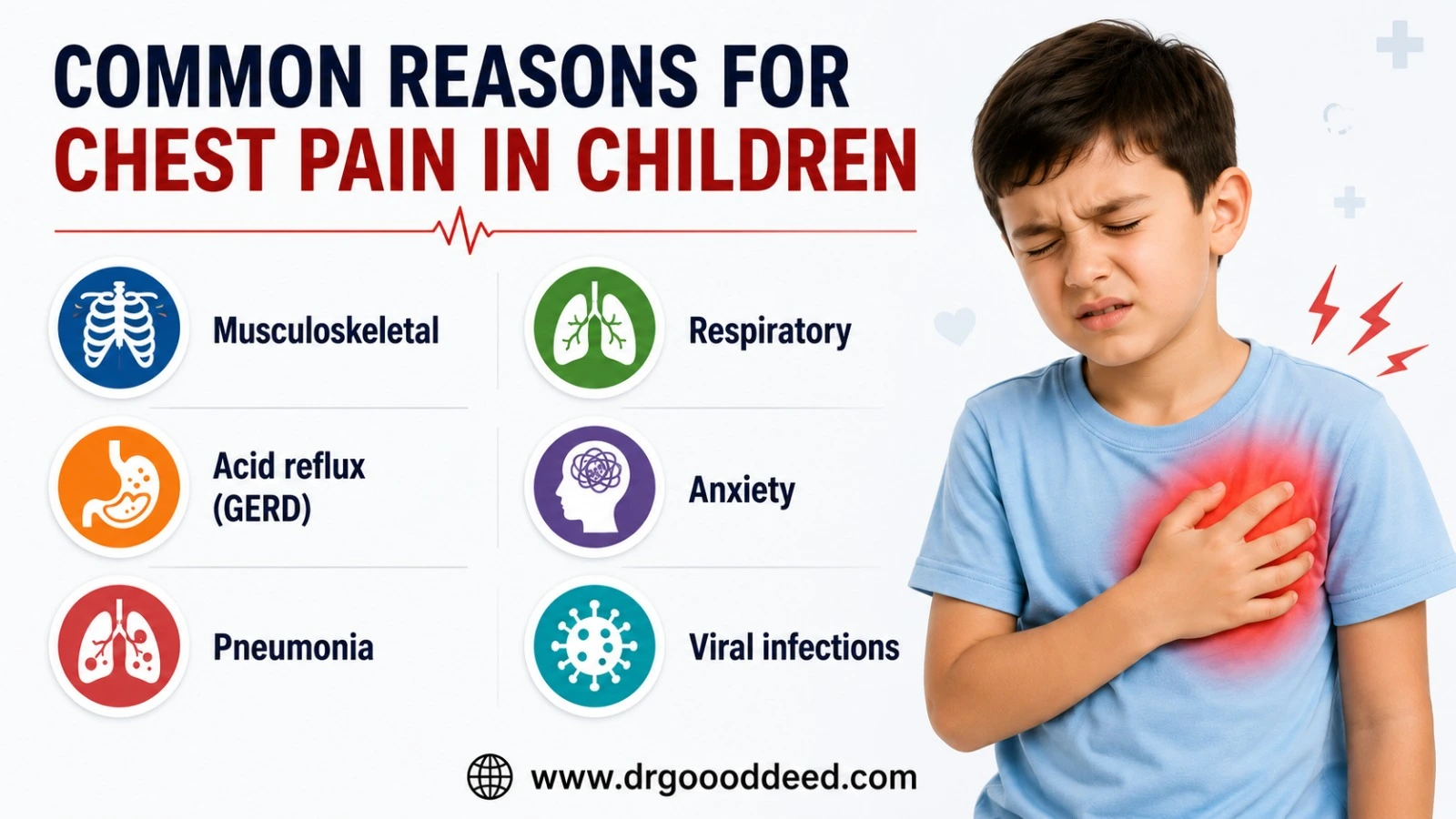
Common reasons for chest pain in children fall into four main categories: musculoskeletal, respiratory, digestive, and psychological. Most cases are benign. That said, the cause determines the response, so knowing the difference matters.
Musculoskeletal causes (most common)
Inflammation of the cartilage connecting the ribs to the breastbone, called costochondritis, is the most frequently diagnosed cause in outpatient pediatric clinics. It produces localized, sharp pain that worsens when pressure is applied to the spot. Muscle strain from sports, heavy backpacks, or prolonged coughing is also common.
Respiratory causes
Asthma causes chest tightness rather than sharp pain. Pneumonia produces stabbing pain that worsens with deep breathing. Pleuritis, which is inflammation of the lung lining, creates pain that sharpens with every breath.
Digestive causes
Acid reflux (GERD) is underdiagnosed in children. The pain feels like burning behind the breastbone and worsens after meals or when lying flat. Kids often describe it as a bad taste in their throat combined with chest discomfort.
Anxiety or stress-related pain
Anxiety generates real physical chest tightness through hyperventilation and muscle tension. It appears more often in kids aged 8 to 17 and is commonly linked to school pressure, social stress, or performance situations.
Muscle and Bone Causes
Chest pain in children traced to the chest wall follows a consistent pattern: the pain is localized, it worsens with movement or pressure, and pressing on the specific spot recreates the pain. That last point is the clearest diagnostic signal.
Costochondritis (rib inflammation)
The cartilage where the ribs attach to the sternum becomes inflamed and tender. The pain is sharp and reproducible on palpation. It often worsens when the child twists, reaches overhead, or takes a deep breath.
Muscle strain from activity or injury
A hard throw during baseball, a rough tackle in football, or even a bad coughing episode from a respiratory infection can strain the intercostal muscles. The resulting soreness is dull and improves within 2 to 4 days of rest.
Pain worsens with movement or touch
This is the key diagnostic differentiator. Musculoskeletal pain worsens with movement and touch. Cardiac pain does not change based on body position or pressure applied to the chest wall.
Key insight: If pressing one specific spot on the chest wall exactly reproduces the pain, the cause is almost certainly musculoskeletal.
Chest Pain with Fever in Children
Chest pain with fever in children is a combination that points toward infection. It shifts the evaluation away from musculoskeletal causes and toward the lungs or, in rare cases, the heart itself.
Pneumonia
Bacterial pneumonia causes sharp, stabbing chest pain that worsens with deep breaths. Fever typically climbs above 101°F (38.3°C). The child usually looks unwell, coughs persistently, and breathes faster than normal.
Bronchitis
Bronchitis causes chest soreness from repeated coughing rather than a sharp pain. Fever is mild to moderate. The pain tends to worsen over several days before improving.
Viral infections
Influenza and COVID-19 can cause pleuritis, producing sharp pain that sharpens with every inhale. Fever, fatigue, and body aches accompany it. Myocarditis, which is inflammation of the heart muscle, is a rare but serious complication of some viral illnesses.
Chest pain with fever in children does not always mean pneumonia. But any child with both symptoms should see a pediatrician within 24 hours. Waiting longer delays treatment when infection is the cause.
Symptoms That Require Immediate Attention (Red Flags)
Chest pain in children paired with any of the following symptoms is a medical emergency. Do not wait.
Call 911 or go to the nearest ER if the child has:
- Chest pain that begins during physical activity and causes fainting or near-fainting
- Rapid, pounding, or irregular heartbeat alongside chest pain
- Pain that radiates to the left arm, jaw, or upper back
- Blue or grayish lips and fingertips
- Severe difficulty breathing while at rest
- A known history of congenital heart disease with a new chest pain episode
- Unresponsiveness or collapse
These presentations are rare in children. But each one signals a condition, including arrhythmia, hypertrophic cardiomyopathy, or aortic dissection, that cannot wait for a scheduled appointment.
How to Tell If Chest Pain in Children Is Serious
Duration and pattern of pain
Pain lasting a few seconds and vanishing completely is almost always benign. Pain that is continuous for more than 30 minutes without relief, especially in a child who looks pale or sweaty, warrants emergency evaluation.
Associated symptoms
Wheezing points to asthma. Fever points to infection. Dizziness or fainting points to a cardiac cause. A child with chest pain and no other symptoms is far less likely to have a serious condition.
Activity-related vs random pain
Intermittent chest pain in kids that starts during exercise and stops immediately with rest is the most important pattern to take seriously. This presentation is a known indicator of hypertrophic cardiomyopathy and arrhythmias. Intermittent chest pain in kids that appears randomly at rest, especially in anxious or stressed children, is usually musculoskeletal or functional.
How to Relieve Chest Pain in Children (Non-Emergency Cases)
Relieving chest pain in children safely at home depends on ruling out red flags first. If none of the emergency symptoms listed above are present, these approaches help with benign causes.
Rest and avoiding physical strain
For costochondritis or muscle strain, rest is the primary treatment. Limit sports, heavy lifting, and physical education for 2 to 3 days. Continuing activity on an inflamed costochondral joint extends recovery.
Warm compress for muscle pain
A warm (not hot) compress applied to the chest wall for 15 to 20 minutes reduces muscle soreness. Avoid heat if the child has a fever.
Hydration and proper posture
Slouching forward compresses the sternum and worsens chest wall pain. Keep the child sitting upright. Staying hydrated also reduces muscle cramping and supports recovery from respiratory infections.
Managing asthma or underlying conditions
For asthma-related chest pain in kids, the prescribed rescue inhaler should be used as directed at the first sign of tightening. If a child needs a rescue inhaler more than twice a week, the current asthma management plan is not adequate and needs medical review.
Diagnosis: What Doctors Check
Physical examination
The doctor presses on specific points across the chest wall to check for tenderness, listens to the heart and lungs, and checks the child’s oxygen level with a pulse oximeter.
Chest X-ray or imaging
Ordered when pneumonia, pleuritis, an enlarged heart, or a structural lung issue is suspected. Most children with musculoskeletal chest pain do not need imaging.
Heart tests (if needed)
An ECG records the heart’s electrical activity and identifies arrhythmias or signs of hypertrophic cardiomyopathy. An echocardiogram maps the heart’s structure and is ordered when a defect is suspected.
Medical history evaluation
The doctor asks about family history of sudden cardiac death before age 50, exercise habits, and whether the pain follows a consistent pattern.
When to See a Doctor
See a pediatrician within 24 hours if the child has chest pain in children alongside the following:
- Fever above 101°F (38.3°C)
- Pain lasting more than 48 hours without improvement
- Known asthma with worsening control
- A history of heart surgery or congenital heart disease
- Pain that wakes the child from sleep repeatedly
Go to the ER immediately if:
- Pain starts during exercise and the child faints
- Lips or fingertips turn blue
- The child cannot speak a full sentence without gasping
- Pain has been continuous for more than 30 minutes
FAQs
Can asthma cause chest pain in kids?
Yes. Asthma-related chest pain in kids results from bronchospasm, the tightening of airway muscles during an attack. It feels like squeezing pressure across the chest, not a sharp stab. Kids with uncontrolled asthma report this most often chest pain during exercise or allergy season. A rescue inhaler typically resolves the pain within 10 to 15 minutes.
What does intermittent chest pain in kids mean?
Intermittent chest pain in kids during exercise that stops at rest needs same-day cardiac evaluation. Pain appearing randomly at rest in a child aged 8 to 14, particularly with no other symptoms, is usually musculoskeletal or anxiety-driven. The pattern and timing are the most important diagnostic clues.
Is chest pain with fever in children serious?
Yes, same-day evaluation is needed. Chest pain with fever in children most commonly points to pneumonia or viral pleuritis. Myocarditis, though rare, is a possibility after viral illness and requires hospital-level assessment. Do not wait overnight if both symptoms are present.
When should chest pain in children be a concern?
Chest pain in children becomes a concern the moment it occurs during physical activity, causes fainting, or comes with a family history of sudden cardiac death before age 50. Any one of these signals requires same-day or emergency evaluation, regardless of how brief the pain was.
Can anxiety cause chest pain in children?
Yes. Anxiety triggers chest tightness through hyperventilation and sustained muscle tension. The pain is physically real, not fabricated. It usually appears alongside stomach upset, avoidance of school, or rapid heartbeat. A pediatric psychologist should be part of the treatment plan when anxiety is confirmed as the cause.
How do doctors diagnose chest pain in kids?
Doctors start with pressing on the chest wall to identify costochondritis, then listen to the heart and lungs. An ECG is added for exercise-related pain. A chest X-ray is ordered only when an infection or structural issue is clinically suspected. Blood tests are rarely needed in routine cases.
Is chest pain in children related to heart problems?
Fewer than 6% of chest pain cases in children are cardiac. Conditions like hypertrophic cardiomyopathy, arrhythmias, and pericarditis are the main cardiac causes. Exercise-induced pain with fainting is the clearest warning sign. Most children with random or reproducible chest pain have no cardiac involvement.
What symptoms require emergency care?
Fainting with chest pain in children, blue lips, severe breathing difficulty at rest, or pain radiating to the jaw or left arm are all emergencies. Call 911. Do not attempt to drive to the hospital if the child is unresponsive or losing consciousness.