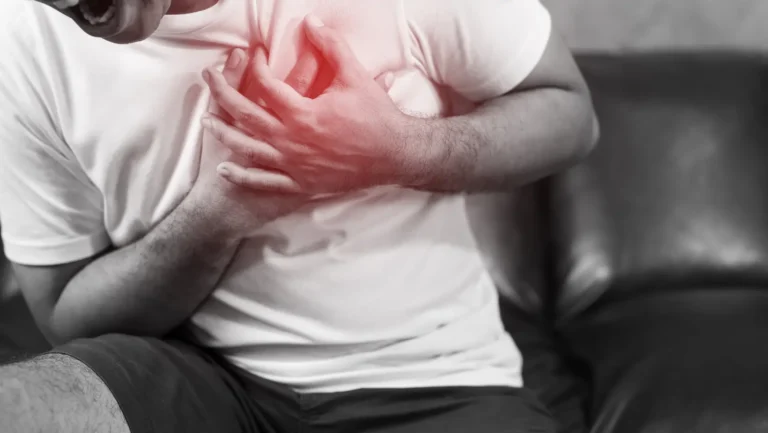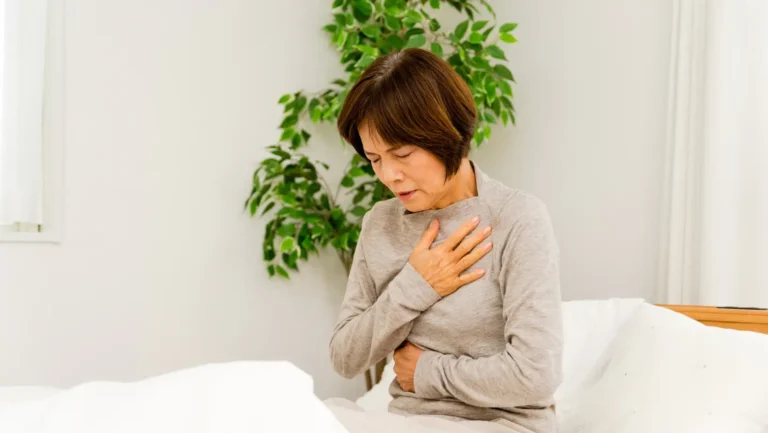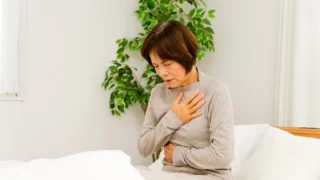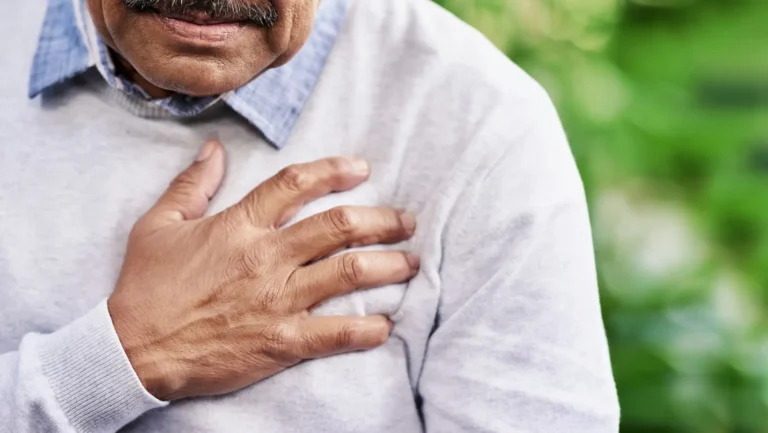
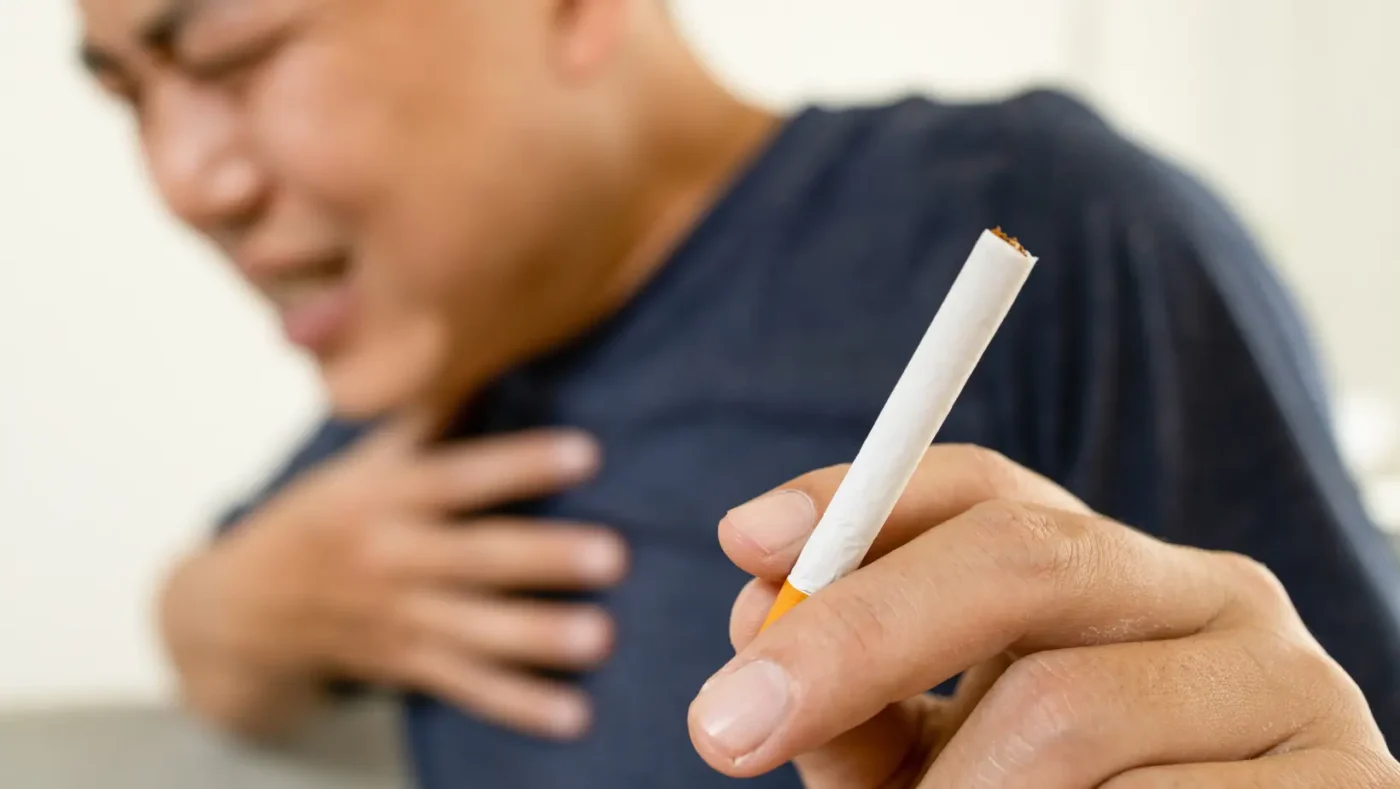

Chest pain after quitting smoking is real, common, and almost always a sign your body is healing. Around 40% of people who quit report some chest discomfort in the first few weeks. It is not a sign that quitting damaged your lungs. It is the opposite.
Your airways, lungs, and chest muscles are adjusting after years of chemical exposure. This guide covers every cause, how long it lasts, when to worry, and how to get relief.
Why Chest Pain Happens After Quitting Smoking
Chest pain after quitting smoking is not caused by the absence of nicotine. It is caused by the physical recovery process happening inside your chest. Your lungs were suppressed by thousands of chemicals in cigarette smoke.
Once that suppression stops, everything activates at once: cilia grow back, mucus loosens, airways widen, and muscles that were chronically tightened begin to relax. That process feels uncomfortable.
Lung Healing After Quitting Smoking Chest Pain
Smoke destroys the tiny hair-like structures in your airways called cilia. These cilia clear mucus and debris. When you quit, they start regrowing within 24 to 48 hours. As they recover, they push out months or years of trapped mucus and irritants. That movement causes pressure and mild pain deep in the chest.
Lung healing after quitting smoking chest pain is the most commonly missed explanation online. Most people assume the pain means something is wrong. In this case, it means something is going right.
Clearing of Mucus and Airway Irritation
Trapped mucus in the bronchial tubes starts breaking loose soon after quitting. Your body treats it like a foreign substance and tries to expel it aggressively. The result is heavy coughing chest tightness, and a burning or raw feeling. This phase is worst between days 3 and 14. It settles once the backlog of mucus clears out.
Breathing Changes and Chest Pain After Quitting
Smokers breathe shallowly. Nicotine, carbon monoxide, and chronic airway inflammation all restrict breathing depth over time. Once those chemicals leave the body, breathing depth increases. The diaphragm and intercostal muscles, which sit between the ribs, start working harder than they have in years. Breathing changes and chest pain after quitting often feel like soreness after exercise. The muscles are not injured. They are waking up chest pain.
Increased Sensitivity in Chest Muscles
Smoking numbs the nerve endings in the lungs and airways. After quitting, those nerves become more sensitive. Sensations that were previously blocked, like the feeling of air moving through your bronchial tubes, become noticeable. This heightened sensitivity registers as discomfort, especially during deep breaths.
Side Effects of Quitting Smoking Chest Pain
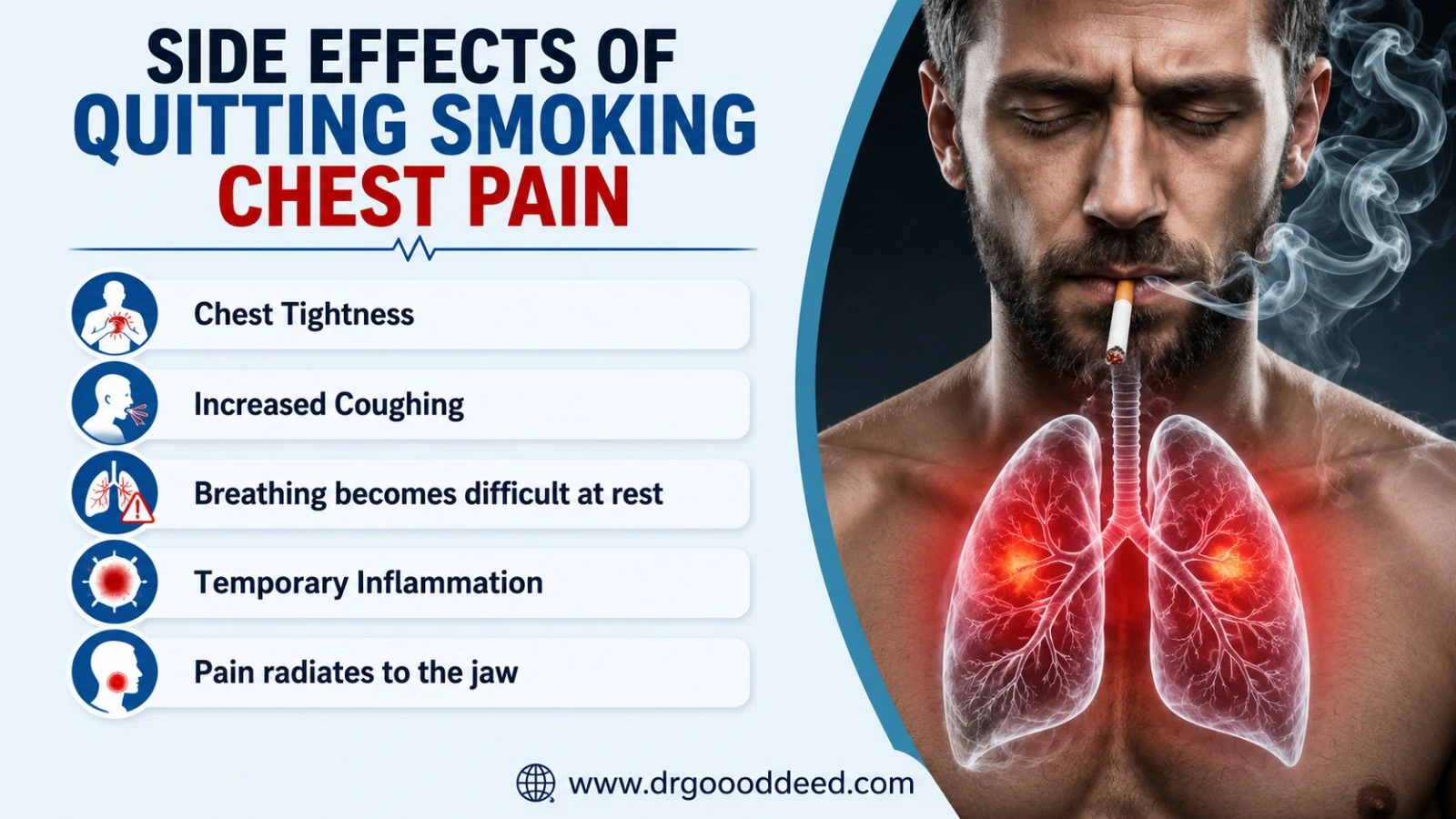
The side effects of quitting smoking include a range of sensations. None of them require medication in most cases.
Chest Tightness or Mild Discomfort
A squeezing or pressure feeling across the chest is common in the first two weeks. It is caused by airway inflammation settling and muscles readjusting. It is rarely sharp or severe.
Increased Coughing
This is your lungs expelling debris. The coughing itself strains the chest muscles, causing soreness that lingers throughout the day. It peaks around day 5 to 10.
Short-Term Breathing Changes
Some people feel short of breath even though their oxygen levels are improving. This happens because the body is recalibrating how it registers airflow and oxygen saturation. It resolves within two to three weeks in most cases.
Temporary Inflammation
The airways were chronically inflamed by smoke. When smoke exposure stops, the inflammation does not vanish immediately. It actually intensifies briefly before resolving. This is called a rebound inflammatory response. It is temporary.
How Long Chest Pain Lasts After Quitting Smoking
Chest pain lasts after quitting smoking, depending on how long and how heavily someone smoked. For most people, mild discomfort peaks between days 3 and 7, then fades by week 3. In long-term heavy smokers, it can persist at a low level for 4 to 8 weeks. Chest pain that worsens after week 4 instead of improving is not normal and needs medical evaluation.
- Days 1 to 3: Mild tightness, onset of coughing
- Days 3 to 10: Peak discomfort, heavy mucus clearance
- Weeks 2 to 3: Gradual improvement, coughing decreases
- Week 4 onward: Pain should be minimal or gone
Lung Healing After Quitting Smoking
Lung healing after quitting smoking chest pain follow a predictable biological sequence backed by research from the American Lung Association.
Cilia Regrowth and Mucus Clearance
Cilia begin regrowing within 24 to 48 hours of quitting. By the two-week mark, mucus transport improves measurably. Lung function increases by up to 30% within three months of quitting, according to data from the U.S. Centers for Disease Control and Prevention.
Improved Oxygen Exchange
Carbon monoxide leaves the blood within 12 hours of the last cigarette. Hemoglobin, freed from carbon monoxide binding, carries more oxygen per breath. This is why some quitters feel slightly lightheaded or hyperaware of their breathing in the first week.
Reduced Inflammation Over Time
Bronchial inflammation falls significantly within six weeks of quitting. Scar tissue takes longer to remodel, sometimes months to years. The chest pain resolves long before the deeper healing is complete.
Breathing Changes and Chest Pain After Quitting
Breathing changes and chest pain after quitting are linked. They are the same event described from two angles.
Deeper Breathing Patterns
The diaphragm, which was restricted during years of smoking, begins moving more freely. Full diaphragmatic breaths were likely impossible for long-term smokers. As breathing deepens, the rib cage expands in ways it has not in years. That expansion stretches ligaments and muscles that have stiffened.
Airway Expansion and Sensitivity
Bronchial tubes that were chronically constricted begin relaxing. Wider airways feel strange. Some people describe it as pressure or fullness in the chest. It is not blockage. It is the feeling of space.
Adjustment Phase Causing Discomfort
The adjustment phase lasts roughly two to three weeks. During this time, the body is recalibrating everything simultaneously: nerve sensitivity, muscle function, mucus production, and airway tone.
How to Relieve Chest Pain After Quitting Smoking
Relieving chest pain after quitting smoking does not require prescription medication in most cases. These are the methods with actual physiological backing.
Hydration and Mucus Clearance
Water thins mucus and makes it easier for cilia to move it out. Drink at least 8 cups of water per day during the first two weeks after quitting. Warm liquids, especially warm water with lemon, speed mucus loosening in the bronchial tubes.
Gentle Breathing Exercises
Diaphragmatic breathing, which means breathing so the belly rises and the chest stays still, reduces chest muscle tension and improves oxygen delivery. Do 5 minutes of this three times per day during the adjustment phase.
Light Physical Activity
Walking increases lung circulation and speeds up mucus clearance. A 20-minute walk daily is enough to improve respiratory recovery without straining healing airways.
Avoiding Irritants
Second-hand smoke, dust, and heavy pollution restart the irritation cycle. People quitting in cities like Los Angeles or Houston with poor air quality indexes should wear masks outdoors during high-pollution days.
What Can Make Chest Pain Worse After Quitting
Some behaviors and exposures make chest pain after quitting smoking significantly worse.
- Nicotine replacement overuse: Too much nicotine gum or patch can cause airway irritation.
- Caffeine increase: Many ex-smokers drink more coffee after quitting. Coffee is a bronchial irritant in high doses.
- Dry indoor air: Heated indoor environments dry out airway mucosa and increase coughing.
- Alcohol: Dehydrates the body and slows mucus clearance.
- Stress: Causes shallow breathing and chest muscle tension, amplifying discomfort.
How to Tell If It’s Lung Healing or Something Serious
Gradual Improvement vs. Worsening Pain
Healing pain gets better week by week. Serious pain stays constant or gets worse. If your chest pain is less intense on day 14 than on day 7, that trajectory is normal.
Presence of Other Symptoms
Fever, coughing up blood, sudden severe pain, pain radiating to the left arm or jaw, and shortness of breath at rest are not normal parts of quitting. These need emergency evaluation.
Pattern and Duration of Discomfort
Healing discomfort is typically dull, diffuse, and tied to breathing or coughing. Cardiac or pulmonary pathology tends to produce sharper, localized, or pressure-type pain that does not change with body position.
Diagnosis: What Doctors Check
Lung Function Tests
Spirometry measures how much air the lungs can hold and how fast air moves out. It distinguishes normal post-quit adjustment from early COPD or other conditions.
Chest Imaging
An X-ray rules out pneumonia, collapsed lung, or fluid accumulation. A CT scan provides more detail and can detect early-stage lung changes missed on X-ray.
Heart Evaluation If Needed
An ECG checks for cardiac causes. Smokers carry a higher baseline cardiac risk, so doctors rule out heart-related causes if symptoms do not fit the healing pattern.
When to See a Doctor
Most chest pain after quitting smoking is benign. Go to a doctor immediately if:
- Pain is sharp, sudden, and severe
- Pain radiates to the jaw, neck, or left arm
- Breathing becomes difficult at rest
- You cough up blood
- Fever accompanies chest pain
- Symptoms worsen after week 4 instead of improving
FAQs
Is chest pain normal after quitting smoking?
Yes. Chest pain after quitting smoking affects roughly 40% of quitters. It is caused by cilia regrowth, mucus clearance, and airway adjustment. It is a healing response, not damage. Pain that improves week by week is normal.
How long chest pain lasts after quitting smoking?
Chest pain that lasts after quitting smoking is typically 1 to 3 weeks for light-to-moderate smokers. Heavy smokers who smoked 20+ cigarettes daily for 10+ years report symptoms lasting up to 8 weeks. Pain peaking after week 4 needs medical attention.
What causes lung healing after quitting smoking chest pain?
Lung healing after quitting smoking chest pain is caused by cilia regrowth pushing out trapped debris, increased bronchial sensitivity, and temporary post-quit inflammation, all occurring simultaneously in the first two to three weeks.
What are side effects of quitting smoking chest pain?
The side effects of quitting smoking chest pain include chest tightness, muscle soreness from heavy coughing, brief shortness of breath, and a raw or burning feeling from inflamed airways, all peaking in days 3 to 10.
How to relieve chest pain after quitting smoking quickly?
Relieve chest pain after quitting smoking: drink 8+ cups of water daily, do diaphragmatic breathing 3 times per day, walk 20 minutes daily, and avoid caffeine and alcohol. These four steps reduce mucus buildup and muscle tension faster than rest alone.
Can breathing changes cause chest pain after quitting?
Yes. Breathing changes and chest pain after quitting are directly connected. Deeper breathing after quitting stretches stiffened rib muscles and the diaphragm, producing soreness similar to starting a new workout routine. It resolves within 2 to 3 weeks.
When should chest pain after quitting smoking be serious?
Chest pain after quitting smoking is serious when it radiates to the arm or jaw, comes with fever or blood in cough, appears suddenly and severely, or worsens beyond week 4. These signs need same-day medical evaluation.
Is chest tightness after quitting smoking normal?
Yes. Chest tightness is one of the most common side effects of quitting smoking chest pain. It peaks in the first 10 days and is caused by temporary airway inflammation and mucus buildup. It is not a sign of heart disease in otherwise healthy quitters.
How do lungs heal after quitting smoking?
Cilia regrow within 48 hours. Mucus clearance improves by week 2. Lung function increases up to 30% within 3 months. Bronchial inflammation reduces within 6 weeks. Full structural healing of damaged tissue takes 1 to 10 years depending on smoking history.
Should I see a doctor for chest pain after quitting smoking?
See a doctor if the pain worsens after week 4, is sharp or radiating, or comes with fever, blood, or breathing difficulty at rest. Mild, improving chest pain after quitting smoking does not require a clinic visit in most cases.