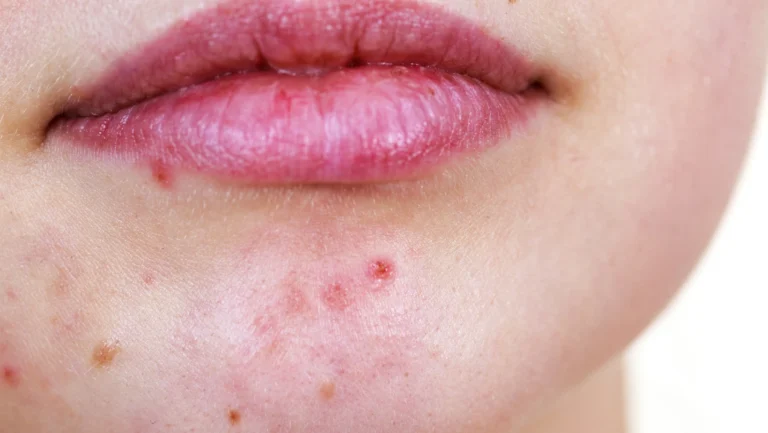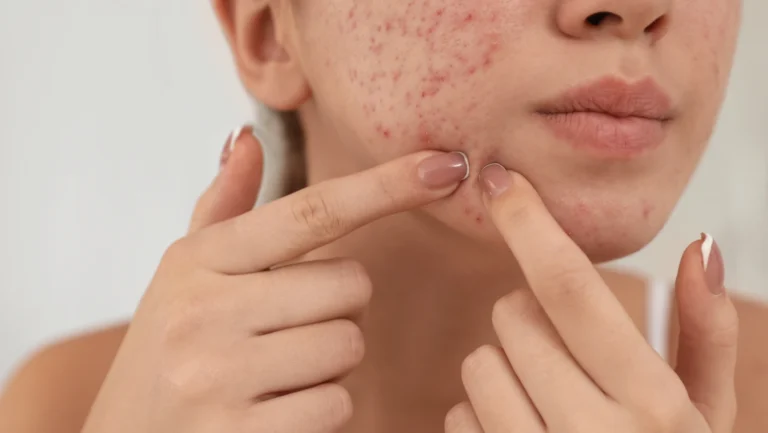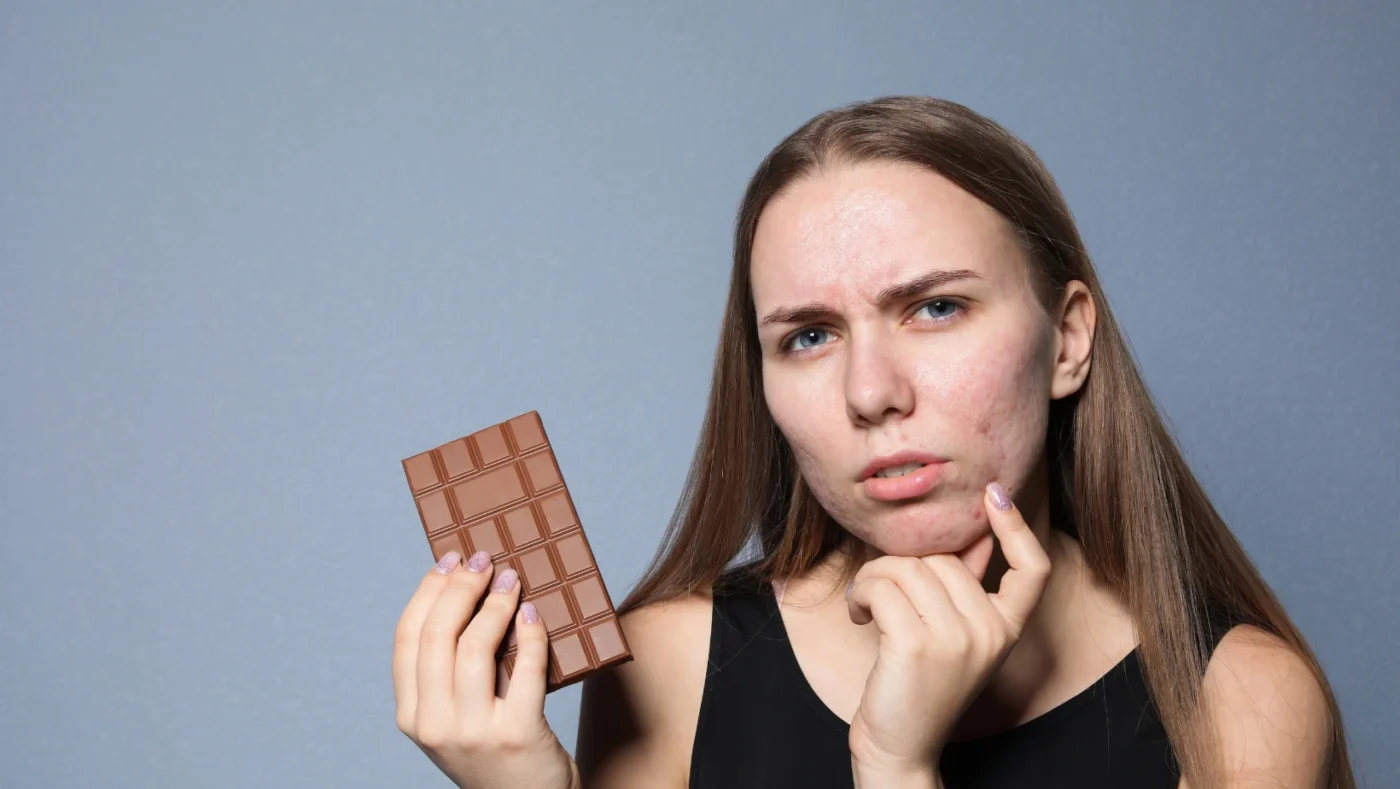

Chocolate can cause acne, but not because of cocoa alone. The sugar, dairy, and processed additives packed into most commercial chocolate are what irritate acne-prone skin. If your skin is already sensitive to hormonal shifts or blood sugar spikes, eating chocolate regularly can make breakouts worse.
Acne affects roughly 50 million Americans each year, making it the most common skin condition in the country. Diet is one factor that many dermatologists now take seriously, especially after studies linking high-sugar and high-dairy diets to increased breakout frequency. Eating chocolate can trigger acne breakouts in people who eat commercial chocolate multiple times per week.
Why Acne Develops in the First Place
Acne forms when your skin’s pores get clogged with oil and dead skin cells, then bacteria move in and cause infection. Your skin naturally produces an oily substance called sebum (SEE-bum), which keeps your skin soft.
When sebum production goes into overdrive, usually driven by hormones or diet, it mixes with dead cells and clogs your pores. Bacteria called Cutibacterium acnes thrive in that blocked environment. Your immune system fights back, which is what causes the redness, swelling, and pain you see on the surface.
Key factors that trigger or worsen acne:
- Excess oil production driven by insulin spikes or hormonal changes
- Dead skin cells that do not shed fast enough
- Bacteria growing inside clogged pores
- Systemic inflammation (body-wide irritation) acne turns small clogs into painful pimples
Your diet affects almost every step in this process. Blood sugar spikes increase oil production. Dairy proteins elevate hormones that speed up skin cell growth. Processed food ingredients fuel inflammation. Chocolate, especially milk chocolate, hits all three.
Can Eating Chocolate Trigger Breakouts?

Eating chocolate can trigger breakouts, and the main culprits are refined sugar, dairy proteins, and processed additives, not pure cocoa. Most people assume cocoa is the problem, but research points firmly at what is added to cocoa to make commercial chocolate.
Sugar and Insulin-Related Inflammation
Eating sugary chocolate raises your blood sugar quickly. Your pancreas (the organ that controls blood sugar) releases insulin to bring levels back down. High insulin tells your skin glands to produce more oil. More oil means more blocked pores and more breakouts.
Insulin also boosts a hormone called IGF-1 (Insulin-like Growth Factor-1). IGF-1 signals your skin cells to grow faster and produce more sebum. Both of those directly increase your chances of a pimple. A single chocolate bar can set this chain in motion within hours.
Processed Chocolate Ingredients and Acne
Most store-bought chocolate is not pure cocoa. It contains refined sugar, hydrogenated oils, emulsifiers, and artificial flavors. These processed ingredients increase inflammation in your body.
Chronic inflammation is now understood to be a primary driver of adult acne, especially the stubborn kind that keeps coming back despite good skincare. Processed chocolate can cause acne.
Individual Skin Sensitivity Differences
Not everyone reacts the same way. Your genetics, hormone levels, gut bacteria balance, and baseline skin oil production all influence whether chocolate breaks you out. Someone with naturally low oil production and stable hormones is far less likely to react than someone dealing with hormonal acne.
Dairy in Chocolate and Acne Risk
Dairy in chocolate and acne risk is a combination that keeps coming up in dermatology research. Milk chocolate contains milk solids, whey, and casein, all dairy proteins that influence your hormone levels.
Milk Proteins and Hormone-Related Effects
Milk naturally contains IGF-1 and estrogen precursors because dairy cows produce milk during pregnancy. When you eat milk chocolate, those hormones reach your bloodstream. They tell your skin glands to produce more oil and trigger faster skin cell growth. Faster skin cell growth increases the chance that dead cells will pile up and block pores.
Whey protein is especially problematic. It spikes insulin even without sugar present. In milk chocolate, you get both sugar and whey working together, making it a particularly strong trigger for acne-prone people.
Sweetened Milk Chocolate Concerns
Milk chocolate is typically 30% to 50% sugar by weight. That much sugar, combined with dairy proteins, sends a strong pro-inflammatory signal to your body. People who already experience hormonal breakouts along the chin and jawline tend to notice the strongest reactions to milk chocolate specifically.
Dark Chocolate vs. Milk Chocolate Differences
Dark chocolate contains significantly less dairy than milk chocolate and less sugar overall. This reduces both the hormonal trigger and the insulin response. Dairy in chocolate and acne risk is considerably lower with 70% or higher dark chocolate than with any standard milk chocolate bar.
High-Glycemic Foods Causing Breakouts
High-glycemic foods causing breakouts is a well-supported finding in dermatology. Glycemic index (GI) scores measure how fast a food raises blood sugar. High-GI foods cause fast, sharp spikes. Milk chocolate scores between 40 and 50 on the GI scale. White bread scores above 70. Any food above 55 is considered high-glycemic.
Blood Sugar Spikes and Oil Production
When blood sugar rises fast, insulin spikes sharply. High insulin directly increases sebum production and stimulates the growth of acne-causing bacteria. People who switch to a low-glycemic diet often see their skin improve noticeably within four to six weeks. White bread, soda, and milk chocolate all belong in the high-glycemic category.
Processed Foods and Inflammation
Processed foods loaded with refined carbohydrates and seed oils push the body into a mild but constant state of inflammation. That chronic low-grade inflammation is now considered a core driver of persistent adult acne. It makes your skin more reactive, slower to heal, and more prone to new breakouts.
Acne Flare-Ups After Eating Chocolate and Sugary Foods
Acne flare-ups after eating chocolate usually appear within 24 to 72 hours, not immediately. Pore-clogging takes time. Your immune response takes time. This delay is why most people fail to connect their Saturday chocolate binge to the breakout they wake up with on Monday. High-glycemic foods causing breakouts is a slow, biological chain.
Does Dark Chocolate Affect Acne Differently?
For most people, dark chocolate is far less likely to trigger breakouts, but it is not completely harmless.
Lower Sugar Content Considerations
A 70% dark chocolate bar has roughly half the sugar of milk chocolate. Less sugar means a smaller, slower insulin spike. For people whose breakouts are driven primarily by blood sugar, switching to dark chocolate often makes a noticeable difference.
Cocoa Concentration and Antioxidants
Cocoa contains flavanols, natural antioxidant compounds that reduce oxidative stress (damage from unstable molecules in your body) and lower inflammation. At high concentrations, these compounds may actually benefit your skin.
Evidence suggests cocoa flavanols improve skin hydration and reduce inflammatory markers when consumed regularly. The catch is that most commercially processed dark chocolate loses a significant portion of its flavanols during manufacturing. Raw cacao retains the most.
Portion Size Still Matters
Even 85% dark chocolate is not sugar-free. Eating large amounts still produces an insulin response in sensitive people. One or two squares is a reasonable amount. Half a bar eaten regularly will eventually affect acne-prone skin regardless of cocoa percentage.
Foods That May Help Prevent Acne
Foods that help prevent acne do so by keeping blood sugar stable, reducing body-wide inflammation, and supporting healthy hormone levels.
High-Fiber Foods and Blood Sugar Balance
Fiber slows how quickly sugar enters your bloodstream. That means lower insulin spikes and less oil production. High-fiber foods that support clearer skin include oats, lentils, leafy greens like spinach, and berries. All of these are low on the glycemic index and avoid triggering the acne chain reaction that sugary foods set off.
Omega-3-Rich Foods for Inflammation Support
Omega-3 fatty acids (healthy fats found in certain whole foods) actively reduce inflammation throughout the body. Calmer inflammation means calmer skin. Foods that help prevent acne through omega-3s include:
- Salmon and sardines
- Walnuts
- Flaxseeds
- Chia seeds
People who eat fatty fish two to three times per week tend to have lower inflammatory markers overall.
Hydration and Balanced Nutrition Habits
Dehydration slows your skin’s natural ability to shed dead cells, which leads to more clogged pores. Drinking around 8 cups of water daily supports skin cell turnover. Zinc (a mineral found in pumpkin seeds, chickpeas, and beef) reduces sebum production and kills acne-causing bacteria. It is one of the more underrated dietary tools for managing breakouts.
Other Common Acne Triggers Beyond Chocolate
Chocolate often gets blamed when other triggers are actually responsible. But skim milk in their coffee or the whey protein in their post-workout shake can also cause acne. Identifying your real trigger requires watching patterns across multiple factors.
Common non-chocolate acne triggers:
- Skim milk, which raises IGF-1 more sharply than whole milk because fat slows absorption
- Whey protein supplements, which spike insulin strongly even without added sugar
- White rice, pasta, and white bread, all high-glycemic staples
- Stress, which raises cortisol (a stress hormone) and increases oil production
- Dirty pillowcases and phone screens, which transfer bacteria directly to your skin every day
- Certain medications, including some birth control pills, steroids, and lithium
If chocolate is the only thing you have removed and your skin is not clearing, one of these other factors is likely involved.
How to Know if Chocolate Is Affecting Your Skin
The clearest way to test whether chocolate can cause acne for you personally is an elimination approach. This means cutting chocolate completely for four to six weeks while keeping everything else the same.
Steps to test your skin response:
- Remove all chocolate from your diet for at least four weeks
- Keep your skincare routine and other food habits unchanged
- After four weeks, reintroduce a small amount of 70% dark chocolate
- Watch your skin carefully for 72 hours
- If acne flare-ups after eating chocolate return, your skin is sensitive to it
A simple food-and-skin journal also helps. Write down what you eat and how your skin looks two days later. Patterns become obvious within three to four weeks of consistent tracking.
FAQs
Why Do Some People Break Out After Eating Chocolate While Others Do Not?
Your oil production rate, IGF-1 baseline, and gut bacteria balance determine your reaction. People with already-elevated sebum production or insulin sensitivity react strongly to sugar and dairy in chocolate. Those with naturally lower oil production rarely see a skin response even after eating the same amount.
Is Dark Chocolate Less Likely to Trigger Acne Than Milk Chocolate?
Yes. Dark chocolate at 70% or higher contains significantly less sugar and dairy than milk chocolate, both of which are the primary acne triggers. Cocoa flavanols in dark chocolate also reduce inflammation, making it a safer option for acne-prone skin.
How Do High-Glycemic Foods Increase Acne Inflammation?
High-glycemic foods causing breakouts through a fast blood sugar spike, which triggers insulin release, which raises IGF-1, which increases sebum production and speeds up skin cell growth. Both of those clog pores and feed acne bacteria. Breakouts appear within 24 to 72 hours of eating.
Can Dairy Ingredients in Chocolate Worsen Hormonal Acne?
Yes. Dairy in chocolate and acne risk is highest for people with hormonal acne. Whey and casein proteins in milk chocolate spike insulin independently of sugar. Milk also carries IGF-1 and estrogen-like compounds that increase oil production and worsen chin and jawline breakouts specifically.
What Foods Are Commonly Linked to Acne Flare-Ups?
Skim milk, white bread, whey protein shakes, sugary sodas, and fast food consistently trigger breakouts in acne-prone people. Skim milk raises IGF-1 more sharply than whole milk because its fat has been removed, which normally slows hormone absorption.
Can Removing Chocolate Completely Clear Acne Permanently?
No. Chocolate is one trigger, not the only cause. Clearing acne permanently requires addressing genetics, hormones, skincare habits, and overall diet together. Removing chocolate reduces one input, but most people with persistent acne have multiple overlapping triggers that all need to be managed.
How Long After Eating Trigger Foods Can Acne Flare-Ups Appear?
Acne flare-ups after eating chocolate appear within 24 to 72 hours in most people. Pore clogging and immune response are not instant. People with slower skin cell turnover sometimes notice breakouts up to four days later, which is why connecting the dots without a food journal is so difficult.
Are Antioxidants in Dark Chocolate Beneficial for Skin Health?
Yes. Cocoa flavanols reduce oxidative stress and inflammation. Evidence shows they improve skin hydration and elasticity when consumed regularly. The benefit is strongest in minimally processed dark chocolate with 70% or higher cocoa content. Heavily processed commercial dark chocolate loses much of this antioxidant activity.
What Diet Habits May Help Reduce Recurring Breakouts?
Prioritize low-glycemic foods to stabilize insulin. Add omega-3 fatty acids through salmon, sardines, or walnuts to reduce inflammation. Get zinc from pumpkin seeds or chickpeas to control oil production. These are the foods that help prevent acne that dermatologists consistently point to.
When Should Acne Symptoms Be Evaluated by a Dermatologist?
See a dermatologist if your acne is causing scars, is painful and deep (cystic), is spreading beyond your face, or has not improved after eight to twelve weeks of dietary changes and consistent skincare. Cystic acne always requires professional treatment. A dermatologist can help separate dietary triggers from hormonal and genetic causes.