
You may always be cold even when everyone else in the room is fine. Persistent cold sensitivity is clinically linked to hypothyroidism, iron-deficiency anemia, and autonomic dysfunction, and it affects millions of Americans.
In the US alone, hypothyroidism affects nearly 5 in 100 adults, with women aged 30–60 at the highest risk. This guide covers the most overlooked causes, physical symptoms, diet factors, and evidence-backed ways to feel warmer, including the information most health blogs skip entirely.
What Causes Constant Cold Sensitivity?
Feeling cold all the time is the body signaling that something internal is off. Most people blame the weather. The real answer is usually is inside their own biology.
Body Temperature Regulation Explained
The hypothalamus, a small region in the brain, controls core body temperature. It works like a thermostat. When disrupted by low thyroid hormone or poor nutrition, core temperature drops. Healthy adults stay between 97°F and 99°F. A drop of even 0.5°F triggers the sensation of feeling cold.
Blood Circulation and Warmth Production
Warm blood flowing through vessels keeps hands, feet, and skin from feeling frozen. Poor circulation means less warm blood reaches the extremities. Conditions that cut blood flow include:
- Raynaud’s disease (vessels in fingers and toes spasm in cold)
- Peripheral artery disease
- Chronic low blood pressure
- Anemia (fewer red blood cells carrying oxygen and heat)
Environmental vs Internal Causes of Feeling Cold
Environmental cold goes away when you walk into a heated room. Internal cold sensitivity does not. If you feel cold at 72°F while everyone else is sweating, the cause is internal, not environmental. That distinction matters clinically.
Causes of Feeling Cold All the Time
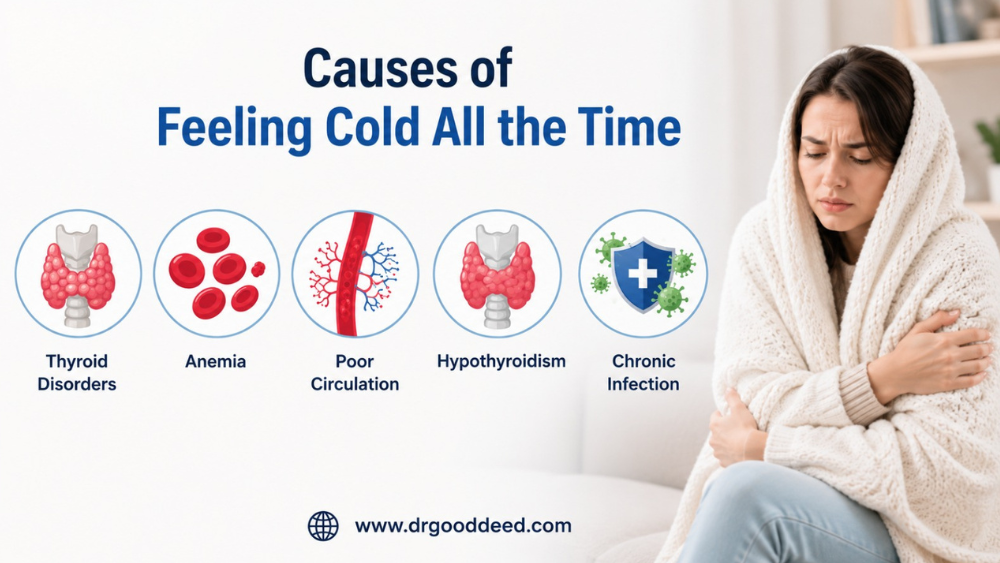
The causes of feeling cold all the time range from nutrient deficiencies to hormonal disorders. Most are treatable once identified.
Thyroid Disorders Affecting Metabolism
An underactive thyroid slows the entire metabolic process. Less metabolic activity means less heat production. The American Thyroid Association estimates over 20 million Americans have thyroid issues, and up to 60% go undiagnosed. Cold intolerance is often one of the earliest symptoms, appearing before weight gain or hair loss.
Low Iron and Anemia Symptoms
Iron helps red blood cells carry oxygen. Without enough oxygen, cells generate less energy and less heat. Iron-deficiency anemia affects roughly 10 million Americans. Women who menstruate heavily and vegetarians who skip iron-fortified foods face the highest risk.
Poor Circulation and Blood Flow Issues
Narrow arteries reduce warm blood reaching the limbs. People with type 2 diabetes often develop peripheral neuropathy alongside poor circulation. Sitting for 8 or more hours daily, which is standard in desk jobs, also cuts circulation significantly.
Low Calorie Intake and Body Fat Levels
Body fat acts as insulation. People with very low body fat feel colder faster. A diet too low in calories also starves the thyroid of the fuel it needs. Eating below the basal metabolic rate reduces core temperature by measurable degrees.
Vitamin Deficiencies Causing Chills
Vitamin deficiencies causing chills are frequently missed in standard conversations about cold sensitivity:
- Vitamin B12: Low B12 causes nerve damage over time, and damaged nerves misread temperature signals
- Vitamin D: Deficiency disrupts metabolic signaling. About 42% of US adults are vitamin D deficient
- Ferritin: Even when full anemia has not developed, low stored iron causes cold hands and fatigue
Fatigue and Feeling Cold Symptoms
The fatigue and feeling cold symptoms that appear together usually point to a systemic cause. When multiple symptoms cluster, the body is often dealing with a hormonal or nutritional issue.
Weakness and Low Energy Levels
Low energy combined with persistent coldness is a signature of both hypothyroidism and B12 deficiency. The body slows conversion of glucose to energy, reducing heat output at the cellular level.
Brain Fog and Concentration Problems
Brain fog alongside cold sensitivity is common in anemia. The brain is highly oxygen-dependent. When red blood cells drop, cognitive function and temperature regulation both decline together.
Pale Skin and Dizziness
Pale or yellowish skin with cold hands is a strong indicator of anemia. Dizziness when standing points to low blood pressure or dehydration, both of which reduce how well the body distributes heat.
Hair Thinning and Dry Skin Changes
Hair thinning combined with feeling cold is almost always thyroid-related. The thyroid controls hair follicle cycling. When it is underactive, follicles enter resting phase too early. Dry skin follows because the thyroid also governs oil gland activity.
Thyroid Disorders and Cold Sensitivity
Thyroid dysfunction is the most medically significant reason why I am always cold, which remains a persistent complaint. The thyroid produces T3 and T4 hormones that control how fast cells burn fuel. Slower burning equals less heat.
Hypothyroidism Slowing Metabolism
TSH levels above 4.5 mIU/L generally indicate hypothyroidism. Many people with borderline TSH (2.5–4.5) still experience cold intolerance but receive no diagnosis. This is a documented gap in thyroid care.
Hormonal Imbalance Affecting Body Temperature
Estrogen, cortisol, and insulin all interact with thyroid function. Women in perimenopause sometimes experience cold sensitivity alongside hot flashes because fluctuating estrogen directly disrupts the hypothalamic thermostat.
Weight Gain and Fatigue Symptoms
Unexplained weight gain alongside fatigue and cold sensitivity is a clinical triad. These three together have a higher predictive value for hypothyroidism than any one symptom alone.
Vitamin Deficiencies Causing Chills
Vitamin deficiencies causing chills are among the most reversible causes of cold sensitivity in the US. A single blood panel covering B12, D, ferritin, and folate can identify the problem in one visit.
| Nutrient | Normal Range | Cold-Risk Level |
| Vitamin B12 | 200–900 pg/mL | Under 300 pg/mL |
| Vitamin D | 30–100 ng/mL | Under 20 ng/mL |
| Ferritin (women) | 12–150 ng/mL | Under 30 ng/mL |
| Folate | 2.7–17 ng/mL | Under 3 ng/mL |
Foods That Improve Circulation and Warmth
Foods that improve circulation and warmth work through multiple pathways: fueling metabolism, supporting red blood cell production, and improving vessel flexibility.
Protein-Rich Foods Supporting Metabolism
Protein has the highest thermic effect of any macronutrient. Digesting it raises core temperature more than carbohydrates or fats. Eggs, chicken, and lentils supply tyrosine, an amino acid the body uses to make thyroid hormone directly.
Iron-Rich Foods and Healthy Blood Flow
- Red meat: highest bioavailable iron per serving
- Spinach and lentils: plant-based iron, best absorbed with vitamin C
- Pumpkin seeds: iron plus zinc, which supports thyroid enzyme function
- Oysters: highest zinc content of any single food
Hydration and Circulation Support
Dehydration thickens blood, making it harder to pump warmth to the extremities. 8–10 cups of water daily keeps viscosity at a level that supports circulation. Ginger tea adds a thermal effect through TRPV1 receptor stimulation.
How to Stop Feeling Cold Constantly
Constantly feeling cold means addressing the root cause, not just wearing more layers.
Improving Sleep and Recovery
Chronic sleep deprivation suppresses thyroid hormone and raises cortisol. High cortisol at night blocks T3 conversion, reducing heat output the next day. The American Academy of Sleep Medicine recommends 7–9 hours for adults.
Regular Movement and Exercise
Resistance training builds muscle mass, and muscle generates more resting heat than fat tissue. Thirty minutes of weight training three times per week raises basal metabolic rate measurably over 8 weeks.
Managing Stress and Cortisol Levels
Cortisol and adrenaline constrict blood vessels within minutes of a stress response. Chronic stress keeps vessels partially constricted, reducing blood flow to hands and feet consistently. Diaphragmatic breathing reduces cortisol within 20–30 minutes.
Eating Enough Nutrient-Dense Foods
Restricting calories below 1,200/day (women) or 1,500/day (men) consistently lowers T3 levels within two weeks. The body conserves energy by cutting heat production first.
Lifestyle Habits That May Worsen Cold Sensitivity
These daily habits quietly increase cold sensitivity without any obvious link to why am I always cold:
- Excessive caffeine: Over 400mg daily constricts peripheral blood vessels
- Smoking: Nicotine causes sustained vasoconstriction. Smokers have measurably colder fingertip temperatures
- Sedentary lifestyle: Sitting for hours drops muscle heat generation significantly
- Skipping breakfast: Morning blood glucose sets the metabolic tone. Skipping it increases cold sensitivity by midday
- Alcohol before bed: Creates initial warmth through vasodilation, then causes rapid heat loss during sleep
FAQs
What are the most common causes of feeling cold all the time?
Hypothyroidism, iron-deficiency anemia, and vitamin B12 deficiency are the top three causes in US adults. A TSH panel, CBC, and ferritin test together identify the cause in most cases within one blood draw.
Can anemia and low iron make someone feel constantly cold?
Yes. Low iron reduces red blood cell count, cutting oxygen delivery and tissue heat. Even low ferritin under 30 ng/mL causes cold hands before full anemia develops. Women with heavy periods are at the highest risk.
How does hypothyroidism affect body temperature regulation?
Hypothyroidism reduces T3 and T4 output, slowing cellular fuel-burning directly. Cold intolerance appears months before weight gain or hair loss. TSH above 4.5 mIU/L on a blood test confirms it.
Which vitamin deficiencies are linked to chills and fatigue?
B12 deficiency damages temperature-sensing nerves. Vitamin D deficiency impairs metabolic signaling. Low ferritin depletes oxygen-carrying capacity. All three are measurable with a standard blood panel and are among the most treatable causes.
Can poor circulation cause cold hands and feet?
Yes. Raynaud’s disease, peripheral artery disease, and low blood pressure all reduce warm blood flow to extremities. Raynaud’s is identifiable: fingers turn white, then blue, then red during cold exposure or emotional stress.
What foods help improve warmth and circulation naturally?
Beef and oysters provide iron and zinc. Ginger and cayenne stimulate thermogenesis through TRPV1 receptors. Lentils with bell peppers maximize plant-based iron absorption. These have the strongest clinical evidence for circulation and heat support.
How does stress affect body temperature and circulation?
Cortisol and adrenaline, released during stress, constrict blood vessels within minutes. Chronic stress keeps vessels in a partially constricted state long-term, measurably reducing hand and foot temperature.
Can under-eating and low calorie intake increase cold sensitivity?
Yes. Eating below your basal metabolic rate drops T3 levels within two weeks. The body cuts heat production to conserve energy. This is documented in research on very low-calorie diets and restrictive eating disorders.
When should constant cold sensitivity be medically evaluated?
Get evaluated if cold sensitivity persists more than 4 weeks without an obvious environmental cause, especially with fatigue, weight changes, or hair thinning. A TSH, CBC, ferritin, B12, and vitamin D panel is the standard first step.
What symptoms suggest a more serious underlying condition?
Pale skin with dizziness points to anemia. Fingers turning white or blue in the cold point to Raynaud’s or vascular disease. Cold sensitivity with weight gain and hair loss points to hypothyroidism. Any of these warrant a medical visit.