
A headache after eating usually develops from a drop or spike in blood sugar, dehydration, or a reaction to specific foods. The World Health Organization classifies recurring headaches under ICD-11 code 8A80, with tension-types of headache and migraine being the most common forms triggered by meals.
In the USA, post-meal headaches affect a large share of migraine sufferers, since food is one of the most reported migraine triggers. This guide covers the causes, the specific foods involved, prevention steps, and when a headache after eating signals something that needs medical attention.
What Triggers Headaches After Eating?
A headache after eating results from one of four main mechanisms: blood sugar changes, dehydration, specific food compounds, or an underlying medical condition reacting to digestion.
Food-Related Triggers
Certain foods contain compounds that directly affect blood vessels in the brain. Tyramine, found in aged cheese and cured meats, and nitrates, found in processed meats, both cause blood vessels to widen or narrow rapidly, triggering headache pain.
Blood Sugar Changes
Eating a large amount of refined carbohydrates causes blood sugar to spike, then drop sharply 1–3 hours later. This drop, called reactive hypoglycemia, triggers the release of stress hormones that can cause headache pain.
Dehydration and Electrolyte Imbalances
Salty meals draw water out of cells and into the bloodstream, temporarily reducing fluid around brain tissue. Even mild dehydration, a 1–2% drop in body water, has been shown to trigger headaches in controlled studies.
Underlying Medical Conditions
Conditions like migraine, temporomandibular joint (TMJ) disorder, and trigeminal autonomic cephalalgias can all be triggered specifically by the act of eating or by certain food compounds, separate from blood sugar or hydration effects.
Causes of Headaches After Meals
The causes of headaches after meals range from temporary and harmless to signs of an underlying condition that needs diagnosis. Most cases fall into one of six identifiable categories, each with a distinct mechanism and timeline.
Reactive Hypoglycemia
Reactive hypoglycemia occurs when blood sugar drops below 70 mg/dL within 1–4 hours after eating, typically after a high-carbohydrate meal. The American Diabetes Association notes this triggers adrenaline release, which can cause headache, shakiness, and sweating.
Food Sensitivities and Intolerances
Unlike allergies, food sensitivities (such as gluten or lactose intolerance) cause digestive inflammation that can trigger headaches 30 minutes to several hours after eating, often alongside bloating or stomach discomfort.
Migraine Trigger Foods
A 2020 review in Headache: The Journal of Head and Face Pain by Martin and Vij identified specific food categories most commonly reported by migraine patients, including aged cheese, processed meat, chocolate, and alcohol, particularly red wine.
High-Sugar Meals
Meals high in added sugar cause rapid insulin release. The resulting blood sugar crash 1–2 hours later is one of the most common and underrecognized causes of headaches after meals in the USA, where added sugar intake remains high.
Excessive Caffeine Consumption
Caffeine constricts blood vessels. When caffeine wears off 3–5 hours after consumption, blood vessels rebound and widen, a mechanism well documented in caffeine-withdrawal headache research.
Food Additives and Preservatives
Monosodium glutamate (MSG), nitrates, and artificial sweeteners like aspartame have each been studied for headache association, though individual sensitivity varies significantly between people.
Foods That May Trigger Headaches
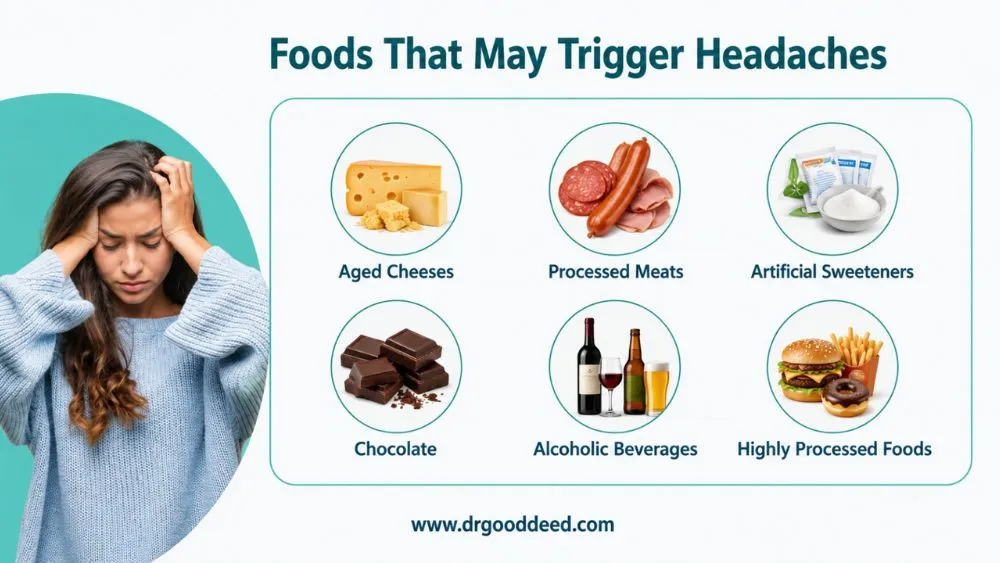
Foods that may trigger headaches affect blood vessel diameter, blood sugar, or contain compounds the body processes slowly.
Aged Cheeses
Aged cheeses like cheddar, blue cheese, and parmesan contain high levels of tyramine, a compound formed during the aging process that affects blood vessel regulation in sensitive individuals.
Processed Meats
Bacon, hot dogs, and deli meats often contain nitrates and nitrites used for preservation. These compounds cause blood vessels to dilate, which can trigger headache onset within 30 minutes in sensitive individuals.
Foods Containing MSG
MSG is found in many processed foods, soy sauce, and certain restaurant dishes. A 2016 study in the Journal of Headache and Pain by Obayashi and Nagamura found MSG triggered headache in a subset of sensitive participants within 1 hour of consumption at higher doses.
Artificial Sweeteners
Aspartame, found in many diet sodas and sugar-free products, has been associated with headache in some sensitive individuals, though research results remain mixed across studies.
Chocolate
Chocolate contains both caffeine and phenylethylamine, a compound that affects blood vessel tone. It ranks among the most commonly self-reported migraine triggers, though some research suggests chocolate cravings may precede a migraine rather than cause it.
Alcoholic Beverages
Red wine specifically contains tyramine and histamine, both linked to headache triggers. Alcohol also causes dehydration and blood vessel dilation, a double mechanism that explains why headaches after drinking often appear within hours, not just the next day.
Highly Processed Foods
Beyond specific additives, highly processed foods tend to be high in sodium, low in fiber, and cause faster blood sugar spikes, combining multiple headache triggers into a single meal.
Symptoms That May Occur With Post-Meal Headaches
A headache after eating in the USA often comes with additional symptoms that help identify the underlying cause.
- Nausea or stomach discomfort, common with food sensitivities and migraine
- Shakiness, sweating, or rapid heartbeat, signs of reactive hypoglycemia
- Sensitivity to light or sound, typical of migraine vs headaches
- Bloating or digestive changes, often linked to food intolerances
- Fatigue or brain fog occurring 1–2 hours after eating, associated with blood sugar crashes
- Facial pressure or jaw discomfort, which may point to TMJ-related headache during chewing
How to Prevent Headaches After Eating
Prevent headaches after eating by addressing the root mechanism, whether that is blood sugar stability, hydration, or trigger food avoidance. The strategies below target the most common causes identified in the sections above.
Eating Balanced Meals
Combining protein, fiber, and healthy fat with carbohydrates slows digestion and prevents the rapid blood sugar spike and crash that triggers reactive hypoglycemia headaches.
Avoiding Known Trigger Foods
For migraine sufferers, eliminating one suspected trigger food at a time for 2–4 weeks, then reintroducing it, helps identify individual sensitivity more accurately than eliminating multiple foods at once.
Maintaining Stable Blood Sugar Levels
Eating every 3–4 hours prevents blood sugar from dropping low enough to trigger a stress hormone response. Skipping meals is one of the most common and preventable causes of headaches after meals.
Staying Hydrated
Drinking water before and during meals, especially salty ones, helps offset the fluid shift that contributes to dehydration-related headaches. The Institute of Medicine recommends roughly 11.5 cups of fluid daily for women and 15.5 cups for men.
Limiting Highly Processed Foods
Reducing intake of processed meats, packaged snacks, and high-sodium meals lowers exposure to multiple headache triggers (nitrates, MSG, sodium) simultaneously.
Treatment Options for Headaches After Meals
Treatment for a headache after eating depends on the underlying cause identified through symptom patterns and timing. Most cases respond to dietary or lifestyle changes, though some require medical evaluation and prescription treatment.
- Managing Blood Sugar Levels: For reactive hypoglycemia, eating a small protein-containing snack immediately when symptoms begin can stop the headache from worsening within 15–20 minutes
- Dietary Modifications: An elimination diet under guidance from a registered dietitian identifies specific trigger foods systematically rather than through guesswork
- Migraine Treatments: For migraine triggered by food, treatments range from over-the-counter NSAIDs for mild cases to prescription triptans for moderate-to-severe migraine, per American Headache Society guidelines
- Addressing Underlying Medical Conditions: Conditions like celiac disease or TMJ disorder require condition-specific treatment (gluten elimination, dental splints) rather than headache-focused treatment alone
- Lifestyle Adjustments: Reducing caffeine gradually (not abruptly) over 1–2 weeks prevents withdrawal headaches while still addressing caffeine-related triggers
When Headaches After Eating May Signal a Medical Problem
While most headache after eating cases in the USA are linked to diet and blood sugar, certain patterns suggest an underlying condition requiring evaluation by a primary care physician or neurologist. Recognizing these warning signs early prevents delayed diagnosis of conditions like diabetes, migraine disorders, or gastrointestinal disease.
- Headaches occurring after eating specific foods consistently, every time, may indicate a true food sensitivity or migraine trigger requiring formal testing
- Headaches accompanied by blurred vision, confusion, or difficulty speaking require immediate medical attention, as these can signal more serious neurological events
- Frequent post-meal headaches alongside excessive thirst, frequent urination, or unexplained weight loss may indicate undiagnosed diabetes and warrant blood glucose testing
- Headaches that worsen over weeks rather than staying consistent should be evaluated, since this pattern differs from typical trigger-based headaches
- Post-meal headaches alongside chronic digestive symptoms (diarrhea, bloating, weight loss) may indicate celiac disease, which affects roughly 1 in 100 people in the USA per the National Institute of Diabetes and Digestive and Kidney Diseases
FAQs
1. Why do I get a headache after eating?
The most common cause is a blood sugar crash 1–3 hours after a high-carbohydrate meal, called reactive hypoglycemia. Tyramine in aged cheese, nitrates in processed meat, and dehydration from salty food are other frequent causes.
2. What triggers headaches after eating?
Four main triggers: blood sugar drops after high-carb meals, dehydration from sodium-heavy foods, compounds like tyramine and nitrates in specific foods, and underlying conditions like migraine or TMJ disorder reacting to chewing or digestion.
3. Can blood sugar fluctuations cause headaches after meals?
Yes. When blood sugar drops below 70 mg/dL within 1–4 hours after eating, the body releases adrenaline, which the American Diabetes Association links directly to headache, shakiness, and sweating in reactive hypoglycemia.
4. Which foods commonly trigger headaches?
Aged cheese (tyramine), processed meats (nitrates), chocolate (phenylethylamine and caffeine), red wine (tyramine and histamine), and MSG-containing foods rank highest in migraine trigger research per a 2020 review in Headache journal.
5. Can food sensitivities cause headaches after eating?
Yes. Gluten and lactose intolerance cause digestive inflammation that triggers headaches 30 minutes to several hours after eating, typically alongside bloating, gas, or stomach pain, distinct from immediate allergic reactions.
6. Is a headache after eating a sign of diabetes?
Sometimes. Frequent post-meal headaches combined with excessive thirst, frequent urination, and unexplained weight loss may indicate undiagnosed diabetes. A fasting blood glucose test confirms or rules this out definitively.
7. Can dehydration contribute to post-meal headaches?
Yes. Salty meals pull water from cells into the bloodstream, temporarily reducing fluid around brain tissue. Even a 1–2% drop in body water has triggered headaches in controlled hydration studies.
8. How can I prevent headaches after eating?
Eat balanced meals with protein, fiber, and fat to slow blood sugar spikes. Drink water before salty meals. Eat every 3–4 hours. Identify and eliminate one suspected trigger food at a time over 2–4 weeks.
9. Should I keep a food diary to identify headache triggers?
Yes. Recording meal timing, specific foods, and headache onset for 2–4 weeks identifies patterns that elimination guesswork misses, and is the method recommended by the American Headache Society for trigger identification.
10. Can migraines be triggered by certain foods?
Yes. A 2020 review in Headache journal found aged cheese, processed meats, chocolate, and alcohol (especially red wine) are the most consistently reported migraine triggers, though sensitivity varies significantly by individual.
Sources
- World Health Organization: ICD-11 Classification of Headache Disorders
- American Diabetes Association: Hypoglycemia (Low Blood Glucose)
- Martin VT, Vij B. Diet and Headache: Part 1. Headache: The Journal of Head and Face Pain. 2016.
- Obayashi Y, Nagamura Y. Does monosodium glutamate really cause headache? Journal of Headache and Pain. 2016.
- American Headache Society: Treatment Guidelines for Migraine
- National Institute of Diabetes and Digestive and Kidney Diseases: Celiac Disease
- Institute of Medicine: Dietary Reference Intakes for Water