Drinking milk before bed has been a bedtime habit for generations, and the science behind it is more interesting than most people expect. Milk contains tryptophan, calcium, and casein protein, all of which interact with the body’s sleep-regulating systems.
A 2023 review published in Advances in Nutrition found that dairy proteins and micronutrients in milk are consistently linked to positive effects on sleep quality. This guide breaks down why it works, which milk type is best, and when it does not make sense for certain people.
Why Milk Became a Bedtime Habit in the First Place
Drinking milk before bed is one of the oldest bedtime remedies in the USA and around the world. The habit started long before anyone understood the biochemistry. Mothers gave children warm milk to calm them down. What science has now confirmed is that the calming effect is not entirely in your head.
The Cultural Belief vs The Scientific Explanation
Culturally, warm milk signals bedtime the same way a dim room or a lullaby does. The body learns to associate the routine with sleep. This is called conditioned relaxation, and it has real physiological effects on heart rate and cortisol.
Scientifically, milk contains tryptophan, an essential amino acid the body cannot produce on its own. Tryptophan converts to serotonin, which then converts to melatonin, the hormone that tells your brain it is time to sleep. Calcium in milk helps the brain use tryptophan more efficiently.
What Happens in the Body After Drinking Milk at Night
Within 30 to 60 minutes of drinking milk before bed, tryptophan enters the bloodstream and begins crossing the blood-brain barrier. Calcium activates enzymes that convert tryptophan into serotonin. As light dims and the evening progresses, serotonin converts to melatonin. The result is a gradual shift toward drowsiness, not sudden sedation.
Casein protein, which makes up about 80% of milk’s protein content, digests slowly and stabilizes blood sugar throughout the night, preventing the hunger-triggered waking that many people experience in the early morning hours.
Benefits of Drinking Milk at Night
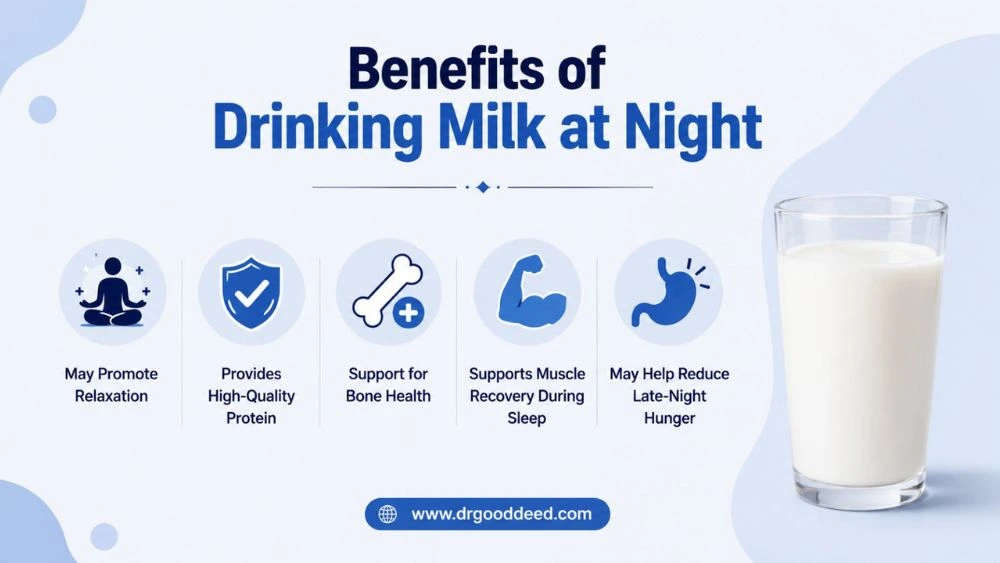
The benefits of drinking milk at night go well beyond a comforting feeling. The nutrient profile of milk addresses several factors that directly affect sleep quality.
May Promote Relaxation
Milk contains bioactive peptides produced when casein is digested. These peptides have mild anxiolytic (anti-anxiety) effects, meaning they reduce the nervous system’s stress response. A 2015 study found that alpha-lactalbumin, a whey protein in milk, increases plasma tryptophan availability and improves morning alertness. Less stress at night means faster sleep onset.
Provides High-Quality Protein
One cup of whole cow’s milk delivers approximately 8 grams of protein, split between fast-digesting whey and slow-digesting casein. Casein is particularly useful at night. It sustains amino acid release for up to 7 hours, feeding muscle tissue while you sleep.
Support for Bone Health During Long Overnight Fasts
During the 7 to 9 hours of sleep, the body goes without dietary calcium. Drinking milk before bed gives the body a calcium reserve to draw from during this fast. One cup of milk contains roughly 300mg of calcium, covering about 23% of the daily recommended intake for adults. Bone remodeling, which happens largely during sleep, benefits from this timing.
Supports Muscle Recovery During Sleep
Casein protein consumed before sleep provides a sustained supply of amino acids during overnight muscle repair. A 2018 study in Nutrients found that pre-sleep casein and whey protein consumption improved next-morning resting metabolic rate in active women. This makes drinking milk before bed a practical strategy for anyone who exercises.
May Help Reduce Late-Night Hunger
The combination of protein and fat in milk slows gastric emptying. This keeps hunger signals quiet through the night. People who wake frequently due to hunger often benefit from the slow-digesting nature of casein, which keeps blood amino acids stable until morning.
Contributes Important Nutrients
Beyond protein and calcium, one cup of milk provides:
- Magnesium: Supports muscle relaxation and regulates GABA receptors linked to sleep
- Potassium: Reduces nighttime leg cramps
- Vitamin D: Deficiency is linked to poor sleep quality and shorter sleep duration
- Vitamin B12: Involved in melatonin production pathways
Best Type of Milk to Drink Before Bed
Choosing the best type of milk to drink before bed depends on your health goals and dietary needs.
Cow’s Milk
Whole cow’s milk is the most researched option for sleep. It provides the highest tryptophan content (183mg per cup) alongside calcium and casein. Night milk, collected from cows milked at night when their own melatonin levels peak, contains measurably higher melatonin. It is available in specialty health stores in the USA.
Low-Fat Milk
Low-fat milk (1% or 2%) delivers the same tryptophan and calcium as whole milk with fewer calories. The protein profile is identical. This works for people watching caloric intake while still wanting nighttime drinks that promote better sleep.
Lactose-Free Milk
Same nutritional profile as regular cow’s milk. The lactase enzyme is added during processing, breaking down lactose before you drink it. This is the ideal option for people with lactose intolerance who still want the full tryptophan and casein benefits.
Almond Milk
Almond milk contains about 80mg of tryptophan per cup, less than half of cow’s milk. Its advantage is magnesium content, which supports muscle relaxation and GABA activity. Choose unsweetened, fortified versions for the best sleep benefit.
Soy Milk
Soy milk is the strongest plant-based alternative for sleep. It provides tryptophan levels close to cow’s milk and contains isoflavones, plant compounds that may support sleep quality. A 2023 review noted soy’s isoflavones are among the most studied plant compounds in relation to sleep. Choose calcium-fortified versions.
Oat Milk
Oat milk is lower in tryptophan but higher in complex carbohydrates. Complex carbs increase the ratio of tryptophan crossing the blood-brain barrier relative to other amino acids, making more tryptophan available for serotonin production. It is a useful indirect sleep aid, particularly when warmed.
Warm Milk vs Cold Milk: Does Temperature Matter?
Warm milk and sleep quality are closely linked in research, but not for the reasons most people assume.
Physiological Differences
Temperature does not change tryptophan, calcium, or casein content. Both warm and cold milk provide identical nutrients. The physiological advantage of warm milk relates to body temperature regulation. Drinking something warm slightly raises core temperature. As your body works to dissipate that heat, core temperature drops. Falling core temperature is a biological trigger for sleepiness.
Psychological Differences
Warm milk and sleep quality are also tied through learned association. The nervous system treats bedtime rituals as sleep cues. A consistent ritual, warm milk included, signals the brain that sleep is imminent. This reduces arousal and anxiety. Cold milk does not carry the same cultural conditioning for most people.
When Cold Milk May Be Better
Cold milk works fine for the nutritional benefits. If you drink milk primarily for the protein or calcium, temperature is irrelevant. Cold milk also causes less acid production in some people with mild reflux, making it the safer choice for that group.
How to Make Bedtime Milk Work Better (Practical Framework)
Drink milk 30 to 60 minutes before bed. This gives tryptophan enough time to cross the blood-brain barrier and begin converting to serotonin before your sleep window opens.
Portion Rules
One cup (240ml) is the right starting portion. More than two cups adds unnecessary calories and may increase overnight bathroom trips. Children aged 2 to 8 do well with half a cup.
Composition Rules
Pair milk with a small carbohydrate source, like a few crackers or half a banana. Carbohydrates trigger insulin release, which reduces competing amino acids in the bloodstream, giving tryptophan a clearer path to the brain. This combination produces a stronger sleep effect than milk alone.
Sleep Tracking Rule
If you add drinking milk before bed to your routine, track your sleep quality for two weeks. Note time-to-fall-asleep and nighttime waking frequency. Most people who respond to the tryptophan-calcium mechanism notice improvement within 5 to 7 days.
Who Should Avoid Drinking Milk Before Bed?
People With Lactose Intolerance
About 36% of Americans have some degree of lactose intolerance. Drinking dairy milk before bed causes bloating, gas, and stomach cramping during the night, directly disrupting sleep. Switch to lactose-free milk or soy milk instead.
Individuals With Dairy Allergies
A true dairy allergy triggers immune responses that no amount of lactase enzyme will fix. Casein and whey proteins are the usual allergens. Plant-based milks are the only appropriate alternative.
Those Experiencing Reflux Symptoms
Milk temporarily neutralizes stomach acid but stimulates more acid production 20 to 30 minutes later. For people with GERD or frequent acid reflux, drinking milk before bed may worsen overnight reflux symptoms. Cold milk or a non-dairy alternative is less acid-stimulating.
People Sensitive to Nighttime Digestion Issues
Some people find full-fat dairy heavy enough to disrupt sleep through bloating or discomfort. Low-fat or lactose-free milk typically resolves this. Drinking milk more than 30 minutes before lying down also helps by allowing initial digestion to begin while still upright.
FAQs
Does warm milk really help you fall asleep?
Yes, but modestly. Warm milk and sleep quality connect through tryptophan-to-melatonin conversion and the body’s temperature regulation response to warm liquids. The ritual effect also reduces pre-sleep anxiety. Expect gradual drowsiness, not instant sedation.
What role does tryptophan in milk play in sleep?
Tryptophan in milk and sleep work through a two-step process. Tryptophan converts to serotonin first, then serotonin converts to melatonin as darkness increases. One cup of cow’s milk provides approximately 183mg of tryptophan, which is meaningful but not pharmacological in dose.
Is warm milk better than cold milk for sleep?
Yes, for most people. Warm milk and sleep quality benefit from both the physiological temperature-drop response and the conditioned relaxation response from the nightly routine. Nutritionally, both temperatures deliver identical tryptophan and calcium.
Can drinking milk before bed cause weight gain?
No, if portion is controlled. One cup of whole milk adds around 150 calories. A 2018 study in Nutrients found pre-sleep casein protein improved next-morning resting metabolic rate, so it does not increase fat storage risk at appropriate amounts.
Are there any risks to drinking milk at night?
Yes, for specific groups. People with lactose intolerance experience digestive disruption. Those with GERD see reflux worsen. People with dairy allergies should avoid it entirely. For healthy adults without these conditions, nightly milk consumption carries no established health risk.
Can lactose intolerance affect sleep after drinking milk?
Yes. Gas, bloating, and cramps from undigested lactose wake people up during the night. Lactose-free milk solves this and delivers the same benefits of drinking milk at night including tryptophan, calcium, and casein protein.
Should children drink milk before bed?
Yes, for most children aged 2 and up. Drinking milk before bed supports bone development and provides a natural wind-down cue. Limit to half a cup for children under 6 to avoid excess caloric intake before sleep. Brush teeth after to prevent cavities.
Does milk increase melatonin levels?
Yes, indirectly. Tryptophan in milk and sleep connect through serotonin as an intermediate step. Night milk, collected from cows at night, contains direct measurable melatonin. Regular milk raises melatonin by providing tryptophan as a precursor rather than delivering melatonin directly.
Is almond milk a good bedtime drink?
Yes, with caveats. Almond milk provides magnesium and is low-calorie, making it one of the best types of milk to drink before bed for people avoiding dairy. Its tryptophan content is about 56% lower than cow’s milk, so the sleep effect is milder. Choose fortified, unsweetened versions.
Sources
- St-Onge MP, et al. Exploring the Role of Dairy Products in Sleep Quality. Advances in Nutrition. 2023;14(2):283-294. https://pmc.ncbi.nlm.nih.gov/articles/PMC10229376/
- Pérez-Piñero S, et al. Effectiveness of Enriched Milk with Ashwagandha Extract and Tryptophan for Improving Subjective Sleep Quality. Clocks & Sleep. 2024. https://www.ncbi.nlm.nih.gov/pmc/articles/PMC11348217/
- Madzima TA, et al. Pre-Sleep Consumption of Casein and Whey Protein: Effects on Morning Metabolism and Resistance Exercise Performance in Active Women. Nutrients. 2018;10(9):1273. https://pubmed.ncbi.nlm.nih.gov/30201853/
- Dairy Nutrition Canada. Milk and Sleep: Review of Evidence. Updated 2024. https://dairynutrition.ca/en/nutrition-and-health/sleep/milk-and-sleep
- Sleep Foundation. Does Warm Milk Help You Sleep? Updated 2026. https://www.sleepfoundation.org/nutrition/does-warm-milk-help-you-sleep
- Aisthesis Journal. Timed Consumption of Tryptophan from Whole Cow’s Milk to Regulate Sleep Quality. University of Minnesota. 2022. https://pubs.lib.umn.edu/index.php/aisthesis/article/view/4726
- Res PT, et al. Protein ingestion before sleep improves postexercise overnight recovery. Medicine & Science in Sports & Exercise. 2012. Referenced in: https://www.ncbi.nlm.nih.gov/pmc/articles/PMC5952515/
- Journal of Medicinal Food. Night Milk Melatonin Content Review. Referenced in: https://www.sleepfoundation.org/nutrition/does-warm-milk-help-you-sleep
- Healthline. Sleep Apnea Tongue Signs. https://www.healthline.com/health/sleep-apnea/tongue-signs-of-sleep-apnea
- Cleveland Clinic. Nutrition and Sleep Health Overview. https://my.clevelandclinic.org