
Take propranolol for anxiety, and you get fast, targeted relief from the physical side of stress: racing heart, shaky hands, and that flushed feeling in your face.
Propranolol is a beta blocker (a drug that blocks adrenaline signals in your heart) prescribed by doctors across the USA for performance anxiety, situational anxiety, and as a physical symptom add-on for generalized anxiety disorder. It kicks in within 30 minutes, keeps your mind sharp, and carries no addiction risk.
What Is Propranolol?
Propranolol is a prescription beta-blocker. FDA-approved since the 1960s for heart conditions, it became one of the most widely used off-label anxiety medications in the USA because it addresses the body without touching brain chemistry.
Overview of Propranolol
Generic name: propranolol. Brand names: Inderal, Innopran XL. It comes in immediate-release tablets (used as-needed) and extended-release capsules (used for daily management). Both require a prescription.
How Beta Blockers Work
Your heart has beta receptors, small sensors that respond to adrenaline. When you are stressed, adrenaline binds to these receptors and drives your heart rate up fast. Propranolol attaches to those receptors first, blocking adrenaline entirely before it causes symptoms.
Why Propranolol Is Used for Anxiety
Most people who choose to take propranolol for anxiety do so because it does not sedate them. Unlike benzodiazepines (sedating drugs like Xanax or Valium), propranolol leaves your thinking, focus, and reaction time completely untouched. You stay sharp. Your body just stops overreacting.
Types of Anxiety It May Help Manage
- Performance anxiety (musicians, athletes, surgeons, public speakers)
- Situational anxiety (exams, flights, medical procedures)
- Social anxiety (for physical symptoms only, not fear itself)
- Generalized anxiety disorder (used as a physical add-on alongside therapy or SSRIs)
How Does Propranolol Work for Anxiety?
When you take propranolol for anxiety, it does not reduce fear or worry. It stops your body from physically overreacting to stress, and that physical calm often stops mental anxiety from spiraling further.
Blocking the Effects of Adrenaline
The moment stress hits, adrenaline floods your system. Propranolol blocks beta-1 receptors in the heart before adrenaline can activate them. Your heart rate stays controlled instead of jumping to 120 or 130 beats per minute.
Reducing the Body’s Stress Response
A calm heart rate stops your body from sending more distress signals to your brain. This breaks the feedback loop where physical symptoms, pounding chest, shaky voice, and sweaty palms, make mental anxiety worse.
Managing Physical Symptoms of Anxiety and Propranolol
Physical symptoms of anxiety and propranolol are directly connected in how this drug works. Propranolol controls:
- Rapid or pounding heartbeat (palpitations)
- Hand or voice tremors
- Excessive sweating
- Facial flushing (redness in cheeks or neck)
- Shortness of breath triggered by a racing heart
What Propranolol Does Not Treat
Propranolol does not touch overthinking, fear, or intrusive thoughts. It does not treat panic disorder as a solo option. If your anxiety is mostly mental, a doctor will pair propranolol with therapy or a different medication.
When to Take Propranolol for Anxiety
Timing the dose correctly makes a significant difference. Too late and it has not kicked in. Too early and the effect fades before your event ends.
Best Time to Take Propranolol for Anxiety
The best time to take propranolol for anxiety is 30 to 60 minutes before the stressful situation. Immediate-release tablets reach peak blood concentration within 60 to 90 minutes, so starting 45 minutes ahead gives consistent coverage at the right moment.
Taking Propranolol Before Stressful Events
When you take propranolol for anxiety before a planned event, flight, medical appointment, or difficult conversation, one dose about one hour before works reliably. The drug needs time to absorb before the stressor begins.
Timing for Performance Anxiety
Performers and athletes commonly take propranolol for anxiety about 45 to 60 minutes before their event. Studies on musicians with performance anxiety consistently show propranolol significantly reduces tremors and pounding heart without slowing reaction time or cognitive sharpness.
Timing for Public Speaking and Presentations
For presentations, the best time to take propranolol for anxiety is 45 to 60 minutes before speaking. Taking it after a small snack reduces stomach upset and keeps absorption more stable.
Daily Use vs As-Needed Use
- As-needed: One dose before one event. Most common for situational anxiety.
- Daily use: Two to three times per day for persistent anxiety. Stopping daily propranolol without a gradual taper carries real risks, including rebound high blood pressure. Always follow a doctor-managed taper.
How Long Propranolol Lasts for Anxiety
How long propranolol lasts for anxiety is what determines whether one dose covers your event or not.
Duration of Symptom Relief
Immediate-release propranolol provides 4 to 6 hours of relief. Extended-release forms last 10 to 24 hours. Most speeches, exams, and flights fit within the 4 to 6-hour window, so a single dose is usually enough.
Immediate-Release vs Extended-Release Forms
| Form | Onset | Duration |
| Immediate-release | 20 to 30 min | 4 to 6 hours |
| Extended-release (LA/XL) | 60 to 90 min | 10 to 24 hours |
Factors That Affect Duration
- Liver health (propranolol breaks down in the liver)
- Age (older adults metabolize it more slowly, so effects last longer)
- Body weight and metabolic rate
- Food intake (food slows absorption slightly but does not reduce effectiveness)
When Additional Doses May Be Needed
For events lasting more than 6 hours, a doctor prescribes a second dose in advance. How long propranolol lasts for anxiety also shortened in people with fast liver metabolism. Never add extra doses on your own.
Propranolol Dosage Timing for Anxiety
Propranolol dosage timing for anxiety is not the same for everyone. Your doctor sets the dose based on your heart rate, weight, and whether you use it occasionally or daily.
Common Starting Dosages
Doctors usually prescribe 10 to 40 mg for situational anxiety. Dosage varies based on your medical history and resting heart rate.
Situational Anxiety Dosage Timing
For a single event, propranolol dosage timing for anxiety is one dose taken 30 to 60 minutes prior. Do not take a second dose just because the first feels slow. It takes time to absorb.
Daily Anxiety Management Dosing
For ongoing anxiety, doctors typically prescribe 40 to 160 mg per day in two or three divided doses. Morning and evening timing is common to keep blood levels steady.
Why Dosages Should Only Be Adjusted by a Doctor
Too much propranolol causes bradycardia (heart rate dropping below 50 beats per minute) and dangerously low blood pressure. Too little produces no effect. Your doctor monitors your resting heart rate at each adjustment.
Importance of Following Prescription Instructions
Stopping daily propranolol suddenly after weeks of use triggers rebound hypertension and rapid heart rate. These are documented withdrawal effects, not minor inconveniences. Taper gradually under medical supervision.
Propranolol Side Effects and Precautions
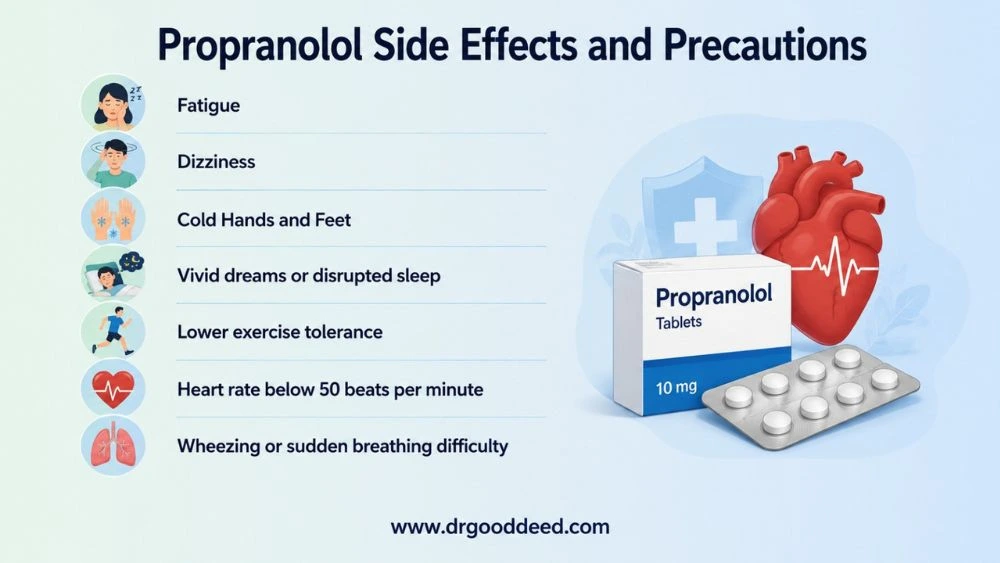
Before you take propranolol for anxiety, knowing the likely side effects prevents surprises and helps you catch problems early. Propranolol side effects and precautions are manageable for most healthy adults.
Common Side Effects
Fatigue
Propranolol slows heart rate, so the body works less forcefully. Tiredness is most noticeable in the first few weeks and usually improves over time.
Dizziness
Blood pressure drops slightly with propranolol. Standing up too fast causes light-headedness. Rising slowly from chairs or beds resolves most of it.
Cold Hands and Feet
Reduced blood flow to the extremities is well-documented. Mild and usually not dangerous for healthy adults, though worth tracking.
Less Common Side Effects
- Vivid dreams or disrupted sleep
- Nausea
- Lower exercise tolerance (heart rate will not climb as high during workouts)
- Depression, rare but reported in long-term users
Serious Side Effects Requiring Medical Attention
- Heart rate below 50 beats per minute
- Wheezing or sudden breathing difficulty
- Fainting or severe dizziness
- Unexplained leg swelling or sudden weight gain
Drug Interactions
Propranolol side effects and precautions extend to interactions with other drugs:
- Other blood pressure medications: Combined use can drop blood pressure dangerously low
- Fluoxetine (Prozac): Raises propranolol blood levels considerably
- Aluminum-based antacids: Reduce propranolol absorption
- Alcohol: Amplifies blood pressure lowering and adds dizziness
Who Should Not Take Propranolol?
People With Asthma
Propranolol blocks beta-2 receptors in the lungs, triggering bronchospasm (sudden dangerous airway narrowing). This applies even at low doses and is a hard contraindication (a medical reason never to take the drug) for anyone with asthma or severe COPD (a serious chronic lung disease).
Certain Heart Conditions
People with bradycardia (consistently slow resting heart rate), certain arrhythmias (irregular heartbeat), or severe heart failure should avoid propranolol unless a cardiologist specifically approves it.
Low Blood Pressure
If your resting blood pressure is already low, propranolol lowers it further. Fainting, particularly in hot weather or after standing, becomes a real risk.
Diabetes Considerations
Propranolol masks the rapid heartbeat that normally warns diabetics about hypoglycemia (dangerously low blood sugar). Diabetics on insulin must discuss this masking effect with their doctor before starting propranolol.
Pregnancy and Breastfeeding Considerations
Propranolol crosses the placenta and enters breast milk. Doctors explore safer alternatives first. It is used during pregnancy only when the benefit clearly outweighs the risk.
Can Propranolol Be Combined With Other Anxiety Treatments?
Take propranolol for anxiety alongside Cognitive Behavioral Therapy (CBT), and you address both sides at once. Propranolol handles the physical symptoms; CBT rewires the thought patterns behind them. Together, they outperform either approach used alone.
- SSRIs (sertraline, escitalopram): For long-term daily anxiety management, used alongside propranolol under doctor supervision
- Mindfulness and controlled breathing: Lower adrenaline output before symptoms start, reducing how much propranolol is needed
- Avoid combining propranolol with alcohol; the blood pressure drop is amplified
Always disclose every medication, supplement, and herbal product to your doctor before combining treatments.
Natural Strategies to Support Anxiety Management
These approaches reduce the anxiety load propranolol alone cannot handle:
- Diaphragmatic breathing (belly breathing): Activates your parasympathetic nervous system (the body’s built-in calm-down system), cutting adrenaline output before it peaks
- Regular aerobic exercise: Lowers baseline cortisol and resting adrenaline levels over weeks
- Cutting caffeine: Caffeine directly stimulates adrenaline release, working against propranolol
- Magnesium-rich foods: Spinach, almonds, and pumpkin seeds support nerve regulation; low magnesium is consistently linked to increased anxiety sensitivity
- Consistent sleep schedule: Sleep deprivation raises anxiety reactivity significantly; stable sleep timing is one of the most underused anxiety management tools available
FAQs
1. When should I take propranolol for anxiety?
Take propranolol for anxiety 30 to 60 minutes before the stressful event. Immediate-release tablets peak in blood concentration at 60 to 90 minutes, placing maximum physical effect right when the stressor hits.
2. What is the best time to take propranolol for anxiety?
The best time to take propranolol for anxiety is 45 to 60 minutes before your event, taken after a light snack. This timing maximizes absorption and prevents the nausea that can occur on an empty stomach.
3. How long before a presentation should I take propranolol?
Take it 45 to 60 minutes before stepping up. Peak blood concentration lands around 60 to 90 minutes after ingestion, so this window puts you at full effect exactly when you start speaking.
4. How quickly does propranolol start working for anxiety?
Physical calming begins within 20 to 30 minutes of taking the immediate-release form. Most people notice heart rate stabilizing and hand tremors stopping within the first 40 minutes.
5. How long does propranolol last for anxiety symptoms?
How long propranolol lasts for anxiety: immediate-release covers 4 to 6 hours; extended-release covers 10 to 24 hours. One immediate-release dose is sufficient for almost all single-event situations.
6. What physical symptoms of anxiety does propranolol help control?
Physical symptoms of anxiety and propranolol treatment include palpitations, hand tremors, shaky voice, facial flushing, and shortness of breath from a racing heart. It does not reduce fear, worry, or intrusive thoughts.
7. What is the usual propranolol dosage timing for anxiety?
Propranolol dosage timing for anxiety for situational use: 10 to 40 mg taken once, 30 to 60 minutes before the event. For daily management, doctors split 40 to 160 mg into two or three doses through the day.
8. Can I take propranolol every day for anxiety?
Yes. Take propranolol for anxiety daily under a doctor’s prescription for persistent symptoms. Heart rate and blood pressure are monitored regularly. Never stop abruptly; rebound blood pressure spikes are a real documented risk.
9. Can propranolol lower blood pressure too much?
Yes. Combined with other blood pressure medications or alcohol, the drop can become dangerous. Warning signs include sudden dizziness, blurry vision, and near-fainting, especially when standing up.
10. Is propranolol safe for people with asthma?
No. Propranolol is contraindicated (medically forbidden) in asthma patients because it triggers bronchospasm, a dangerous sudden narrowing of the airways. Safer anxiety treatment options exist for people with asthma.
Sources:
- MedlinePlus, U.S. National Library of Medicine: Propranolol
- FDA Drug Label: Propranolol Hydrochloride Tablets
- Anxiety and Depression Association of America (ADAA)
- American Heart Association: About Beta Blockers
DISCLAIMER: This article is for informational purposes only and does not constitute medical advice, diagnosis, or treatment. Always consult a licensed healthcare provider before starting, stopping, or changing any medication.