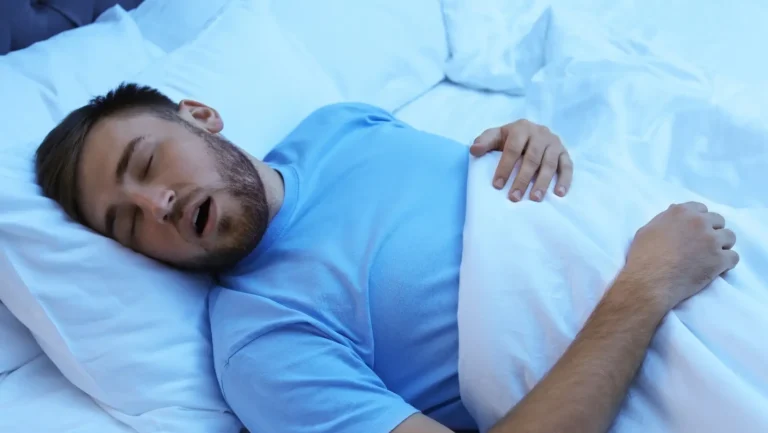
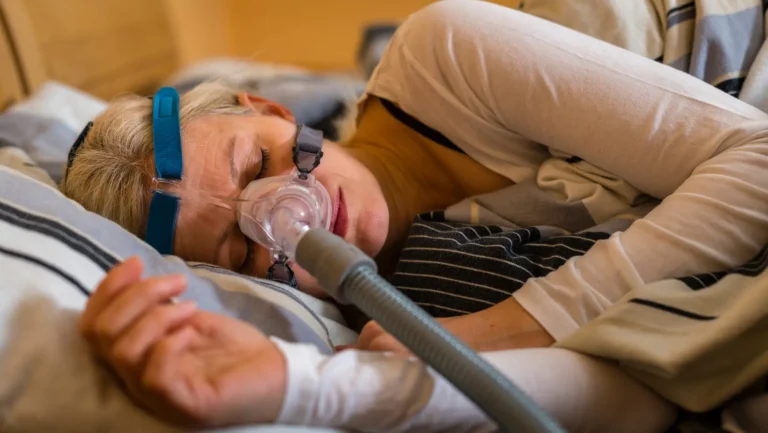
The best sleep position for sleep apnea is usually the side, but the real answer depends on your sleep apnea type, your anatomy, and whether you use CPAP.
Posture changes how far your airway collapses, how much your blood oxygen drops, and how loud you snore. Quick answer first: side sleeping is the best way to sleep with sleep apnea for most people with a positional pattern. Keep reading for the exceptions, because there are several.
Ranking Sleep Positions for Sleep Apnea (Best to Worst)
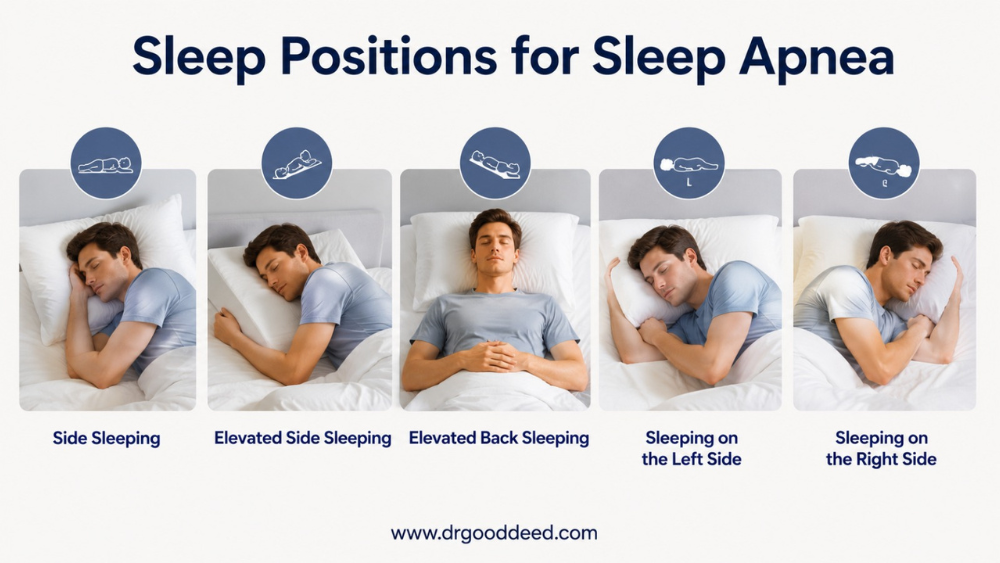
Not all sleep positions are equal when your airway is the problem. Gravity pulls soft tissue, your tongue, your jaw, even fat around your neck, toward the back of your throat the moment you lie flat. Side sleeping resists that pull. Back sleeping surrenders to it. This ranking shows the best sleep position for sleep apnea, from most protective to most harmful for airway collapse.
#1 Side Sleeping (Generally the Best Choice for Sleep Apnea)
Side sleeping keeps the tongue and soft palate from sliding straight back into the airway. Gravity now pulls tissue sideways instead of down into the throat. A 2025 meta-analysis in Frontiers in Medicine pooling 19 randomized trials and 1,231 patients found positional therapy for sleep apnea meaningfully cut the apnea-hypopnea index specifically in the supine position compared to placebo, with a mean difference of about 7.5 fewer events per hour.
#2 Elevated Side Sleeping
Add a wedge or adjustable bed base under the upper body, and you stack two benefits at once. Gravity stops pulling tissue backward, and the head-up angle reduces fluid shift into neck tissues that happens when you lie flat. People with mild-to-moderate OSA combined with nasal congestion or reflux tend to do best here. It’s not a cure on its own. It’s a multiplier on whatever else you’re doing.
#3 Elevated Back Sleeping
Flat-out back sleeping is rough on the airway, but tilting the head and chest upward 30 to 45 degrees changes the math. The angle reduces how far the tongue can fall backward. This position helps people who physically cannot tolerate side sleeping, post-surgery patients, for example, and it counts as a reasonable best way to sleep with sleep apnea when lateral positioning just isn’t an option, but it’s a compromise, not a fix.
#4 Flat Back Sleeping (Usually the Worst Position)
This is where apnea events spike for most people. Lying flat on your back lets gravity drag the tongue, soft palate, and throat tissue straight down into the airway with nothing pushing back. The link between back sleeping and sleep apnea symptoms shows up clearly in sleep lab data: the supine position consistently produces the highest apnea-hypopnea index readings, which is why sleep labs test patients in multiple positions instead of just one.
Best Sleep Position for Sleep Apnea?
Side sleeping is the umbrella answer to the best sleep position for sleep apnea, but left and right aren’t identical, and your body isn’t identical to your neighbor’s. The skeleton of the answer matters less than the details under it.
Benefits of Sleeping on the Left Side
Left-side sleeping does double duty if you have both sleep apnea and acid reflux, which overlap more than most people realize. A 2023 systematic review in the World Journal of Gastroenterology found the left lateral position reduced esophageal acid exposure time and acid clearance time compared to both the right side and the back, and a cohort study published in the American Journal of Gastroenterology using simultaneous pH and impedance monitoring confirmed faster acid clearance on the left side compared to right-side or supine sleeping.
Less acid creeping up the esophagus means less throat irritation and swelling, and a less swollen throat is a slightly more open airway.
Benefits of Sleeping on the Right Side
Right-side sleeping still beats flat back sleeping for keeping the airway open. It just loses the reflux advantage. If you don’t have GERD, the right side works fine and may feel more natural depending on which shoulder bothers you less or which side you’ve slept on your whole life. Pregnant women are often steered toward the left side anyway, for circulation reasons that have nothing to do with breathing.
Individual Differences in Sleep Position Preferences
Jaw structure, neck circumference, tonsil size, and where your body stores fat are among the main positional sleep apnea causes, and they shift which position helps most. Someone with a recessed jaw might get more benefit from side sleeping than someone whose apnea comes mainly from nasal blockage, who might need elevation more than lateral positioning.
There’s no universal best sleep position for sleep apnea that fits every anatomy. A home sleep study or in-lab polysomnogram that tracks position alongside oxygen levels is the only way to know your own pattern for certain.
Why Side Sleeping Helps Sleep Apnea
The mechanism behind the best sleep position for sleep apnea isn’t mysterious once you see it laid out. Here’s what’s happening underneath that line.
Reduced Airway Collapse
When you’re on your back, the upper airway narrows because the tongue base and soft palate fall toward the pharyngeal wall. On your side, that same tissue shifts laterally instead, away from the breathing passage.
Drug-induced sleep endoscopy research published in 2025 examined this directly. Researchers studied 186 patients and watched airway behavior shift in real time as position changed from supine to lateral, with the tongue base showing the most dramatic response to the postural change.
Improved Airflow
A wider airway means less resistance to airflow, which means your chest muscles and diaphragm don’t have to work as hard to pull air in. That reduced effort is part of why people often report feeling less exhausted after switching to side sleeping, even before any formal treatment.
Reduced Snoring
Snoring is the sound of airflow vibrating against a narrowed, partially collapsed airway. Open the passage up by rolling onto your side, and the vibration drops, sometimes disappears entirely. This is also why bed partners are usually the first ones to notice a position change working.
Better Oxygen Levels During Sleep
Fewer and shorter apnea events mean fewer oxygen desaturation episodes. Oxygen desaturation index, or ODI, tracks how often and how far blood oxygen drops during sleep. Lower ODI numbers on the side compared to the back show up consistently in polysomnography data across multiple studies, including the hypoglossal nerve stimulation research from Cleveland Clinic Florida that separately tracked supine versus non-supine AHI in the same patients.
Improved Sleep Quality
Fewer apnea events mean fewer micro-arousals, the brief wake-ups you don’t remember but that fragment sleep architecture all night. Less fragmentation means more time in deep and REM sleep, the stages that actually restore you. This is the part patients feel the most, even more than the oxygen numbers.
How to Train Yourself to Stay in the Best Position for Sleep Apnea
Most adults shift position 20 to 40 times a night without waking up enough to remember it. Training your body takes tools, not willpower.
Positional Therapy Devices for Sleep Apnea
Modern positional therapy for sleep apnea has moved past the old tennis-ball-in-a-shirt trick. Vibrating chest or neck-worn devices buzz gently the moment you roll onto your back, nudging you to shift without fully waking you. This is one of the more reliable side-sleeping techniques for sleep apnea because it removes the need for willpower entirely.
A comparative study of 124 patients with positional OSA, randomized to either a positional therapy device or CPAP for three months, found both treatments cut AHI by a similar margin, but adherence to the positional device ran well above adherence to CPAP. People simply stick with what’s comfortable.
The Pillow Strategies That Actually Work for Sleep Apnea
A pillow wedged behind the back prevents the easy roll onto the spine. A full-length body pillow hugged from the front does the same job while also supporting the top knee, which keeps the spine aligned and reduces shoulder strain.
Pillows are the cheapest entry point into the best sleep position for sleep apnea, and these side-sleeping techniques for sleep apnea cost under thirty dollars and work for a meaningful share of people with mild positional apnea.
Bed Adjustments for Sleep Apnea
An adjustable base that raises the head 30 to 45 degrees combines elevation with whatever lateral position you land in. For people who can’t tolerate strict side sleeping, alternating between elevated back and elevated side sleeping gets most of the airway benefit without the rigid posture requirement.
The Best Sleep Position Based on Your Sleep Apnea Type
Positional sleep apnea causes vary enough that the best sleep position for sleep apnea isn’t one-size-fits-all advice. The table below maps situation to strategy.
| Sleep Apnea Situation | Most Helpful Position |
| Positional OSA | Side sleeping |
| Mild OSA | Side sleeping + positional therapy |
| OSA with acid reflux | Left side + slight elevation |
| OSA with nasal congestion | Elevated side sleeping |
| CPAP users | Side or elevated side |
| Shoulder pain sufferers | Customized elevated position |
| Severe OSA | Positioning plus primary treatment |
Important point: Position is a treatment enhancer, not always a standalone treatment. Severe OSA, where breathing stops dozens of times an hour regardless of posture, still needs CPAP, an oral appliance, or another primary therapy. The best way to sleep with sleep apnea combines posture with whatever device or treatment your sleep physician has already prescribed.
Using Pillows to Improve Sleep Apnea Symptoms
Beyond keeping you on your side, the right pillow shape solves secondary problems that sneak up once you commit to the best sleep position for sleep apnea.
Body Pillows
Full-length pillows support the head, upper knee, and sometimes the lower back simultaneously. They stop the slow drift onto the back that happens around 2 a.m. once your muscles relax.
Wedge Pillows
Triangular foam wedges raise the torso for people combining elevation with side or back sleeping. They’re a direct fix for back sleeping and sleep apnea symptoms tied to reflux, and for nasal congestion that worsens when lying flat.
CPAP-Compatible Pillows
Standard pillows push the CPAP mask sideways and break the seal the moment you turn your head. CPAP-specific pillows have cutouts at the sides so the mask and hose clear the pillow surface without leaking air or waking you up.
Cervical Support Pillows
Contoured pillows that cradle the neck keep the cervical spine aligned during sleep, which matters because neck strain is the most common reason people abandon side-sleeping techniques for sleep apnea within the first two weeks.
FAQ
Why is side sleeping recommended for sleep apnea?
Side sleeping keeps the tongue and soft tissue from collapsing backward into the airway. Studies show it directly lowers the apnea-hypopnea index compared to back sleeping in patients with positional OSA.
How does positional therapy work?
A wearable device vibrates when you roll onto your back, prompting a position shift without full awakening. Trials show it cuts AHI by margins similar to CPAP in confirmed positional OSA cases.
Can side sleeping reduce snoring?
Yes. Side sleeping widens the airway, which lowers tissue vibration during airflow. Bed partners typically notice reduced snoring volume within the first few nights of a position change.
Can a pillow help improve sleep apnea symptoms?
Yes. Body pillows and wedges physically block the roll onto your back and reduce reflux-driven throat irritation. They work best for mild, positional cases, not severe OSA.
Is sleeping on the stomach good for sleep apnea?
No. Stomach sleeping strains the neck and offers no proven airway benefit over side sleeping. Most sleep specialists don’t recommend it as a positional therapy option.
Can positional therapy replace CPAP therapy?
Sometimes, for confirmed positional OSA only. A 2025 trial found similar AHI reduction between the two, but severe or non-positional OSA still requires CPAP or another primary treatment.
What is the best way to sleep with sleep apnea?
Side sleeping with the head slightly elevated, paired with your prescribed treatment if you have moderate to severe OSA. Positional therapy devices help maintain this posture through the night.