
Signs your liver is healing show up days to months after you remove the thing that was damaging it, whether that’s alcohol, excess weight, or a virus like hepatitis C. The liver is the only solid organ in your body that can regrow its own tissue.
The World Health Organization and the American Liver Foundation both track liver disease through standard blood markers (ALT, AST, bilirubin) and imaging, and recovery shows up first in how you feel, then in your lab numbers. This guide covers the early symptoms, the timeline by condition, the blood tests doctors use to confirm healing, and where the line sits between damage that reverses and damage that doesn’t.
Signs Your Liver Is Healing
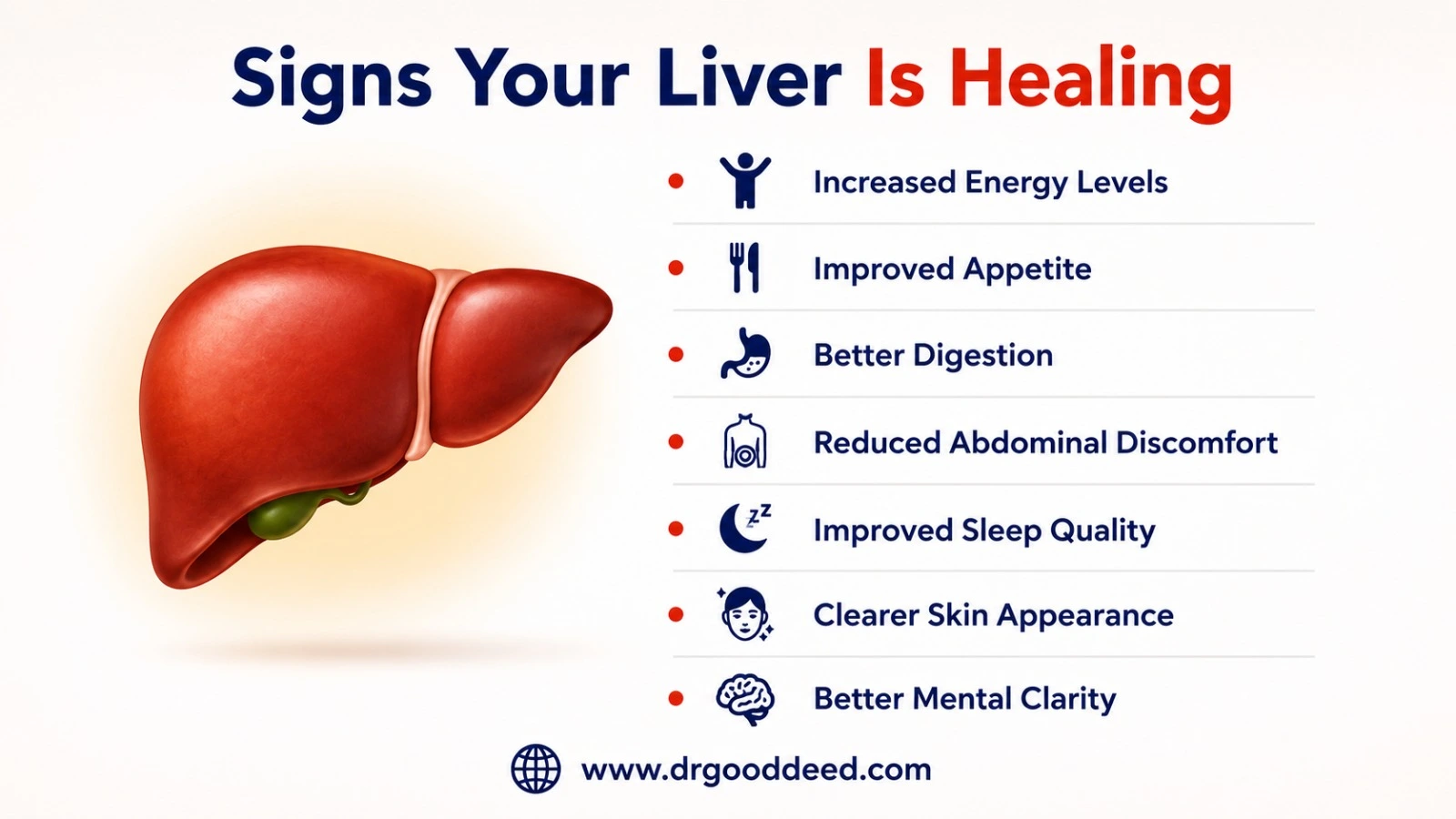
A healing liver sends signals you can actually feel before any blood test confirms it. These signs your liver is healing cluster around energy, digestion, sleep, and skin, because the liver touches all four systems directly. Doctors call this symptom cluster non-specific, meaning no single sign proves liver recovery on its own.
Increased Energy Levels
Fatigue is the first thing to lift. A damaged liver can’t clear ammonia and other waste products efficiently, and that buildup makes you tired in a way sleep doesn’t fix. Once liver function climbs back, that fog lifts. Patients on hepatitis C treatment often report better energy within four to eight weeks of starting therapy, even before viral clearance is confirmed.
Improved Appetite
A struggling liver releases less bile, and bile is what breaks down fat in your food. Low bile output kills appetite, especially for fatty liver meals. As bile production recovers, food starts sounding good again, and that’s one of the clearest signs your liver is healing that people notice in week two or three.
Better Digestion
Bile also keeps your gut moving. People recovering from liver damage often go from loose, pale, or oily stools to a normal pattern within a few weeks of treatment or abstinence. Pale or clay-colored stool is a marker doctors specifically ask about during follow-up visits, because it tracks bile flow directly.
Reduced Abdominal Discomfort
A swollen, inflamed liver pushes against the capsule that surrounds it, and that’s what causes the dull ache under the right ribs. As inflammation drops, that pressure drops too. This is usually one of the first physical signs of liver healing, sometimes within the first two weeks of cutting out alcohol.
Improved Sleep Quality
Liver dysfunction disrupts melatonin clearance and raises ammonia levels at night, both of which interrupt sleep. As the liver regains function, sleep gets deeper and less broken. This matters because poor sleep itself worsens insulin resistance, which then feeds back into fatty liver disease, so this sign reflects a cycle actually breaking.
Clearer Skin Appearance
Jaundice, the yellow tint in skin and eyes, comes from bilirubin the liver can’t process fast enough. As liver function improves, bilirubin clears and skin tone evens out. Itchy skin, caused by bile salts building up under the skin, also fades as bile flow normalizes.
Better Mental Clarity
Brain fog in liver disease has a name: hepatic encephalopathy, caused by ammonia crossing into the brain. Even mild, subclinical versions of this cause forgetfulness and slow thinking. As the liver clears ammonia properly again, that clarity returns, often described by patients as “the fog lifting” rather than a sudden change.
Increased Energy During Liver Healing
Increased energy during liver healing follows a specific chain: less inflammation, better metabolism, better nutrient absorption. Understanding that chain helps explain why energy often improves before any other symptom does, sometimes within the first two weeks of treatment.
Why Fatigue Is Common in Liver Disease
The liver processes ammonia, drug byproducts, and metabolic waste. When it’s inflamed or scarred, that processing slows down, and waste accumulates in the bloodstream. This isn’t “feeling run down.” It’s a measurable biochemical drag on your whole system, and it’s one of the most common complaints among people with chronic liver conditions, including MASLD (the condition formerly called NAFLD).
Improved Metabolism and Energy Production
The liver converts stored sugar (glycogen) into usable glucose and processes fats for energy. A damaged liver does this inefficiently, leaving cells starved for fuel despite normal eating. As liver cells regenerate, that conversion process speeds back up.
Better Nutrient Processing
Vitamins A, D, E, and K all need a working liver to get activated and stored. Deficiencies in these vitamins cause their own fatigue, on top of liver-related fatigue. Recovery restores this storage and activation function, which is part of why multivitamin-level fatigue often improves alongside liver-specific fatigue.
Improved Daily Functioning
Within four to twelve weeks of meaningful improvement, most people report being able to do normal daily tasks, work shifts, and exercise without the crash that defined their sick phase. This functional recovery tends to track with falling ALT and AST numbers, not just how someone feels that day.
Liver Healing Symptoms You May Notice
Liver healing symptoms show up in a rough order. Bloating and nausea tend to fade first. Concentration and weight stability follow later, usually by month two or three.
| Symptom | Typical timing after intervention starts |
| Less bloating | 1-3 weeks |
| Reduced nausea | 2-4 weeks |
| Better food tolerance | 3-6 weeks |
| Improved concentration | 4-8 weeks |
| Stabilized weight | 8-16 weeks |
Less Bloating
A congested liver slows portal blood flow, and that backup causes fluid retention and gas in the gut. As liver pressure normalizes, that bloating drops, often noticeably within the first month.
Reduced Nausea
Bile acid buildup in the bloodstream, a condition called cholestasis, triggers nausea independent of anything you ate. As bile flow restores, this nausea fades steadily rather than all at once.
Better Tolerance to Foods
Fatty and fried foods are usually the first to become tolerable again, since fat digestion depends directly on bile output. People recovering from alcohol-related liver disease often notice this shift before any blood test changes.
Improved Concentration
This overlaps with the mental clarity sign above, but it shows up specifically as better performance at work or school, not just a vague sense of feeling sharper.
Stabilized Weight
Liver disease causes unpredictable weight swings, water retention from ascites in advanced cases, unintentional weight loss in others. Stable, predictable weight is a quieter but reliable marker that the liver has reached a steadier state.
How Long Does Liver Healing Take?
Stages of liver recovery depend entirely on what caused the damage and how much scarring already happened. Fatty liver responds in months. Hepatitis C responds in weeks for the virus, longer for the liver tissue itself. Cirrhosis, in the right circumstances, can take years and may never fully reverse.
Recovery From Fatty Liver Disease
Losing 5% of body weight can meaningfully reduce liver fat in MASLD, and losing 7-10% produces measurable drops in liver inflammation markers. A 2025 analysis of the DiRECT diabetes remission trial found that participants who lost close to 12 kilograms saw MASLD resolve in 74% of cases at twelve months, with liver fat dropping from roughly 13% to under 2%.
Alanine aminotransferase and gamma glutamyl transferase levels decreased by about 38% at the twelve month mark in that same trial. ALT can normalize within six months of consistent diet and exercise changes in many MASLD cases.
Recovery After Alcohol Cessation
Liver enzymes often start dropping within one to two weeks of stopping alcohol completely. Fat deposits in the liver, the earliest stage of alcohol-related damage, can clear within four to six weeks of abstinence in mild cases.
A 2026 study from the Medical University of Vienna, published in the Journal of Hepatology, followed patients with decompensated alcohol-related cirrhosis and found that around one third achieved complete resolution of liver-related complications alongside recovered liver function within five years of consistent abstinence, a state researchers call “recompensation.”
Recovery From Viral Hepatitis
Hepatitis C clears in 95% or more of cases with eight to twelve weeks of direct-acting antiviral treatment. The virus itself is gone fast. The liver tissue takes longer. One study tracking patients with advanced fibrosis or cirrhosis after viral clearance found that 62% showed liver stiffness improvement consistent with at least one stage of liver fibrosis regression, with the median time from cure to measurable regression sitting at one year.
Hepatitis B works differently. Antivirals suppress the virus rather than curing it outright, so liver healing depends on long-term viral suppression rather than a single treatment course.
Factors That Influence Healing Speed
Age matters, since liver regeneration slows somewhat after 60. The cause matters more, alcohol-related fat buildup clears faster than scar tissue from years of untreated viral hepatitis. Whether you also have diabetes or obesity slows things down, because those conditions keep feeding liver inflammation even after the original cause is addressed.
When Recovery May Be Limited
Fat buildup (steatosis) reverses fastest. Inflammation (steatohepatitis) takes longer but still reverses in most cases. Fibrosis, early scarring, can regress with enough time and the right intervention. Cirrhosis is where things get complicated: regression happens, but it’s slower, less complete, and not guaranteed for every patient.
Liver Function Tests and Recovery Monitoring
Symptoms tell you something is changing. Blood tests tell you what and by how much. Doctors track five main markers to confirm recovery is real and not just a good week.
ALT Levels
Alanine aminotransferase sits mostly inside liver cells. When those cells get damaged, ALT leaks into the blood, so falling ALT usually means less active liver cell injury. In the DiRECT trial, ALT dropped by 38% at twelve months following significant weight loss, and a baseline ALT above 40 IU/L predicted a drop in liver fat with 100% positive predictive value. Normal range is under roughly 40 U/L for men and 33 U/L for women, though labs vary slightly.
AST Levels
Aspartate aminotransferase shows up in the liver, heart, and muscle, so it’s less liver-specific than ALT on its own. Doctors look at the ratio between the two: an AST-to-ALT ratio above 2:1 points toward alcohol-related damage, while ALT running higher than AST points toward fatty liver disease.
Bilirubin Measurements
Bilirubin is the pigment that causes jaundice when it builds up. Falling bilirubin after treatment is one of the more reassuring signs doctors look for, since it confirms the liver is actually processing waste again, not just that inflammation markers look better on paper.
Albumin Levels
The liver makes albumin, a protein that keeps fluid inside blood vessels instead of leaking into tissue. Low albumin signals the liver has lost real production capacity, not just that it’s inflamed. Rising albumin over months is one of the slower markers to improve, but it’s also one of the most meaningful, since it reflects actual liver manufacturing function returning.
Imaging Studies
Ultrasound, FibroScan (transient elastography), and MRI-PDFF measure fat content and stiffness directly, without blood draws. FibroScan in particular tracks fibrosis regression over time and has become the standard non-invasive way to watch scar tissue soften, replacing repeat liver biopsies for most monitoring purposes.
Ways to Support Liver Regeneration Naturally
Ways to support liver regeneration naturally come down to removing what’s hurting the liver and giving it what it needs to rebuild. The liver responds to basic, consistent habits more reliably than anything sold as a “detox.”
- Avoiding alcohol completely, not just cutting back, since even moderate drinking slows healing in an already-damaged liver
- Maintaining a healthy weight, with 7-10% body weight loss producing measurable drops in liver fat and inflammation in MASLD
- Following a balanced diet built around vegetables, lean protein, and whole grains, while cutting added sugar and refined carbs that drive fat storage in the liver
- Staying physically active, aiming for at least 150 minutes of moderate exercise weekly, which improves insulin sensitivity independent of weight loss
- Managing blood sugar levels, since insulin resistance and fatty liver disease drive each other in both directions
- Getting adequate sleep, seven to nine hours, since poor sleep raises cortisol and worsens insulin resistance, feeding back into liver fat accumulation
What Clinicians Track When Liver Function Improves
Doctors managing liver recovery watch a specific pattern across patients, not isolated symptoms. The first marker to shift is usually ALT, dropping within the first month of weight loss or abstinence. The second is patient-reported energy, which tends to lag the blood work by two to four weeks. The third, and slowest, is albumin and clotting function, which can take three to six months to climb even after enzymes look normal.
A patient whose ALT normalizes in month two but whose albumin is still low in month four hasn’t finished healing, even though they feel fine. That gap between feeling recovered and being recovered is exactly why repeat blood work, not just symptom tracking, stays part of standard follow-up care for at least six months after the initial improvement.
When Liver Damage May Not Be Reversible
Reversal has limits. Past a certain point, scar tissue replaces functioning liver cells permanently, and no amount of lifestyle change brings that tissue back.
Advanced Cirrhosis
Once cirrhosis reaches a decompensated stage, meaning complications like fluid buildup, confusion, or bleeding have already started, full reversal becomes unlikely. Improvement and symptom control remain possible. Complete reversal generally doesn’t.
Severe Fibrosis
Fibrosis scored at stage 3 or 4 (out of 4) on biopsy or FibroScan can improve with treatment, but full return to a stage 0 liver is uncommon at this severity. Partial regression is the realistic, evidence-backed goal.
Chronic Untreated Liver Disease
Years of unaddressed fatty liver disease, hepatitis, or alcohol use compound damage faster than the liver can repair it. The longer the gap between disease onset and treatment, the smaller the reversible portion becomes.
Importance of Early Intervention
Every study on fibrosis regression points to the same pattern: people who start treatment or stop the harmful exposure earlier recover more completely. Waiting for symptoms to become severe before acting removes options that exist only in the earlier stages.
FAQ
How do I know if my liver is recovering?
Falling ALT and AST on blood tests confirm it. Symptom-wise, rising energy within two to four weeks and clearer skin within four to eight weeks are the most reliable early signs your liver is healing.
How long does liver recovery take?
Fatty liver: 3-6 months with weight loss. Alcohol-related fat buildup: 4-6 weeks of abstinence. Hepatitis C: virus clears in 8-12 weeks; fibrosis regression takes about a year.
What are the stages of liver recovery?
Four stages in order: enzyme normalization (weeks), symptom improvement (weeks to months), fibrosis regression (months to years), and functional recovery shown by rising albumin and clotting factors (months to years).
Can liver enzyme levels improve during recovery?
Yes. ALT dropped 38% at twelve months in a 2025 weight-loss trial for MASLD patients, with baseline ALT above 40 IU/L predicting fat reduction with 100% accuracy in that study.
What foods support liver regeneration?
Vegetables, lean protein, whole grains, and unsaturated fats from fish or olive oil. Added sugar and refined carbs work against regeneration by feeding fat storage in liver cells directly.
Can liver damage be completely reversed?
Fat buildup and early scarring, yes, usually. Decompensated cirrhosis, rarely fully. A 2026 Vienna study found that one-third of cirrhosis patients reached full complication resolution within five years of total alcohol abstinence.
What habits slow liver healing?
Any alcohol intake during recovery, continued weight gain, untreated diabetes, and skipping prescribed antiviral or fibrosis treatment. Each one keeps liver inflammation active even after the original trigger is removed.
How often should liver function tests be checked?
Every 4-12 weeks during active treatment, depending on the condition and how abnormal the starting numbers were. Stable patients in maintenance typically move to checks every 6-12 months.
Can exercise help improve liver health?
Yes. 150 minutes of moderate weekly exercise improves insulin sensitivity and reduces liver fat independent of weight loss, based on consistent findings across MASLD intervention studies.
Sources
- Reversal of liver cirrhosis: current evidence and expectations – The Korean Journal of Internal Medicine
- Alcohol abstinence enables regeneration even in advanced liver cirrhosis – MedUni Vienna, Journal of Hepatology, 2026
- Clinical utility of liver function tests for resolution of MASLD after weight loss – DiRECT Trial
- Morphometry Confirms Fibrosis Regression From Sustained Virologic Response – Hepatology Communications
- Regression of liver fibrosis: evidence and challenges
- Care of patients who have achieved SVR after antiviral therapy for chronic hepatitis C – American Gastroenterological Association