
“Gut reset” programs often involve cutting out certain foods, using supplements, fasting, or following a very restricted diet for a short period, but there is no medically established reset that detoxifies or “cleans” the gut.
Before choosing one, it helps to compare it against an actual gut health diet plan built on sustainable, condition-specific principles.
Key Takeaways
- Many commercial gut reset programs are rebranded detox products using vague, unverifiable claims about “removing toxins.”
- The real, evidence-backed risk with extended fasting-based resets is nutritional deficiency.
- A genuinely well-designed program is condition-specific and often physician-guided, not a generic one-size-fits-all plan.
- Certain symptoms, like unexplained weight loss or blood in stool, warrant medical evaluation instead of a self-directed gut reset program.
- Before starting one, check whether it requires unnecessary restriction, laxatives, prolonged fasting, or unproven supplements, and consider whether there is an actual digestive problem that needs proper evaluation.
What Gut Reset Programs Actually Claim vs What’s Proven
Most gut reset programs market themselves around reduced bloating, higher energy, and improved microbiome diversity within a short window, often seven to thirty days.
- Claims of rapid bloating relief are often technically accurate but misleading, since the change frequently reflects reduced water retention or a mild laxative effect rather than actual shifts in bacterial populations.
- Improved energy reported during a reset frequently correlates with reduced processed food and added sugar intake during the program.
- Sustained dietary fiber intake and food variety drive measurable gut microbiome improvement over weeks to months.
Red Flags: Spotting a Rebranded Detox Program
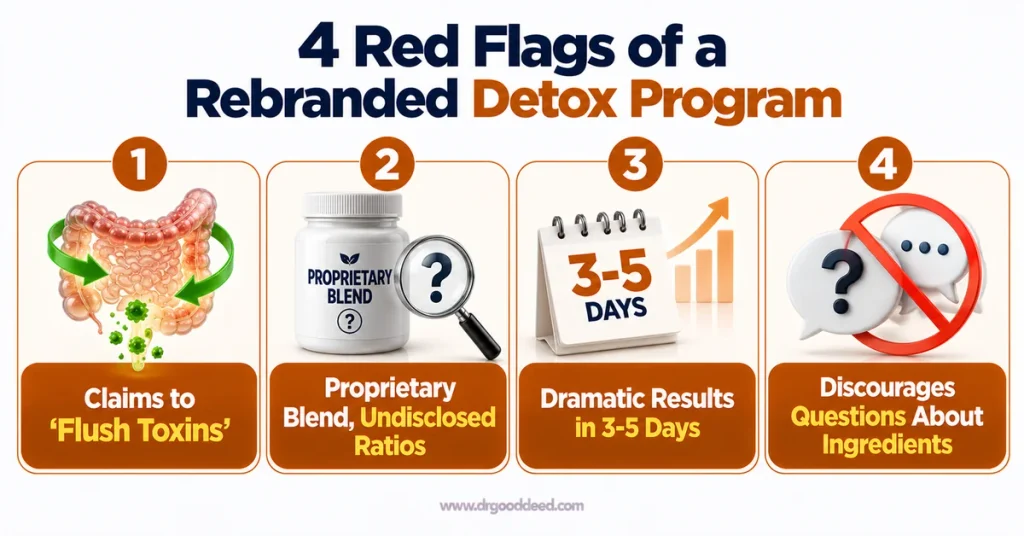
Any product claiming to “flush toxins” from your gut misrepresents basic physiology, since your liver and kidneys already handle toxin filtration continuously, a point covered directly in benefits of a detox tea, which explains why no food or supplement performs this function separately.
- Proprietary blends with undisclosed ingredient ratios make it impossible to verify dosage or evaluate safety, a common tactic used to avoid scrutiny.
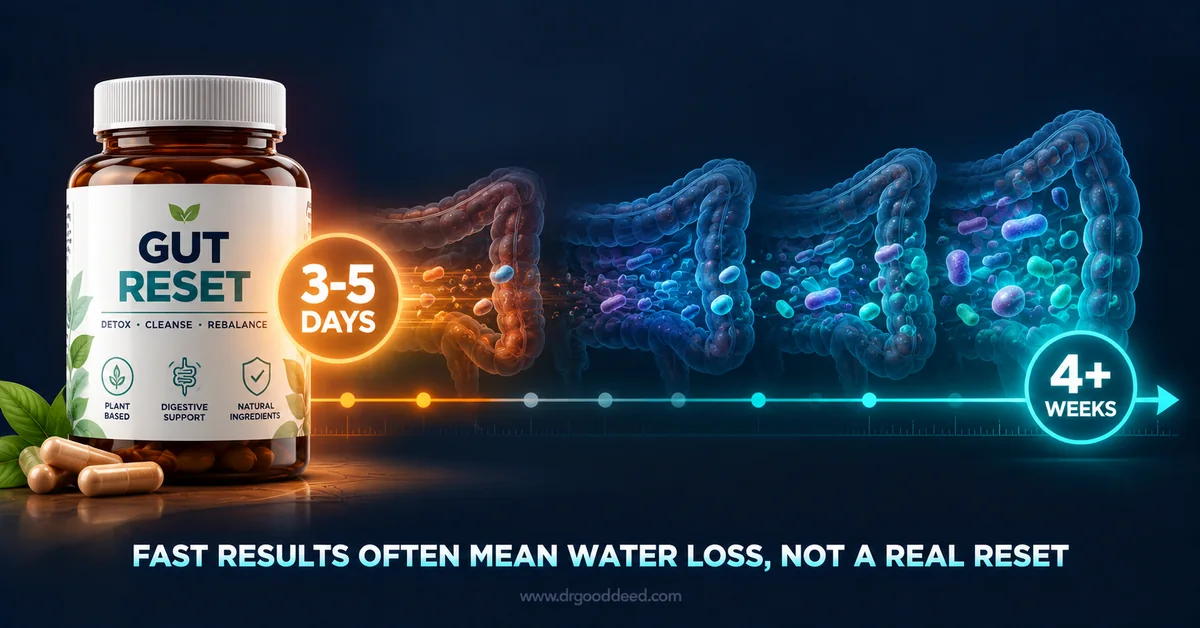
- Promises of dramatic results within 3 to 5 days should raise suspicion, since meaningful microbiome shifts documented in research typically require weeks of sustained dietary change, not days.
- Programs that discourage questions about ingredients or actively distance themselves from medical guidance are prioritizing sales over safety.
The Real Risk With Extended Fasting-Based Resets
The real, well-documented risk with prolonged fasting-based resets is nutritional deficiency and malnutrition, since extended restriction limits intake of essential vitamins, minerals, and protein needed for normal gut lining repair.
- This risk compounds the longer the restriction continues, which is why protocols involving brief bowel rest, as discussed in natural remedies for ulcerative proctitis, specifically limit fasting duration rather than extending it, since prolonged fasting can worsen nutritional status without providing additional healing benefit.
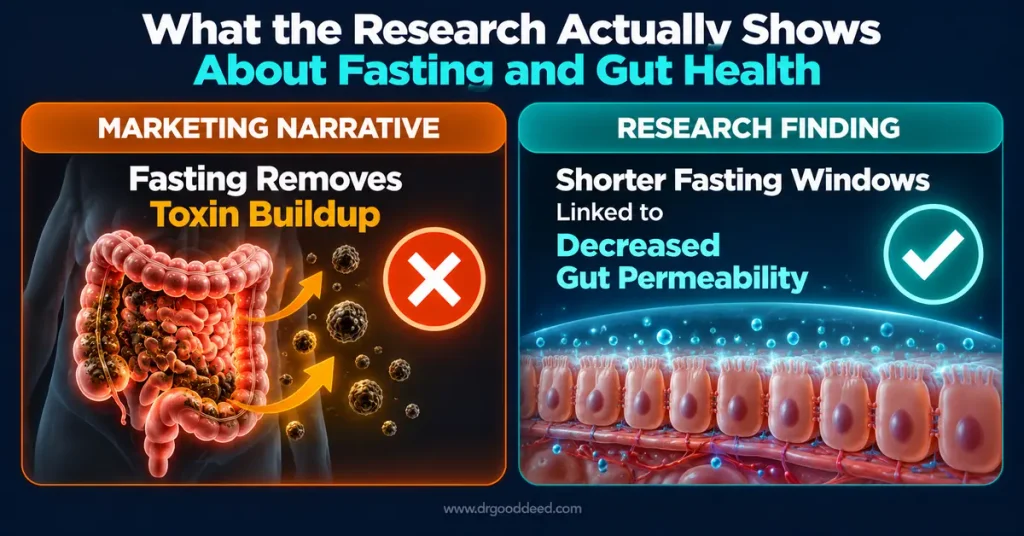
- General caloric restriction and shorter fasting windows are actually associated with decreased gut permeability markers in existing research, the opposite of the toxin-buildup narrative some gut reset programs use in their marketing.
- The deficiency risk is more relevant for people already managing low body weight, existing nutrient deficiencies, or a diagnosed eating pattern that restriction could worsen.
What a Genuinely Well-Designed Program Looks Like
A legitimate gut reset program looks fundamentally different from a generic detox product, both in structure and in who designs it.
- Well-designed programs are typically condition-specific, built around a diagnosed issue like IBS or dysbiosis.
- Physician-guided design matters because it accounts for existing conditions, medications, and lab findings.
- The Gut Reset Guide, created by Dr Nivedita Pandey is one example of an IBS-specific program built around diagnosed symptoms rather than generic bloating claims.
- Dr Pandey’s own gut health e-book and her IBS recovery program reflect the same physician-led structure, built around gradual, sustainable dietary adjustment rather than rapid short-term restriction.
Effective gut reset programs are built for a defined condition, guided by someone with relevant clinical training, and designed around gradual change rather than a dramatic short-term promise.
Pro Tip: A useful way to evaluate any gut reset program before starting is to check whether it names a specific condition it’s designed for, since programs built around a defined issue like IBS or SIBO typically outperform generic “whole-body reset” plans that apply identical restrictions regardless of your actual symptoms.
Warning Signs That Require Medical Attention, Not a Reset Program
Certain symptoms should never be managed through a self-directed gut reset program, since they may indicate a condition requiring diagnostic evaluation.
- Unexplained weight loss without deliberate calorie reduction can signal an underlying condition that a reset program won’t identify or address.
- Blood in stool, whether bright red or dark and tarry, always warrants prompt medical evaluation rather than dietary self-treatment.
- Persistent vomiting or difficulty swallowing are signs that go beyond typical digestive discomfort and need clinical assessment.
- Symptoms that worsen or fail to improve after starting a program are a signal to stop and consult a physician rather than continuing or switching to a stricter protocol.
FAQs
How long should a gut reset program actually last?
Most evidence-based programs run 2 to 6 weeks, since bacterial diversity shifts measurably within this window; programs extending past 8 weeks without medical supervision raise nutritional deficiency concerns.
Can you reset your gut without cutting out entire food groups?
Yes. Increasing fiber diversity and reducing ultra-processed foods produces measurable microbiome improvement without eliminating entire food groups, which most well-designed programs prioritize over restriction.
Are gut reset programs safe if you have IBS?
Only condition-specific ones. Generic reset programs can worsen IBS symptoms; an IBS-specific, physician-guided protocol like the Gut Reset Guide is designed around this exact limitation.
Do you need a doctor’s approval before starting one?
Recommended, especially with existing conditions, medications, or prior nutrient deficiencies. Otherwise generally unnecessary for short, food-based programs without extended fasting components.
What are the first real signs a gut program is working?
More consistent bowel movements and reduced bloating within 1 to 2 weeks, not dramatic overnight changes; measurable microbiome diversity shifts typically take 4 or more weeks.
Sources:
- World Health Organization — nutrition and dietary guidance standards link
- NIH National Center for Biotechnology Information (PubMed) — fasting, caloric restriction, and gut permeability research link
- Mayo Clinic — digestive health and detox program safety overview link
Medical Disclaimer: This article is for general information only and is not medical advice. It does not replace a diagnosis, treatment plan, or guidance from a qualified healthcare professional. Always talk to your doctor about your own symptoms and before starting, stopping, or changing any treatment. If you think you may be having a medical emergency, call 911 or go to your nearest emergency room.