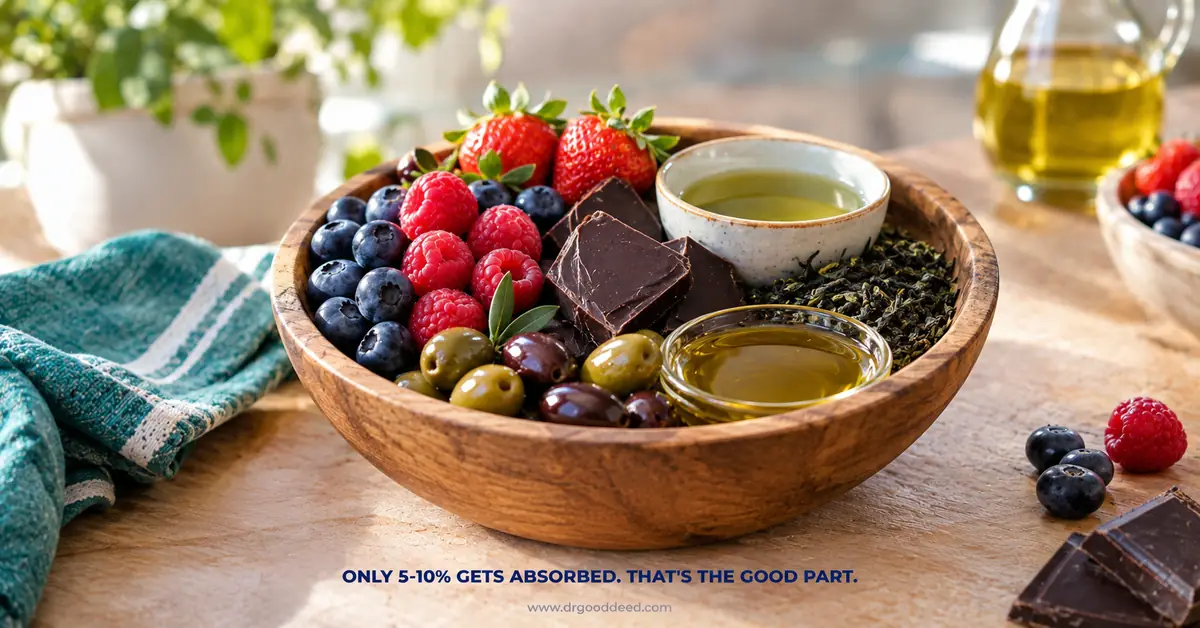

Foods high in polyphenols can support gut microbiome diversity by providing plant compounds that certain beneficial gut bacteria can metabolize. Good sources include berries, apples, grapes, pomegranate, cocoa and dark chocolate, green tea, coffee, extra-virgin olive oil, nuts, legumes, colorful vegetables, and herbs and spices such as turmeric, cloves, and oregano.
If you’re building out a broader gut health diet plan, understanding this absorption gap is the piece most guides skip entirely.
Key Takeaways
- Only 5-10% of polyphenols get absorbed in your small intestine; the remaining 90-95% travel intact to your large intestine.
- Gut bacteria convert unabsorbed polyphenols into smaller, more active compounds your body can actually use.
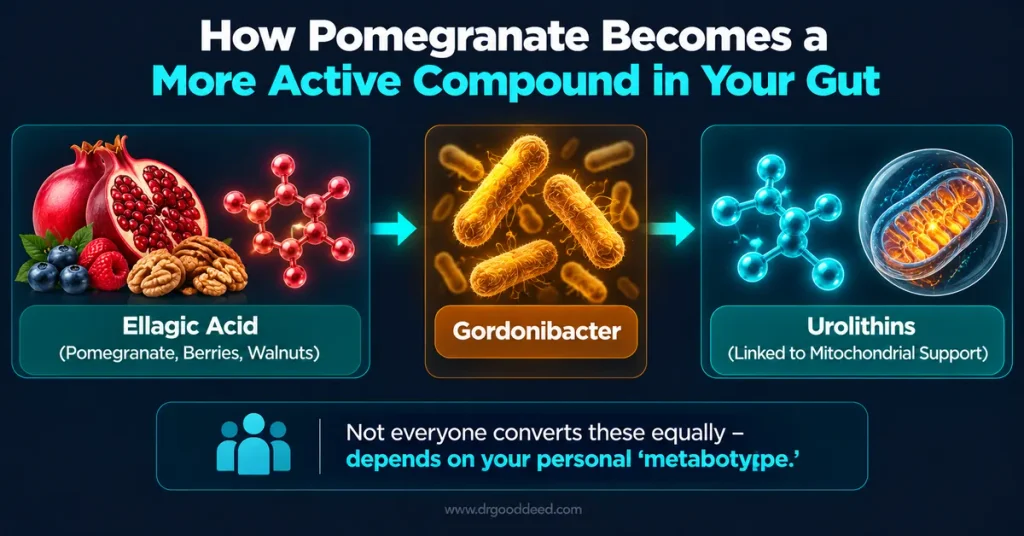
- Specific bacteria transform ellagic acid (found in pomegranate and berries) into urolithins, compounds linked to mitochondrial support.
- Pairing foods high in polyphenols with fiber-rich foods may improve how these compounds get processed.
- Your existing gut bacteria composition determines how much benefit you personally extract from the same polyphenol-rich meal.
What Polyphenols Are and Their Role in Gut Health
Polyphenols are natural plant compounds that give fruits, vegetables, teas, and spices their color, bitterness, and astringency. They fall into flavonoids, phenolic acids, and tannins, and they show up across an unusually wide range of everyday foods.
Once they reach your colon, they act as raw material for bacterial fermentation, shaping which microbial species thrive.
The Absorption Paradox: Why Unabsorbed Nutrients Benefit the Lower Gut Most
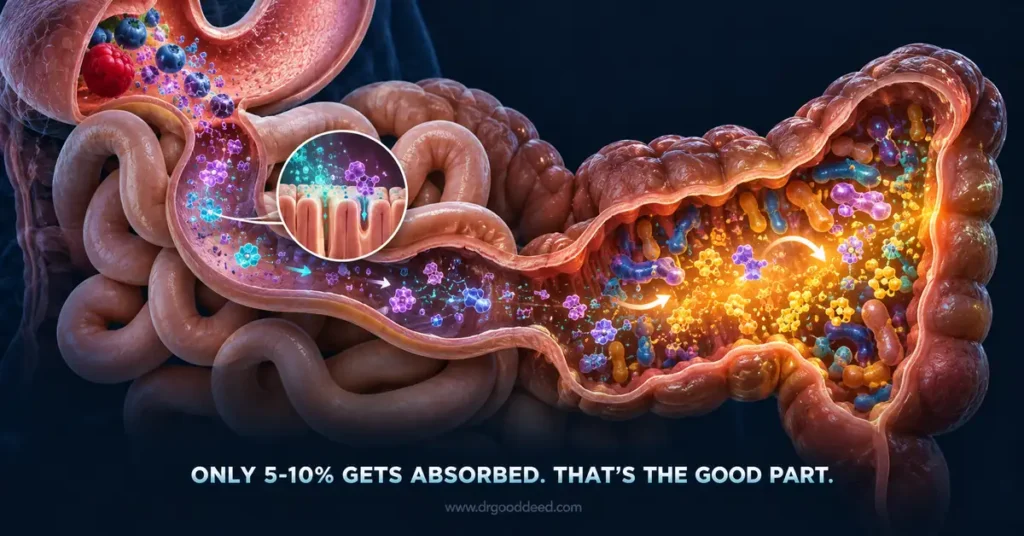
Only about 5-10% of dietary polyphenols are absorbed in your small intestine. The remaining 90-95% travel further down into your large intestine, where an entirely different process takes over.
- This “low absorption” is what allows polyphenols to reach the colon largely intact, where bacterial populations, not digestive enzymes, do the real transformation work.
- Compounds that would otherwise be considered poorly bioavailable become functionally important once they interact with gut bacteria.
- This explains why blood-level absorption studies alone understate how much of an effect foods high in polyphenols can have on the body.
The Microbial Transformation: How Gut Bacteria Fuel Postbiotic Compounds
Bacteria such as Gordonibacter and certain Bifidobacterium species break down complex polyphenols into smaller postbiotic metabolites that are often more bioactive than the original compound.
- Ellagic acid, abundant in pomegranate, walnuts, and berries, gets converted by these bacteria into urolithins, with pomegranate’s urolithin content specifically studied for its connection to mitochondrial function and muscle-related outcomes in early research.
- Not everyone produces urolithins equally; people are generally grouped by “metabotype” based on how efficiently their gut bacteria perform this conversion.
- Catechins from tea and cocoa undergo similar bacterial breakdown into smaller phenolic acids that support a more favorable gut environment.
Top Foods High in Polyphenols
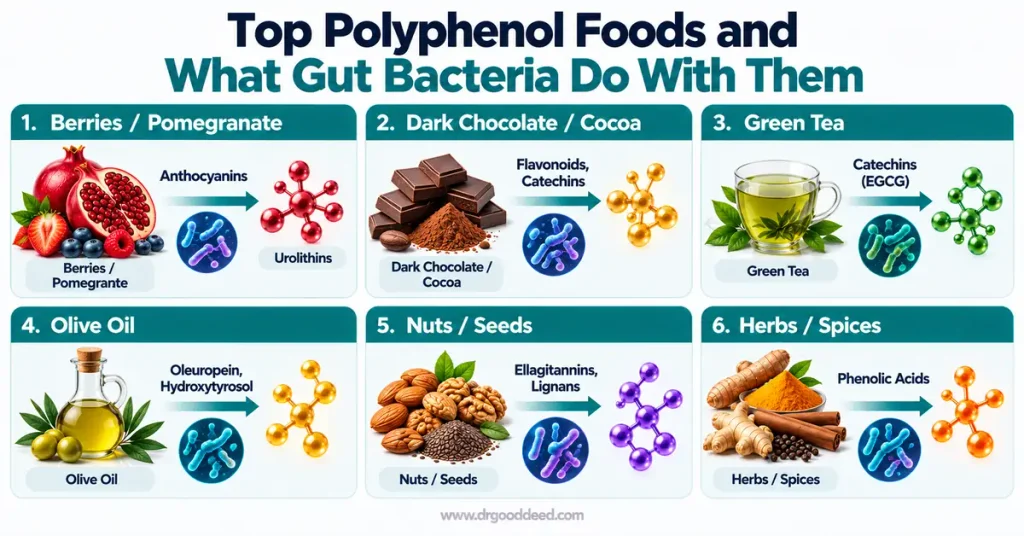
The table below breaks down the main sources by polyphenol type and what their bacterial byproducts actually do.
| Food | Main Polyphenol Type | Gut-Related Benefit |
| Berries and Pomegranate | Anthocyanins, Ellagitannins | Converted by gut bacteria into urolithins, linked to mitochondrial support |
| Dark Chocolate and Cocoa | Flavonoids, Catechins | Antioxidant and anti-inflammatory support; useful when comparing dark chocolate for sugar cravings as a whole-food swap |
| Green Tea | Catechins (EGCG) | Supports beneficial bacteria growth, may reduce inflammatory markers |
| Extra Virgin Olive Oil | Oleuropein, Hydroxytyrosol | Anti-inflammatory support, associated with favorable gut bacteria shifts |
| Nuts and Seeds | Ellagitannins, Lignans | Fiber plus polyphenols together support short-chain fatty acid production; see walnuts vs almonds for a direct nutrient comparison |
| Herbs and Spices | Phenolic Acids, Flavonoids | Concentrated polyphenol source in small amounts, added to meals easily |
Pairing Polyphenols With Fiber for Better Results
Dietary fiber and polyphenols interact in a way that’s easy to use practically, even without tracking exact grams. Fiber can slow transit time and feed some of the same bacteria involved in polyphenol conversion, creating a more favorable setting for those compounds to be processed.
- Combining foods high in polyphenols with fiber-rich vegetables, legumes, or whole grains gives gut bacteria more substrate to work with during fermentation.
- This pairing overlaps with how prebiotic fiber sources function, since both prebiotics and polyphenols rely on bacterial fermentation as their primary mechanism of action.
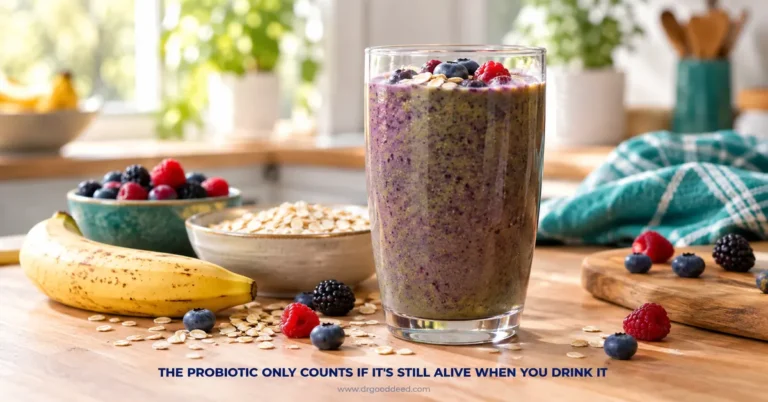
| A simple, practical example: adding berries or pomegranate seeds to an oat-based breakfast pairs a polyphenol source with fermentable fiber in one meal. |
Can Polyphenol-Rich Foods Trigger Headaches?
Some researchers have proposed that tannins, a polyphenol subtype concentrated in red wine, black tea, and chocolate, may influence certain headaches through pathways involving serotonin or catecholamine release.
- The evidence linking tannins directly to headache triggers is inconclusive, and study designs vary widely in how they isolate tannins from other known triggers like alcohol or caffeine.
- Millions of people consume tannin-rich foods like black tea and dark chocolate daily without any headache pattern.
- If you notice a personal pattern after specific tannin-rich foods, tracking it individually is more useful.
Pro Tip: If you’re testing whether a specific polyphenol-rich food affects you personally, reintroduce it alone after a short break rather than eliminating several foods at once, since overlapping triggers like caffeine, sulfites, or dehydration are commonly mistaken for a tannin reaction.
Why the Same Foods Affect Everyone’s Gut Differently
The relationship between diet and gut bacteria runs in both directions, which is often missed in general nutrition advice. Your current bacterial composition determines how efficiently you convert polyphenols into active compounds, and consistent polyphenol intake gradually reshapes that same bacterial composition over time.
- People recovering their microbiome after a course of antibiotics often show altered polyphenol metabolism temporarily, which connects directly to broader guidance on how to heal the gut after antibiotics.
- Diet diversity appears to be a stronger driver of long-term gut microbiome diversity than any single high-polyphenol food eaten in isolation.
This individual variation is also why clinical trials on foods high in polyphenols often show mixed results across study populations.
FAQs
Can you consume too many polyphenols through food?
Yes, extremely high intake from concentrated supplements, not whole foods, has been associated with digestive discomfort and interference with mineral absorption in some studies, though whole-food sources rarely reach these levels.
Do cooking methods destroy polyphenols?
Yes, partially. Boiling can reduce polyphenol content through leaching into water, while steaming and roasting generally preserve more, though losses vary significantly by specific food and cooking duration.
Are polyphenol supplements as effective as whole foods?
No. Whole foods high in polyphenols provide fiber and co-nutrients that support bacterial conversion; isolated supplements bypass this synergy and show less consistent absorption and metabolite production.
Can a high-polyphenol diet help repair a leaky gut?
Evidence is limited. Some polyphenols show anti-inflammatory activity in early research, but no established clinical protocol confirms polyphenol intake alone repairs intestinal permeability.
Why do the same polyphenol foods affect people differently?
Because gut bacteria composition varies person to person, determining how efficiently ellagic acid, catechins, and other compounds get converted into active metabolites like urolithins.
Sources:
- World Health Organization — general dietary and nutrition guidance link
- NIH National Center for Biotechnology Information (PubMed) — polyphenol metabolism and gut bacteria research link
Medical Disclaimer: This article is for general information only and is not medical advice. It does not replace a diagnosis, treatment plan, or guidance from a qualified healthcare professional. Always talk to your doctor about your own symptoms and before starting, stopping, or changing any treatment. If you think you may be having a medical emergency, call 911 or go to your nearest emergency room.