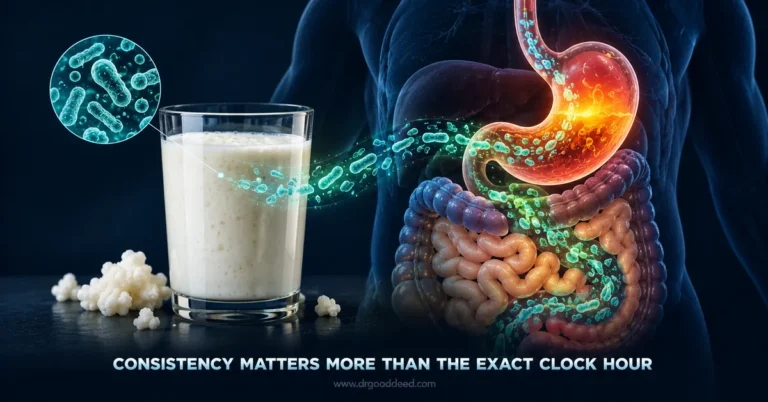

Drinking kombucha on an empty stomach is generally safe, but it can irritate your esophagus in some people. For your gut health diet plan, a small serving with or after a meal may be easier to tolerate, especially if you have acid reflux or a sensitive stomach.
Key Takeaways
- Kombucha has a pH of roughly 2.5-3.5, close to the stomach’s own natural acidity of 1.5-3.5.
- Because kombucha is acidic and may contain caffeine and small amounts of alcohol.
- Some people may experience heartburn, nausea, bloating, or stomach discomfort when they drink it before eating.
- The claim that kombucha on an empty stomach matches omeprazole for reducing acid traces back to a single unreplicated mouse study.
- Drinking kombucha alongside food buffers its acidity and reduces irritation risk.
- Choose commercially prepared kombucha from a reputable brand, check the sugar and alcohol content, keep it refrigerated as directed, and avoid homemade batches with questionable hygiene or fermentation control.
Why Kombucha on an Empty Stomach Can Irritate Your Stomach
Your stomach already operates at a naturally acidic pH of roughly 1.5-3.5 to break down food and kill pathogens. Since kombucha is at pH 2.5-3.5, it doesn’t meaningfully change that internal environment; the stomach lining is built to handle acid in that range regardless of what you drink.
- The actual injury risk is in the esophagus, where tissue damage begins once pH drops below 4, a threshold kombucha can cross on contact with unprotected esophageal tissue.
- Carbonation from the fermentation process physically distends the stomach and can weaken the lower esophageal sphincter, the valve that normally prevents stomach contents from moving upward.
- This mild esophageal exposure plus a temporarily loosened valve is what causes the burning or reflux-like sensation some people report after kombucha on an empty stomach.
People managing an already-sensitive stomach lining benefit from the same principle covered in home remedies for stomach ulcers, avoiding long gaps without food protects the lining from unnecessary irritation.
The Omeprazole Myth: Why Kombucha Cannot Replace PPIs
A widely repeated claim states that kombucha on an empty stomach works as well as omeprazole for reducing stomach acid.
- This traces back to a single mouse study that used a concentrated tea extract, not standard kombucha, on chemically induced ulcers in rodents.
- That study measured ulcer protection in mice and has never been replicated in human trials.
Omeprazole is a proton pump inhibitor that directly blocks acid-producing cells in the stomach lining through a well-documented pharmacological pathway; kombucha has no comparable, clinically proven mechanism in humans.
Treating kombucha on an empty stomach as a PPI substitute risks delaying appropriate treatment for anyone with diagnosed GERD or ulcer disease.

Why Empty-Stomach Kombucha Can Cause Bloating
Kombucha’s natural fermentation process produces carbon dioxide, the same gas responsible for bloating after any carbonated drink consumed quickly on an empty stomach.
- Drinking kombucha without food, the carbonation has less to buffer against, so gas can distend the stomach more noticeably.
- The live yeast and bacterial cultures in kombucha are generally well tolerated, and current evidence doesn’t support yeast fermentation itself as the primary bloating trigger.
- Drinking kombucha slowly, rather than swallowing it quickly, reduces the amount of trapped gas reaching your stomach at once.
For most people, this bloating is temporary and mechanical, though anyone with a diagnosed digestive condition should still monitor their individual response.
Who Should Be Most Cautious
Certain groups face a higher likelihood of irritation from kombucha on an empty stomach.
- People with diagnosed GERD, active peptic ulcers, or esophagitis face a higher baseline risk, since their esophageal lining or sphincter function is already compromised before kombucha adds any additional exposure.
- Pregnant individuals are generally advised to limit kombucha given its small residual alcohol content, typically under 0.5%, from the fermentation process, along with its caffeine content from the tea base.
- Anyone recovering from recent gastrointestinal surgery or an active flare of inflammatory bowel disease should discuss kombucha timing with their treating physician before adding it back into their diet.

How to Drink Kombucha More Safely
Most people can include kombucha safely by adjusting timing and portion size.
- Drink kombucha alongside a meal rather than first thing in the morning; food in the stomach buffers acidity and slows carbonation’s effect on the esophageal sphincter.
- Start with a small serving, around 50ml or less, especially the first few times, to gauge personal tolerance before increasing the amount.
- Choose plain, unflavored kombucha initially, since added fruit juices or extra sugars in flavored varieties can increase total acidity and fermentation byproducts.
- Track your own response over one to two weeks; individual tolerance to kombucha on an empty stomach varies significantly and isn’t predictable from general guidelines alone.
A Gentler Alternative If Kombucha Is Too Harsh
For people who consistently notice discomfort, switching probiotic sources rather than eliminating fermented foods altogether is usually the more practical option.
- Water kefir and dairy kefir are generally less acidic than kombucha and contain no caffeine, making them a gentler route to similar probiotic diversity goals.
- Both options ferment with different bacterial and yeast cultures than kombucha, offering comparable gut-support benefits without the carbonation-driven sphincter effect.
- For guidance on the best time to drink kefir, timing still matters, but the acidity profile makes kefir noticeably easier to tolerate on a sensitive stomach.
Pro Tip: If you notice throat clearing, a sour taste, or mild chest tightness within 30 minutes of kombucha, that’s a more reliable early signal of esophageal reflux than stomach discomfort alone, and it’s worth noting the timing relative to food intake, not just the amount consumed.
When to See a Doctor
Occasional mild bloating or a brief warm sensation after kombucha usually doesn’t need medical attention. Persistent or worsening symptoms are different.
- See a doctor if you experience recurring heartburn, chest discomfort, or regurgitation multiple times a week regardless of what you eat or drink.
- Seek prompt care for difficulty swallowing, unintended weight loss, or black or bloody stools, since these can indicate a condition beyond simple acid exposure.
- If kombucha on an empty stomach consistently triggers symptoms even in small amounts, that pattern is worth discussing with a gastroenterologist.
FAQs
Can kombucha help with acid reflux at all?
No reliable human evidence supports this. The omeprazole comparison came from one unreplicated mouse study on ulcers, not reflux, so kombucha shouldn’t replace prescribed reflux treatment.
How much kombucha is safe to drink in one serving?
Start with 50ml or less per serving, especially with an empty stomach. Most healthy adults tolerate up to 240ml (8oz) daily once tolerance is established.
Does flavored kombucha cause more stomach sensitivity than plain?
Yes, often. Added fruit juices and extra sugars increase total acidity and fermentation activity, making flavored varieties more likely to trigger irritation than plain kombucha.
Can you build tolerance to kombucha’s acidity over time?
Partially. Gradual exposure may reduce bloating from carbonation adjustment, but esophageal sphincter sensitivity to carbonation and acid doesn’t reliably improve through repeated exposure.
Is homemade kombucha gentler than store-bought?
Not necessarily. Homemade batches often have inconsistent, sometimes higher acidity and carbonation than commercially regulated products, depending on fermentation time and starter culture strength.
Sources:
- World Health Organization — general dietary safety guidance link
- NIH National Center for Biotechnology Information (PubMed) — kombucha fermentation and gastric research link
Medical Disclaimer: This article is for general information only and is not medical advice. It does not replace a diagnosis, treatment plan, or guidance from a qualified healthcare professional. Always talk to your doctor about your own symptoms and before starting, stopping, or changing any treatment. If you think you may be having a medical emergency, call 911 or go to your nearest emergency room.