
A headache during period follows a predictable hormonal pattern, and that pattern makes it treatable, sometimes even preventable. Most women who get these headaches never find out why, so they keep suffering. This guide covers the real causes, how to tell what kind of headache you’re dealing with, and what actually works to stop it.
Menstrual Migraine vs Regular Headache
Understanding menstrual migraine vs regular headache is the first step to getting actual relief. They feel different, respond to different treatments, and have different causes. Treating a menstrual migraine like a tension headache almost always fails.
Key Differences in Symptoms
A regular period headache is dull, pressure-like, and usually on both sides of the head. A menstrual migraine throbs. It’s usually one-sided, often behind one eye or temple. It comes with nausea, light sensitivity, and sometimes vomiting. A regular headache doesn’t.
Timing in Menstrual Cycle
Menstrual migraines follow a tight window: they start 2 days before bleeding begins or within the first 3 days of the period. This timing is the clearest sign you’re dealing with a hormonal migraine, not just general period discomfort.
Severity and Duration
Regular period headaches last a few hours. Menstrual migraines last 4 to 72 hours without treatment. The pain is severe enough to stop normal activity in most cases.
Why Menstrual Migraines Are Harder to Treat
Menstrual migraines respond less reliably to standard over-the-counter painkillers. The reason: estrogen withdrawal lowers the brain’s pain threshold, making the entire nervous system more reactive. Standard ibuprofen doses that work for tension headaches often fall short here.
Menstrual Headache Causes
The menstrual headache causes come down to specific biological changes in the body right before and during the period. It’s not just “hormones.” Several distinct mechanisms are at work.
Hormonal Fluctuations (Estrogen Drop)
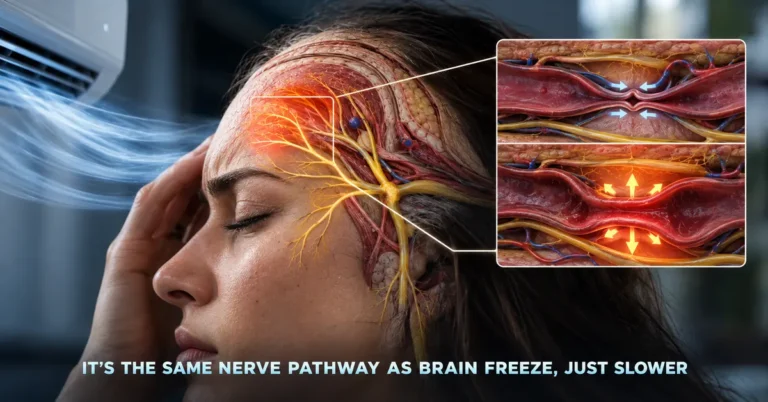
Estrogen drops sharply in the 2 days before menstruation. This drop triggers changes in serotonin levels in the brain. Low serotonin activates the trigeminal nerve, which is the main pain pathway for head and face pain. That’s why the headache feels neurological, because it is.
Prostaglandins and Inflammation
The uterus releases prostaglandins to cause contractions during menstruation. These same chemicals enter the bloodstream and cause inflammation elsewhere, including in blood vessels around the brain. Prostaglandins are also the reason period cramps and headaches often happen together.
Dehydration and Low Iron Levels
Heavy periods cause blood and fluid loss. Even mild dehydration, around 1 to 2% of body weight, triggers headaches in people who are already susceptible. Iron loss from heavy bleeding reduces oxygen delivery to the brain, compounding the pain.
Sleep Disruption and Fatigue
Cramps, bloating, and discomfort interrupt sleep. Even one or two nights of poor sleep lower the pain threshold significantly. Women who already get migraines find that sleep loss during menstruation reliably triggers an attack.
Migraine During Menstruation Symptoms
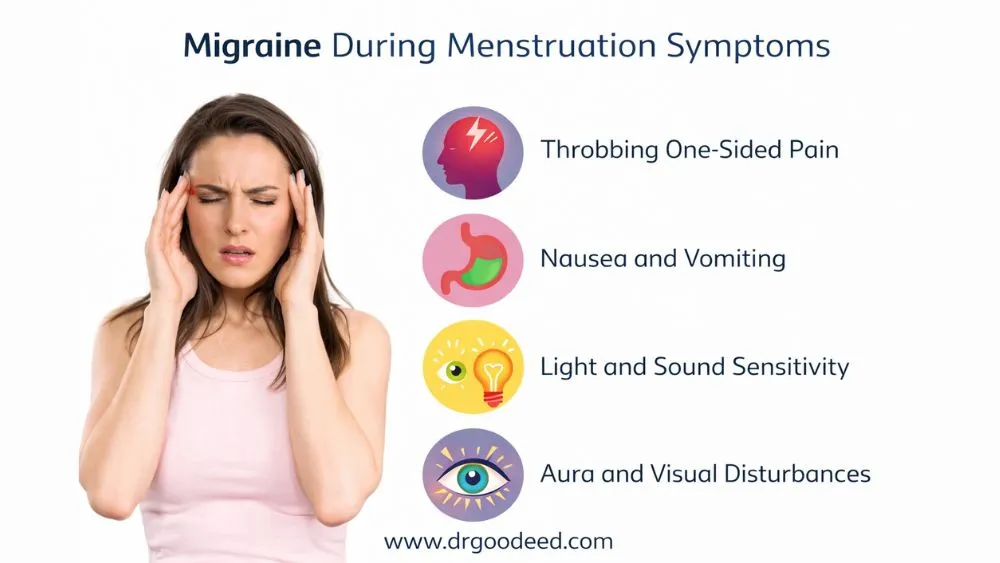
Migraine during menstruation symptoms overlap with regular migraines but tend to be more intense and longer-lasting due to the hormonal environment.
Throbbing One-Sided Pain
The pain pulses with the heartbeat. It’s almost always on one side of the head. Moving around makes it worse. Lying still in a dark room is the only thing that helps during a severe attack.
Nausea and Vomiting
About 73% of menstrual migraine sufferers report nausea. Vomiting occurs in roughly 29%. This matters because oral medications get absorbed poorly when nausea is severe, which is one reason period migraines are harder to treat.
Light and Sound Sensitivity
The brain becomes hyperactive during a migraine. Normal light levels feel blinding. Ordinary sounds feel amplified. This is called allodynia, and it’s a sign the nervous system is in a pain-amplification state.
Aura and Visual Disturbances
About 25% of women with menstrual migraines experience aura. This includes zigzag lines, flashing lights, or temporary blind spots. Aura usually lasts 20 to 60 minutes and precedes the headache. Women who get aura have a higher stroke risk if they also smoke or use estrogen-containing contraceptives.
Stress and Period Headache Triggers
Stress and period headache triggers interact directly. Stress alone doesn’t cause hormonal headaches. But it amplifies every other trigger already present during menstruation.
Hormonal and Emotional Stress Interaction
Cortisol, the stress hormone, disrupts the balance between estrogen and progesterone. During the late luteal phase, already a hormonal low point, high cortisol accelerates the estrogen drop and makes headaches more likely and more severe.
Sleep Deprivation and Cortisol Spikes
Poor sleep raises cortisol the next day. Higher cortisol lowers estrogen further. This creates a cycle: pain causes poor sleep, poor sleep raises stress hormones, stress hormones worsen the headache.
Diet Triggers (Caffeine, Sugar, Salt)
Caffeine withdrawal triggers migraines. Women who drink coffee daily and skip it during their period are triggering their own headaches. High salt intake causes water retention, which increases pressure. Blood sugar crashes from skipping meals are a well-documented migraine trigger.
Lifestyle Habits Worsening Headaches
Alcohol, especially red wine, dilates blood vessels and triggers migraines in susceptible women. Irregular eating patterns during PMS, common given appetite changes, create the blood sugar instability that makes a headache during the period worse.
How to Identify Hormonal Headaches
A hormonal headache during period has a consistent pattern every month. Tracking that pattern is the most reliable way to confirm what you’re dealing with.
Look for these signs:
- Headache starts 2 days before or within the first 3 days of bleeding
- Pain is one-sided and throbbing, not pressure-like
- Headache does not respond well to ibuprofen alone
- Nausea is present
- The headache repeats at the same point in the cycle for 3 or more consecutive months
- Other migraine symptoms (light sensitivity, sound sensitivity) appear alongside the headache
If 4 or more of these apply, you’re dealing with a hormonal migraine, not a general period headache.
Natural Remedies for Period Headaches
Natural remedies for period headaches work best when started before the headache hits. Once the migraine is in full swing, these approaches offer limited relief.
Hydration and Electrolyte Balance
Drink 2 to 3 liters of water daily starting 3 days before your period. Add electrolytes, specifically sodium and potassium, from food or a low-sugar electrolyte drink. Dehydration compounds every other trigger.
Magnesium and Vitamin Supplementation
Magnesium glycinate at 400 mg daily reduces menstrual migraine frequency by up to 41% in clinical trials published in the journal Cephalalgia. Start 10 days before your expected period. Riboflavin (Vitamin B2) at 400 mg daily is also evidence-backed for migraine prevention.
Heat Therapy and Relaxation
A warm compress on the neck reduces muscle tension that amplifies headache pain. Progressive muscle relaxation, which involves tensing and releasing muscle groups, lowers cortisol within 20 minutes.
Sleep and Routine Correction
Fix your sleep schedule 5 to 7 days before your period starts. Aim for the same bedtime and wake time daily. Sleep disruption in the days before menstruation is one of the most controllable triggers.
Medical Treatment Options
NSAIDs and Pain Relief Medications
Naproxen sodium (Aleve) works better than ibuprofen for menstrual migraines because it lasts longer and inhibits prostaglandins more effectively. Taking it 2 days before the expected headache onset and continuing for 5 to 7 days is called “mini-prophylaxis” and it actually works.
Triptans for Menstrual Migraines
Sumatriptan and frovatriptan are first-line prescription options. Frovatriptan has a longer half-life (26 hours) making it better suited for menstrual migraine prevention when taken twice daily starting 2 days before the period. It’s one of the few treatments FDA-recognized specifically for this use.
Hormonal Therapy (Birth Control)
Combined oral contraceptives reduce estrogen fluctuation, which reduces menstrual migraine frequency. However, estrogen-containing pills are contraindicated in women with aura due to stroke risk. Progestin-only options or extended-cycle pills that skip the placebo week are safer alternatives for aura sufferers.
Preventive Migraine Medications
Topiramate, propranolol, and amitriptyline are standard preventive options when menstrual migraines occur more than 4 times per month. CGRP monoclonal antibodies (erenumab, fremanezumab) are newer options that reduce menstrual migraine days significantly in clinical trials.
How to Prevent Headaches During Period
Managing Hormonal Fluctuations
Extended-cycle birth control pills eliminate the placebo week, which eliminates the estrogen drop entirely. This stops menstrual migraines in many women. It’s not a fix for everyone, but it’s one of the most effective options available.
Diet Adjustments Before Cycle
Cut caffeine gradually before the period (not suddenly). Eat every 3 to 4 hours to keep blood sugar stable. Reduce salt and alcohol starting 3 days before menstruation. Increase magnesium-rich foods: pumpkin seeds, spinach, and dark chocolate.
Regular Sleep and Stress Control
Cortisol management is underrated in headache during period prevention. Consistent sleep, physical activity, and stress reduction practices started a week before menstruation make a measurable difference.
Exercise and Blood Circulation
Moderate aerobic exercise, 30 minutes at least 3 times per week, raises endorphins and reduces migraine frequency over time. Exercising during the premenstrual week specifically blunts the cortisol spike that worsens hormonal headaches.
When to See a Doctor
A headache during the period that follows the usual pattern is manageable at home. But some signs need medical evaluation.
See a doctor if:
- Migraines are disabling you for more than 2 days per month
- Over-the-counter medications stop working
- The headache comes with vision loss, weakness, or confusion
- Pain is the worst of your life and starts suddenly
- You get aura and are currently on estrogen-containing birth control
- Headaches are getting progressively worse each cycle
Frequently Asked Questions
Why do I get headaches during my period?
Estrogen drops sharply 1 to 2 days before bleeding starts. This lowers serotonin and activates the trigeminal nerve, the brain’s main pain pathway. Prostaglandins released during menstruation add inflammation. Both happen together, which is why the headache during period hits at the same time every month.
Are menstrual migraines dangerous?
For most women, no. But women who get migraines with aura and take estrogen-containing birth control have a 6-fold higher stroke risk. That specific combination needs medical review. Menstrual migraines without aura do not carry the same elevated risk.
How long do period headaches last?
Regular period headaches last 2 to 6 hours. Menstrual migraines last 4 to 72 hours without treatment. Migraines that exceed 72 hours are called status migrainosus and require medical attention.
What is the fastest way to relieve a period headache?
Take naproxen sodium 500 mg or a triptan (if prescribed) at the very first sign of pain. Drink 500 ml of water immediately. Go to a dark, quiet room. Acting in the first 30 minutes cuts headache duration by half compared to waiting.
Can birth control stop menstrual headaches?
Yes, extended-cycle pills that eliminate the placebo week stop the estrogen drop entirely, which is what triggers menstrual migraines. However, estrogen-containing pills are not safe for women with aura. A doctor needs to assess the right option based on migraine type with headache.
Is caffeine good or bad for period headaches?
Both, depending on timing. One cup of coffee at headache onset narrows blood vessels and gives short-term relief. Skipping your daily caffeine during your period triggers withdrawal migraines. The safest approach is consistent, low daily intake, not elimination.
Can low iron cause headaches during periods?
Yes. Heavy periods cause iron loss, and even mild anemia reduces oxygen delivery to the brain. Women with hemoglobin below 11 g/dL often report more frequent headaches during period. An iron panel from your doctor confirms whether this is a factor.
Do period headaches get worse with age?
They peak in the late 20s to early 40s and improve significantly after menopause for most women. The exception: perimenopause, when estrogen fluctuates more chaotically, often worsens migraines temporarily before they improve.
Can stress make menstrual headaches worse?
Yes. Stress raises cortisol, which accelerates the estrogen drop already happening before menstruation. Women with high baseline stress levels report more frequent and more severe headaches during period compared to those with lower stress. Cortisol management is an underused prevention strategy.
When should I worry about hormonal headaches?
Worry when the headache is sudden and severe, comes with vision changes, arm weakness, or slurred speech, or is getting worse with each cycle instead of staying consistent. A consistent monthly pattern is usually hormonal. A changing or worsening pattern needs imaging to rule out other causes.