
Ayurvedic medicine for memory uses a class of brain-specific herbs called Medhya Rasayana, clinically documented in Charaka Samhita, to improve recall, focus, and cognitive endurance.
Ayurveda classifies memory decline (Smriti Bhramsha) as a Vata and Pitta imbalance affecting the nervous system and brain tissue (Majja Dhatu). In the US, over 6 million adults live with Alzheimer’s disease, and millions more report age-related cognitive decline, driving growing interest in evidence-backed plant-based cognitive support.
What Causes Memory Problems According to Ayurveda
Ayurveda identifies four root causes of memory problems. Each disrupts brain function through a different pathway, and treatment targets all four together rather than managing one symptom at a time.
Vata Imbalance and Nervous System Weakness
Vata governs all electrical activity in the nervous system. When Vata aggravates, nerve transmission becomes erratic, leading to scattered thinking, poor retention, and mental restlessness. Vata imbalance in the brain specifically affects Prana Vata, the subtype responsible for sensory processing and memory formation. Signs include forgetfulness, anxiety, inability to focus, and poor sleep.
Stress and Mental Overload
Stress affecting memory, according to Ayurveda texts, is a primary cause of Smriti Nasha (memory destruction). Chronic mental stress aggravates both Vata and Pitta, depleting Ojas, which is the body’s vital essence and the seat of mental clarity. Ojas depletion directly reduces neurochemical stability, weakening long-term memory consolidation.
Poor Digestion (Agni Imbalance)
The brain relies on properly digested nutrients for neurotransmitter production. Weak Agni produces Ama (undigested metabolic waste), which circulates in the blood and blocks the channels (Srotas) that supply the brain. The gut-brain connection Ayurveda described 3,000 years ago aligns closely with modern research on the gut-brain axis and its role in cognitive function.
Sleep Disturbances and Fatigue
Ayurveda identifies deep sleep as the period when the brain consolidates memories and clears metabolic waste from neural tissue. Disrupted sleep increases Vata in the nervous system and prevents proper Ojas replenishment. Modern neuroscience confirms this: the glymphatic system, which clears beta-amyloid from the brain, works almost exclusively during deep sleep.
Best Ayurvedic Medicines for Memory
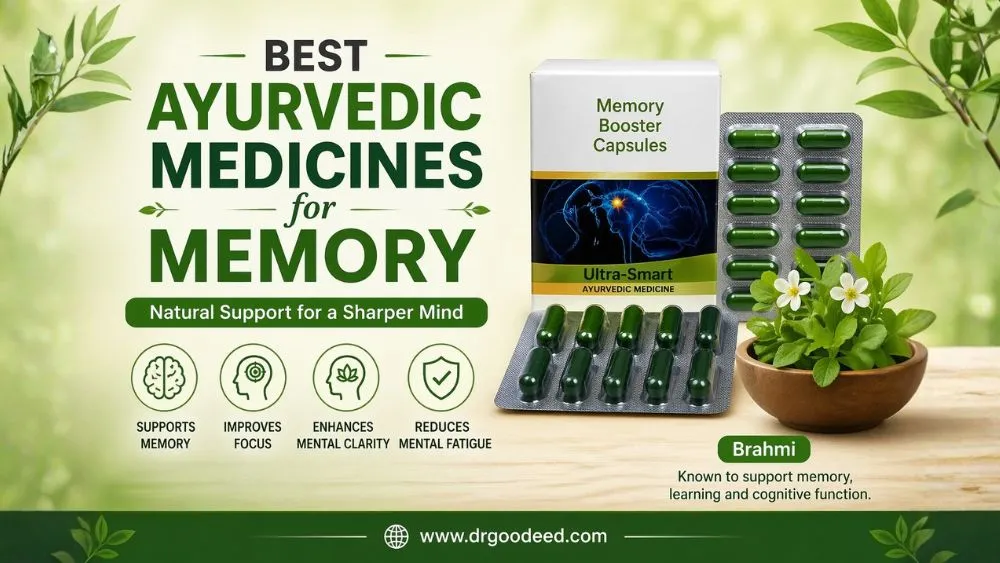
Ayurvedic medicine for memory draws from a specific category of herbs called Medhya Rasayana, meaning “intellect-rejuvenating tonics.” These are the five most clinically supported.
Brahmi (Bacopa Monnieri): Memory Enhancer
Brahmi for memory improvement is the most researched Ayurvedic herb for cognitive function. A 2016 meta-analysis in the Journal of Ethnopharmacology, covering 9 randomized controlled trials, confirmed Brahmi significantly improved memory recall, attention, and processing speed in healthy adults. It works by increasing brain-derived neurotrophic factor (BDNF) and reducing oxidative stress in hippocampal neurons. Standard dose: 300mg of Bacopa monnieri standardized to 55% bacosides daily.
Ashwagandha: Stress and Cognitive Support
Ashwagandha (Withania somnifera) reduces cortisol and protects neurons from stress-induced damage. A 2017 study in the Journal of Dietary Supplements found 300mg of ashwagandha root extract twice daily improved immediate memory, general memory, and executive function over 8 weeks in adults with mild cognitive impairment. It rebuilds Ojas depleted by chronic stress.
Shankhpushpi: Brain Tonic
Shankhpushpi (Convolvulus pluricaulis) improves acetylcholine activity in the brain, supporting both memory encoding and retrieval. It reduces Vata in the nervous system and calms mental hyperactivity. Ayurvedic practitioners prescribe it specifically for students, professionals under cognitive demand, and older adults with early memory decline.
Mandukaparni (Gotu Kola): Focus and Clarity
Gotu Kola improves cerebral blood flow and promotes axon growth in neurons. A 2016 study in Evidence-Based Complementary and Alternative Medicine showed Gotu Kola extract improved working memory and mood in healthy adults over 2 months. It is particularly effective when stress affecting memory is identified as the primary trigger by Ayurveda practitioners.
Saraswatarishta: Traditional Memory Formulation
Saraswatarishta is a classical Ayurvedic liquid formulation containing Brahmi, Shatavari, Ashwagandha, and other Medhya herbs fermented with honey. Ayurvedic hospitals across India and US integrative medicine use it for memory support in adults over 40. The fermentation process increases bioavailability of active compounds. Standard dose: 15ml to 30ml with equal water after meals.
Memory Loss Ayurvedic Treatment
Memory loss ayurvedic treatment combines herbal therapy, detox protocols, and mental discipline into a structured program rather than relying on a single remedy.
Medhya Rasayana Therapy
Medhya Rasayana is the Ayurvedic protocol for cognitive rejuvenation. It includes four primary herbs: Brahmi, Shankhpushpi, Mandukaparni, and Yashtimadhu (licorice root).
Classical texts in Charaka Samhita prescribe these individually based on the patient’s dosha profile. Modern Ayurvedic practitioners combine them in standardized formulations for broader support.
Panchakarma Detox Therapies
Shirodhara, a Panchakarma therapy involving a continuous warm oil stream poured over the forehead, reduces Vata in the nervous system and has demonstrated measurable reductions in cortisol and anxiety in clinical studies.
Nasya (medicated oil instilled through the nostrils) directly nourishes the brain’s supply channels and is used specifically for memory support in Ayurvedic hospitals.
Herbal Supplementation
A structured supplementation protocol for memory loss ayurvedic treatment typically includes:
- Brahmi (300mg daily) for BDNF and acetylcholine support
- Ashwagandha (300mg twice daily) for cortisol reduction
- Shankhpushpi powder (3g with warm milk at bedtime) for neural calming
- Saraswatarishta (15ml twice daily) as a base tonic
Lifestyle and Mental Discipline
Ayurveda treats memory as a trainable faculty. Daily recitation practice (memorizing verses or lists), studying during peak Kapha hours of 6 AM to 10 AM when the mind is calm, and avoiding multitasking all strengthen memory encoding pathways.
Natural Ayurvedic Remedies for Memory
Natural ayurvedic remedies for memory include daily kitchen practices that most people can start without a prescription.
Brahmi Tea or Powder
Brew 1 teaspoon of dried Brahmi leaves in 250ml of boiling water for 10 minutes. Drink once daily in the morning. Alternatively, mix 3g of Brahmi powder in warm water or milk before study or cognitive work.
Almond Milk with Herbs
Soak 10 raw almonds overnight. Blend with 250ml of warm milk, a pinch of saffron, and half a teaspoon of Shankhpushpi powder. Drink every morning. Almonds provide L-carnitine and riboflavin, which Ayurveda classifies as Medhya (intellect-supporting) foods. Saffron contains safranal, shown in a 2010 study in Phytomedicine to improve memory in mild-to-moderate Alzheimer’s disease.
Ghee for Brain Nourishment
Clarified butter (ghee) is considered the primary carrier (Anupana) for Medhya herbs in Ayurveda. One teaspoon of pure cow’s ghee daily lubricates myelin sheaths around nerves and improves Vata in the brain. Brahmi ghee, a medicated preparation, is the classical formulation for cognitive support in children and older adults.
Herbal Oils and Head Massage (Shiro Abhyanga)
Massaging the scalp with Brahmi oil or Bhringraj oil for 10 to 15 minutes before sleep reduces Vata in the nervous system and improves cerebral circulation overnight. US-based Ayurvedic wellness centers offer Shiro Abhyanga as a standalone therapy. For home use, warm the oil slightly and massage in slow circular movements starting from the crown.
Ayurvedic Diet for Brain Health
Diet in Ayurvedic medicine for memory focuses on foods that build Ojas and reduce Ama.
Brain-supporting foods to eat:
- Soaked walnuts (5 to 7 daily; walnut’s omega-3 profile supports neuronal membrane integrity)
- Cow’s milk with turmeric at bedtime
- Sesame seeds and sesame oil
- Fresh fruits, especially pomegranate (shown to reduce oxidative stress in hippocampal tissue)
- Light cooked grains: rice, barley
- Green vegetables, especially spinach and coriander
Foods to avoid for brain health:
- Processed foods with artificial additives
- Alcohol (depletes Ojas directly)
- Excessive caffeine (aggravates Vata)
- Leftover or reheated food (Ayurveda classifies it as Tamasic, reducing mental clarity)
- Cold or raw food in excess
Stress and Memory: Ayurvedic Perspective
How Stress Weakens Memory
Chronic stress in Ayurveda is called Chinta (worry) and Shoka (grief). Both aggravate Vata and Pitta simultaneously. This disrupts the Tarpaka Kapha, the protective fluid covering brain tissue, leaving neurons vulnerable to inflammatory damage.
Role of Cortisol and Mental Fatigue
Elevated cortisol shrinks hippocampal volume over time. Ayurveda’s concept of Ojas depletion from mental overwork maps almost exactly onto the modern understanding of cortisol-induced hippocampal atrophy.
People who work under chronic deadline pressure, a common condition for American adults, show higher rates of Vata-dominant cognitive complaints in clinical Ayurvedic intake assessments.
Ayurvedic Stress Reduction Methods
- Ashwagandha 300mg to 600mg daily reduces serum cortisol by up to 27.9% (per a 2012 Indian Journal of Psychological Medicine study)
- Brahmi reduces anxiety scores on validated scales within 4 weeks of consistent use
- Yoga Nidra (a guided deep relaxation practice) reduces stress biomarkers faster than sleep alone
Lifestyle Tips to Improve Memory Naturally
Daily Routine (Dinacharya)
Wake before 6 AM. Oil pull with sesame oil for 5 minutes. Apply Brahmi oil to the scalp. Study or do focused cognitive work between 6 AM and 10 AM. Avoid screens for the first 30 minutes after waking. These practices stabilize Prana Vata and set the neurological tone for the day.
Yoga and Meditation for Brain Health
Sarvangasana (shoulder stand) increases blood flow to the brain directly. Paschimottanasana (seated forward bend) calms the nervous system. Daily meditation for 20 minutes increases gray matter density in the prefrontal cortex, according to Harvard Medical School research published in NeuroReport in 2011.
Pranayama (Breathing Exercises)
Nadi Shodhana (alternate nostril breathing) balances Prana Vata in both brain hemispheres. Practice 10 minutes daily before study or mentally demanding work. Bhramari (humming bee breath) reduces Pitta-related mental heat and improves focus within a single session.
Sleep Optimization
Sleep before 10 PM. Drink warm milk with Ashwagandha and a pinch of nutmeg 30 minutes before sleep. Nutmeg contains myristicin, which has mild sedative properties that support deep sleep without dependency. Deep sleep is when Ayurveda says Ojas is replenished and memory consolidation occurs.
Are Ayurvedic Medicines Safe for Memory
When Used Under Guidance
Ayurvedic medicine for memory is safe for most adults when used under the guidance of a qualified Ayurvedic practitioner (BAMS degree or a licensed practitioner in US states that regulate Ayurvedic medicine).
Importance of Dosage and Quality
Brahmi at doses above 600mg daily causes nausea and fatigue in some users. Ashwagandha interacts with thyroid medications and sedatives. Always use standardized extracts from third-party tested brands. In the US, look for products verified by NSF International or USP for purity.
Possible Side Effects
- Brahmi: nausea and loose stools at high doses
- Shankhpushpi: mild sedation in sensitive individuals
- Saraswatarishta: contains small amounts of self-generated alcohol from fermentation; not suitable for recovering alcoholics
- Guggul-containing formulations: interact with warfarin and estrogen medications
When to See a Doctor
Consult a doctor if:
- Memory problems affect daily work or safety, such as forgetting medications or getting lost in familiar places
- Symptoms worsen rapidly over weeks rather than months
- You take prescription medications, since several Ayurvedic herbs interact with antidepressants, thyroid drugs, and blood thinners
- Self-administered protocols show no improvement after 12 weeks of consistent use
Always consult a neurologist for sudden or severe memory loss. Ayurvedic support works best alongside, not instead of, conventional medical evaluation for diagnosed conditions like early Alzheimer’s or vascular dementia.
Frequently Asked Questions
Does Brahmi really improve memory?
Yes. Brahmi for memory improvement is supported by a 2016 meta-analysis of 9 randomized controlled trials published in the Journal of Ethnopharmacology. Brahmi standardized to 55% bacosides improved memory recall, attention, and processing speed in healthy adults. Results were statistically significant at 300mg daily over 12 weeks.
How long does it take for Ayurvedic herbs to work?
Brahmi and Ashwagandha produce measurable cognitive improvements within 8 to 12 weeks of consistent daily use. Shankhpushpi shows focus benefits within 4 weeks. Ayurvedic medicine for memory works cumulatively; skipping doses resets progress. Expect meaningful results only after 3 months of uninterrupted use.
Can Ayurveda treat memory loss permanently?
Yes, for memory loss caused by stress, Vata imbalance, or nutritional deficiency. Ayurveda reverses these causes when protocols are followed consistently. For memory loss from structural brain damage like stroke or advanced neurodegeneration, Ayurveda supports quality of life and slows progression but does not reverse existing damage.
Is Ashwagandha good for brain function?
Yes. Ashwagandha at 300mg twice daily improved immediate memory, executive function, and processing speed in adults with mild cognitive impairment in a 2017 Journal of Dietary Supplements study. It works by reducing cortisol, increasing acetylcholine activity, and protecting neurons from oxidative stress.
What is Medhya Rasayana in Ayurveda?
Medhya Rasayana is Ayurveda’s category of cognitive rejuvenation herbs, specifically Brahmi, Shankhpushpi, Mandukaparni, and Yashtimadhu. The term means “intellect-nourishing tonic.” These four herbs are prescribed in Charaka Samhita as the primary memory loss ayurvedic treatment protocol, used individually or in combination based on the patient’s dosha profile.
Are Ayurvedic brain supplements safe daily?
Yes, at standard doses and from quality-tested brands. Brahmi at 300mg daily is safe long-term. Ashwagandha at 600mg daily is safe for up to 12 months based on clinical trial data. Natural ayurvedic remedies for memory like Brahmi tea and almond milk with Shankhpushpi carry no documented long-term safety concerns at recommended amounts.
Can stress cause memory loss in Ayurveda?
Yes. Stress affecting memory Ayurveda classifies as Chinta-Shoka-induced Ojas depletion. Chronic stress aggravates Vata and Pitta simultaneously, depletes Tarpaka Kapha (the brain’s protective fluid), and disrupts memory consolidation during sleep. This mirrors modern research showing cortisol-induced hippocampal shrinkage from chronic psychological stress.
Which herb is best for focus and concentration?
Shankhpushpi is the best Ayurvedic herb specifically for focus. It improves acetylcholine signaling and calms mental hyperactivity without sedation. Brahmi improves both focus and recall. For best ayurvedic herbs for memory boost combined with focus improvement, practitioners often prescribe both together, with Shankhpushpi during the day and Brahmi at night.
Can Ayurveda prevent dementia or cognitive decline?
Yes, for lifestyle-related cognitive decline. Ayurvedic protocols combining Brahmi, Ashwagandha, dietary Ojas-building foods, and sleep optimization reduce the modifiable risk factors for dementia, including chronic stress, poor sleep, and oxidative inflammation. For genetic or vascular dementia risk, Ayurveda reduces progression rate but does not eliminate the risk entirely.