

PCOS and migraines are more connected than most women realize, and the connection runs deeper than just hormones. Polycystic ovary syndrome (PCOS) affects 6-12% of women in the US, according to the CDC, making it one of the most common endocrine disorders in reproductive-age women.
Research published in Cephalalgia confirms that women with PCOS report significantly higher migraine frequency than women without it. This guide covers the hormonal mechanisms, symptom patterns, dietary strategies, sleep factors, and management approaches for both conditions together.
What Is PCOS?
PCOS is a hormonal disorder where the ovaries produce excess androgens (male hormones) and follicles fail to mature and release eggs normally. It disrupts the entire hormonal cycle, not just ovulation.
Hormonal Imbalance in Polycystic Ovary Syndrome
- Elevated luteinizing hormone (LH) relative to follicle-stimulating hormone (FSH)
- High androgen levels (testosterone and DHEA-S)
- Low progesterone due to absent or irregular ovulation
- Elevated insulin, even in women with normal body weight
Irregular Periods and Metabolic Changes
Irregular or absent periods in PCOS are directly caused by anovulation (no egg release). Without ovulation, progesterone does not rise after mid-cycle. Estrogen stays elevated without the progesterone counterbalance. This estrogen dominance pattern is one of the direct hormonal drivers behind pcos and migraines.
Common Symptoms Linked to PCOS
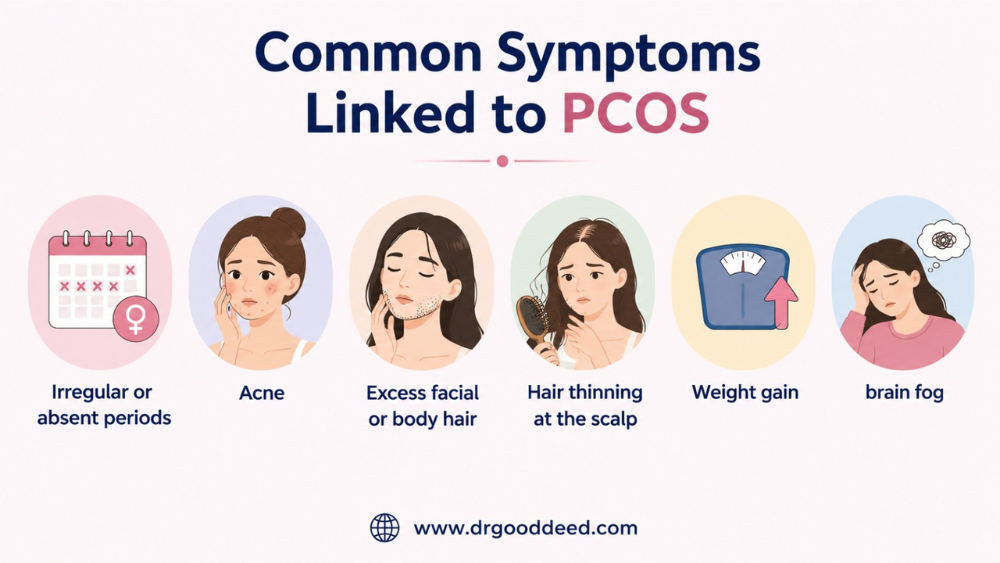
- Irregular or absent periods (oligomenorrhea or amenorrhea)
- Acne and oily skin from elevated androgens
- Excess facial or body hair (hirsutism)
- Hair thinning at the scalp
- Weight gain concentrated around the abdomen
- Fatigue, brain fog, and recurring headaches
Can PCOS Cause Migraines?
Yes, PCOS causes migraines through three overlapping mechanisms: estrogen dominance, insulin resistance, and chronic low-grade inflammation. The link between PCOS and migraine headaches is bidirectional.
Hormonal fluctuations trigger migraine attacks, and migraine attacks worsen stress hormones, which further destabilize the PCOS hormonal environment. Women with PCOS are up to 42% more likely to experience migraines than women without the condition, based on a 2020 cohort study in Frontiers in Endocrinology.
- Estrogen without progesterone balance sensitizes the trigeminal nerve, the main pain pathway in migraines
- Insulin resistance raises systemic inflammation, lowering the brain’s pain threshold
- Elevated androgens disrupt serotonin metabolism, a neurotransmitter directly involved in migraine onset
- Cortisol spikes from PCOS-related stress aggravate both conditions simultaneously
PCOS causes migraines in women who never had headaches before. Many women first develop migraines after PCOS diagnosis, often coinciding with worsening hormonal imbalance or significant weight changes.
Common Migraine Symptoms Seen With PCOS
One-Sided Throbbing Headaches
The most characteristic migraine symptom. In PCOS, this pain tends to worsen in the days before an irregular or late period, when estrogen drops suddenly without adequate progesterone support.
Nausea and Dizziness
Nausea with migraine in PCOS is often more severe than in women without hormonal dysfunction. Elevated androgens affect the gut’s motility, making nausea harder to manage.
Sensitivity to Light and Sound
This happens because estrogen fluctuations lower the threshold of the trigeminal nerve. Even moderate light exposure triggers pain during an active migraine in women with pcos and migraines.
Migraines Around Menstrual Cycle Changes
- Migraines 2-3 days before an expected period (even irregular ones) are called menstrual migraines
- In PCOS, the “period” arrival is unpredictable, making these attacks harder to anticipate
- Estrogen withdrawal, not low estrogen itself, triggers the attack
How Hormones Influence Migraines in PCOS
Estrogen Imbalance and Headache Patterns
Estrogen doesn’t cause migraines when it’s stable. The problem is the drop. In a normal cycle, estrogen dips before menstruation and rises again after. In PCOS, estrogen stays elevated for weeks, then drops sharply when bleeding finally occurs. That sharp drop is a direct migraine trigger.
Testosterone and Metabolic Health Changes
Elevated testosterone reduces insulin sensitivity. Lower insulin sensitivity means blood glucose fluctuates more between meals. Blood sugar dips below 70 mg/dL reliably trigger migraines in women already prone to them. This is why pcos and migraines worsen when meals are skipped.
Cortisol and Chronic Stress Effects
Cortisol is elevated chronically in PCOS. It suppresses progesterone production further, worsening the estrogen dominance already present. High cortisol also lowers the brain’s pain threshold by reducing GABA activity, making migraine attacks more frequent and more severe.
Diet Changes for PCOS and Headaches
Diet changes for PCOS and headaches are among the most effective non-pharmaceutical interventions for reducing migraine frequency. Food choices directly affect blood sugar stability, estrogen metabolism, and inflammation, all three of which connect PCOS to migraines.
Stabilizing Blood Sugar Levels
- Eat every 3-4 hours. Do not skip meals.
- Pair carbohydrates with protein at every meal to slow glucose absorption
- Choose low-glycemic index foods: oats, lentils, sweet potatoes, berries
- Avoid eating carbohydrates alone, especially at breakfast
Reducing Processed Foods and Excess Sugar
Processed sugar spikes insulin rapidly. In PCOS, insulin is already elevated. Adding a sugar spike increases androgen production further, worsening hormonal imbalance and migraine risk. This is not a gentle suggestion. Women with insulin-resistant PCOS who reduce refined sugar consistently report fewer migraines within 4-6 weeks.
Hydration and Anti-Inflammatory Foods
- Drink at least 2.5 liters of water daily. Dehydration alone can trigger a migraine within hours.
- Omega-3 fatty acids (from salmon, walnuts, flaxseed) reduce prostaglandin-driven inflammation
- Turmeric and ginger reduce systemic inflammatory markers linked to migraine sensitization
- Avoid alcohol and caffeine excess. Both are estrogen metabolism disruptors and migraine triggers.
Magnesium-Rich Foods for Migraine Support
Magnesium deficiency is documented in both PCOS and migraine patients. Low magnesium allows the trigeminal nerve to fire more easily.
- Pumpkin seeds, dark leafy greens, black beans, almonds
- Magnesium glycinate supplementation (300-400 mg/day) has peer-reviewed evidence for migraine prevention
Sleep Problems and Migraines in PCOS
Sleep problems and migraines in PCOS form a self-reinforcing cycle. PCOS disrupts sleep through elevated cortisol, insulin resistance, and sleep apnea (which affects up to 30% of women with PCOS). Poor sleep then raises cortisol further the next day, lowers the migraine threshold, and makes attacks more likely and more painful.
- Sleep apnea in PCOS causes oxygen drops during sleep, directly triggering morning headaches
- Cortisol peaks at 6-8 AM naturally. Poor sleep keeps it elevated through the afternoon.
- Irregular sleep schedules disrupt serotonin and melatonin production, both directly tied to migraine frequency
- Women with PCOS who sleep fewer than 6 hours per night report 2x more frequent migraines, per a 2019 observational study
Fixing sleep is not secondary to treating PCOS and migraines. It is foundational.
How to Manage Migraines With PCOS
Managing migraines with PCOS requires addressing both conditions simultaneously, because treating one without the other produces partial results at best.
Tracking Migraine and Menstrual Patterns
Use an app like Clue or Migraine Buddy. Record:
- Migraine date and duration
- Last menstrual period date
- Sleep hours the night before
- Meals skipped or unusual food consumed
- Stress rating out of 10
After 8-12 weeks of tracking, clear patterns emerge. Most women find their migraines cluster within a 3-5 day window of hormonal changes.
Stress Reduction and Regular Exercise
- 150 minutes of moderate aerobic exercise per week reduces circulating androgens and improves insulin sensitivity
- Resistance training specifically improves glucose uptake in muscle, stabilizing blood sugar between meals
- Yoga and breathwork reduce cortisol measurably within a single 60-minute session
Consistent Sleep and Meal Timing
Go to bed at the same time every night. Eat breakfast within 60 minutes of waking. These two habits stabilize cortisol rhythm more than most supplements do.
Medical Treatment Options for Migraine Control
- Hormonal contraceptives: effective for some, worsen migraines in others. Progesterone-only options are safer for women with migraine-with-aura.
- Metformin: reduces insulin resistance in PCOS, indirectly reducing migraine frequency by stabilizing blood sugar
- Magnesium IV or oral supplementation: first-line preventive treatment for menstrual migraines
- Triptans: effective acute migraine treatment, but should not replace hormonal management in PCOS
Lifestyle Habits That May Reduce Migraine Frequency
Weight Management and Hormonal Balance
A 5-10% reduction in body weight in overweight women with PCOS reduces androgen levels measurably. Lower androgens improve insulin sensitivity, reduce estrogen dominance, and decrease migraine frequency within 2-3 menstrual cycles.
Reducing Screen Stress and Overstimulation
Blue light from screens suppresses melatonin and raises cortisol after 8 PM. For women with pcos and migraines, evening screen use is a compounding trigger, disrupting both sleep and hormonal rhythm.
- Use blue light filters after sunset
- Take 5-minute screen breaks every 45 minutes during work hours
- Avoid screens for 30 minutes before bed
Avoiding Skipped Meals and Dehydration
Skipping lunch is one of the most consistent self-reported migraine triggers in women with PCOS. Blood glucose drops sharply, cortisol spikes to compensate, and the trigeminal nerve sensitizes within 2-3 hours of the skipped meal.
When PCOS and Migraine Symptoms Need Medical Attention
PCOS and migraines together require medical evaluation when either condition worsens significantly, or when new symptoms appear that don’t fit the usual pattern.
Women with PCOS and migraine-with-aura carry a higher-than-average cardiovascular risk, particularly if they smoke or use combined oral contraceptives. This is not a risk to manage alone.
Seek medical evaluation if:
- Migraines occur more than 4 times per month
- Migraine duration exceeds 72 hours
- Aura includes vision loss, speech difficulty, or arm weakness
- Headaches begin suddenly and severely (thunderclap pattern)
- PCOS symptoms worsen rapidly alongside increased migraine frequency
- A new headache pattern appears different from prior migraines
The link between PCOS and migraine headaches means an endocrinologist and a neurologist both need to be part of the care team for moderate-to-severe cases. Managing hormones without addressing migraines, or treating migraines without stabilizing PCOS, produces incomplete results.
FAQs
How are PCOS and migraines hormonally connected?
In PCOS and migraines, estrogen dominance (high estrogen, low progesterone) sensitizes the trigeminal nerve. Elevated androgens reduce insulin sensitivity, causing blood sugar swings that trigger attacks. Chronically high cortisol suppresses progesterone further, creating a hormonal loop that makes both conditions worse together.
Can insulin resistance worsen migraine frequency in PCOS?
Yes. Insulin resistance causes blood glucose to drop sharply between meals. Glucose dips below 70 mg/dL activate the hypothalamic stress response, which triggers trigeminal nerve firing. In women with PCOS and migraines, every skipped meal or high-sugar food creates a predictable migraine risk window within 2-3 hours.
Why do migraines sometimes worsen around irregular menstrual cycles?
The trigger is estrogen withdrawal, not low estrogen. In PCOS, estrogen stays elevated for extended periods due to anovulation. When bleeding finally occurs, the sudden estrogen drop activates migraine pathways. The longer the cycle, the steeper the drop, and the worse the migraine.
How do sleep problems increase headaches in PCOS?
Sleep apnea, which affects 30% of women with PCOS, causes overnight oxygen drops. These drops raise cortisol by morning, lower serotonin, and sensitize pain pathways before the day even starts. Sleep problems and migraines in PCOS are not separate issues. They share the same cortisol-serotonin disruption pathway.
Which foods may help reduce migraine triggers in PCOS?
Magnesium-rich foods (pumpkin seeds, spinach, black beans) directly reduce trigeminal nerve sensitivity. Omega-3 fats reduce prostaglandin inflammation. Low-GI carbohydrates prevent blood sugar crashes. Diet changes for PCOS and headaches show measurable migraine reduction within 4-6 weeks when refined sugar and skipped meals are eliminated.
Can dehydration and skipped meals worsen hormonal migraines?
Yes. Dehydration reduces blood volume, triggering a compensatory cortisol and adrenaline spike. Skipped meals drop blood glucose below the migraine threshold. Women with PCOS and migraines are especially vulnerable because insulin resistance makes blood sugar less stable to begin with. Both triggers act within 2-3 hours.
How can stress affect both PCOS symptoms and migraines?
Stress raises cortisol. Cortisol suppresses progesterone production, worsening estrogen dominance in PCOS. Simultaneously, cortisol lowers GABA activity in the brain, reducing the pain threshold. The result: one stress event can delay a period, raise androgens, and trigger a migraine within the same 24-hour window.
What lifestyle habits support migraine prevention with PCOS?
Eating breakfast within 60 minutes of waking stabilizes morning cortisol. Fixed sleep and wake times regulate melatonin and serotonin. Resistance training 3x per week improves insulin sensitivity within 4 weeks. These three habits address the core hormonal drivers behind PCOS and migraines without medication.
When should migraines and hormonal symptoms be medically evaluated together?
Seek evaluation when migraines occur more than 4 times per month, last over 72 hours, or include aura with vision or speech changes. Women with PCOS and migraines who have aura-type migraines face higher stroke risk, especially on combined oral contraceptives. Both an endocrinologist and neurologist should be involved.
How can menstrual and migraine patterns be tracked effectively?
Log menstrual start dates, migraine dates, sleep hours, and meals skipped daily. Apps like Clue or Migraine Buddy allow tagging of hormonal and dietary variables. After 8-12 weeks, the link between PCOS and migraine headaches becomes visible as a consistent 3-5 day trigger window tied to cycle events.